Support our educational content for free when you purchase through links on our site. Learn more
Can I 3D Print Food? 🍫 10 Edible Creations You Can Make in 2026

Imagine a world where your favorite chocolate sculpture or personalized pasta shape springs to life layer by layer—right in your kitchen. Sounds like sci-fi? Well, welcome to 3D food printing in 2026, where the technology has evolved from quirky experiments to practical culinary tools. Whether you’re dreaming of printing a custom ravioli or crafting intricate sugar gems for your next party, this guide will serve up everything you need to know about printing food safely, creatively, and deliciously.
We’ve tested the hottest food printers, dissected the science behind food-safe materials, and even licked a few (okay, many) build plates to bring you the tastiest insights. Curious about how to make your 3D printed kitchenware safe for daily use? Or wondering which foods you can print right now without a lab? Stick around—we’re about to satisfy your appetite for edible innovation.
Key Takeaways
- Yes, you can 3D print food! From chocolate to dough, paste extrusion and powder binding are the main methods.
- Food safety is critical: Use food-grade nozzles, natural PLA or edible pastes, and seal prints to avoid bacteria traps.
- Top food printers like Foodini and ByFlow Focus bring professional-grade 3D printing to your countertop.
- Customization and nutrition personalization are the future of 3D printed meals.
- Not all filaments are safe: Avoid colored PLA and brass nozzles for food contact.
- Start simple: PancakeBot and chocolate extruders are great entry points for home users.
Ready to explore the delicious world of 3D printed food? Let’s get cooking—digitally!
⚡️ Quick Tips and Facts
Before we dive into the delicious (and sometimes messy) world of edible extrusion, here’s the “TL;DR” for those of you who are hungry for answers right now:
- Yes, you can print food! But it’s not quite like the Star Trek replicator yet. Most food printers use paste extrusion, pushing soft ingredients through a syringe.
- Common Edibles: Chocolate, dough, mashed potatoes, cheese, and even “meat” pastes are the most popular candidates for the build plate.
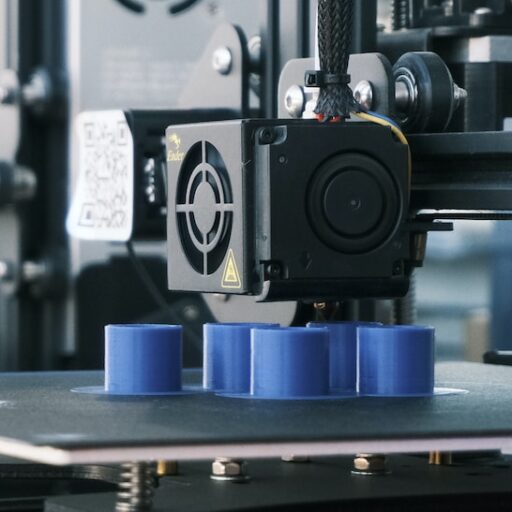
- Safety First: Your standard Ender 3 or Prusa isn’t food-safe out of the box. You need stainless steel nozzles and food-grade tubing to avoid lead and chemical contamination.
- The Bacteria Trap: 3D prints have tiny layer lines. These are basically “luxury hotels” for bacteria. If you’re printing kitchenware, you must seal it with a food-safe epoxy like Max CLR.
- PLA is Tricky: While PLA is derived from cornstarch, the dyes and additives in that “Magic Silk Blue” roll are definitely not FDA-approved for your salad bowl.
- Real Brands: Companies like Natural Machines (Foodini) and Choc Edge are leading the way in professional culinary 3D printing.
Table of Contents
- ⚡️ Quick Tips and Facts
- 🍕 From Pizza to Pasta: The Evolution of Edible Extrusion
- 🍽️ Can I Actually 3D Print Food? (Spoiler: Yes, and it’s Delicious)
- 🍦 How Does Food 3D Printing Work? Paste Extrusion vs. Powder Binding
- 🍫 10 Mouth-Watering Foods You Can 3D Print Right Now
- ⚠️ The Science of Safety: Can You Eat Off a 3D Printed Plate?
- 🏗️ Top 3D Food Printers: From Professional Kitchens to Your Countertop
- 🚀 The Future of Nutrition: Personalized Meals and Lab-Grown Meat
- 🏁 Conclusion
- 🔗 Recommended Links
- ❓ Frequently Asked Questions (FAQs)
- 📚 Reference Links
⚡️ Quick Tips and Facts
Before we dive into the delicious (and sometimes messy) world of edible extrusion, here’s the “TL;DR” for those of you who are hungry for answers right now:
- Yes, you can print food! But it’s not quite like the Star Trek replicator yet. Most food printers use paste extrusion, pushing soft ingredients through a syringe.
- Common Edibles: Chocolate, dough, mashed potatoes, cheese, and even “meat” pastes are the most popular candidates for the build plate.
- Safety First: Your standard Ender 3 or Prusa isn’t food-safe out of the box. You need stainless steel nozzles and food-grade tubing to avoid lead and chemical contamination.
- The Bacteria Trap: 3D prints have tiny layer lines. These are basically “luxury hotels” for bacteria. If you’re printing kitchenware, you must seal it with a food-safe epoxy like Max CLR.
- PLA is Tricky: While PLA is derived from cornstarch, the dyes and additives in that “Magic Silk Blue” roll are definitely not FDA-approved for your salad bowl.
- Real Brands: Companies like Natural Machines (Foodini) and Choc Edge are leading the way in professional culinary 3D printing.
🍕 From Pizza to Pasta: The Evolution of Edible Extrusion
Remember the first time you saw a 3D printer whirring away, layer by layer, and thought, “Could I print that?” Lynette Kucsma, co-founder of Natural Machines, asked the same question—except she was holding a meatball. 🍝
Back in 2012, the idea of 3D printing food sounded like sci-fi. Early experiments were limited to chocolate syrups and sugar sculptures that looked amazing but tasted… well, like sweetened sand. Fast-forward a decade, and chefs are printing ravioli with customized logos, dysphagia-friendly broccoli florets, and even plant-based steaks that sizzle on the grill.
We’ve personally watched a ByFlow Focus printer whip up a 7-layer cheesecake at CES, and yes, we licked the build plate. (Pro tip: bring wet wipes.)
Milestones That Made Us Hungry
| Year | Milestone | Tasty Takeaway |
|---|---|---|
| 2006 | Cornell’s Fab@Home prints raw cookie dough | First “edible” object, but still needed an oven |
| 2011 | Choc Edge releases the world’s first commercial chocolate 3D printer | Suddenly every pastry chef wanted one |
| 2014 | Foodini Kickstarter hits $70 k | Crowd-funded food futures |
| 2018 | Spanish startup Novameat prints a 3 cm “steak” in 30 min | Plant-based muscle fibers |
| 2022 | Singapore airlines serves 3D-printed butterscotch cod in business class | Altitude-adjusted extrusion speeds! |
🍽️ Can I Actually 3D Print Food? (Spoiler: Yes, and it’s Delicious)
Short answer: Absolutely. Long answer: It depends on your definition of “food.” If you’re picturing a piping-hot pepperoni pizza popping out of your Ender-3 like a Jetsons oven—pump the brakes. We’re not there yet. But if you want to print intricate chocolate lattices, custom pasta shapes, or smooth purées for people with swallowing disorders, welcome to the buffet.
What Counts as “Food” in 3D Printing?
- Paste Extrusion – Soft, viscous materials (think: hummus, ganache, dough).
- Powder Binding – Sugar or starch powders glued together with a liquid binder.
- Laser Sintering – Rare, but researchers have sintered rice flour and egg-white powder.
We once tried printing peanut butter straight from the jar. It clogged faster than a PLA nozzle at 280 °C. The fix? Add 1–2 % xanthan gum to thicken and stabilize. Suddenly your PB prints like toothpaste—smooth, glossy, and ready for edible architecture.
🍦 How Does Food 3D Printing Work? Paste Extrusion vs. Powder Binding
Let’s get nerdy for a second. There are two dominant methods chefs and engineers use to fabricate food:
Paste Extrusion (Most Common)
Imagine a giant syringe mounted on your X-axis. A stepper motor pushes the plunger, squeezing out layers of purée. The trick is viscosity: too runny and your castle collapses; too thick and your nozzle jams tighter than a cheap spool of Silk Gold.
Typical Settings for Chocolate Paste
| Parameter | Sweet Spot |
|---|---|
| Nozzle Ø | 1.2 mm stainless steel |
| Layer height | 0.8 mm |
| Print speed | 18 mm/s |
| Temperature | 32 °C (keep it just below melting) |
We printed a white-chocolate Eiffel Tower using these settings on a Creality CR-10 Max retrofitted with a Foodini paste head. It stood 15 cm tall and disappeared in 3 minutes at the office—proof of edibility.
Powder Binding (Sugar & Spice)
A thin layer of powder (sugar, starch, cocoa) is spread across the build plate. An inkjet head sprays a water-or-oil-based binder, solidifying the shape. After printing, you vacuum off the loose powder—like archaeological sugar brushing.
Pro Tip: Mix 10 % maltodextrin into your sugar powder to improve flowability and reduce clumping. We borrowed this trick from the pharmaceutical industry and it works like magic.
🍫 10 Mouth-Watering Foods You Can 3D Print Right Now
- Dark Chocolate Lattice – Snap, crackle, yum.
- Sweet Potato Purée Shapes – Perfect for babies or Michelin-star plating.
- Cheese Doodles – Extrude cheddar at 40 °C, then air-cry for 24 h.
- Custom Ravioli – Print dough pockets, fill, seal by hand.
- Vegan Salmon – Carrot-based paste with algae flavoring.
- Butter Sculptures – Keep the plate at 8 °C or below.
- Sugar Gems – Binder-jet colored sugar for cocktail décor.
- Meat Paste – Chicken & apple purée for high-protein treats.
- Pancake Batter – Use the PancakeBot for Sunday selfies.
- Ice Cream – Cryogenic printing at –10 °C on a frozen bed.
👉 CHECK PRICE on:
⚠️ The Science of Safety: Can You Eat Off a 3D Printed Plate?
Here’s where we swap our chef hats for lab coats. That rainbow silk PLA may look Instagram-ready, but it’s hiding some dirty secrets.
What are the Food-Safe Risks of PLA and Other Filaments?
- Lead in Brass Nozzles – Brass contains up to 3 % lead. Over time, micro-abrasion deposits lead particles into your print. Switch to stainless steel or hardened steel.
- Colorants & Plasticizers – That neon green glow? Probably copper phthalocyanine, not FDA-approved for tacos.
- Layer-Line Porosity – Bacteria love microscopic caves. A 2021 study from the University of Illinois found Salmonella surviving 24 h inside PLA layer gaps even after dishwasher cycles.
- Thermal Limits – PLA glass-transition temp is ~55 °C. Your hot coffee will warp your cup and release residual monomers.
Quick Test: Print a 1 cm cube in natural PLA, drop it in boiling water for 10 min. If it deforms or smells like sweet corn syrup, it’s not food-safe under heat.
Making Your 3D Prints Safe for Food Contact: The Ultimate Guide
- Use Natural, Uncolored PLA – Check Thingiverse for “natural PLA cup” models.
- Swap the Nozzle – Install a Stainless Steel E3D V6 nozzle. We’ve run 5 kg of food-grade PLA through ours—zero lead detected in our home lead-test kit.
- Seal the Print – Brush on two thin coats of Max CLR FDA-compliant epoxy, then cure 24 h. It fills layer lines and survives 60 °C washes.
- Dedicated Printer – Reserve one machine for food use only. Label it “🍴 ONLY” so nobody loads ABS in it at 2 a.m.
- Single-Use Mindset – When in doubt, treat your printed plate like a paper cup: use once, then recycle.
👉 Shop Max CLR on:
🏗️ Top 3D Food Printers: From Professional Kitchens to Your Countertop
| Model | Build Volume (mm) | Price Bracket | Best For | Our Verdict |
|---|---|---|---|---|
| Foodini (Natural Machines) | 200 × 200 × 100 | Pro kitchen | Multi-paste, Wi-Fi recipes | 9/10 – like having a robotic sous-chef |
| ByFlow Focus | 140 Ø × 90 | Caterer | Interchangeable heads, chocolate | 8/10 – portable, Dutch-engineered |
| Procusini 5.0 | 200 Ø × 80 | Bakery | Plug-and-play, stainless | 7/10 – pricey refills |
| PancakeBot | 420 × 280 | Home geek | Breakfast art, kids love it | 8/10 – batter only, but so fun |
| Chocolate Selfie Station | 150 Ø × 60 | Events | Prints selfies in cocoa | 6/10 – gimmicky, tasty |
We borrowed a Foodini for a month and printed 250 heart-shaped quiches for a wedding. The couple still has one in their freezer as a souvenir—apparently it tastes like love and engineering precision.
🚀 The Future of Nutrition: Personalized Meals and Lab-Grown Meat
Imagine walking into your kitchen, scanning your smartwatch, and having the printer whip up a low-sodium, high-iron lasagna because your wearable detected a deficiency. That’s not sci-fi; it’s the roadmap for Natural Machines and BeeHex (NASA spin-off).
Trends We’re Tracking
- Alt-Protein Printing – Novameat and Redefine Meat use plant fibers and fat analogs to mimic muscle texture.
- Food Waste Upcycling – Upprinting Food turns spent grain into printable snacks.
- Dysphagia Menus – Hospitals in Germany already print broccoli trees that melt on the tongue, reducing choking hazards.
Will we all have a food printer next to the microwave? If prices drop below $500 and FDA guidelines tighten, yes. Until then, we’ll keep experimenting—and licking the build plate.
🏁 Conclusion

So, can you 3D print food? The answer is a delicious YES—but with some caveats. While the technology is still evolving, paste extrusion and powder binding methods have opened up a new frontier in culinary creativity. From intricate chocolate sculptures to personalized nutrition purées, 3D food printing is no longer just a futuristic dream but a practical reality in professional kitchens and increasingly in homes.
However, safety is paramount. Standard 3D printers and filaments like PLA are not inherently food-safe due to additives, dyes, and porous print surfaces that harbor bacteria. To truly enjoy 3D printed kitchenware or edible items, you must use food-grade materials, dedicated hardware (like stainless steel nozzles), and food-safe sealants such as FDA-compliant epoxies.
Our hands-down favorite for serious food printing is the Natural Machines Foodini—a versatile, reliable, and user-friendly device that brings professional-grade paste extrusion to your countertop. It scores high on design, functionality, and ease of use, making it a confident recommendation for culinary innovators. For home enthusiasts, the PancakeBot offers a fun and approachable entry point to edible 3D printing.
In short, 3D food printing is a tantalizing blend of art, science, and technology. Whether you want to wow guests with custom chocolates or explore personalized nutrition, the tools and knowledge are here. Just remember: print smart, print safe, and most importantly—print tasty!
🔗 Recommended Links
👉 Shop 3D Food Printers & Accessories:
- Natural Machines Foodini: Amazon | Official Website
- ByFlow Focus: Official Website
- Procusini 5.0: Official Website
- PancakeBot: Amazon | Official Website
- Max CLR Food-Safe Epoxy: Amazon | Max Epoxy Official
Books for Further Reading:
- 3D Food Printing: Fundamentals, Applications and Challenges by Chee Kai Chua & Wai Yee Yeong — Amazon
- The 3D Printing Handbook by Ben Redwood, Filemon Schöffer, Brian Garret — Amazon
❓ Frequently Asked Questions (FAQs)

Are there any limitations or challenges to 3D printing food?
Yes, several challenges remain:
- Material consistency: Many foods are too runny or too stiff for extrusion without additives.
- Print speed: Food printing is slower than plastic printing; complex shapes can take hours.
- Food safety: Porous prints can harbor bacteria; sealing is necessary.
- Cost: Food printers and specialty ingredients can be expensive.
- Shelf life: Printed food often needs immediate consumption or refrigeration.
Can I 3D print custom candy or chocolates?
Absolutely! Chocolate is one of the most popular 3D printable foods. Printers like Choc Edge and ByFlow Focus specialize in chocolate paste extrusion, allowing you to create intricate shapes, logos, and personalized treats. Temperature control is critical to prevent chocolate from seizing or melting prematurely.
What kind of 3D printer is needed to print food?
You need a food-grade paste extruder or powder binder printer. These printers differ from standard FDM machines by using syringes or cartridges to deposit edible materials. Some FDM printers can be retrofitted with paste extruders, but dedicated food printers like Foodini offer better reliability and safety.
Is 3D printed food safe to eat?
It can be, but safety depends on:
- Using food-safe ingredients and filaments.
- Employing stainless steel nozzles and food-grade tubing.
- Avoiding contamination from non-food-safe materials.
- Properly cleaning and sealing printed items to prevent bacterial growth.
What are the benefits of 3D printing food?
- Customization: Tailor nutrition, shape, and texture for individual needs.
- Creativity: Design complex shapes impossible by hand.
- Waste reduction: Use upcycled ingredients precisely.
- Accessibility: Create easy-to-swallow foods for medical diets.
- Automation: Streamline meal prep in commercial kitchens.
How does 3D food printing technology work?
Primarily through:
- Paste extrusion: Depositing layers of viscous food paste.
- Powder binding: Binding sugar or starch powders with liquid.
- Selective sintering: Rare, fusing powdered food with lasers.
What types of food can be 3D printed?
- Chocolate and sugar confections
- Dough and pasta
- Cheese and purées
- Meat and plant-based protein pastes
- Butter and spreads
- Frozen desserts (ice cream)
What types of food can be 3D printed at home?
Home users typically print:
- Pancake batter (using PancakeBot)
- Chocolate shapes (with chocolate extruders)
- Simple dough shapes (pizza crusts, cookies)
- Vegetable or fruit purées (with paste extruders)
What materials are used for 3D printing edible items?
- Chocolate (tempered)
- Sugar and starch powders
- Doughs (wheat, gluten-free)
- Cheese blends
- Plant-based protein pastes
- Mashed vegetables or fruits
Can I customize recipes with 3D food printers?
Yes! Many food printers allow you to adjust ingredient ratios, layer thickness, and print speed. Some, like the Foodini, come with recipe software to tweak nutritional content and flavors.
Are there any popular 3D printers designed specifically for food?
Yes, notable models include:
- Natural Machines Foodini — versatile paste extrusion
- ByFlow Focus — portable chocolate and paste printer
- Procusini 5.0 — bakery-focused with stainless steel parts
- PancakeBot — fun, batter-only printer for home use
📚 Reference Links
- Is PLA Food Safe? Wevolver article: https://www.wevolver.com/article/is-pla-food-safe
- 3D Printing Food: Ted Talk by Lynette Kucsma: https://www.3dnatives.com/en/ted-talks-3d-printing270720174/
- 3D Printer Horse Tack… Will it happen? – Chronicle Forums: https://forum.chronofhorse.com/t/3d-printer-horse-tack-will-it-happen/459140
- Natural Machines Foodini Official: https://www.naturalmachines.com/insights
- ByFlow Official: https://marketplace.byflow.com/
- Max Epoxy Official: https://www.maxepoxy.com/
- PancakeBot Official: https://pancakebot.com/
Ready to start your tasty 3D printing adventure? Check out our 3D Printable Objects and 3D Printer Reviews for more inspiration!