Support our educational content for free when you purchase through links on our site. Learn more
How Strong Are 3D Printed Parts? 💪 The Ultimate 2026 Guide


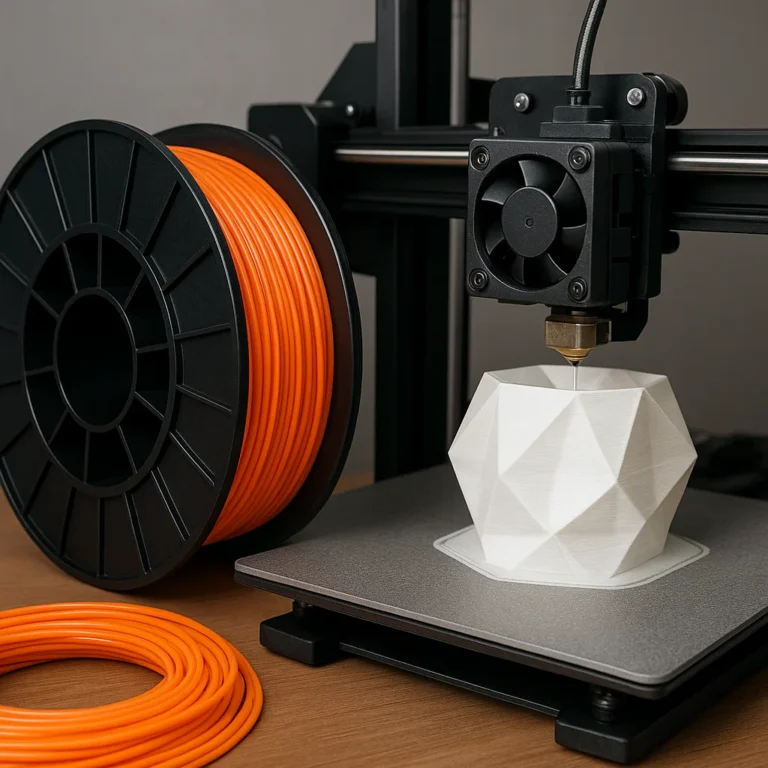
Ever wondered if your 3D printed creation can survive a drop, a twist, or even a real-world load? Spoiler alert: 3D printed parts can be shockingly strong, sometimes rivaling traditional manufacturing materials like aluminum! But—and this is a big but—their strength depends on a cocktail of factors including material choice, print settings, and clever post-processing.
We’ve all been there: printing a part that looks perfect but snaps under pressure. At 3D Printed™, we’ve tested everything from brittle PLA trinkets to carbon fiber-reinforced drone frames that survived crashes unscathed. In this guide, we’ll reveal the top 10 strongest materials, the slicer secrets that make your prints tougher, and real-world examples where 3D prints replaced metal parts. Plus, we’ll bust myths that might be holding you back from printing parts that truly last.
Ready to unlock the full potential of your 3D printer and print parts that don’t just look good but perform? Let’s dive in!
Key Takeaways
- Material choice is the biggest factor in 3D print strength: carbon fiber composites, polycarbonate, and metal prints lead the pack.
- Print settings like infill density, wall thickness, and orientation can multiply your part’s durability several times.
- Post-processing techniques such as annealing and epoxy infiltration can boost strength by up to 40%.
- 3D printed parts exhibit anisotropy—they’re strongest along the layers and weakest between them, so print orientation matters!
- With the right approach, 3D printed parts can outperform some traditionally manufactured components in specific applications.
Curious which materials made our top 10 list? Or how to tweak your slicer for maximum muscle? Keep reading to become a 3D printing strength master!
Table of Contents
- ⚡️ Quick Tips and Facts
- 🚀 The Journey to Robustness: A Brief History of 3D Print Strength
- 💪 The Million-Dollar Question: Just How Strong ARE 3D Printed Parts?
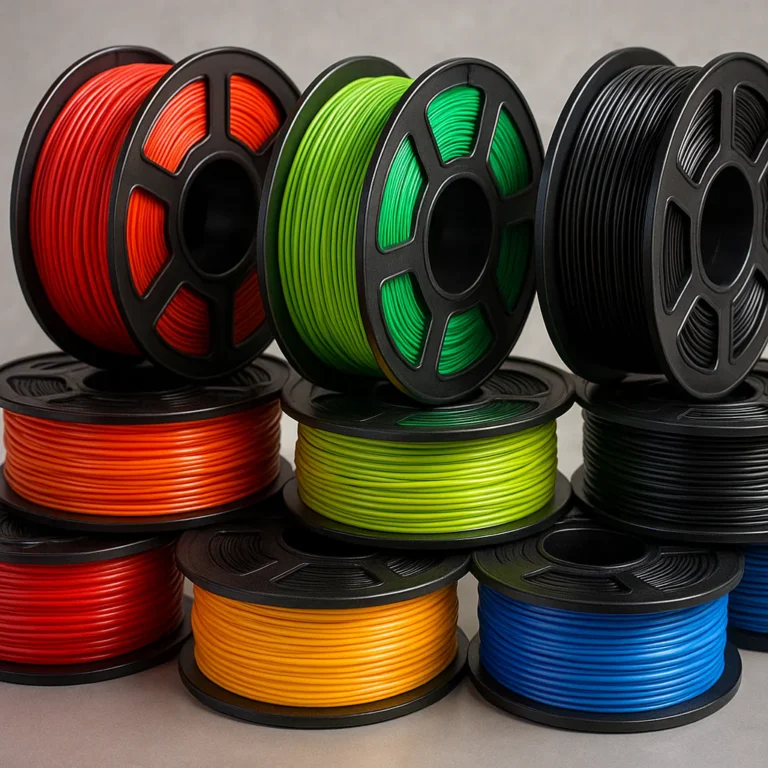
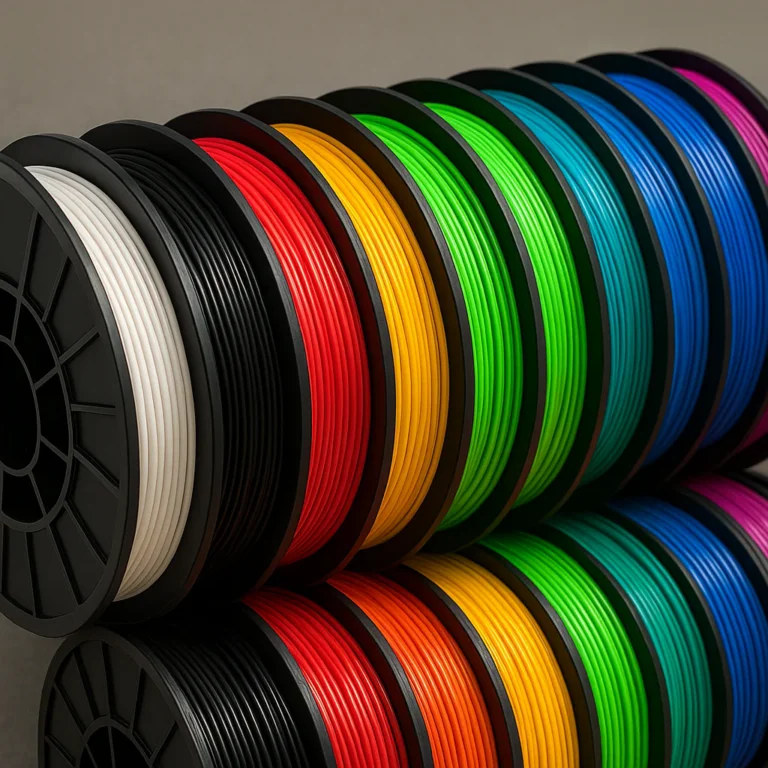
- 🛠️ The Material Matrix: Decoding 3D Printing Filaments and Resins for Ultimate Strength
- PLA: The Everyday Workhorse (and Its Limits)
- ABS: The OG of Toughness
- PETG: The Best of Both Worlds?
- Nylon: The King of Durability and Flexibility
- Polycarbonate (PC): Extreme Impact Resistance
- Composites (Carbon Fiber, Glass Fiber): Unleashing Super Strength
- Flexible Filaments (TPU, TPE): Strength in Elasticity
- Resins (SLA/DLP/LCD): Precision and Specialized Strengths
- Metal 3D Printing: The Apex of Strength
- ⚙️ The Slicer’s Secrets: Print Settings That Make or Break Your Part’s Durability
- Infill Density and Pattern: The Inner Skeleton
- Wall Thickness (Perimeters/Shells): The Outer Armor
- Layer Height: The Resolution vs. Strength Trade-off
- Print Temperature: Fusion at the Micro-Level
- Print Speed: Patience for Power
- Orientation: Anisotropic Strength Explained
- Nozzle Diameter: More Material, More Muscle
- 🆚 3D Printing vs. Traditional Manufacturing: Where Do They Stand on Strength?
- ✨ Beyond the Printer: Post-Processing Techniques to Supercharge Strength
- 🌍 From Prototypes to Production: Real-World Examples of Strong 3D Printed Parts
- debunking-myths-common-misconceptions-about-3d-print-strength
- 🎯 Your Blueprint for Durability: How to Choose the Best Material and Settings
- 💡 The Future is Strong: Our Final Take on 3D Printed Durability
- Conclusion
- 🔗 Recommended Links for Further Exploration
- ❓ Frequently Asked Questions (FAQ) About 3D Print Strength
- 📚 Reference Links and Scientific Sources
⚡️ Quick Tips and Facts
Welcome to the ultimate deep dive on how strong 3D printed parts really are! Whether you’re prototyping a gadget, building a drone frame, or just curious if your 3D print can survive a drop test, we’ve got you covered. Here’s a quick cheat sheet from the 3D Printed™ engineers’ lab:
- ✅ Material matters most: Polycarbonate and carbon-fiber composites are the heavy hitters, boasting tensile strengths rivaling aluminum alloys.
- ✅ Print settings are your secret weapon: Infill density, layer height, and print orientation can make or break your part’s durability.
- ✅ Post-processing boosts strength: Annealing and epoxy coatings can increase toughness by 30-40%.
- ✅ Anisotropy alert: 3D prints are generally 4-5 times stronger along the XY plane than the Z-axis (layer bonding is the weak link).
- ✅ Diminishing returns on infill: Above 70% infill, gains in strength slow down—except for 100% solid prints, which jump in strength dramatically.
- ✅ 3D prints can outperform some metals: With the right materials and settings, parts can exceed the strength of 6061 aluminum in certain directions.
- ❌ Not all plastics are created equal: PLA is brittle and heat-sensitive; ABS is tough but warps; PETG is flexible but less heat resistant.
- ❌ Print speed and temperature matter: Too fast or too cold, and layer adhesion suffers, weakening your part.
- ❌ Orientation is key: Printing a load-bearing part standing up vs. lying flat can change strength by 400%!
Curious how these nuggets come together? Stick around — we’ll unpack every detail, backed by real tests, expert tips, and even some surprising myths busted along the way. Ready to flex your 3D printing muscles? 💪
🚀 The Journey to Robustness: A Brief History of 3D Print Strength

Before we geek out on tensile strengths and infill patterns, let’s rewind a bit. The story of 3D printing strength is a tale of evolution — from fragile prototypes to functional parts that can handle real-world stress.
Early Days: Fragile Beginnings
Back in the 1980s and 90s, 3D prints were mostly for visual models. Materials like standard PLA and ABS were brittle or prone to warping, and layer adhesion was weak. Strength was an afterthought; the goal was shape, not toughness.
The Rise of Functional Materials
Fast forward to the 2010s, and the game changed. Filaments like Nylon, PETG, and Polycarbonate entered the scene, offering better mechanical properties. Composite filaments infused with carbon or glass fibers started pushing strength boundaries. Suddenly, 3D prints weren’t just prototypes — they were functional parts.
Modern Era: Strength Meets Precision
Today, with advancements in metal 3D printing (like Direct Metal Laser Sintering (DMLS)) and high-performance polymers like PEEK and Ultem, 3D printed parts can rival or even surpass traditionally manufactured components in strength for certain applications. Plus, smarter slicers and optimized print settings mean you can tailor strength to your exact needs.
Our Take
At 3D Printed™, we’ve seen this evolution firsthand. From brittle prints that shattered on drop tests to carbon-fiber reinforced drone arms that survived crashes, the journey has been thrilling. And the best part? It’s still accelerating.
💪 The Million-Dollar Question: Just How Strong ARE 3D Printed Parts?
Let’s address the elephant in the room: Can a 3D printed part replace a machined metal one? The answer is… it depends. But how?
Strength Is Multifaceted
Strength isn’t a single number. It includes:
- Tensile strength: Resistance to being pulled apart.
- Impact resistance: Ability to absorb shocks.
- Flexural strength: Resistance to bending.
- Fatigue resistance: How many stress cycles before failure.
3D printed parts can excel or fail in any of these depending on material, print settings, and design.
The Role of Anisotropy
Remember, 3D prints are layered. This means:
- XY plane strength (along layers): Strongest direction.
- Z-axis strength (between layers): Weakest link, often 4-5 times weaker.
This anisotropy means orientation during printing is critical. Printing a part “lying flat” vs. “standing tall” can dramatically affect strength.
Real-World Test: Infill vs. Strength
One of our favorite experiments (also echoed in the Snapmaker blog) tested PLA beams with varying infill percentages. Here’s a quick summary:
| Infill % | Breaking Strength (KG) | Notes |
|---|---|---|
| 0% | 43.5 | Shell-only strength |
| 20% | 79.0 | Moderate internal support |
| 50% | 113.5 | Strong for most applications |
| 70% | 141.0 | Diminishing returns begin |
| 100% | 179.0+ | Solid parts are beasts! |
The takeaway? Increasing infill boosts strength, but after ~70%, gains slow — until you hit 100%, which jumps strength significantly.
What Does This Mean for You?
If you’re printing a functional part, aim for 50-70% infill with a strong wall thickness. For critical load-bearing parts, consider 100% infill or composite materials.
🔬 Unpacking the Variables: What Makes a 3D Print Strong (or Weak)?
Strength is a cocktail of factors:
- Material choice: Some plastics are inherently tougher.
- Print orientation: Align layers with expected stress.
- Infill density & pattern: Honeycomb or triangular infills offer great strength-to-weight ratios.
- Layer height: Thinner layers improve bonding but increase print time.
- Print temperature: Too low = poor adhesion; too high = stringing and deformation.
- Wall thickness: More perimeters mean stronger shells.
- Post-processing: Annealing or epoxy infiltration can boost strength.
We’ll cover these in detail soon, but keep this checklist handy!
🛠️ The Material Matrix: Decoding 3D Printing Filaments and Resins for Ultimate Strength
Material selection is your first and most important step toward strong 3D prints. Let’s break down the popular contenders:
| Material | Tensile Strength (MPa) | Heat Resistance (°C) | Flexibility | Best For | Drawbacks |
|---|---|---|---|---|---|
| PLA | ~50 | ~52 | Low | Prototypes, decorative parts | Brittle, low heat resistance |
| ABS | 34-42 | ~105 | Medium | Functional parts, automotive | Warping, fumes |
| PETG | 38-50 | ~73 | Medium-High | Impact-resistant parts, outdoor | Less heat resistant than ABS |
| Nylon (PA12) | 70-76 | ~120 | High | Gears, hinges, flexible parts | Moisture sensitive |
| Polycarbonate (PC) | 70-75 | ~150 | Medium | High-impact parts, enclosures | Requires high print temps |
| Carbon Fiber Filled | 70-100+ | Varies | Low-Med | Aerospace, automotive, drones | Abrasive on nozzles, brittle |
| Glass Fiber Filled | 50-80 | Varies | Medium | Mechanical parts, rigidity | Abrasive, less flexible |
| TPU/TPE (Flexible) | 20-40 | ~60-80 | Very High | Flexible parts, seals | Lower tensile strength |
| SLA/DLP Resins | 40-70 | Varies | Low-Med | High-detail parts, molds | Brittle, UV sensitive |
| Metal (DMLS, SLM) | 300+ (steel, titanium) | >500 | N/A | Aerospace, medical implants | Expensive, complex process |
PLA: The Everyday Workhorse (and Its Limits)
PLA is the go-to for beginners and hobbyists. It’s easy to print, smells sweet, and produces sharp details. But don’t expect it to survive heavy loads or heat — it softens around 52°C and is brittle under stress.
- Strength: Moderate tensile strength (~50 MPa).
- Best use: Prototypes, decorative items, low-stress parts.
- Drawbacks: Brittle, low heat resistance, poor layer adhesion compared to PETG.
ABS: The OG of Toughness
ABS is a classic for a reason. It’s tougher and more heat resistant than PLA, making it suitable for functional parts like automotive components and enclosures.
- Strength: Tensile strength 34-42 MPa.
- Heat resistance: Up to 105°C.
- Challenges: Prone to warping; requires heated bed and enclosure; emits fumes.
- Post-processing: Acetone vapor smoothing for a glossy finish.
PETG: The Best of Both Worlds?
PETG combines the ease of PLA with some toughness of ABS. It offers excellent layer adhesion and impact resistance, making it a favorite for functional parts that need some flexibility.
- Strength: 38-50 MPa tensile strength.
- Heat resistance: ~73°C.
- Pros: Less warping than ABS, good chemical resistance.
- Cons: Harder to smooth than ABS; slightly lower heat tolerance.
Nylon: The King of Durability and Flexibility
Nylon (especially PA12) is a powerhouse for mechanical parts. It’s strong, flexible, and abrasion-resistant but needs dry storage due to moisture absorption.
- Strength: 70-76 MPa tensile strength.
- Flexibility: High.
- Best for: Gears, hinges, functional prototypes.
- Drawbacks: Hygroscopic (absorbs moisture), tricky to print.
Polycarbonate (PC): Extreme Impact Resistance
Polycarbonate is the heavyweight champion for impact resistance and heat tolerance.
- Strength: ~70-75 MPa.
- Heat resistance: Up to 150°C.
- Use cases: Electrical enclosures, automotive parts.
- Printing: Requires high temps (~270-310°C) and heated bed.
Composites (Carbon Fiber, Glass Fiber): Unleashing Super Strength
Composite filaments mix base plastics with reinforcing fibers for up to 10x strength improvement.
- Carbon fiber: Lightweight, stiff, great for aerospace and drones.
- Glass fiber: Adds rigidity and dimensional stability.
- Downside: Abrasive to brass nozzles; use hardened steel nozzles.
Flexible Filaments (TPU, TPE): Strength in Elasticity
Flexible filaments trade tensile strength for elasticity. Great for seals, grips, or wearable parts.
- Strength: 20-40 MPa.
- Flexibility: Very high.
- Printing: Requires slower speeds and direct drive extruders.
Resins (SLA/DLP/LCD): Precision and Specialized Strengths
Resin prints offer high detail and smooth surfaces but tend to be brittle unless using specialized tough resins.
- Strength: 40-70 MPa depending on resin.
- Use: Dental molds, jewelry, functional prototypes.
- Post-processing: UV curing critical for strength.
Metal 3D Printing: The Apex of Strength
Metal printing (DMLS, SLM) produces parts with strength exceeding 300 MPa, rivaling CNC-machined components.
- Materials: Stainless steel, titanium, aluminum alloys.
- Applications: Aerospace, medical implants, tooling.
- Cost: High, but unmatched strength and complexity.
⚙️ The Slicer’s Secrets: Print Settings That Make or Break Your Part’s Durability
Even the strongest filament can fail if printed poorly. Here’s how to dial in your slicer for max strength:
Infill Density and Pattern: The Inner Skeleton
- Density: 50-70% is sweet spot for strength without excessive print time.
- Patterns: Triangular and honeycomb infills offer excellent strength-to-weight ratios.
- Note: 100% infill yields max strength but increases print time and material use.
Wall Thickness (Perimeters/Shells): The Outer Armor
- Recommendation: 2-3 mm wall thickness (4-6 perimeters) for load-bearing parts.
- Why: Shells carry most of the load; thicker walls improve impact resistance.
Layer Height: The Resolution vs. Strength Trade-off
- Thinner layers (0.1-0.2 mm): Better layer adhesion, stronger parts.
- Thicker layers: Faster prints but weaker interlayer bonding.
Print Temperature: Fusion at the Micro-Level
- Optimal temp: High enough for good layer fusion but below degradation point.
- Tip: Slightly increase temp (+5-10°C) for stronger layer bonding.
Print Speed: Patience for Power
- Slower speeds: Improve layer adhesion and reduce defects.
- Faster speeds: Risk poor bonding and weak spots.
Orientation: Anisotropic Strength Explained
- Print parts so stress aligns with XY plane.
- Avoid loading parts perpendicular to layers (Z-axis).
Nozzle Diameter: More Material, More Muscle
- Larger nozzles (0.6-0.8 mm): Lay down thicker lines, improving layer bonding.
- Trade-off: Lower resolution but stronger parts.
🆚 3D Printing vs. Traditional Manufacturing: Where Do They Stand on Strength?
How do 3D printed parts stack up against injection molding, CNC machining, or casting?
| Manufacturing Method | Strength Profile | Pros | Cons |
|---|---|---|---|
| Injection Molding | Very high, isotropic | Uniform strength, fast production | High tooling cost, less design freedom |
| CNC Machining | Excellent, depends on raw material | High precision, strong parts | Wasteful, expensive for complex shapes |
| Casting | Good bulk strength | Complex shapes, metal parts | Porosity issues, less dimensional accuracy |
| 3D Printing | Variable, anisotropic | Design freedom, complex geometries | Layer adhesion weak point, slower |
The Hybrid Approach: Combining Strengths
Many industries combine 3D printing with traditional methods:
- Print complex internal structures, then CNC machine critical surfaces.
- Use 3D prints for molds or tooling in casting.
- Metal 3D printing for parts impossible to machine.
✨ Beyond the Printer: Post-Processing Techniques to Supercharge Strength
Post-processing can be a game-changer for strength:
Annealing: Heat Treatment for Toughness
- Controlled heating and cooling reorganizes polymer chains.
- Can increase strength by 30-40%.
- Works well for PLA, PETG, and some nylons.
Epoxy Coatings and Infiltration: Sealing the Deal
- Applying epoxy resin penetrates and reinforces layers.
- Improves impact resistance and surface finish.
- Popular for functional parts and cosplay armor.
Vapor Smoothing: Surface Integrity
- Acetone vapor smoothing for ABS melts outer layers, improving bonding.
- Reduces micro-cracks and stress concentrators.
- Not suitable for all materials.
Curing (for Resins): The Final Hardening
- UV curing solidifies resin prints fully.
- Proper curing improves mechanical properties and durability.
🌍 From Prototypes to Production: Real-World Examples of Strong 3D Printed Parts
3D printing strength isn’t just theory — it’s powering real-world innovation.
Aerospace: Lightweight and Robust Components
- NASA and Boeing use carbon fiber composites and metal 3D printing for lightweight brackets and ducts.
- Parts withstand extreme temperatures and stress while cutting weight.
Automotive: Custom Parts and Tooling
- Companies like Ford and Tesla print custom jigs and functional prototypes.
- Carbon fiber filaments produce durable drone frames and racing car parts.
Medical: Biocompatible and Durable Implants
- Titanium 3D printed implants with complex porous structures promote bone growth.
- Nylon and resin prints used for surgical guides and prosthetics.
Consumer Products: Everyday Items with Hidden Strength
- Functional phone cases, tool handles, and even furniture parts printed with PETG or composites.
- Strength tailored to user needs with smart design and settings.
debunking-myths-common-misconceptions-about-3d-print-strength
Let’s bust some myths that often cloud the 3D print strength conversation:
-
Myth: “3D printed parts are always weak and brittle.”
Fact: With the right material and settings, prints can outperform some metals in specific directions. -
Myth: “Higher infill always means stronger parts.”
Fact: Strength gains plateau after 70% infill; 100% infill is strong but costly. -
Myth: “PLA is strong enough for functional parts.”
Fact: PLA is brittle and heat-sensitive; better for prototypes than end-use. -
Myth: “Post-processing is just cosmetic.”
Fact: Techniques like annealing and epoxy infiltration significantly improve strength. -
Myth: “3D printing can replace all traditional manufacturing.”
Fact: Each method has strengths; 3D printing excels in complexity and customization, not always raw strength.
🎯 Your Blueprint for Durability: How to Choose the Best Material and Settings
Ready to print parts that don’t just look good but last? Here’s your step-by-step guide:
Define Your Strength Requirements
- Will the part bear load, impact, or flex?
- What is the maximum stress expected?
- Is heat resistance important?
Consider Environmental Factors
- Exposure to moisture? (Avoid nylon if uncontrolled)
- UV exposure? (Choose UV-resistant materials)
- Chemical contact? (PETG and PC resist many chemicals)
Balance Cost vs. Performance
- Carbon fiber filaments and metal printing offer strength but at a premium.
- ABS and PETG provide solid performance for moderate budgets.
- PLA is cheapest but limited in strength.
💡 The Future is Strong: Our Final Take on 3D Printed Durability
The strength of 3D printed parts has come a long way — from fragile curiosities to functional components in aerospace and medicine. With ongoing innovations in materials science, print technology, and post-processing, the gap between 3D printing and traditional manufacturing continues to shrink.
At 3D Printed™, we believe the question isn’t just “how strong are 3D printed parts?” but “how strong do you need them to be?” With the right choices, your 3D prints can be as tough as your imagination demands.
Want to see strength in action? Check out the featured video where a custom-built machine tests PLA beams with varying infill — revealing surprising insights on strength gains and the magic of 100% infill.
CHECK PRICE on popular filaments and composites:
- Prusament PC Blend: Amazon | Prusa Official Website
- MatterHackers NylonX (carbon fiber nylon): MatterHackers | Amazon
- Hatchbox PETG: Amazon | Thingiverse (models)
- Formlabs Tough Resin: Formlabs | Amazon
For more on materials and print settings, explore our 3D Printing Innovations and 3D Printer Reviews sections.
Conclusion

So, how strong are 3D printed parts? The short answer: they can be incredibly strong — sometimes even stronger than traditional materials — but it depends on what you print, how you print it, and what you do after printing.
From our deep dive, here’s the bottom line:
- Material choice is king. Polycarbonate, carbon fiber composites, and metal prints lead the pack in strength.
- Print settings are your secret sauce. Optimizing infill, wall thickness, layer height, and orientation can multiply strength several times over.
- Post-processing is the cherry on top. Annealing, epoxy infiltration, and vapor smoothing can transform a good print into a great one.
- 3D printing is no longer just for prototypes. Functional, load-bearing parts in aerospace, automotive, and medical fields prove the technology’s mettle daily.
Remember our early question — can 3D printed parts replace machined metal? The answer is nuanced. For many applications, especially where complex geometries or lightweight designs are needed, 3D printed parts are strong enough and sometimes even preferable. But for extreme loads or critical safety components, traditional manufacturing still holds the edge.
At 3D Printed™, we confidently recommend exploring advanced materials like carbon fiber reinforced filaments or polycarbonate blends if strength is your priority. Combine that with careful print settings and post-processing, and you’ll be amazed at what your printer can achieve.
Ready to flex those 3D printing muscles? Your next strong print awaits!
🔗 Recommended Links for Further Exploration
👉 Shop top-rated filaments and materials for strength:
-
Prusament PC Blend (Polycarbonate):
Amazon | Prusa Official Website -
MatterHackers NylonX (Carbon Fiber Reinforced Nylon):
MatterHackers | Amazon -
Hatchbox PETG:
Amazon | Thingiverse (3D models) -
Carbon Fiber Filaments (e.g., Proto-pasta Carbon Fiber PLA):
Amazon | Proto-pasta Official Website
Recommended books for mastering 3D printing strength:
- 3D Printing Failures: How to Diagnose and Repair All Desktop 3D Printing Issues by Sean Aranda — Amazon
- 3D Printing: The Next Industrial Revolution by Christopher Barnatt — Amazon
- Additive Manufacturing Technologies: 3D Printing, Rapid Prototyping, and Direct Digital Manufacturing by Ian Gibson, David Rosen, Brent Stucker — Amazon
❓ Frequently Asked Questions (FAQ) About 3D Print Strength

Are 3D printed metal parts stronger than traditionally manufactured metal parts?
Short answer: Sometimes, but it depends on the process and application.
Metal 3D printing methods like Direct Metal Laser Sintering (DMLS) and Selective Laser Melting (SLM) can produce parts with strength comparable to or exceeding wrought metals due to fine microstructures and complex geometries. However, traditional forging or machining often results in more uniform grain structures and fewer internal defects.
- Advantages of metal 3D printing: Ability to create complex internal lattices that reduce weight without sacrificing strength; rapid prototyping; customization.
- Limitations: Potential porosity, residual stresses, and anisotropy if not properly controlled.
For critical aerospace or medical implants, metal 3D prints undergo rigorous testing and post-processing (heat treatment, hot isostatic pressing) to ensure strength and reliability.
What are some design considerations to keep in mind when creating 3D printed parts for strength and durability?
- Orient parts to align layers with expected load directions to avoid weak Z-axis bonding.
- Add fillets and chamfers to reduce stress concentrations.
- Use thicker walls and higher infill densities for load-bearing areas.
- Incorporate ribs or internal structures to increase stiffness without excessive weight.
- Avoid sharp corners and thin features that can cause cracks or breakage.
- Consider anisotropy and design accordingly.
How do environmental factors like temperature and humidity impact the strength of 3D printed parts?
- Temperature: Materials like PLA soften around 50-60°C, reducing strength. Polycarbonate and nylon withstand higher temperatures (~150°C and above). Exposure to heat can cause warping or deformation.
- Humidity: Nylon and other hygroscopic materials absorb moisture, which weakens the part and causes print defects. Proper storage and drying are essential.
- UV exposure: Some resins and plastics degrade under UV light, losing strength over time unless UV-stabilized.
Can 3D printed parts be made stronger with post-processing techniques such as sanding or coating?
- Sanding improves surface finish but has minimal effect on strength.
- Coatings like epoxy resin infiltrate layers, increasing impact resistance and sealing micro-cracks.
- Annealing (controlled heating) realigns polymer chains, boosting tensile and impact strength by up to 40%.
- Vapor smoothing (acetone for ABS) melts outer layers, improving layer adhesion and reducing stress concentrators.
What are the differences in strength between FDM, SLA, and SLS 3D printed parts?
| Technology | Strength Characteristics | Notes |
|---|---|---|
| FDM | Layered anisotropic strength; depends on settings and material | Generally lower resolution; strength varies with orientation |
| SLA | High detail, but often brittle unless tough resins used | Best for precision, less for heavy loads |
| SLS | Isotropic strength; strong nylon-based parts | No support structures needed; good for functional parts |
How does the layer thickness of 3D printed parts affect their overall strength and durability?
Thinner layers (0.1-0.2 mm) improve layer adhesion and reduce voids, resulting in stronger parts. Thicker layers print faster but can cause weaker interlayer bonding and surface defects, reducing strength.
What are the most common materials used for 3D printing and their strength properties?
- PLA: Moderate strength, brittle, low heat resistance.
- ABS: Tough, heat resistant, prone to warping.
- PETG: Good impact resistance, flexible, easier to print than ABS.
- Nylon: High strength and flexibility, moisture sensitive.
- Polycarbonate: Very strong and heat resistant.
- Carbon fiber composites: Highest strength-to-weight ratio.
- Resins: High detail, variable strength depending on formulation.
- Metal powders: Highest strength, complex post-processing.
What factors affect the strength of 3D printed parts?
- Material selection
- Print orientation and layer bonding
- Infill density and pattern
- Wall thickness
- Layer height
- Print temperature and speed
- Post-processing methods
Which 3D printing materials produce the strongest parts?
- Carbon fiber reinforced filaments
- Polycarbonate (PC)
- Nylon (especially carbon-filled)
- High-performance resins
- Metal 3D printing powders (steel, titanium)
How does layer height influence the durability of 3D printed objects?
Lower layer heights improve bonding and reduce micro-cracks, increasing durability. Higher layer heights speed printing but can weaken interlayer adhesion.
Can post-processing improve the strength of 3D printed parts?
Yes. Annealing, epoxy infiltration, and vapor smoothing can significantly increase strength and impact resistance.
What are the best 3D printing techniques for creating strong functional parts?
- FDM with composite filaments and optimized settings
- SLS for isotropic nylon parts
- Metal 3D printing (DMLS/SLM) for ultimate strength
- SLA with tough resins for detailed, moderately strong parts
How do infill patterns and density impact 3D printed part strength?
- Higher infill density generally increases strength but with diminishing returns above ~70%.
- Patterns like triangular and honeycomb provide excellent strength-to-weight ratios.
- Sparse infills reduce material and weight but sacrifice strength.
Are 3D printed parts suitable for load-bearing applications?
Yes, when designed and printed correctly with appropriate materials and settings. Many aerospace, automotive, and medical parts are now 3D printed for functional, load-bearing use.
📚 Reference Links and Scientific Sources
- Snapmaker Blog: How Strong Are 3D Printed Parts?
- Wevolver: PETG vs ABS: How Do They Compare?
- All3DP: Top 10 Strongest 3D Printing Materials
- Prusa Research: Prusament PC Blend Filament
- MatterHackers: NylonX Carbon Fiber Filament
- Formlabs: Tough Resin
- Proto-pasta: Carbon Fiber PLA
For more on 3D printing strength and materials, visit our 3D Printing Innovations and 3D Printable Objects categories.