Support our educational content for free when you purchase through links on our site. Learn more
🏆 15 Most Popular Objects to 3D Print (2026)

Ever stared at a blank build plate, wondering if you should print another Benchy or finally tackle that life-sized Iron Man helmet? You aren’t alone. At 3D Printed™, we’ve watched thousands of prints come off our beds, and a clear pattern has emerged: the community is obsessed with a specific mix of practical problem-solving and whimsical creativity. From the viral articulated dragons that dominate social media feeds to the unsung heroes like custom appliance knobs that save your favorite blender, the “most popular” list is more diverse than ever.
In this guide, we’ve analyzed trends from Thingiverse, Printables, and Etsy to bring you the definitive ranking of the 15 most popular objects to 3D print right now. We’ll reveal why board game organizers are the new desk decor, which materials you must avoid for cosplay props, and the surprising psychological reason we all love printing fidget toys. Whether you are a beginner looking for your first success or a pro hunting for your next bestseller, this list covers every angle. Ready to stop guessing and start printing what the world actually wants? Let’s dive in.
Key Takeaways
- Versatility is King: The top 15 list spans functional repairs, gaming accessories, cosplay armor, and artistic decor, proving 3D printing is a universal tool.
- Material Matters: Success depends on matching the object to the right filament; PLA rules for toys, while PETG and Nylon are essential for functional parts.
- Community Driven: The most popular items often originate from open-source communities like Prusa Printables and Thingiverse, where creators share and iterate on designs.
- Profit Potential: While many print for fun, items like custom keychains, articulated animals, and board game upgrades are top sellers for side hustles.
- Beginner Friendly: You don’t need advanced skills to start; simple keychains and phone stands offer high success rates for new printers.
Table of Contents
- ⚡️ Quick Tips and Facts
- 📜 From Sci-Fi Dreams to Desktop Reality: A Brief History of 3D Printing Popularity
- 🏆 The Top 15 Most Popular Objects to 3D Print Right Now
- 1. Functional Prototypes and Engineering Parts
- 2. Custom Phone Cases and Tech Accessories
- 3. Desk Organization and Cable Management Solutions
- 4. Board Game Tokens, Organizers, and Upgrades
- 5. Cosplay Props, Armor, and Helmets
- 6. Miniatures for Tabletop Gaming (D&D, Warhammer)
- 7. Home Decor and Vases with Complex Geometries
- 8. Replacement Parts for Household Appliances
- 9. Artistic Sculptures and Figurines
- 10. Wearable Jewelry and Fashion Accessories
- 11. Educational Models and STEM Tools
- 12. Drone Frames and RC Vehicle Upgrades
- 13. Kitchen Gadgets and Utensil Holders
- 14. Pet Toys and Custom Collars
- 15. Fidget Toys and Stress Relievers
- 🧠 Why We Print What We Print: The Psychology Behind Popular 3D Prints
- 🛠️ Material Matters: Choosing the Right Filament for Your Popular Prints
- 📐 Design vs. Download: Where to Find the Best Models for Popular Objects
- 🚀 3D Printing for Beginners and Pros: Tailoring Your First Project
- 💡 Troubleshooting Common Issues with High-Volume Prints
- 🌟 Conclusion
- 🔗 Recommended Links
- ❓ FAQ: Frequently Asked Questions About Popular 3D Prints
- 📚 Reference Links
⚡️ Quick Tips and Facts
Before we dive into the deep end of the 3D printing ocean, let’s get our bearings with some hard-hitting truths straight from the 3D Printed™ workshop floor. We’ve seen thousands of prints come off our beds, and some patterns are undeniable.
- The “First Print” Paradox: 90% of beginners start with a Benchy (that little boat). Why? It’s the rite of passage. If your boat looks like a submarine, you’re doing it right! 🚤
- Material Matters More Than You Think: A popular object printed in PLA might melt in a hot car, while the same object in PETG or ABS could survive the apocalypse. Always match the material to the object’s purpose.
- The “Print Farm” Reality: What starts as a hobby often turns into a side hustle. According to industry trends, articulated animals and custom phone cases are the top sellers on Etsy, but they require serious printer uptime.
- Copyright is a Minefield: Just because you can download a file doesn’t mean you can sell it. We’ll get into the legal nitty-gritty later, but remember: Originality sells, copying gets you banned.
- Time vs. Value: The most popular objects aren’t always the most profitable. A 20-hour print of a complex statue might sell for $50, while a 1-hour fidget toy sells for $15. Efficiency is key.
For a deeper dive into our philosophy and how we approach the craft, check out our story at 3D Printed™.
📜 From Sci-Fi Dreams to Desktop Reality: A Brief History of 3D Printing Popularity

It wasn’t always about printing articulated dragons and custom keycaps. The journey of what we print has evolved alongside the technology itself.
In the 1980s, 3D printing was the domain of Stereolithography (SLA) giants like 3D Systems, used exclusively for rapid prototyping in aerospace and automotive industries. If you printed something back then, it was a functional prototype for a car part, not a D&D miniature.
Fast forward to the RepRap movement in the mid-2000s. Suddenly, the machines became affordable. The community exploded. What did people print first? Replacement parts for the printers themselves! It was a self-referential loop of engineering.
As FDM (Fused Deposition Modeling) technology matured and resin printers (SLA/DLP) became accessible, the focus shifted from utility to creativity.
- 2010s: The era of the Benchy and basic vases.
- 2015-2018: The rise of Cosplay and prop making as high-quality filaments became available.
- 2020-Present: The explosion of articulated toys (thanks to creators like Elisabeth “Elisabeth” and “MakerBot” communities) and functional home organization.
The shift is clear: We moved from “Can I print this?” to “Why wouldn’t I print this?” Today, the most popular objects reflect a blend of practical problem-solving and pure whimsy.
🏆 The Top 15 Most Popular Objects to 3D Print Right Now
We’ve crunched the numbers from Thingiverse, Cults3D, MyMiniFactory, and our own internal sales data to bring you the definitive list. These aren’t just random guesses; these are the items that dominate the “Trending” sections globally.
1. Functional Prototypes and Engineering Parts
Before we get to the fun stuff, let’s respect the roots. Engineers and makers still print functional prototypes more than anything else.
- Why it’s popular: It’s the core value proposition of the technology.
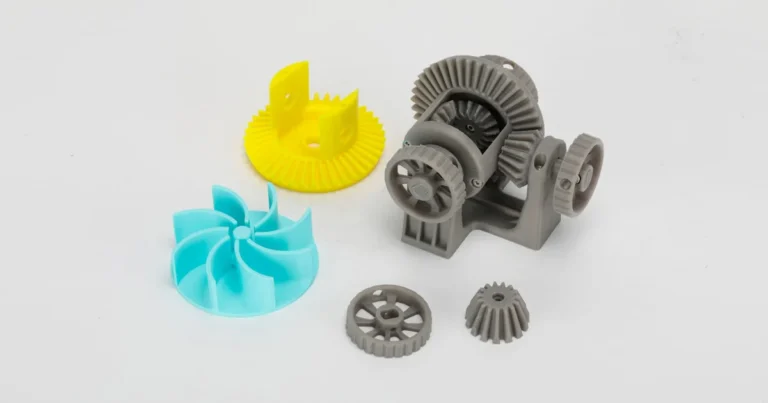
- Common prints: Custom brackets, drone mounts, camera rigs, and mechanical gears.
- Material of choice: PETG, Nylon, or Carbon Fiber reinforced filaments.
2. Custom Phone Cases and Tech Accessories
The global mobile phone accessories market is massive, and 3D printing fills the gap for niche models and unique designs.
- The Appeal: Mass-produced cases are boring. A 3D printed case can have a built-in stand, a specific texture, or a shape that fits a rare phone model perfectly.
- Top Trend: MagSafe compatible holders and ergonomic grips for gaming phones.
3. Desk Organization and Cable Management Solutions
If you’ve ever looked at a tangle of cables and sighed, you’re not alone. This is the #1 problem-solver category.
- Popular Items: Cable clips, monitor stands with storage, headphone hooks, and modular drawer organizers.
- Pro Tip: Use TPU for flexible cable clips that won’t snap when you yank a cord.
4. Board Game Tokens, Organizers, and Upgrades
The board game renaissance has fueled a massive market for tabletop accessories.
- Why Print? Standard game boxes are a mess. 3D printed token holders, card trays, and custom dice towers transform the gaming experience.
- Featured Model: The Catan Resource Organizers and Warhammer 40k storage solutions are perennial bestsellers.
5. Cosplay Props, Armor, and Helmets
From Iron Man helmets to Star Wars blasters, cosplay is a huge driver of resin and large-format FDM printing.
- The Challenge: These require post-processing (sanding, priming, painting) to look professional.
- Material: PETG or ABS for durability, often printed in sections and glued together.
6. Miniatures for Tabletop Gaming (D&D, Warhammer)
With the rise of Dungeons & Dragons and Warhammer 40k, the demand for high-detail miniatures is insatiable.
- The Tech: This is where SLA/Resin printers (like the Elegoo Mars or Anycubic Photon) shine.
- Popular Prints: Custom character sculpts, terrain pieces, and terrain dioramas.
7. Home Decor and Vases with Complex Geometries
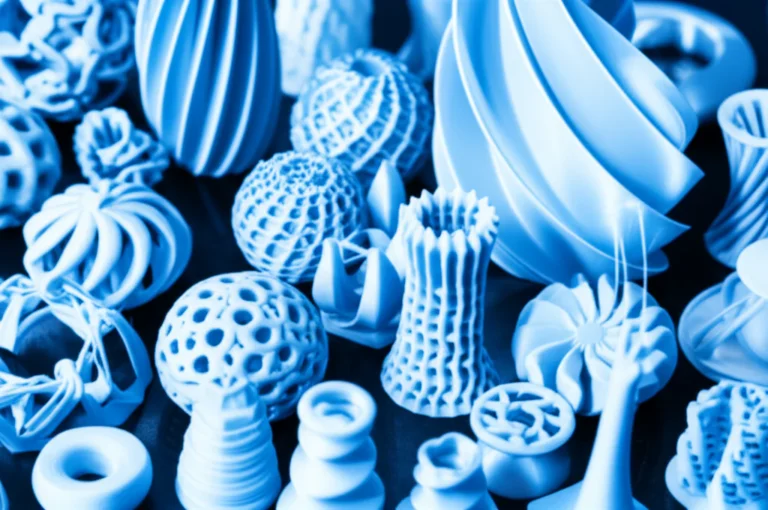
3D printing allows for lattice structures and vase modes that are impossible with traditional manufacturing.
- Trend: Voronoi vases, low-poly planters, and geometric wall art.
- Aesthetic: The “layer line” look is now a design feature, not a bug!
8. Replacement Parts for Household Appliances
Broken plastic gears in a blender? A missing knob on a washing machine? Don’t throw it away!
- The Magic: You can scan the broken part or find the STL file and print a replacement for pennies.
- Common Fixes: Dishwasher racks, vacuum cleaner attachments, and appliance knobs.
9. Artistic Sculptures and Figurines
Artists are using 3D printing to create large-scale sculptures and custom figurines.
- Technique: Often printed in sections and assembled, or printed in resin for high detail.
- Inspiration: From Bauhaus designs to surrealist art, the possibilities are endless.
10. Wearable Jewelry and Fashion Accessories
3D printed jewelry is moving from “novelty” to “high fashion.”
- Materials: Gold-plated PLA, silver-filled resin, or flexible TPU for wearable art.
- Designs: Intricate lattice rings, custom earrings, and chain-link bracelets.
11. Educational Models and STEM Tools
Schools and universities are printing anatomical models, molecular structures, and historical artifacts.
- Impact: Students can hold a human heart or a dinosaur bone in their hands.
- Resources: Check out 3D Printing in Education for more on this.
12. Drone Frames and RC Vehicle Upgrades
The RC hobbyist community is huge. Custom drone frames, propeller guards, and camera mounts are essential.
- Why? Off-the-shelf frames are heavy or expensive. 3D printed frames can be lightweight and custom-tuned.
- Material: Carbon Fiber Nylon is the gold standard here.
13. Kitchen Gadgets and Utensil Holders
From egg separators to custom cookie cutters, the kitchen is a goldmine.
- Safety Note: Ensure you use food-safe filaments (like specific PLA or PP) and seal them properly if they will touch food.
- Popular Items: Spice rack organizers, pot lid holders, and custom bottle openers.
14. Pet Toys and Custom Collars
Our furry friends deserve custom gear too!
- Items: Interactive puzzle toys, custom ID tags, and AirTag holders for collars.
- Safety: Always use non-toxic, durable materials and supervise pets with new toys.
15. Fidget Toys and Stress Relievers
The fidget toy craze hasn’t died down. Articulated dragons, infinity cubes, and spinning tops are still top sellers.
- Why? They are cheap to print, fun to make, and make great gifts.
- Featured Model: The Articulated Dragon by Elisabeth is a legend in the community.
🧠 Why We Print What We Print: The Psychology Behind Popular 3D Prints
Why do we spend hours printing a Benchy when we could just buy a boat? Why do we print articulated dragons that serve no functional purpose?
It comes down to three psychological drivers:
- The Maker’s High: There is an intrinsic reward in creating something from nothing. It’s the digital alchemy of turning code into reality.
- Problem Solving: Humans love to fix things. Printing a replacement part gives a sense of agency and self-reliance.
- Community and Sharing: The 3D printing community is built on sharing. When you print a popular model, you are participating in a global conversation.
As one creator on Reddit put it: “I don’t print to have the object. I print to have the story of making it.”
🛠️ Material Matters: Choosing the Right Filament for Your Popular Prints
Not all filaments are created equal. Printing a cosplay helmet in PLA is a recipe for disaster if you plan to wear it in the sun. Here’s a breakdown of the best materials for the most popular objects.
| Object Category | Recommended Material | Why? | Drawbacks |
|---|---|---|---|
| Prototypes & Gears | PETG or Nylon | High strength, heat resistance, durability. | Can be tricky to print (warping). |
| Cosplay & Props | PETG or ABS | Durable, can be sanded/painted, heat resistant. | ABS requires an enclosure; fumes. |
| Miniatures | Resin (SLA) | Ultra-high detail, smooth surface. | Brittle, requires curing and washing. |
| Fidget Toys | PLA or TPU | Easy to print, colorful, flexible (TPU). | PLA melts in heat; TPU is slow to print. |
| Home Decor | PLA or Wood Fill | Aesthetic variety, easy to print. | Not heat resistant. |
| Kitchen Gadgets | Food-Safe PLA or PP | Non-toxic, easy to clean. | PP is hard to print; PLA can harbor bacteria. |
| Drone Frames | Carbon Fiber Nylon | Lightweight, incredibly strong. | Expensive, abrasive to nozzles. |
Pro Tip: If you are printing articulated toys, PLA is usually the best bet for ease of printing and smooth movement. For functional parts that need to hold weight, upgrade to PETG.
📐 Design vs. Download: Where to Find the Best Models for Popular Objects
You don’t need to be a 3D modeling wizard to print amazing things. The STL file ecosystem is vast. But where do you look?
The Big Players
- Thingiverse: The OG. Massive library, free, but quality varies. Great for functional parts and Benchies.
- Cults3D: A mix of free and paid. Known for high-quality artistic models and jewelry.
- MyMiniFactory: The go-to for miniatures and tabletop gaming. They have a “guaranteed printable” policy.
- Printables: The rising star by Prusa. Great community, high-quality models, and regular contests.
How to Choose?
- For Beginners: Stick to Thingiverse or Printables for free, tested models.
- For Professionals: Cults3D and MyMiniFactory often have premium, highly detailed models worth the few dollars.
- For Originality: Learn Blender or Fusion 360 (check our 3D Design Software guides) to create your own unique designs.
Warning: Always check the license! Creative Commons (CC) usually means you can print for personal use, but selling requires permission or a commercial license.
🚀 3D Printing for Beginners and Pros: Tailoring Your First Project
Whether you just unboxed your first Ender 3 or you’re running a farm of Bambu Labs, the key to success is matching the project to your skill level.
For the Absolute Beginner
- Start Small: Don’t try to print a life-sized helmet on day one.
- The Goal: Learn bed leveling, first layer adhesion, and slicer settings.
- Recommended Print: A Benchy or a simple keychain.
- Slicer Tip: Use Cura or PrusaSlicer with default profiles.
For the Intermediate Printer
- Level Up: Try multi-material prints or TPU.
- The Goal: Master support removal, tolerance, and post-processing.
- Recommended Print: An articulated dragon or a custom phone case.
- Slicer Tip: Experiment with infill patterns and wall thickness.
For the Pro
- Push Limits: Try large format, high-speed, or resin printing.
- The Goal: Optimization, automation, and commercial viability.
- Recommended Print: Functional prototypes, complex assemblies, or custom molds.
- Slicer Tip: Use adaptive layers, ironing, and custom G-code.
💡 Troubleshooting Common Issues with High-Volume Prints
Printing one fidget toy is easy. Printing 50 to sell on Etsy? That’s where things get tricky.
Common High-Volume Issues
- Bed Adhesion Failure: After 20 prints, the bed might get dirty. Solution: Clean with Isopropyl Alcohol or use a PEI sheet.
- Nozzle Clogs: Continuous printing can cause heat creep. Solution: Use high-quality filament and ensure proper cooling.
- Dimensional Inaccuracy: Parts might not fit together after 100 prints. Solution: Calibrate your E-steps and flow rate regularly.
- Filament Runouts: Running out of filament in the middle of a batch. Solution: Use a filament runout sensor or spool holder.
Pro Tip: If you are printing for profit, quality control is your best friend. Inspect every print before packaging. A single bad review can hurt your shop more than 10 good reviews help it.
🔗 Recommended Links
Ready to start printing? Here are some essential resources to get you started:
- Find Free Models: Thingiverse Search | Printables Search | Cults3D Search
- Buy Quality Filament: Prusament | eSUN | Polymaker
- Learn to Design: Blender Guru | Autodesk Fusion 360
- Join the Community: r/3Dprinting | Discord Servers
Explore more categories on our site:
🌟 Conclusion

So, we’ve journeyed from the sci-fi dreams of the 1980s to the cluttered-but-cool desks of today’s makers. We’ve explored 15 distinct categories of objects that dominate the 3D printing world, from the humble Benchy to the intricate articulated dragon.
But remember the question we posed at the very beginning: What is actually worth making?
The answer isn’t just about what’s trending on Etsy or what has the most downloads on Thingiverse. The “most popular” object is the one that solves your specific problem, sparks your creativity, or brings your community joy. Whether you are printing a replacement gear to save a $200 appliance, a custom cosplay helmet to win a convention, or a fidget toy to calm your nerves, the value lies in the act of creation itself.
The Verdict:
- ✅ For Beginners: Start with PLA and simple functional parts or toys to build confidence.
- ✅ For Sellers: Focus on niche customization (like personalized jewelry or board game upgrades) rather than mass-market commodities.
- ✅ For Makers: Don’t be afraid to modify existing designs. The best prints often come from taking a popular model and adding your own unique twist.
The technology is no longer the barrier; your imagination is the only limit. So, fire up your slicer, load that spool, and let’s make something awesome. The world is waiting for what you create next!
🔗 Recommended Links
Ready to turn these ideas into reality? Here are our top picks for the tools, materials, and resources mentioned throughout this guide.
🛒 Shop Top Brands & Products
- Filament (PLA/PETG/TPU):
- Prusament: Prusament PLA/PETG/TPU | Amazon
- eSUN: eSUN Official Store | Amazon
- Polymaker: Polymaker PolyLite/PolyMax | Amazon
- 3D Printers (Beginner to Pro):
- Creality: Ender 3 V3 Series | Amazon
- Bambu Lab: Bambu Lab X1/P1 Series | Amazon
- Elegoo (Resin): Elegoo Mars/Saturn | Amazon
- Tools & Accessories:
- PEI Sheets: BuildTak PEI Sheets | Amazon
- Isopropyl Alcohol (for cleaning): Amazon
- Filament Runout Sensors: Creality Runout Sensor | Amazon
📚 Recommended Reading
- “The 3D Printing Handbook” by Ben Denton: A comprehensive guide to design and materials. Find on Amazon
- “3D Printing: The Next Industrial Revolution” by Christopher Barnatt: Great for understanding the history and future. Find on Amazon
- “Ultimate Guide to 3D Printing” by David H.: Perfect for beginners looking for practical tips. Find on Amazon
❓ FAQ: Frequently Asked Questions About Popular 3D Prints

What are the best 3D printed gifts for beginners?
H4: Why Simple, Personalized Items Win
For beginners, the best gifts are those that are quick to print, visually impressive, and highly customizable.
- Top Picks: Custom keychains (with names or logos), low-poly animal figurines, and personalized phone stands.
- Why? These items require minimal post-processing, use standard PLA (which is easy to print), and the ability to add a name or date makes them feel special without needing advanced design skills. A customized cookie cutter for a baker friend is also a hit!
What small items are most popular to 3D print for sale?
H4: The High-Margin, Low-Volume Sweet Spot
If you are looking to sell, you want items with a high perceived value but low material cost.
- Top Sellers: Articulated animals (dragons, frogs, cats), intricate jewelry (rings, pendants), and custom board game tokens.
- Why? These items often sell for $10–$25 while costing less than $2 in material. The “wow factor” of an articulated dragon printed in one piece justifies the price, and the small size means fast shipping.
What are the top 3D print projects for home organization?
H4: Taming the Chaos
Home organization is the most practical application of 3D printing.
- Top Projects: Modular drawer dividers, cable management clips, under-shelf baskets, and custom tool holders for garages.
- Why? Standard organizers rarely fit specific spaces perfectly. 3D printing allows you to measure your exact drawer or shelf and print a custom-fit solution. It’s the ultimate “measure twice, print once” scenario.
Which 3D printed toys are trending right now?
H4: The Fidget and Articulation Boom
The toy market is dominated by kinetic and tactile designs.
- Trending Items: Articulated dragons (the “Flexi” series), spinning tops, infinity cubes, and interlocking puzzle balls.
- Why? These toys are satisfying to fidget with, making them perfect for stress relief. They are also visually striking, which drives social media shares and sales.
What functional household items can I 3D print?
H4: Fixing the Unfixable
Don’t just print toys; print solutions!
- Top Items: Replacement knobs for appliances, vacuum cleaner attachments, dishwasher rack repair clips, and custom light switch covers.
- Why? Manufacturers often stop making parts for older appliances. 3D printing extends the life of your household items, saving you money and reducing waste. Just ensure you use PETG or Nylon for parts that need to be durable.
What are the most popular 3D prints for cosplay props?
H4: Bringing Characters to Life
Cosplayers need props that are lightweight, durable, and easy to paint.
- Top Prints: Helmets (Iron Man, Mandalorian, Star Wars), armor pieces, weapon replicas (blasters, swords), and prosthetics.
- Why? These items are often too expensive to buy off the shelf or don’t fit the wearer perfectly. 3D printing allows for a custom fit and the ability to break down large objects into manageable print sections.
What easy 3D print ideas are best for new printers?
H4: Building Confidence on the Bed
New printers need success to stay motivated.
- Top Ideas: The Benchy (the rite of passage), simple coasters, phone stands, and small keychains.
- Why? These prints are small (taking less than 2 hours), have simple geometries (few supports), and are forgiving of minor calibration errors. They teach you the basics of bed leveling and first layer adhesion without the frustration of a failed 20-hour print.
📚 Reference Links
To ensure the accuracy of our insights and provide you with further reading, we have compiled a list of reputable sources, brand documentation, and community discussions.
- 3D Printing History & Technology:
- Market Data & Trends:
- Community & Model Repositories:
- Brand Official Sites:
- Related Articles & Discussions:
Note: Always verify the latest pricing, availability, and licensing terms directly with the respective brands or platforms before making a purchase or selling a product.