Support our educational content for free when you purchase through links on our site. Learn more
♻️ 3D Printer Waste: 9 Ways to Recycle (2026)

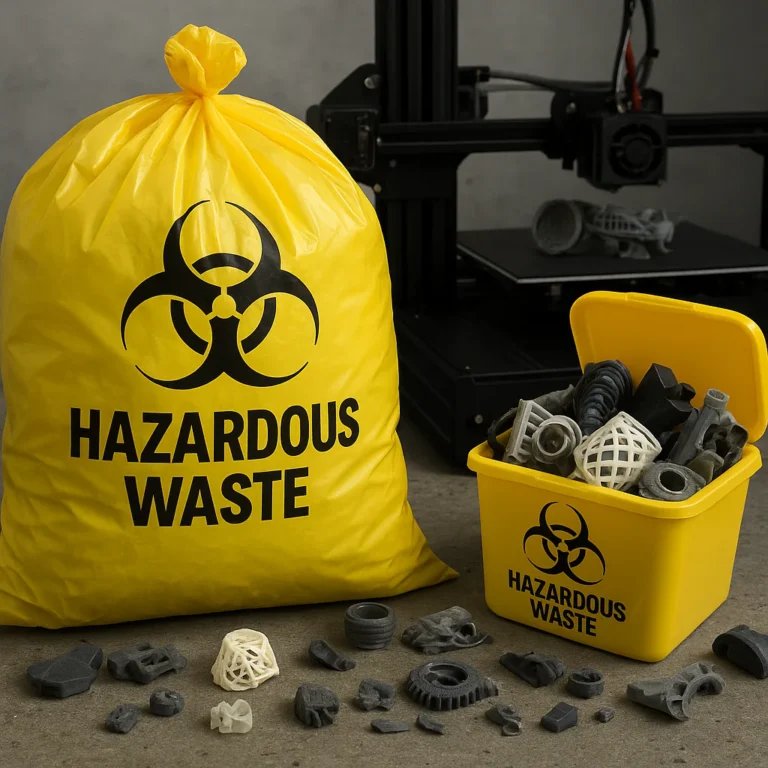
Ever stared at a pile of failed 3D prints, support structures, and filament scraps, wondering if your passion for making is inadvertently creating a plastic problem? You’re not alone! Here at 3D Printed™, we’ve all been there – from the frustrating “spaghetti monster” prints to the satisfying peel of supports that still end up in the bin. But what if we told you that your 3D printer waste isn’t just trash, but a hidden resource waiting for a second life? In this comprehensive guide, we’ll dive deep into the world of 3D printer recycling, revealing 9 ingenious methods to transform your scraps into something new, reduce your environmental footprint, and even save you money. Get ready to discover how industry leaders like Printerior Designs are turning educational waste into new filament, and how you can join the movement to print a greener tomorrow!
Key Takeaways
- Understand Your Waste: Not all 3D printer waste is created equal. PLA, ABS, and PETG are generally recyclable, while exotic filaments and uncured resin require specialized handling.
- Explore Diverse Recycling Avenues: From DIY filament extrusion and local recycling centers to dedicated mail-back programs like TerraCycle, there are numerous ways to manage your scraps.
- Prioritize Waste Reduction: The most effective recycling starts with minimizing waste through optimized slicer settings, smart design, and preventing print failures.
- Support the Circular Economy: Choose recycled filaments from brands like Filamentive and Reflow to close the loop and encourage sustainable manufacturing practices.
- Resin Requires Caution: Always cure liquid resin and contaminated IPA under UV light before disposal to prevent environmental harm.
Table of Contents
- ⚡️ Quick Tips and Facts
- 🌍 The Growing Mountain: Understanding 3D Printer Waste & Its Environmental Impact
- 🤔 Why Bother? The Imperative of Recycling Your 3D Printing Scraps
- 🗑️ What Exactly Counts as 3D Printer Waste?
- Filament Scraps & Support Material: The Everyday Accumulation
- Failed Prints: The “Oops” Pile of Shame
- Empty Spools & Packaging: Beyond the Plastic
- Resin Curing Waste & PPE: A Different Beast Entirely
- 🔬 The Great Divide: Recyclable vs. Non-Recyclable Filaments & Resins
- PLA: The Eco-Friendly Darling?
- ABS: The Sturdy but Tricky One
- PETG: The All-Rounder’s Dilemma
- Nylon, PC, and Exotics: Advanced Challenges in Recycling
- Resin Prints: Post-Processing & Disposal Considerations
- ✅ 9 Ingenious Ways to Recycle Your 3D Printer Waste ♻️
- 1. The Home Shredder & Extruder Loop: DIY Filament Production
- 2. Local Recycling Centers: A Community Effort for Plastic Waste
- 3. Dedicated 3D Printing Recycling Programs: Industry Leaders Step Up
- 4. Mail-Back Recycling Services: Convenience at Your Doorstep
- 5. Upcycling & Repurposing: Giving Scraps a Second Life
- 6. Industrial Recycling Solutions: For the Big Players & Businesses
- 7. Creative Art Projects & Sculptures: Waste as Art!
- 8. Donating to Schools or Makerspaces: Sharing the Love & Learning
- 9. Composting Biodegradable Filaments: A Niche, But Growing Option
- 🏡 Setting Up Your Home 3D Print Waste Management System
- Sorting & Storage Strategies for Different Filament Types
- Cleaning Your Scraps: A Crucial Step for Successful Recycling
- 📉 Beyond Recycling: Reducing Your 3D Printing Footprint from the Start
- Optimizing Slicer Settings to Minimize Filament Waste
- Designing for Less Support Material & Efficient Prints
- Print Failure Prevention: Master Your Machine, Save Your Scraps
- Choosing Sustainable Filaments & Eco-Conscious Practices
- 🌱 The Future is Green: Innovations in Sustainable 3D Printing
- Advanced Biodegradable Filaments & Composites
- Closed-Loop Manufacturing & The Circular Economy in Additive Manufacturing
- ✅ Conclusion: Printing a Greener Tomorrow, One Layer at a Time
- 🔗 Recommended Links: Your Go-To Resources for 3D Printing Sustainability
- ❓ FAQ: Burning Questions About 3D Printer Waste & Recycling Answered
- 📚 Reference Links: Our Sources & Further Reading
⚡️ Quick Tips and Facts
Did you know that your beloved 3D printer, while a marvel of modern manufacturing, can also be a silent producer of plastic waste? It’s true! From failed prints to support structures and purge lines, the scraps can pile up faster than you can say “filament jam.” But don’t despair, fellow maker! Here at 3D Printed™, we’re passionate about making your printing journey as sustainable as it is creative. Let’s dive into some quick, mind-bending facts about 3D printer waste and how we can tackle it together!
- The “Poop” Problem: Multi-color printing, especially on single-head machines, generates a significant amount of “purge waste” or “filament poop” as the printer switches colors. This can quickly become a substantial pile of plastic.
- PLA’s Promise: Polylactic Acid (PLA) is often touted as a biodegradable filament, derived from renewable resources like corn starch. However, it typically requires industrial composting facilities to break down effectively, which aren’t universally available. Don’t just toss it in your backyard compost!
- DIY Dilemmas: While technically possible to shred and extrude your own waste into new filament, it’s a journey fraught with challenges. Think inconsistent filament thickness, potential contamination, and the upfront cost of equipment. We’ve been there, and it’s a learning curve!
- Educational Impact: Schools and educational institutions, where learning often involves trial and error, produce a lot of failed prints. Dedicated recycling programs can turn these “teaching moments” into new filament for future students. How cool is that for 3D Printing in Education?
- Beyond Filament: It’s not just the plastic prints! Empty filament spools, packaging, and even resin curing waste contribute to the overall environmental footprint of 3D printing. We need to think holistically!
🌍 The Growing Mountain: Understanding 3D Printer Waste & Its Environmental Impact
We love our 3D printers. They empower us to bring ideas to life, prototype innovations, and create incredible 3D Printable Objects right from our desks. But let’s be honest, sometimes our creative endeavors result in a mountain of plastic scraps. We’re talking about the failed prints that look more like abstract art than functional parts, the support structures that peel off with satisfying (or frustrating!) snaps, and the endless purge lines that accumulate in a colorful, tangled mess.
This isn’t just a minor inconvenience; it’s a growing environmental concern. Every kilogram of filament we use, if not managed properly, has the potential to end up in a landfill, contributing to plastic pollution that can take hundreds of years to decompose. The energy consumed in manufacturing new virgin plastic, the carbon footprint of shipping, and the potential for microplastics entering our ecosystems are all part of the bigger picture. As one user on the Bambu Lab forum aptly put it, “many users rely on single head machines for multi colour printing which generates a LOT of purging waste particularly from commercial printing farms.” This highlights the sheer volume of waste, especially in scenarios where efficiency is paramount.
We, as a community of makers and engineers at 3D Printed™, have a responsibility to address this. We’ve seen firsthand how quickly a “scrap bin” can overflow, and we’ve felt that pang of guilt tossing perfectly good (albeit failed) plastic into the general waste. But what if we told you there are exciting, innovative, and even fun ways to tackle this growing mountain? Stick with us, because the solutions are more accessible than you might think!
🤔 Why Bother? The Imperative of Recycling Your 3D Printing Scraps
So, why should you, a busy maker with a backlog of projects, even think about recycling your 3D printing waste? Good question! Beyond the obvious environmental benefits, there are compelling reasons that hit closer to home for every 3D printer enthusiast.
First and foremost, it’s about stewardship. We’re leveraging incredible technology, and with that comes a responsibility to minimize our impact. Every piece of plastic you divert from a landfill is a small victory for the planet. It reduces the demand for virgin plastic production, which in turn saves energy and reduces greenhouse gas emissions. It’s a tangible way to contribute to a more sustainable future, and frankly, it just feels good!
Secondly, there’s a community aspect. Imagine a world where 3D printing is not just innovative but also circular. By participating in recycling efforts, you’re not just helping yourself; you’re contributing to a larger movement. Some companies and initiatives are actively working to create closed-loop systems, where your waste becomes someone else’s raw material. This fosters innovation and collaboration within the additive manufacturing space.
Finally, and perhaps most excitingly, recycling your scraps can open up new creative avenues and even cost savings. What if those failed prints could become the raw material for your next masterpiece? Or what if you could contribute to a program that provides affordable, recycled filament to schools, fostering the next generation of engineers and designers? The possibilities are endless, and we’ll explore many of them in detail. It’s about transforming what was once considered trash into a valuable resource.
🗑️ What Exactly Counts as 3D Printer Waste?
Before we dive into how to recycle, let’s clarify what we’re actually talking about. When we say “3D printer waste,” it’s not just a monolithic blob of plastic. It encompasses a variety of materials and forms, each with its own recycling considerations. Understanding these categories is the first step toward effective waste management.
Filament Scraps & Support Material: The Everyday Accumulation
This is probably the most common type of waste you’ll encounter. Think about it: every print starts with a skirt or a brim, often has support structures to prevent gravity from ruining your day, and sometimes involves purge lines to ensure consistent color or material flow. These are the small, often intricate pieces that accumulate quickly.
- Brims and Skirts: The initial layers that help with bed adhesion. Usually thin and easy to remove.
- Support Structures: The scaffolding that holds up overhangs and complex geometries. These can range from delicate tree supports to chunky block supports.
- Purge Lines/Towers: Especially prevalent with multi-material or multi-color printing (like on a Bambu Lab X1 Carbon), these are extruded plastic lines or towers used to clear the nozzle of previous material before printing with a new one. As the first YouTube video embedded in this article mentions, “3D printers can produce quite a lot of waste, especially if you’re multi-color printing.” This “filament poop” is a significant contributor to waste.
These scraps are typically clean, meaning they haven’t been exposed to much contamination, making them prime candidates for recycling.
Failed Prints: The “Oops” Pile of Shame
Ah, the dreaded failed print. We’ve all been there. A layer shift, a clogged nozzle, poor bed adhesion, or a miscalculation in 3D Design Software – suddenly, your masterpiece is a tangled mess of spaghetti or a half-formed blob. These “teaching moment prints,” as Printerior Designs calls them, are a significant source of waste, especially in educational settings or when you’re experimenting with new settings or materials.
- Partial Prints: Prints that stopped midway due to an error.
- Deformed Prints: Prints with severe warping, layer shifts, or other structural failures.
- Test Prints: Small calibration cubes, temperature towers, or retraction tests that served their purpose but are no longer needed.
While emotionally painful, these failed prints are often made of a single type of filament, making them relatively straightforward to sort and prepare for recycling.
Empty Spools & Packaging: Beyond the Plastic
It’s easy to focus solely on the plastic filament, but let’s not forget the accessories! Every roll of filament comes on a spool, and these spools themselves are often made of plastic (though cardboard spools are becoming more common, which is fantastic!). Then there’s the packaging – cardboard boxes, plastic bags, desiccant packets.
- Filament Spools: Often made of ABS, PLA, or recycled plastics. Some brands offer take-back programs or refillable spools.
- Cardboard Boxes: Generally easy to recycle through standard household recycling.
- Plastic Bags/Vacuum Seals: Often made of low-density polyethylene (LDPE), which can be recycled at specific drop-off points (like grocery store plastic bag recycling).
- Desiccant Packets: Typically silica gel, which can often be reactivated and reused.
Don’t let these “hidden” waste streams slip through the cracks!
Resin Curing Waste & PPE: A Different Beast Entirely
For those of us who dabble in resin 3D Printer Reviews, the waste stream is a bit more complex and requires extra caution. Liquid resin is a hazardous material and cannot simply be poured down the drain.
- Cured Resin Scraps: Support structures, failed prints, and resin spills that have been fully cured under UV light. Once cured, these are generally inert plastic, but their composition can vary.
- Uncured Liquid Resin: This is the most hazardous. It includes leftover resin in the vat, resin from cleaning tools, and contaminated isopropyl alcohol (IPA) used for post-processing.
- Contaminated PPE: Gloves, paper towels, and other personal protective equipment (PPE) that have come into contact with uncured resin.
❌ Never dispose of liquid resin or contaminated IPA down the drain! Always cure liquid resin under UV light until it’s solid before disposing of it as general waste, or follow local hazardous waste guidelines. Contaminated PPE should also be treated as hazardous waste until cured. This is a critical safety and environmental consideration for resin printing.
🔬 The Great Divide: Recyclable vs. Non-Recyclable Filaments & Resins
Alright, now that we know what constitutes 3D printer waste, let’s tackle the crucial question: which of these plastics can actually be recycled? This is where things get a little nuanced, as not all plastics are created equal in the recycling world. Understanding the material properties is key to successful recycling.
PLA: The Eco-Friendly Darling?
PLA (Polylactic Acid) is often hailed as the most eco-friendly filament, and for good reason! It’s derived from renewable resources like corn starch, cassava roots, or sugarcane, making it a bio-based polymer.
- Recyclability: ✅ PLA is technically recyclable. It’s a thermoplastic, meaning it can be melted and reformed. Many dedicated 3D printing recycling programs specifically target PLA due to its prevalence and relatively straightforward processing.
- Biodegradability: While often called “biodegradable,” this comes with a significant caveat. PLA typically requires industrial composting facilities to break down efficiently. These facilities maintain specific temperature and humidity conditions that are rarely found in a home compost pile. So, don’t expect your failed PLA print to disappear in your garden overnight!
- Challenges: Even in dedicated recycling, mixing different colors or types of PLA (e.g., silk PLA, carbon fiber infused PLA) can affect the quality of the recycled material. Contamination with other plastics is also a major no-no.
Our Take: PLA is a fantastic starting point for sustainable 3D printing. Its bio-based origin is a huge plus, and its recyclability is a major advantage. Just be mindful of its specific composting requirements and aim for dedicated recycling streams.
ABS: The Sturdy but Tricky One
ABS (Acrylonitrile Butadiene Styrene) is known for its strength, durability, and heat resistance. It’s the same plastic found in LEGO bricks and many household appliances.
- Recyclability: ✅ ABS is also a thermoplastic and is widely recycled in traditional plastic recycling streams (often identified as plastic #7, though sometimes #9 or other). However, getting your 3D printer ABS scraps into these streams can be tricky due to the small quantities and potential for contamination.
- Challenges: ABS fumes during printing can be unpleasant and require good ventilation. For recycling, ensuring the ABS scraps are clean and free from other plastics is crucial. Its higher melting point compared to PLA also means different processing requirements for recyclers.
Our Take: ABS is a workhorse material, and its recyclability is a definite plus. If you’re printing with ABS, look for local recycling centers that accept #7 plastics or dedicated 3D printing recycling services that specifically mention ABS.
PETG: The All-Rounder’s Dilemma
PETG (Polyethylene Terephthalate Glycol-modified) is a popular filament that combines many of the best properties of PLA and ABS – it’s strong, durable, and relatively easy to print. It’s also chemically similar to PET, the plastic used in water bottles.
- Recyclability: ✅ PETG is technically recyclable and falls under the #1 plastic category, which is widely accepted in municipal recycling programs. However, like ABS, getting small batches of 3D printer PETG scraps into these streams without contamination can be a hurdle.
- Challenges: While chemically similar to PET, PETG has a slightly different molecular structure due to the glycol modification. This means it shouldn’t be mixed with pure PET for recycling, as it can degrade the quality of the recycled PET. Dedicated sorting is essential.
Our Take: PETG is a fantastic all-around filament, and its potential for recycling is high. The key is proper sorting and finding a recycling stream that specifically accepts PETG or mixed plastics (if they can differentiate).
Nylon, PC, and Exotics: Advanced Challenges in Recycling
As you venture into more advanced filaments, the recycling landscape becomes more complex.
- Nylon (Polyamide): ✅ Some types of Nylon are recyclable (often #7), but it’s less commonly accepted than PLA, ABS, or PETG in general recycling. Its unique properties (like hygroscopy) also make it challenging for consistent recycling.
- PC (Polycarbonate): ✅ PC is also recyclable (#7), known for its extreme strength and heat resistance. However, like Nylon, dedicated recycling streams for PC are less common for small-scale waste.
- Exotic Filaments: This category includes everything from carbon fiber reinforced PLA/PETG/Nylon, wood-filled, metal-filled, flexible filaments (TPU/TPE), and specialty engineering plastics.
- Recyclability: ❌ Generally, these are very difficult or impossible to recycle through conventional means. The additives (carbon fiber, wood particles, metal powders) contaminate the base plastic, making it unsuitable for standard recycling processes. Flexible filaments often have unique chemical compositions that don’t fit into common recycling categories.
- Challenges: The presence of multiple materials makes separation and reprocessing extremely difficult and often uneconomical for recyclers.
Our Take: For exotic and composite filaments, focus heavily on waste reduction from the outset. Design your prints efficiently, optimize your settings, and aim for successful prints to minimize scraps. Recycling options for these materials are currently very limited.
Resin Prints: Post-Processing & Disposal Considerations
Resin 3D printing offers incredible detail, but its waste stream is fundamentally different from FDM.
- Cured Resin: ✅ Once fully cured under UV light, failed resin prints and support structures are essentially inert plastic. They can often be disposed of with general household waste, though some specialized recycling facilities might accept them if they can identify the specific resin type.
- Uncured Liquid Resin: ❌ This is hazardous waste. It contains monomers that can be harmful to the environment and human health.
- Disposal: NEVER pour uncured resin down the drain. It must be fully cured (solidified) before disposal. You can leave small amounts in a clear container in direct sunlight until solid, then dispose of the solid plastic. For larger quantities or contaminated IPA, check with your local hazardous waste disposal facility for proper guidelines.
- Contaminated IPA: ❌ Isopropyl alcohol used for cleaning resin prints becomes contaminated with uncured resin. This also needs to be handled carefully. You can often filter out cured resin particles and reuse the IPA, but eventually, it will need proper disposal as hazardous waste. Again, local regulations are key here.
Our Take: Resin waste management is all about safety and proper hazardous waste disposal. Prioritize curing all liquid resin and contaminated IPA before disposal. Look for specialized services if you have significant quantities.
✅ 9 Ingenious Ways to Recycle Your 3D Printer Waste ♻️
Alright, enough talk about the problem! Let’s get to the good stuff: the solutions! We’ve scoured the community, experimented in our own labs, and researched the latest innovations to bring you 9 genuinely ingenious ways to recycle your 3D printer waste. Get ready to transform your trash into treasure!
1. The Home Shredder & Extruder Loop: DIY Filament Production
Ever dreamed of turning your failed prints into brand-new filament, right in your own workshop? The DIY shredder and extruder loop makes this a tangible (though challenging!) reality. This method involves two main steps: shredding your plastic waste into small, manageable pieces, and then extruding those pieces into new filament.
How it Works:
- Shredding: You’ll need a plastic shredder. These can range from DIY designs (often 3D Printable Objects themselves!) to commercially available units. The goal is to break down your failed prints, supports, and purge lines into uniform flakes or granules. The first YouTube video embedded in this article demonstrates this, showing how “Once I had a bunch of material chopped up, I quickly put it through a sieve in order to make sure that no big pieces still are in the ground-up material.”
- Extrusion: The shredded plastic is then fed into a filament extruder. This machine melts the plastic and pushes it through a heated nozzle (die) to form a continuous strand of filament. A cooling system and a spooling mechanism then wind the new filament onto a spool.
Benefits:
- Ultimate Control: You control the source material, potentially creating custom filament blends.
- Cost Savings (Long-term): Once the initial investment in equipment is made, your raw material cost can drop significantly.
- True Circularity: You’re closing the loop right in your own space!
Drawbacks & Our Experience:
This is where the rubber meets the road. As the Bambu Lab forum post highlights, “The second one [filament creation] is expensive and it can suffer from contamination between different filament types. It can also suffer from issues while trying to maintain a constant thickness.” Our own experience, and that of the presenter in the featured video, echoes this. The video’s presenter encountered challenges with inconsistent filament diameter, leading to print failures, and the need for meticulous cleaning to prevent nozzle clogs from metal particles.
- Cost: Quality shredders and extruders (like the Filastruder or ProtoCycler) can be a significant investment.
- Consistency: Achieving a consistent filament diameter is incredibly difficult without precise control over temperature, extrusion speed, and cooling. Inconsistent filament leads to inconsistent prints, as we’ve learned the hard way!
- Contamination: Mixing different plastic types (even different colors of the same plastic) can lead to material degradation, poor adhesion, and weak prints. Meticulous sorting is paramount.
- Time & Effort: It’s a hands-on process that requires dedication and troubleshooting.
Recommendations:
This is a fantastic project for advanced makers and those with a strong engineering bent. If you’re serious about DIY filament, research reputable brands for shredders and extruders.
- Shredders: Look for robust, low-speed, high-torque shredders designed for plastic. Precious Plastic offers open-source designs and community resources.
- Extruders:
- Filastruder: A popular, more affordable option for hobbyists.
- ProtoCycler: A more advanced, integrated system that includes shredding and extrusion with better control.
👉 CHECK PRICE on:
- Filastruder: Filastruder Official Website
- ProtoCycler: ProtoCycler Official Website
2. Local Recycling Centers: A Community Effort for Plastic Waste
This is often the first thought for many, and it can be a viable option, especially for common plastics like PLA, ABS, and PETG. Your municipal recycling program or local recycling centers often accept various plastic types.
How it Works:
- Identify Plastic Type: Crucially, you must know what type of plastic your waste is (PLA, ABS, PETG). Look for the recycling symbol (triangle with a number) on filament spools or packaging, though this isn’t always present on the filament itself.
- Clean & Sort: Ensure your scraps are clean and free of other materials (no metal, no paper labels, no mixed plastics). Sort them by type.
- Check Local Guidelines: Visit your city or county’s waste management website or call your local recycling center. Ask specifically if they accept 3D printer waste or if they have specific bins for plastics #1 (PETG), #6 (PS, sometimes used for spools), or #7 (Other, which can include PLA and ABS).
Benefits:
- Convenience: If your local center accepts it, it’s an easy drop-off.
- Cost-Effective: Often free or low-cost.
Drawbacks:
- Inconsistency: Acceptance varies wildly by location. Many municipal centers are not equipped to handle the specific forms or purity requirements of 3D printer waste.
- Contamination Risk: If you mix plastics or don’t clean them properly, you can contaminate an entire batch of recyclable material, rendering it unusable.
- Lack of Specificity: Most centers are geared towards common household plastics like bottles and containers, not necessarily small, irregular 3D print scraps.
Our Take: Always check first! Don’t assume your local center will take it. We’ve had mixed results, with some centers being surprisingly accommodating and others turning us away. When in doubt, call ahead.
3. Dedicated 3D Printing Recycling Programs: Industry Leaders Step Up
This is arguably one of the most promising avenues for responsible 3D printer waste disposal. As the industry matures, more companies are recognizing the need for sustainable practices and are offering specialized recycling services.
How it Works:
These programs are typically run by filament manufacturers, 3D printer companies, or specialized recycling firms. You collect your 3D printing waste (often sorted by plastic type), and then you either ship it to them, or they provide collection bins. They then process the waste, often turning it into new filament or other plastic products.
Examples:
- Printerior Designs: This company offers a fantastic service, particularly for educational institutions. As their website states, “We can help reduce your waste by taking those teaching moment prints and turning them into filament for the next student.” They convert failed prints into new filament, offering a sustainable input material and even educational discounts and bulk pricing. They also provide prepaid collection shipping bins for a more official solution. This is a brilliant example of a closed-loop system benefiting the community.
- Terracycle: While not exclusively for 3D printing, Terracycle offers various “Zero Waste Boxes” for hard-to-recycle plastics. You purchase a box, fill it, and ship it back. Check their specific programs for plastics that might align with your 3D printing waste.
- Filament Manufacturers: Some filament brands, like Filamentive (though we couldn’t access their specific guide), are at the forefront of promoting recycling. Others, like Prusa Research, have explored or implemented their own recycling initiatives or partnerships. It’s always worth checking with your preferred filament brand to see if they offer a take-back program.
Benefits:
- Targeted Recycling: These programs are specifically designed for 3D printing plastics, increasing the likelihood of successful recycling.
- Convenience: Many offer mail-back options or collection points.
- Impact: Directly contributes to a circular economy within the 3D printing industry.
Drawbacks:
- Cost: Some services might involve a fee for shipping or the recycling service itself.
- Limited Availability: Not all regions have access to these specialized programs.
Our Take: These programs are a game-changer. They take the guesswork out of recycling and ensure your plastic is handled appropriately. We highly recommend exploring options like Printerior Designs, especially if you’re part of an educational institution or a commercial printing farm.
👉 Shop Recycling Services on:
- Printerior Designs: Printerior Designs Recycling Program
- Terracycle: Terracycle Zero Waste Boxes
4. Mail-Back Recycling Services: Convenience at Your Doorstep
Similar to dedicated programs, mail-back services offer a convenient way to send your sorted 3D printer waste directly to a recycling facility. These are often third-party companies that specialize in hard-to-recycle materials.
How it Works:
You typically purchase a recycling kit or a shipping label, collect and sort your waste according to their guidelines, and then mail it back to them. They handle the processing.
Examples:
- RecycleForce: While primarily focused on electronics, some general plastic recycling services might be available.
- Specific Filament Brands: As mentioned, some filament brands might offer their own mail-back programs. Always check their official websites.
Benefits:
- Ease of Use: No need to find a local drop-off; just pack and ship.
- Specialized Handling: Ensures your waste goes to facilities equipped to process it.
Drawbacks:
- Shipping Costs: You’ll likely incur shipping fees.
- Material Restrictions: Services may only accept specific types of plastic.
Our Take: A great option if local recycling is unavailable or inadequate, and you’re willing to pay for the convenience and peace of mind. Always verify the types of plastic they accept before sending anything.
5. Upcycling & Repurposing: Giving Scraps a Second Life
Sometimes, the best form of recycling is not to melt it down, but to give it a new purpose! Upcycling involves transforming waste materials into new products of higher quality or environmental value. This is where your creativity as a maker truly shines!
Ideas for Upcycling 3D Printer Waste:
- Decorative Items: Failed prints, especially colorful ones, can be incorporated into mosaics, collages, or even melted slightly and reshaped into unique art pieces. One user on the Bambu Lab forum mentioned repurposing silicone molds to create decorative items like skulls.
- Infill for Other Projects: Small scraps can be used as infill for larger, non-structural 3D prints, reducing the amount of new filament needed.
- Tool Organizers: Those support structures or small failed parts can be glued together or modified to create custom holders for pens, tools, or even your freshly removed hot nozzles, as one user cleverly suggested.
- Jewelry & Accessories: With a bit of imagination, small, colorful scraps can be polished, drilled, or combined to make unique earrings, pendants, or keychains.
- Garden Markers: PLA scraps can be cut into shapes and used as plant markers (though remember, they won’t biodegrade quickly in a typical garden).
- Kids’ Craft Projects: A bin of colorful plastic scraps can be a treasure trove for children’s art projects, encouraging creativity and resourcefulness.
Benefits:
- Zero Waste: You’re directly reusing the material without energy-intensive reprocessing.
- Creative Outlet: Sparks new ideas and projects.
- Cost-Free: You’re using materials you already have!
Drawbacks:
- Limited Scale: This is generally for small quantities of waste.
- Time-Consuming: Requires manual effort and creativity.
Our Take: This is our personal favorite for smaller scraps and failed prints. It’s incredibly satisfying to turn a “failure” into something new and useful. We’ve made countless custom tool holders and even some quirky desk ornaments from our “oops” pile!
6. Industrial Recycling Solutions: For the Big Players & Businesses
For larger organizations, commercial printing farms, or businesses that generate significant volumes of 3D printing waste, industrial recycling solutions become more viable. These are typically large-scale operations designed to handle bulk quantities.
How it Works:
These solutions often involve partnerships with industrial plastic recyclers who have the machinery to sort, shred, wash, and re-pelletize various plastic types. They can often handle larger, more consistent streams of waste than individual hobbyists.
Benefits:
- High Volume Capacity: Can process large amounts of waste efficiently.
- Professional Processing: Ensures high-quality recycled material.
- Compliance: Helps businesses meet sustainability goals and regulations.
Drawbacks:
- Minimum Quantities: Often require substantial volumes of waste to be economically viable.
- Logistics: Requires coordinated collection and transportation.
Our Take: If you’re running a print farm or a business heavily reliant on 3D printing, exploring partnerships with industrial recyclers is a smart move. Companies like Printrecor, mentioned in the featured video, are examples of services catering to this need. It’s a crucial step towards true circularity in additive manufacturing.
7. Creative Art Projects & Sculptures: Waste as Art!
Similar to upcycling, but with a stronger emphasis on artistic expression. Your 3D printer waste, with its unique shapes, textures, and colors, can be an incredible medium for contemporary art.
Ideas:
- Melted Sculptures: Experiment with carefully melting and reforming PLA or ABS scraps into abstract sculptures. (Always do this in a well-ventilated area and with caution!)
- Assemblage Art: Combine various failed prints, supports, and purge lines into intricate assemblages or dioramas.
- Textural Elements: Use shredded or small pieces of plastic to add texture to paintings or mixed-media pieces.
- Jewelry Making: As mentioned before, small, clean scraps can be transformed into unique, avant-garde jewelry.
Benefits:
- Artistic Expression: Unleash your inner artist!
- Unique Aesthetic: Creates pieces with a distinct, modern look.
- Conversation Starter: Highlights the issue of plastic waste in a creative way.
Drawbacks:
- N
iche Appeal: Not for everyone. - Limited Scale: Best for individual projects.
Our Take: We’ve seen some truly stunning art created from 3D printer waste. It’s a powerful way to make a statement about sustainability and demonstrate the hidden beauty in discarded materials.
8. Donating to Schools or Makerspaces: Sharing the Love & Learning
This is a fantastic way to give your waste a second life while supporting education and community. Schools, makerspaces, and art programs are often on the lookout for free or low-cost materials for various projects.
How it Works:
Contact local schools (especially those with art or STEM programs), community makerspaces, or youth organizations. Ask if they would be interested in receiving clean, sorted 3D printer waste for craft projects, educational demonstrations, or even for their own experimental recycling efforts.
Benefits:
- Educational Value: Provides resources for learning and creativity.
- Community Support: Fosters local maker communities.
- Waste Diversion: Keeps plastic out of landfills.
Drawbacks:
- Logistics: Requires you to reach out and coordinate drop-offs.
- Material Restrictions: They might only accept certain types of plastic or require specific sorting.
Our Take: This is a win-win! We love the idea of our “failures” inspiring future engineers or artists. It’s a simple act of generosity that can have a big impact. Imagine a student creating their first robot prototype using plastic that was once your failed benchy! This is a great way to support 3D Printing in Education.
9. Composting Biodegradable Filaments: A Niche, But Growing Option
While we mentioned earlier that PLA requires industrial composting, the landscape of biodegradable filaments is evolving. New materials are emerging that offer more accessible composting solutions.
How it Works:
For truly compostable filaments, the material breaks down into natural elements (water, CO2, biomass) under specific conditions. This can be in industrial composting facilities or, for some advanced materials, even in home compost environments.
Examples:
- Specific PLA Blends: Some manufacturers are developing PLA blends that are more amenable to home composting, though these are still relatively rare and require careful verification.
- PHA (Polyhydroxyalkanoates): A less common but highly biodegradable bioplastic that can break down in various environments, including soil and marine conditions.
- Other Bioplastics: Research and development are constantly bringing new bioplastics to market with varying degrees of biodegradability.
Benefits:
- True Environmental Return: Materials return to the earth without leaving harmful residues.
- Reduced Landfill Burden: Completely eliminates the plastic waste.
Drawbacks:
- Limited Availability: Truly home-compostable 3D printer filaments are still a niche market.
- Verification Needed: Always check manufacturer claims and independent certifications for biodegradability. Don’t assume all “eco-friendly” filaments are home compostable.
- Contamination Risk: Mixing non-compostable plastics will ruin the compost batch.
Our Take: This is an exciting frontier! While not yet a widespread solution for all 3D printer waste, keeping an eye on advancements in truly compostable filaments is crucial for the future of sustainable 3D printing. Always do your homework on the specific material’s composting requirements.
🏡 Setting Up Your Home 3D Print Waste Management System
Okay, you’re convinced! You want to be a responsible maker and tackle that growing pile of plastic. But where do you start? Setting up an efficient home waste management system for your 3D printing scraps is easier than you think. It’s all about organization and a little bit of discipline.
Sorting & Storage Strategies for Different Filament Types
This is perhaps the most critical step for successful recycling. Mixing different types of plastic (e.g., PLA with ABS) will almost certainly render your entire batch unrecyclable. Think of it like sorting your laundry – whites with whites, colors with colors!
Our Recommended Setup:
- Dedicated Bins/Containers: Invest in several clearly labeled containers. We use transparent plastic bins so we can easily see the contents.
- PLA (Polylactic Acid): Your most common waste. Label clearly.
- ABS (Acrylonitrile Butadiene Styrene): Keep separate.
- PETG (Polyethylene Terephthalate Glycol-modified): Separate from PLA and ABS.
- Other/Exotics: A “catch-all” for materials like Nylon, PC, or anything you’re unsure about. These will likely be destined for upcycling or general waste if no specific recycling option is found.
- Empty Spools: A separate bin for these. Many can be reused or recycled.
- Resin Cured Waste: For those with resin printers, a dedicated bin for fully cured resin scraps.
-
Labeling is Key! Don’t just rely on memory. Use permanent markers or printed labels on each bin. Include the plastic type and perhaps a reminder of where it’s destined (e.g., “PLA – for Recycling Program”).
-
Color Separation (Optional but Recommended for DIY Recycling): If you’re considering DIY filament extrusion, separating by color within each plastic type can be beneficial. This allows you to create more aesthetically pleasing recycled filament. For external recycling programs, this is usually less critical, but doesn’t hurt.
-
Keep it Dry: Store your plastic scraps in a dry environment. Moisture can affect the quality of the plastic if it’s destined for re-extrusion.
-
Regular Maintenance: Don’t let your bins overflow! Periodically process your waste – either drop it off at a recycling center, ship it to a program, or start your upcycling projects.
Anecdote: We once had a massive bin of mixed PLA and ABS scraps. When we finally decided to get serious about recycling, the sheer effort of manually sorting through it all was a nightmare. Learn from our mistake: sort as you go! It takes an extra second when you remove a print, but saves hours later.
Cleaning Your Scraps: A Crucial Step for Successful Recycling
Just like you wouldn’t throw a greasy pizza box into paper recycling, you shouldn’t send dirty 3D printer scraps to be recycled. Contaminants can degrade the quality of the recycled material and even damage recycling equipment.
What to Clean For:
- Adhesives: Any glue stick, hairspray, or other bed adhesives on the bottom of your prints.
- Foreign Objects: Bits of metal (from nozzles or tools), paper labels, dust, or other debris.
- Resin Residue: For resin prints, ensure they are fully cured and free of any sticky, uncured resin.
How to Clean:
- Scrape Off Adhesives: For glue stick or hairspray, a quick scrape with a utility knife or even a stiff brush can remove most residue. For stubborn spots, a little warm water and soap can help, but ensure the plastic is thoroughly dried afterward.
- Inspect for Foreign Objects: Before placing scraps in your recycling bins, quickly inspect them for any non-plastic bits. This is especially important if you’re using a DIY shredder, as metal particles can cause significant issues, as highlighted in the featured video.
- Rinse & Dry (If Necessary): If your prints are particularly dusty or have minor residues, a quick rinse under water and then thorough air-drying is advisable.
- Cure Resin Prints: For resin prints, ensure they’ve had ample time under UV light (or strong sunlight) to fully cure and harden. Any stickiness indicates uncured resin, which is hazardous.
Our Tip: Keep a small brush or scraper near your printer. When you remove a print and detach supports, give the scraps a quick clean before tossing them into the appropriate bin. This proactive approach makes the whole process much smoother!
📉 Beyond Recycling: Reducing Your 3D Printing Footprint from the Start
While recycling is fantastic, the ultimate goal is to reduce the amount of waste we generate in the first place. Think of it as the “reduce” in “reduce, reuse, recycle.” By being more mindful and strategic in our printing practices, we can significantly shrink our environmental footprint. This isn’t just good for the planet; it’s also good for your wallet, as you’ll be using less filament!
Optimizing Slicer Settings to Minimize Filament Waste
Your slicer software (like PrusaSlicer, Cura, or Bambu Studio) is your most powerful tool for waste reduction. A few tweaks can make a big difference.
- Brims vs. Skirts: Do you really need a brim for every print? Often, a simple skirt is enough for bed adhesion, using far less material. Experiment with different adhesion settings to find the minimum required for success.
- Support Structures:
- Support Type: Tree supports (like those in Cura or PrusaSlicer) often use less material and are easier to remove than traditional block supports.
- Support Density: Can you reduce the infill density of your supports? Often, 10-15% is sufficient for stability.
- Support Angle: Adjust the overhang angle threshold. Can your printer handle a 60-degree overhang without supports, instead of 45 degrees? Test your machine’s limits!
- Print Orientation: Sometimes, simply rotating your model on the build plate can drastically reduce the need for supports.
- Infill Density: Do you need 20% infill for that decorative vase? Probably not. For non-functional parts, 5-10% infill (or even vase mode for single-wall prints) can save a lot of filament. For functional parts, consider infill patterns that offer strength with less material, like gyroid.
- Retraction Settings: Properly tuned retraction minimizes stringing and oozing, which means less cleanup and less wasted plastic.
- Prime Tower/Purge Volume (for Multi-Material/Color Printing): For printers like the Bambu Lab X1 Carbon, which generate “filament poop” during color changes, carefully optimize your prime tower settings or purge volumes. Can you reduce the amount of material purged while still ensuring clean color transitions? Some slicers allow for purging into infill or specific waste blocks.
Our Tip: Don’t just stick with default slicer settings! Take the time to understand each parameter and how it impacts both print quality and material consumption. It’s an investment that pays off.
Designing for Less Support Material & Efficient Prints
The best way to reduce support waste is to design models that don’t need them! This is where your 3D Design Software skills come into play.
- Minimize Overhangs: When designing, try to incorporate chamfers, fillets, or angles that are within your printer’s capabilities without supports.
- Split Models: For complex models, consider splitting them into multiple parts that can be printed flat on the build plate, then assembled later. This often eliminates the need for internal supports.
- Hollow Out Models: For resin printing, hollowing out models saves a significant amount of resin and reduces print time. Just ensure you add drain holes!
- Nesting: If printing multiple small parts, arrange them efficiently on the build plate to minimize travel and maximize space, potentially reducing overall print time and associated waste.
Our Take: Thinking about printability during the design phase is a superpower. It not only reduces waste but also often leads to stronger, cleaner prints and less post-processing.
Print Failure Prevention: Master Your Machine, Save Your Scraps
Failed prints are a major source of waste. Every time a print fails, that plastic is essentially wasted. By becoming a master of your 3D Printer Reviews, you can drastically reduce these “oops” moments.
- Calibrate, Calibrate, Calibrate:
- E-steps/Flow Rate: Ensure your printer is extruding the correct amount of filament.
- PID Tuning: For consistent hotend and bed temperatures.
- Bed Leveling: A perfectly level and clean bed is the foundation of a successful print. Auto-bed leveling helps, but manual checks are still valuable.
- Z-offset: Crucial for perfect first layer adhesion.
- Filament Management:
- Dry Filament: Wet filament leads to stringing, bubbling, and weak prints. Store your filament in dry boxes or use a filament dryer.
- Quality Filament: Invest in good quality filament from reputable brands. Cheap filament can lead to inconsistent diameters and printing issues.
- Printer Maintenance:
- Clean Nozzles: Clogged nozzles are a common cause of failure. Perform cold pulls or hotend cleanings regularly.
- Tight Belts: Loose belts lead to layer shifts.
- Lubricated Z-axis: Ensures smooth vertical movement.
- Monitor Your Prints: Especially for longer prints, keep an eye on the first few layers. Catching a failure early can save hours of wasted filament. Smart cameras (like those on the Bambu Lab X1 Carbon) or OctoPrint setups can help with remote monitoring.
Our Anecdote: We once spent an entire weekend battling print failures, only to discover our filament was severely wet. After drying it for 12 hours, our prints were flawless. A simple step saved us countless hours and kilograms of plastic!
Choosing Sustainable Filaments & Eco-Conscious Practices
The choices you make before you even hit print can have a huge impact.
- Recycled Filaments: Many brands now offer filaments made from recycled plastics (e.g., recycled PLA, rPETG). These close the loop and reduce the demand for virgin plastic.
- 👉 Shop Recycled Filaments on:
- Filamentive: Filamentive Official Website
- Prusa Research: Prusa Research Recycled Filaments
- Amazon: Search Recycled PLA Filament on Amazon
- Cardboard Spools/Refill Systems: Opt for brands that use cardboard spools or offer refill systems (where you reuse a plastic core). This reduces plastic waste from spools.
- Bio-Composites: Explore filaments blended with natural fibers (wood, hemp, coffee grounds). While not always fully compostable, they reduce the overall plastic content.
- Source Locally: If possible, choose filament manufacturers closer to you to reduce transportation emissions.
- Energy Consumption: Consider the energy efficiency of your 3D printer. Newer models are often more efficient. Turn off your printer when not in use!
Our Take: Making conscious choices about your filament can be one of the easiest and most impactful ways to reduce your footprint. It’s a simple switch that contributes to a greener future.
🌱 The Future is Green: Innovations in Sustainable 3D Printing
The world of 3D printing is constantly evolving, and thankfully, sustainability is becoming an increasingly important driver of innovation. We’re not just talking about better recycling methods; we’re seeing entirely new materials and manufacturing philosophies emerge that promise a much greener future for additive manufacturing. It’s an exciting time to be a maker!
Advanced Biodegradable Filaments & Composites
While PLA is a good start, the next generation of filaments is pushing the boundaries of biodegradability and environmental friendliness.
- Truly Home-Compostable Materials: Researchers are developing bioplastics that can break down effectively in a wider range of environments, including home compost bins. Imagine a future where your failed prints can truly nourish your garden! These materials often involve complex polymer blends or specific additives that accelerate degradation under ambient conditions.
- PHA (Polyhydroxyalkanoates): As mentioned earlier, PHA is a biopolymer produced by bacteria. It’s gaining traction because of its excellent biodegradability in various natural environments, including soil and marine water. We’re seeing more filament manufacturers experimenting with PHA blends.
- Algae-Based Filaments: Yes, you read that right! Companies are exploring using algae as a feedstock for bioplastics. Algae grows rapidly, sequesters carbon, and doesn’t compete with food crops, making it an incredibly sustainable resource.
- Agricultural Waste Composites: Beyond wood and coffee, imagine filaments made from agricultural byproducts like rice husks, straw, or even fruit peels. These composites not only reduce plastic content but also give a second life to materials that would otherwise be discarded.
- Water-Soluble Support Materials: While not directly a filament for your final print, advanced water-soluble support materials like PVA or BVOH are becoming more efficient. They dissolve completely, leaving no plastic residue from supports, which is a huge win for reducing waste and post-processing effort.
Our Take: The innovation in sustainable materials is breathtaking. Keep an eye on brands that are transparent about their material sourcing and end-of-life properties. The “eco-friendly” label is evolving, and we’re excited to see truly circular materials become mainstream.
Closed-Loop Manufacturing & The Circular Economy in Additive Manufacturing
The ultimate vision for sustainable 3D printing is a closed-loop system, where waste from one process becomes the raw material for another, creating a truly circular economy. This is a paradigm shift from the traditional linear “take-make-dispose” model.
Key Concepts:
- Industrial Scale Recycling: Beyond individual efforts, large-scale industrial facilities are being developed to process 3D printing waste from multiple sources (factories, print farms, educational institutions) and convert it back into high-quality filament or other products. Companies like Printerior Designs are already contributing to this by turning educational waste into new filament.
- Material Passports: Imagine if every spool of filament came with a “material passport” detailing its composition, origin, and optimal recycling pathway. This would make sorting and processing waste much more efficient.
- Distributed Recycling Networks: Picture a network of local recycling hubs equipped with shredders and extruders, allowing communities to process their own 3D printing waste and create local filament supplies. This reduces transportation costs and empowers local economies.
- Product-as-a-Service Models: Some manufacturers are exploring models where you don’t just buy a 3D printer, but you subscribe to a service that includes filament, maintenance, and a take-back program for your waste. This incentivizes manufacturers to design for durability and recyclability.
- Design for Disassembly & Recycling: Engineers are increasingly designing products with their end-of-life in mind. This means creating parts that are easy to disassemble, made from single materials (or easily separable materials), and clearly marked for recycling.
Our Take: The shift towards a circular economy in additive manufacturing is not just a dream; it’s becoming a reality. As consumers, supporting companies that embrace these principles and participating in available recycling programs are crucial steps. We, at 3D Printed™, are incredibly optimistic about this future – a future where our passion for creation doesn’t come at the expense of our planet.
✅ Conclusion: Printing a Greener Tomorrow, One Layer at a Time
Phew! What a journey we’ve been on, from understanding the “growing mountain” of 3D printer waste to uncovering 9 ingenious ways to tackle it head-on. We started by asking, “What if those failed prints could become the raw material for your next masterpiece?” and “What if you could contribute to a program that provides affordable, recycled filament to schools?” We hope by now, you see that these aren’t just pipe dreams – they are tangible realities within our grasp!
The truth is, our passion for 3D printing doesn’t have to come at the expense of our planet. As engineers and enthusiasts at 3D Printed™, we firmly believe that innovation and sustainability can, and must, go hand-in-hand. Whether you’re a hobbyist with a single desktop printer or running a bustling print farm, every conscious decision you make about your waste contributes to a larger, greener movement.
Our confident recommendation? Start small, but start now. Begin by diligently sorting your waste by filament type. Explore local recycling options or consider a mail-back program like those offered by TerraCycle or dedicated 3D printing companies. If you’re feeling adventurous, dive into the world of DIY filament extrusion – it’s a challenge, but incredibly rewarding! And always, always prioritize waste reduction through optimized prints and careful design.
The future of 3D printing is bright, and it’s also green. By embracing these practices, we’re not just printing objects; we’re printing a better, more sustainable tomorrow, one layer of recycled plastic at a time. Let’s make our passion a force for good!
🔗 Recommended Links: Your Go-To Resources for 3D Printing Sustainability
Ready to dive deeper and get your hands on some sustainable solutions? Here are our top picks for products, services, and further reading to help you on your eco-friendly 3D printing journey.
Dedicated 3D Printing Recycling Programs:
- Printerior Designs Recycling Program: Printerior Designs Official Website
- TerraCycle 3D Printer Filament Zero Waste Box: TerraCycle Official Website
Sustainable & Recycled Filament Brands:
- Filamentive Recycled Filaments: Filamentive Official Website
- Reflow Recycled Filaments: Reflow Official Website
- Prusa Research Prusament Recycled PLA: Prusa Research Official Website
DIY Filament Extrusion & Shredding Equipment:
- Filastruder (Filament Extruder): Filastruder Official Website
- Precious Plastic (Open-Source Shredder Designs): Precious Plastic Official Website
Books for Further Reading:
- The 3D Printing Handbook: Technologies, Design, and Applications: Amazon
- Cradle to Cradle: Remaking the Way We Make Things: Amazon
- Sustainable Manufacturing: The Complete Guide: Amazon
❓ FAQ: Burning Questions About 3D Printer Waste & Recycling Answered
Got more questions bubbling up? We’ve got answers! Here are some of the most common queries we hear about recycling 3D printer waste.
How can I recycle failed 3D prints at home?
Recycling failed 3D prints at home typically involves a few approaches, depending on your resources and ambition:
- Upcycling & Repurposing: This is the easiest! Turn failed prints into new functional items like pen holders, decorative elements, or even parts for other projects. Think creatively!
- Local Drop-Offs: Check with your local municipal recycling center. Some may accept specific plastic types (like #1 for PETG or #7 for ABS/PLA) if they are clean and sorted. However, many residential programs are not equipped for the specific forms of 3D print waste.
- DIY Filament Extrusion: For the truly dedicated, you can invest in a plastic shredder and a filament extruder. This allows you to grind your failed prints into pellets and then melt/extrude them into new filament. Be aware: this requires a significant upfront investment in equipment and a learning curve to produce consistent, high-quality filament.
- Mail-Back Programs: Services like TerraCycle offer “Zero Waste Boxes” specifically for 3D printer filament waste, which you fill and mail back for specialized recycling.
What are the best methods for recycling 3D printer filament waste?
The “best” method depends on your filament type, volume of waste, and local resources.
- For PLA: Dedicated 3D printing recycling programs (like Printerior Designs or those offered by some filament manufacturers) are often the most effective, as they can process PLA specifically.
- For ABS/PETG: Check local recycling centers that accept #1 (PETG) or #7 (ABS) plastics. Ensure your scraps are clean and sorted. Mail-back services are also a strong option.
- For Exotic/Composite Filaments (Carbon Fiber, Wood-filled, etc.): Unfortunately, these are generally not recyclable through conventional means. Focus on waste reduction and upcycling for these materials.
- For Resin Waste: Liquid resin and contaminated IPA must be cured under UV light until solid, then disposed of as general waste or according to local hazardous waste guidelines. Never pour liquid resin down the drain!
Can recycled 3D printer plastic be used for new prints?
✅ Absolutely! Recycled 3D printer plastic can definitely be used for new prints, but there are some important considerations:
- Quality Variations: DIY extruded filament might have inconsistent diameter, air bubbles, or impurities, which can lead to print quality issues (e.g., clogs, weak layers).
- Commercial Recycled Filament: Many reputable brands (like Filamentive, Reflow, Prusament Recycled PLA) offer high-quality filaments made from recycled plastics. These are often produced under controlled conditions, resulting in more reliable printing.
- Printerior Designs specifically converts failed prints from educational institutions into new filament, providing a sustainable input material for future student projects. This demonstrates the viability and benefit of using recycled material.
- Best Use Cases: Recycled filament is excellent for functional prototypes, non-critical parts, artistic projects where slight imperfections add character, or educational purposes where the focus is on learning the process.
What equipment is needed to recycle 3D printing scraps?
For a full DIY closed-loop recycling system at home, you would typically need:
- Plastic Shredder/Grinder: To break down failed prints and scraps into small, uniform flakes or pellets.
- Filament Extruder: A machine that melts the plastic pellets and pushes them through a die to form a continuous strand of filament.
- Cooling System: Often a fan or water bath, to cool the extruded filament rapidly.
- Spooling Mechanism: To wind the newly formed filament onto a spool, maintaining consistent tension.
- Filament Diameter Sensor: Crucial for monitoring and adjusting the extrusion speed to ensure a consistent filament diameter, which is vital for reliable printing.
For simpler home management, you’ll need:
- Clearly Labeled Bins: For sorting different plastic types (PLA, ABS, PETG, etc.).
- Cleaning Supplies: To ensure scraps are free of debris, dust, or uncured resin.
Are there eco-friendly filaments made from recycled materials?
✅ Yes, absolutely! The market for eco-friendly filaments made from recycled materials is growing rapidly. Many manufacturers are stepping up to offer more sustainable options.
- rPLA (recycled PLA): This is one of the most common, made from post-industrial or post-consumer PLA waste.
- rPETG (recycled PETG): Also gaining popularity, offering the benefits of PETG with a reduced environmental footprint.
- Other Recycled Blends: Some companies experiment with blends of different recycled plastics or incorporate recycled content into composite filaments.
Brands like Filamentive, Reflow, and Prusa Research (with their Prusament Recycled PLA) are leading the charge in providing high-quality, reliable filaments made from recycled sources. Choosing these filaments is a fantastic way to support the circular economy in 3D printing.
How does recycling 3D printer waste reduce environmental impact?
Recycling 3D printer waste offers several significant environmental benefits:
- Reduces Landfill Waste: Diverting plastic scraps from landfills prevents them from contributing to pollution and taking hundreds of years to decompose.
- Decreases Demand for Virgin Plastic: By reusing existing plastic, we reduce the need to produce new plastic from raw fossil fuels, conserving resources.
- Saves Energy & Reduces Emissions: Manufacturing products from recycled plastics generally requires less energy and produces fewer greenhouse gas emissions compared to using virgin materials.
- Prevents Microplastic Pollution: Proper recycling helps contain plastic waste, reducing the likelihood of it breaking down into harmful microplastics that can enter ecosystems.
- Promotes a Circular Economy: It shifts us away from a linear “take-make-dispose” model towards a more sustainable “reduce-reuse-recycle” approach, where materials are kept in use for as long as possible.
What projects can I 3D print using recycled filament?
Recycled filament, especially commercially produced recycled filament, is suitable for a wide range of projects!
- Functional Prototypes: Perfect for testing designs and fit before committing to virgin material.
- Non-Critical Parts: Items where aesthetic perfection isn’t the absolute priority, but functionality is key (e.g., jigs, fixtures, tool organizers).
- Artistic & Decorative Pieces: The unique color variations or slight imperfections sometimes found in recycled filament can add character to sculptures, vases, or abstract art.
- Educational Projects: Ideal for schools and makerspaces where students are learning and experimenting, reducing the cost and environmental impact of failed prints.
- Everyday Organizers: Bins, trays, cable clips, and other utility items around the home or workshop.
- Outdoor & Garden Items: Planters, bird feeders, or small garden tools where durability and weather resistance are more important than pristine aesthetics.
📚 Reference Links: Our Sources & Further Reading
We believe in backing up our insights with reliable information. Here are some of the sources and organizations that inform our understanding of 3D printing sustainability and recycling.
- Bambu Lab Forum Discussion on Recycling Waste: Bambu Lab Forum
- Printerior Designs – 3D Printer Recycling Programs: Printerior Designs Official Website
- TerraCycle – Innovative Recycling Solutions: TerraCycle Official Website
- Filamentive – Sustainable 3D Printing Filaments: Filamentive Official Website
- Reflow – Recycled & Sustainable Filaments: Reflow Official Website
- Prusa Research – 3D Printers & Prusament Filaments: Prusa Research Official Website
- Precious Plastic – Open-Source Plastic Recycling Machines: Precious Plastic Official Website
- U.S. Environmental Protection Agency (EPA) – Plastics Recycling: EPA Official Website
- Plastics Industry Association – Recycling Resources: Plastics Industry Association Official Website
- All3DP – Recycling 3D Printer Filament: All You Need to Know: All3DP