Support our educational content for free when you purchase through links on our site. Learn more
📊 3D-Printed Home Decor Market: What the Statistics Show

Statistics on 3D printed home decor market size don’t point to one verified global dollar figure: major reports generally measure broader 3D-printing or accessories markets, not home decor as a consistently defined category. The clearest takeaway is that the opportunity is real, but precise market-size and growth claims need careful checking.
That distinction matters if you’re considering selling printed decor. A custom-fit planter or sculptural lampshade may find enthusiastic buyers, but a broad additive-manufacturing forecast can’t tell you how many of them are shopping for home accessories. We’ve seen the same lesson at the printer: a beautiful prototype is exciting, but customer demand and repeatable production are what make it a product.
Key Takeaways
- There’s no standard, widely verifiable market-size figure for 3D-printed home decor alone.
- Broad 3D-printing and 3D-printed accessories statistics aren’t home-decor statistics. Check each report’s product scope, geography, years, and methodology.
- Customization, distinctive designs, and small-batch production are the category’s clearest advantages.
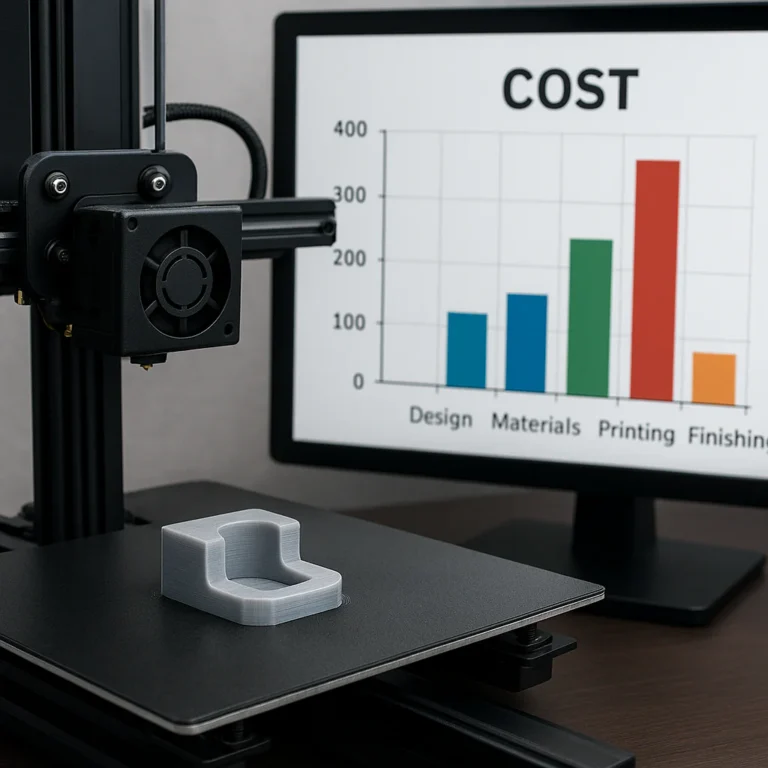
- Printing isn’t automatically cheap or sustainable. Include print failures, finishing, packaging, shipping, material, and product lifespan in your calculations.
- For sellers, test a specific niche before scaling. Track actual purchases, repeat orders, customer requests, and production time—not just likes or listing views.
Table of Contents
- ⚡ Quick Tips and Facts: 3D-Printed Home Decor Market Size
- 📊 3D-Printed Home Decor Market Size at a Glance
- What the headline market figures include—and leave out
- A note on estimates, forecasts, and market definitions
- 🏠 Background: How 3D Printing Is Changing Home Decor
- From desktop printers to design-led interiors
- How additive manufacturing fits into the home furnishings market
- 📈 Growth Rates, Forecasts, and Market Trends
- CAGR explained: What growth forecasts actually tell you
- Why market reports produce different numbers
- 🌍 Regional 3D-Printed Home Decor Market Insights
- North America
- Europe
- Asia-Pacific
- Other emerging markets
- 🛋️ Which Home Decor Categories Are Being 3D Printed?
- Lighting, lampshades, and fixtures
- Vases, planters, and tabletop accessories
- Wall art, sculptures, and decorative objects
- Furniture, hardware, and functional decor
- 🧵 Materials and Technologies Shaping the Market
- FDM printing and popular thermoplastics
- Resin, powder-bed, and industrial printing methods
- Recycled, bio-based, and lower-impact materials
- 🛒 Who Buys 3D-Printed Home Decor—and Why?
- Consumers seeking customization and one-of-a-kind design
- Interior designers, retailers, and commercial buyers
- The role of online marketplaces and print-on-demand
- 💰 Business Models and Opportunities for Sellers
- Selling finished decor, digital files, or printing services
- Craft fairs, Etsy, and direct-to-consumer sales
- Licensing, custom orders, and small-batch production
- ⚙️ What’s Driving Growth—and What’s Holding It Back?
- Customization, design freedom, and local production
- Production speed, quality, and scalability challenges
- Material durability, safety, and consumer expectations
- 🔮 The Future of the 3D-Printed Home Decor Market
- AI-assisted design and personalized interiors
- Mass customization and on-demand manufacturing
- Sustainability claims: What to verify
- 🔎 How to Verify Market Statistics and Research Claims
- Assessing market reports and forecast methodology
- Finding trustworthy company, trade, and government data
- ✅ How to Read the Numbers Before Making a Business Decision
- Questions to ask before investing or launching a product
- Signals that a niche market has real demand
- Conclusion
- Recommended Links
- FAQ
- Reference Links
⚡ Quick Tips and Facts: 3D-Printed Home Decor Market Size
If you’re looking for a single, reliable dollar figure for the 3D-printed home decor market, there’s a catch: major market reports generally track broader categories such as 3D printing, additive manufacturing, or accessories—not home decor as a consistently defined standalone market. Our guide to 3D printing statistics explains why the boundaries matter.
| Quick fact | What it means |
|---|---|
| No standard market definition | One report may count decorative objects; another may include lighting, furniture components, custom manufacturing, or digital design files. |
| Broad-market growth is not decor-market growth | A forecast for the entire 3D printing market cannot be presented as a home decor forecast. |
| Demand has several routes to market | Consumers buy finished items, commission custom pieces, download printable files, or find products through makers and retailers. |
| Customization is a strong selling point | Shape, size, pattern, color, and fit can be adapted without the tooling required for some conventional production methods. |
| Not every print is a bargain | Print time, failed prototypes, finishing, packaging, and shipping can outweigh the raw filament cost. |
| Our practical advice | Treat broad industry reports as context, then validate a decor niche using actual listings, customer feedback, and small-batch tests. |
Bottom line: the category is real, but its exact size depends on what gets counted. Before trusting a precise-sounding number, ask what products, materials, sales channels, and geographic markets are included.
📊 3D-Printed Home Decor Market Size at a Glance
What the headline market figures include—and leave out
A “3D-printed home decor market” could include a surprisingly wide range of things:
- Finished goods such as vases, lampshades, planters, clocks, and sculptures.
- Decorative or functional components added to conventionally made furniture.
- Custom interior products made by a service bureau or local print shop.
- Digital files sold for customers to print themselves.
- Large-scale printed architectural elements—sometimes included in construction or building reports rather than home decor.
That last category is where the numbers can wander off like a vase with an unstable base. A report about 3D-printed construction may discuss homes, walls, or building components, but that does not automatically make it a report about decorative products for the home. Our 3D printing in architecture coverage covers that adjacent—but distinct—field.
| Category | Could be included in a decor estimate? | Why classification varies |
|---|---|---|
| Printed vases, planters, and ornaments | Usually | These are readily recognized as consumer decor. |
| Lampshades and light fixtures | Often | Some reports classify them as lighting or furnishings. |
| Printed clocks and wall art | Often | May be counted as decor, gifts, or accessories. |
| Furniture components | Sometimes | A printed knob may be decor; a structural chair part may be furniture. |
| Digital STL files | Depends | Some estimates count file sales; others count only physical goods. |
| Architectural panels and building elements | Usually separate | Commonly assigned to construction or architecture markets. |
| General 3D printing services | Usually separate | Services span medical, aerospace, industrial, and consumer uses. |
A note on estimates, forecasts, and market definitions
Two research firms can publish different market estimates without either making a simple arithmetic error. Their studies may use different base years, currency conversions, product categories, regions, or revenue measures. One may count manufacturer revenue; another may estimate end-user spending.
That’s why we won’t invent a standalone home decor market valuation or CAGR when the cited public sources do not establish one. For example, the MarketsandMarkets 3D printing market page represents a broad industry category, not a verified home-decor-only total. The Fortune Business Insights 3D-printed accessories page is another adjacent category, not proof of a home decor valuation. Both pages may also be inaccessible to readers behind verification screens.
When you see a report headline, check:
- What products are counted?
- Does it count digital files, services, or only physical products?
- Which regions and years are covered?
- Is the figure actual revenue, an estimate, or a forecast?
- Is the methodology visible enough to assess?
If those answers are missing, treat the number as a clue—not a fact carved into the mantelpiece.
🏠 Background: How 3D Printing Is Changing Home Decor

From desktop printers to design-led interiors
Home decor has always balanced mass production with personal taste. 3D printing adds another option: make an object from a digital model, build it layer by layer, and adjust the design without creating a dedicated mold for every variation.
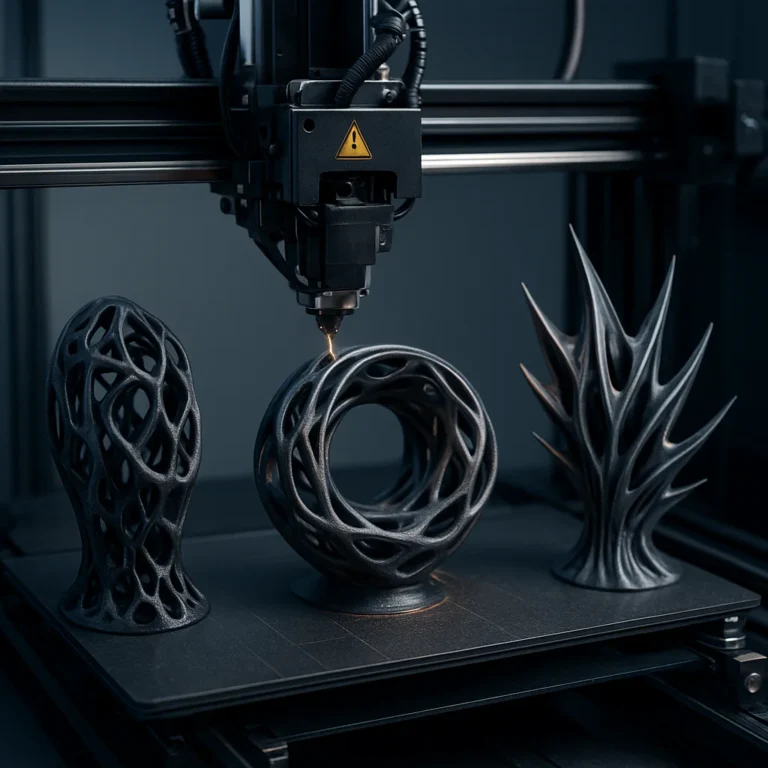
That’s particularly useful for shapes that are difficult or wasteful to produce conventionally: latticework, organic curves, custom-fit organizers, textured lampshades, and small runs of personalized objects. It doesn’t mean 3D printing is automatically cheaper or greener. It means a designer can test and produce certain forms with fewer manufacturing constraints.
For home makers, a printer can turn a shelf measurement into a fitted hook or a rough sketch into a decorative prototype. Our 3D printable objects and 3D design software categories are useful starting points for exploring that workflow.
How additive manufacturing fits into the home furnishings market
The National Institute of Standards and Technology (NIST) describes additive manufacturing as making objects from digital models by adding material, typically layer by layer. In decor, that process can support:
- Design freedom: intricate geometry without conventional tooling.
- Short production runs: practical for a maker testing several styles.
- Customization: altered dimensions, text, patterns, and colors.
- On-demand production: products can be made after an order arrives.
- Iteration: a designer can modify a model after seeing the first physical print.
But the familiar compromises remain. Layer lines may need finishing, print orientation affects strength and appearance, and long prints can fail. We once made a decorative planter that looked elegant in CAD and turned into a wobbly, stringy mess after a poorly supported first run. The fix wasn’t a more expensive machine; it was a better support strategy and a redesigned base.
📈 Growth Rates, Forecasts, and Market Trends
CAGR explained: What growth forecasts actually tell you
CAGR, or compound annual growth rate, describes the smoothed annual rate of change between a starting and ending value over a period. It is a calculation—not a promise that a market grows at the same rate every year.
For home decor, a CAGR is useful only if the underlying market is defined. A growth forecast for all additive manufacturing, for example, may reflect aerospace, medical, automotive, industrial tooling, and other sectors. It should not be relabeled as growth in printed vases or lamps.
A sound forecast should make its scope, base year, forecast period, assumptions, and data sources clear. The U.S. Bureau of Economic Analysis and U.S. Census Bureau offer economic and trade datasets that can help put broader business trends in context, though they do not provide a ready-made global home-decor-only 3D printing total.
Why market reports produce different numbers
Common reasons include:
- Different category boundaries: decor versus accessories versus furniture.
- Different revenue layers: factory sales, retail revenue, or service fees.
- Different units: nominal dollars, adjusted dollars, shipments, or sales volume.
- Different geographies: global totals versus selected countries.
- Different research access: public summaries may omit the methodology behind a paid report.
- Different assumptions: forecasts depend on adoption, materials, manufacturing capacity, and customer demand.
The page summaries for the cited MarketsandMarkets report and Fortune Business Insights report do not provide verifiable home-decor-specific statistics. We therefore don’t quote either as a decor market valuation. That’s less flashy than a giant number, but it’s more useful if you’re making a real decision.
🌍 Regional 3D-Printed Home Decor Market Insights
Regional demand depends on more than how many printers are installed. Local design tastes, access to materials, marketplace habits, shipping costs, and the availability of print services all influence what sells.
| Region | Potential strengths | Questions for sellers to investigate |
|---|---|---|
| North America | Established online marketplaces and maker communities | Which niches have repeat demand, and what shipping costs do buyers accept? |
| Europe | Strong design and craft communities across many countries | Do material, product-safety, or packaging requirements apply to the item and market? |
| Asia-Pacific | Large manufacturing ecosystems and diverse consumer markets | Is the product competing locally on customization, design, or delivery? |
| Other regions | Opportunities for local makers and regionally specific design | Are printing materials, reliable shipping, and customer support readily available? |
North America
In the United States and Canada, creators can reach buyers through direct storefronts, maker markets, and online platforms. A local maker can stand out with custom sizing or a distinctive style, but a product that is inexpensive to print may still be costly to package and ship safely.
For research, compare actual listings and customer reviews across more than one sales channel. A bestseller badge or a few enthusiastic comments can signal interest, but neither establishes the total market size.
Europe
European demand spans many design traditions and national markets, so a single “European taste” is more fantasy than strategy. Minimalist accessories, sculptural objects, and practical organizers may appeal to different buyers in different countries.
Sellers should review applicable product rules, labeling obligations, and consumer protections before selling across borders. The European Commission’s product safety information is a useful starting point; requirements depend on the product and its intended use.
Asia-Pacific
The region combines major manufacturing capacity with diverse consumer markets. For a small decor business, the opportunity may be less about competing with high-volume factories and more about customization, original design, and rapid local service.
Avoid treating Asia-Pacific as one uniform market. Languages, platforms, logistics, and design preferences vary greatly by country.
Other emerging markets
Local printing can reduce dependence on long-distance product shipping, but access to consistent filament, spare parts, and reliable delivery may vary. A small business should test its entire supply chain—not just the printer—before promising fast fulfillment.
🛋️ Which Home Decor Categories Are Being 3D Printed?
There’s no single bestselling object that defines the category. Instead, decor products tend to succeed when they combine visual appeal, a clear use, and a reason to print them rather than buy a mass-produced alternative.
| Product type | What printing adds | Main practical concern |
|---|---|---|
| Vases and planters | Custom shapes, textures, and sizes | Water resistance and print seams |
| Lampshades | Intricate patterns and light diffusion | Heat, electrical safety, and material choice |
| Clocks | Distinctive geometry and personalized faces | Accurate assembly and dependable movement |
| Wall art and sculpture | Complex forms and lightweight structures | Finishing and secure mounting |
| Organizers and hardware | Custom fit for a particular room or object | Functional strength and dimensional accuracy |
Lighting, lampshades, and fixtures
A printed lampshade can create striking shadow patterns, but material and heat safety come first. A decorative shade must suit its light source and installation. Don’t assume a common filament is safe close to a hot bulb, and don’t present a printed part as an electrical component unless it has been appropriately designed and evaluated.
If you’re selling lighting, verify the applicable safety requirements for your market and use tested electrical parts from reputable suppliers. A beautiful shade is not worth turning a cozy reading nook into a fire drill.
Vases, planters, and tabletop accessories
Vases and planters are popular concepts because their geometry is expressive and easy to personalize. The catch: a visually solid print is not automatically watertight. Layer adhesion, seams, wall thickness, and print settings all matter.
Practical tips:
- Test water resistance before advertising a vessel for fresh flowers.
- Use an insert or liner for plants that need regular watering.
- Consider drainage, soil moisture, UV exposure, and heat for outdoor use.
- Tell customers whether a piece is decorative, functional, or both.
Browse examples of printable home decor models on Thingiverse for inspiration, but always check the model’s license and test the print yourself.
Wall art, sculptures, and decorative objects
Wall art and small sculptures show off the geometry that additive manufacturing handles well: repeated patterns, flowing curves, nested forms, and custom dimensions. Their main business challenge is differentiation. A model that anyone can download is less compelling when sold unchanged beside dozens of copies.
Makers can add value through a coherent collection, thoughtful color choices, high-quality finishing, customization, and clear product photography. Make sure the digital model’s license allows commercial use before selling prints.
Furniture, hardware, and functional decor
Printed drawer pulls, cable guides, hooks, shelf accents, and small organizers sit between decor and utility. That blend can be attractive to buyers, but it raises the bar for fit and durability.
We recommend testing functional parts under realistic loads. A wall hook should be evaluated with the right fastener and wall type, not merely admired on a desk. For large or structural furniture elements, seek expert engineering advice; decorative prototypes and load-bearing components are not the same assignment.
🧵 Materials and Technologies Shaping the Market
FDM printing and popular thermoplastics
Fused deposition modeling (FDM) is common in maker workshops because it builds parts by extruding thermoplastic filament. It can produce colorful decor with a relatively accessible workflow, but layer lines and print time are part of the bargain.
| Material | Typical appeal for decor | Considerations |
|---|---|---|
| PLA | Easy to print; widely available in colors and finishes | Can soften under heat; suitability depends on the use |
| PETG | Often chosen when more toughness or moisture resistance is desired | Can string; print quality depends on settings and design |
| ABS/ASA | Used where greater heat or outdoor durability is needed | Requires careful printing; ventilation and printer setup matter |
| TPU | Flexible, useful for soft grips and accents | Slower and more demanding than rigid filament |
| Recycled or bio-based blends | May use alternative feedstocks or recycled content | Verify the material composition and supplier claims |
These are general material characteristics, not guarantees. Follow the filament maker’s technical documentation and consider the finished object’s actual environment. The NIOSH guidance on 3D printing emissions is also worth reviewing when choosing materials and setting up a workspace.
Resin, powder-bed, and industrial printing methods
Resin printing can capture fine detail for small decorative objects, while powder-bed and other industrial processes can make complex parts or larger production runs. They also bring different equipment, post-processing, material, and safety needs.
For resin systems, follow the printer and resin manufacturers’ handling instructions, use appropriate protective equipment, and cure parts as specified. For industrial processes, a service bureau may be more practical than buying specialized machinery for occasional production.
Want to compare equipment? Our 3D printer reviews focus on how machines perform in real use—not just how polished their marketing photos look.
Recycled, bio-based, and lower-impact materials
“Printed on demand” can reduce the need to hold large inventories, but it does not automatically make an item environmentally friendly. Material sourcing, failed prints, finishing, packaging, shipping, and product lifespan all count.
Before using a sustainability claim, ask:
- What is the material made from?
- Is the recycled content documented?
- Can the finished product be recycled locally?
- How much material is wasted during printing and finishing?
- Is the product durable enough to stay in use?
The U.S. Environmental Protection Agency’s sustainable materials management resources offer useful context for thinking beyond the material label.
🛒 Who Buys 3D-Printed Home Decor—and Why?
Consumers seeking customization and one-of-a-kind design
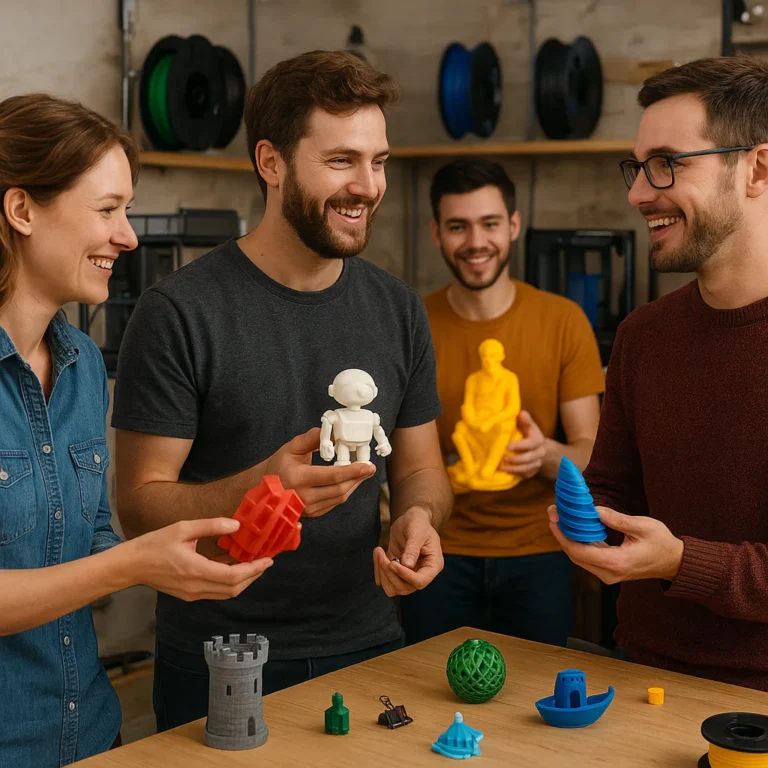
A consumer may choose a printed item because it fits a particular shelf, matches a room, supports a favorite design style, or can be personalized with a name or motif. That’s the central opportunity: sell the benefit, not the fact that a printer was involved.
Buyers may also worry about visible layer lines, fragility, finish quality, or whether a product is worth buying instead of printing themselves. Clear photos, honest specifications, and practical care instructions help answer those questions.
Interior designers, retailers, and commercial buyers
Designers and small retailers may value short runs, custom dimensions, branded accents, or repeatable colorways. But business buyers usually need consistent finishes, reliable lead times, and dependable replacement parts. A one-off prototype is not yet a scalable product.
A useful pilot might include:
- Approve a physical sample.
- Agree on tolerances, finish, packaging, and delivery time.
- Produce a small batch.
- Record defects and rework.
- Scale only after the process is repeatable.
The role of online marketplaces and print-on-demand
Online marketplaces help makers test demand, but listing views and likes are not the same as completed purchases. Track conversion, returns, repeat orders, customer questions, and the time spent fulfilling each order.
Print-on-demand can avoid unsold inventory, but it shifts the work to production planning and dispatch. If every product takes several hours to print, calculate how many printers and work hours you need before promising a busy-season delivery date.
💰 Business Models and Opportunities for Sellers
Selling finished decor, digital files, or printing services
Makers can sell:
- Finished products: more control over quality and customer experience, with more production and shipping responsibility.
- Digital files: no physical fulfillment, but design licensing and customer support matter.
- Custom printing: useful for prototypes and bespoke jobs, but quoting and revisions can consume time.
- Small-batch wholesale: potentially repeatable orders, but consistency and lead times become critical.
Don’t assume a digital file is a free-for-all. Check the model’s license, creator permissions, and platform terms before selling printed copies.
Craft fairs, Etsy, and direct-to-consumer sales
Craft fairs are useful for seeing how people react to texture, scale, and color in person. Ask visitors what they would use the product for, what size they need, and what makes it feel gift-worthy. Online listings, meanwhile, let you test descriptions, photos, variants, and custom options.
One Facebook link asks, “Is there a market for 3d printed home decor at craft fairs?” The post itself is not reliably accessible without login, so we can’t treat it as evidence of demand. Still, the question is a sensible one: take a small, varied display to a local event and record actual sales and conversations rather than relying on guesses. See the Facebook post.
Licensing, custom orders, and small-batch production
Custom work can help a shop stand out, but endless revisions can quietly erase its margins. Set clear boundaries: approved dimensions, included design changes, turnaround expectations, and what happens if a prototype needs rework.
For repeat batches, standardize:
- Filament brand and color.
- Printer profile and nozzle condition.
- Orientation and supports.
- Quality checks and packaging.
- File version and customer-approved specifications.
⚙️ What’s Driving Growth—and What’s Holding It Back?
Customization, design freedom, and local production
3D printing can be compelling when a product benefits from geometry, personalization, or a small production run. It also lets a designer revise a digital model without retooling an entire conventional production line. NIST’s additive manufacturing overview describes the broader technology behind these capabilities.
The strongest customer proposition is often concrete: “This planter fits that narrow sill,” not “This was made with advanced additive manufacturing.” Technology is the method; solving a real problem is the sale.
Production speed, quality, and scalability challenges
A printer can run unattended, but a small shop still needs to manage failed jobs, bed adhesion, clogged nozzles, finishing, order changes, and packing. The first product might print beautifully; the tenth might reveal that the design has a weak bridge or that one color varies by spool.
Track your real production time, including:
- Model preparation and slicing.
- Print setup and removal.
- Cleaning, sanding, or coating.
- Inspection and reprints.
- Packing, labels, and customer service.
That spreadsheet may be less glamorous than a sculptural lamp, but it’s much better at protecting a business.
Material durability, safety, and consumer expectations
Customers may not know what FDM or resin means, but they notice rough seams, weak clips, unstable bases, and vague care labels. A polished listing should explain material, dimensions, intended use, limitations, and cleaning guidance.
For consumer products, electrical parts, food-contact items, children’s products, or load-bearing accessories, requirements can be more demanding. Check the applicable rules and seek qualified guidance rather than assuming a hobby print is ready for every use.
🔮 The Future of the 3D-Printed Home Decor Market
AI-assisted design and personalized interiors
Generative and AI-assisted tools can help create patterns, explore forms, or generate variations, but a visually attractive model still needs to be printable, structurally sound, and licensed for the intended use. Human review remains essential for dimensions, clearances, supports, strength, and finish.
If you use AI-generated designs commercially, check the tool’s terms and the relevant intellectual-property rules. The safest workflow is to treat generated geometry as a starting point, not a substitute for engineering and design review.
Mass customization and on-demand manufacturing
A likely strength of the category is not replacing every mass-produced object. It is making the right object for a specific person, room, or use. Custom dimensions and small variations can turn a generic organizer into one that fits the awkward gap beside a desk.
On-demand production can help limit unsold stock, but it still uses energy and materials, and it needs reliable order fulfillment. The business wins when customization is valuable enough that buyers accept the production time.
Sustainability claims: What to verify
Be cautious with broad claims such as “zero waste” or “eco-friendly.” A print may use less material than a specific alternative, or it may not; the answer depends on the product, manufacturing route, lifetime, and shipping.
Useful evidence includes material documentation, actual waste records, durability testing, repairability, and a realistic account of where the item can be recycled. The EPA’s sustainable materials guidance can help frame those questions.
🔎 How to Verify Market Statistics and Research Claims
Assessing market reports and forecast methodology
Use this quick checklist before citing a market figure:
- Scope: Does the report explicitly define home decor?
- Products: Does it include accessories, furniture, lighting, and digital files?
- Geography: Is the total global or regional?
- Period: Are the base year and forecast years stated?
- Method: Can you see how the estimate was built?
- Source access: Can you verify the underlying information, or only a promotional summary?
The linked MarketsandMarkets 3D printing report and Fortune Business Insights accessories report are relevant background, but their broader scopes do not establish a home-decor-only statistic. The available page summaries also do not provide accessible figures or article quotes to verify.
Finding trustworthy company, trade, and government data
For wider context, start with transparent organizations and primary records:
- NIST additive manufacturing resources for technology and manufacturing context.
- U.S. Census Bureau data for selected economic and trade datasets.
- U.S. Bureau of Economic Analysis data for national economic measures.
- EPA sustainable materials management resources for materials and waste context.
These sources do not provide a clean global total for 3D-printed home decor. They’re useful for validating surrounding claims—not for pretending the missing category data exists.
✅ How to Read the Numbers Before Making a Business Decision
Questions to ask before investing or launching a product
Before buying equipment or building a storefront, ask:
- Who is the buyer, and what problem does the product solve?
- Can you show that buyers pay—not just click or comment?
- How long does printing and finishing actually take?
- What is your failure and reprint rate?
- Can you ship it without damage?
- Does the design have a clear commercial license?
- Does the product’s intended use create safety or compliance requirements?
- Can you produce the same quality repeatedly?
Test the product with a small batch and collect evidence before scaling. If you need a printer recommendation for that workflow, compare options in our 3D printer reviews.
Signals that a niche market has real demand
Look for more than one signal:
- Buyers ask for a specific variation or size.
- Products receive repeat orders, not just one-time curiosity purchases.
- Customers understand the item’s function and finish from the listing.
- Local shoppers handle the sample and follow up later.
- A small batch sells without unsustainable discounting.
- Reviews mention quality, fit, and usefulness—not only novelty.
A promising market doesn’t have to be enormous. A well-defined niche can support a small maker if the product is distinctive, the production process is repeatable, and customers value the customization enough to pay for it.