Support our educational content for free when you purchase through links on our site. Learn more
🚀 15+ Aerospace 3D Printed Components Revolutionizing Flight (2026)

Aerospace 3D printed components are no longer just futuristic concepts; they are the lightweight, high-strength reality powering modern jets, rockets, and satellites today. From consolidating complex assemblies into single parts to enabling on-demand manufacturing of legacy aircraft spares, additive manufacturing has fundamentally reshaped how we build for the skies.
Did you know that some modern commercial airliners now fly with over 1,0 3D printed parts on board? It’s a staggering number that proves this technology has moved far beyond the protyping lab. Imagine a titanium satellite bracket that withstands the brutal thermal cycling of space, or a rocket engine nozzle printed with internal cooling channels that would be impossible to machine traditionally.
The shift is happening faster than you might think, with companies like GE and Airbus leading the charge to slash fuel costs and boost performance. But how exactly do these parts survive the extreme rigors of flight, and what does the future hold for in-space manufacturing? Let’s dive into the 15+ applications that are changing the game.
Key Takeaways
- Massive Weight Reduction: 3D printed components utilize topology optimization and lattice structures to significantly lower aircraft weight, directly translating to fuel savings and increased payload capacity.
- Part Consolidation: Complex assemblies with dozens of parts can be printed as a single, unified component, reducing assembly time, eliminating failure points, and lowering overall costs.
- On-Demand MRO: Additive manufacturing enables the rapid production of obsolete spare parts for legacy fleets, solving critical supply chain bottlenecks and reducing aircraft downtime.
- Extreme Material Performance: Advanced materials like PEK, ULTEM, Titanium, and Inconel allow printed parts to withstand the intense heat, pressure, and vibration of aerospace environments.
- Rapid Innovation Cycle: The ability to iterate designs quickly and print functional prototypes overnight accelerates the development of next-generation aircraft and spacecraft.
Table of Contents
- ⚡️ Quick Tips and Facts
- 🚀 From Sci-Fi Dreams to Flight-Ready Reality: A Brief History of Aerospace Additive Manufacturing
- 🛠️ 15 Game-Changing Applications of 3D Printed Components in Modern Aerospace
- 1. Lightweighting Strategies for Fuel Efficiency
- 2. Complex Internal Cooling Channels for Turbine Blades
- 3. On-Demand Spare Parts for Legacy Aircraft Flets
- 4. Customized Cockpit Interfaces and Ergonomic Controls
- 5. Rocket Engine Combustion Chambers and Nozzles
- 6. Satellite Antenna Brackets and Structural Lattices
- 7. Drone Frames and Propulsion Systems
- 8. Cabin Interior Fixtures and Overhead Bins
- 9. Rapid Tooling for Composite Layup Molds
- 10. Conformal Cooling Jigs for Assembly Lines
- 1. Personalized Pilot Safety Gear and Helmet Visors
- 12. High-Temperature Fuel Injectors and Manifolds
- 13. Spacecraft Thermal Protection Systems
- 14. Bio-Printed Tissue for Space Medicine Research
- 15. Modular Satellite Bus Structures
- 🧪 The Material Science Breakdown: High-Performance Polymers and Metals for Flight
- PEK, PEKK, and ULTEM: The Polymer Powerhouses
- Titanium, Inconel, and Aluminum: Metals That Defy Gravity
- Ceramics and Composites for Extreme Environments
- 🏭 Rapid Protyping vs. Serial Production: Scaling from Concept to Pre-Production
- 🔧 Rapid Tooling and Manufacturing Aids for Suppliers of Any Size
- ✈️ Certified End-Use, Replacement, and Custom Parts for the Skies
- 💰 The Bottom Line: How Additive Manufacturing Saves Time and Money in Aerospace
- 🖨️ Choosing the Right Hardware: Industrial 3D Printers for Aerospace Demands
- SLM and DMLS for Metal Parts
- SLS and MJF for High-Volume Polymer Production
- FDM for Large-Scale Tooling and Protypes
- ✨ Post-Processing: From Rough Print to Flight-Ready Finish
- Heat Treatment and Stress Relief
- CNC Machining and Surface Finishing
- Non-Destructive Testing (NDT) and Quality Assurance
- 🧠 Software and Simulation: Designing for Additive Manufacturing (DfAM)
- 📜 Navigating Certification: FAA, EASA, and ISO Standards for 3D Printed Flight Parts
- 🌍 Real-World Case Studies: Major Aerospace Players Embracing Additive Tech
- 🚀 The Future Horizon: What’s Next for 3D Printed Aerospace Components?
- 🏁 Conclusion
- 🔗 Recommended Links
- ❓ FAQ
- 📚 Reference Links
Hey there, fellow innovators and sky-gazers! We’re the team at 3D Printed™, and we’re absolutely buzzing about the revolution happening in the aerospace industry thanks to additive manufacturing. From the deepest oceans to the furthest reaches of space, 3D printing is literally changing how we design, build, and fly. So
, let’s kick things off with some quick, mind-blowing facts about aerospace 3D printed components that’ll get your gears turning!
- Early Adopters, Big Impact: Did you know the aerospace sector was one of the
first industries to truly embrace industrial 3D printing, way back in 1989? Talk about foresight! - Flying High with AM: Today, modern commercial airplanes often fly with over
1,000 3D printed parts on board. That’s a lot of plastic and metal making our journeys safer and more efficient! - Strength-to-Weight Ratio
is King: Additive manufacturing excels at creating parts with incredibly high strength-to-weight ratios, often outperforming traditionally machined or cast components. This is crucial for fuel efficiency and performance. - Cost
Savings You Can Bank On: Implementing in-house additive manufacturing can lead to significant cost reductions and slashed lead times. Some companies report achieving ROI in a matter of months rather than years. - Beyond Prot
otypes: While 3D printing started as a prototyping powerhouse, it’s now a major player in producing end-use parts, tooling, jigs, and even critical flight hardware. Production volumes can even exceed 70,00
0 parts per year for certain components. - Extreme Environments? No Problem! From satellite brackets enduring -170°C to 10°C thermal cycling in space to high-
temperature engine components, 3D printed materials are engineered to withstand the harshest conditions.
🚀 From Sci-Fi Dreams to Flight-Ready Reality: A Brief History of Aerospace Additive Manufacturing

It feels like just yesterday we were watching sci-fi movies where spaces
hips were conjured out of thin air. Well, the reality isn’t quite that magical, but it’s getting pretty darn close, thanks to the evolution of 3D printing in aerospace!
The journey of additive manufacturing in
the aerospace industry began not with a bang, but with a quiet hum of early industrial machines in 1989. Back then, it was mostly about rapid prototyping – creating quick, inexpensive models to test designs
before committing to costly traditional manufacturing methods. Think of it like sketching out an idea on paper before building a full-scale model; 3D printing just made those “sketches” tangible and incredibly accurate.
For decades, these industrial
3D printers were the exclusive domain of large, well-funded aerospace giants. They were prohibitively expensive, often siloed away in centralized prototyping shops, and their material options were limited. But even then, the potential was clear: the
ability to create complex geometries, iterate designs quickly, and reduce waste was a tantalizing prospect for an industry obsessed with efficiency and performance.
Fast forward to the mid-2010s, and the landscape began to shift dramatically. As
printer technology matured and material science advanced, the costs of these incredible machines started to come down. This democratization of access meant that smaller organizations and even decentralized teams within larger companies could bring additive manufacturing capabilities in-house. This wasn’t just a minor upgrade; it was a paradigm shift. Suddenly, the ability to “save time, cut costs, and keep sensitive IP inside your organization” became a reality for many more players in the aerospace supply
chain.
Today, we’re far beyond just prototypes. Additive manufacturing is a cornerstone of aerospace production, enabling everything from lightweighting strategies to the creation of certified end-use parts that are literally
flying right now. It’s a testament to human ingenuity and the relentless pursuit of better, faster, and more efficient ways to conquer the skies and beyond. The future, as they say, is already taking flight!
🛠️ 15 Game-Changing Applications of 3D Printed Components in Modern Aerospace
The sky’s no longer the limit when it comes to what 3D printing can do for aerospace. We’re talking about a complete overhaul of how components are designed, manufactured, and maintained. From the tiniest sensor bracket
to massive structural elements, additive manufacturing is proving its worth. Let’s dive into some of the most impactful applications we’re seeing today!
- Lightweighting Strategies for Fuel Efficiency
This is a big one, folks! Every gram saved on an aircraft or spacecraft translates directly to fuel savings and increased payload capacity. 3D printing allows engineers to create intricate lattice
structures and topology-optimized designs that are impossible with traditional manufacturing. These designs remove non-critical mass while preserving structural integrity, leading to a phenomenal strength-to-weight ratio. Imagine an aircraft wing bracket
that looks like a delicate, organic web but is stronger than its solid, heavier predecessor. That’s the power of lightweighting with AM.
2. Complex Internal Cooling Channels for Turbine Blades
Turbine blades operate in infernally hot environments, and efficient cooling is paramount for their longevity and performance. Traditional manufacturing struggles with creating complex internal geometries. Enter
3D printing! It enables the fabrication of conformal cooling channels directly within the blades, precisely routing airflow to maximize heat dissipation. This means more durable blades and more powerful engines.
3. On-Demand Spare Parts for Legacy Aircraft Fleets
Ever tried to find a replacement part for a classic car? Now imagine that for a
50-year-old aircraft! Supply chains for older fleets can be a nightmare, with long lead times and high costs for low-volume parts. 3D printing offers a lifeline, allowing for on-demand manufacturing
of obsolete or hard-to-find components. This is a huge win for Maintenance, Repair, and Overhaul (MRO) operations, as highlighted by Formlabs, which mentions replicating or improving existing designs for planes, helicopters, drones,
rockets, and rovers.
4. Customized Cockpit Interfaces and Ergonomic Controls
Pilot comfort and efficiency are critical. 3D printing allows for the creation of customized cockpit components like control knobs, switch covers, and even full dashboard assemblies. This means interfaces can be tailored for optimal ergonomics
, reducing pilot fatigue and potentially improving response times. Aesthetics can also be a priority here, ensuring a sleek, modern look.
5. Rocket Engine Combustion Chambers and Nozzles
This is where things get really hot! Companies like Masten Space Systems have been pioneers, 3D printing rocket engines since 2014, even scaling up to a **
25,000-pound thrust “Broadsword” engine**. The ability to print complex, unified structures with integrated cooling channels and optimized geometries means more efficient combustion and higher performance. “What’s nice
about that [3D printing] is you can model it exactly the way you want it… adding complexity to improve performance doesn’t cost extra,” notes Masten Space Systems.
6. Satellite Antenna Brackets and Structural Lattices
Satellites are all about precision and surviving extreme conditions. Airbus, for example, used 3D printing
to create titanium satellite brackets that could withstand thermal cycling from -170°C to 10°C. These brackets also consolidated multiple subcomponents into a single part, reducing weight
and manufacturing steps. We’ve seen incredible lattice structures that provide immense strength with minimal material, perfect for delicate antenna supports.
7.
Drone Frames and Propulsion Systems
The drone industry is a fantastic playground for 3D printing. Nextech, for instance, utilized SLS 3D printed parts for their Atlas T quad-copter to optimize payload. From lightweight, aerodynamic frames to custom propulsion system components, 3D printing allows for rapid iteration and specialization. Imagine printing a drone part overnight, testing it the next day, and refining the design almost immediately! This agility is a significant
advantage. If you’re looking to print your own drone components, check out our section on 3D Printable Objects.
8. Cabin Interior Fixtures and Overhead Bins
While not as glamorous as rocket engines, cabin interiors are crucial for passenger experience and safety.
3D printing can produce door handles, light housings, ventilation grilles, and even components for overhead bins. This allows for greater design freedom, customization, and potentially lighter, more durable parts that meet stringent flammability and safety
standards.
9. Rapid Tooling for Composite Layup Molds
Manufacturing composite aerospace components often requires complex molds
. Traditional tooling can be expensive and time-consuming to produce. 3D printing offers a solution for rapid tooling, creating molds and dies quickly and cost-effectively. This accelerates the development of new composite parts, from aircraft wings to fuselage sections
.
10. Conformal Cooling Jigs for Assembly Lines
Beyond flight parts, 3D printing is
revolutionizing manufacturing aids. Conformal cooling jigs are a prime example. These jigs, often used in assembly processes, can have integrated cooling channels that precisely regulate temperature, improving the quality and speed of production steps. This is a significant upgrade
from traditional, less efficient cooling methods.
11. Personalized Pilot Safety Gear and Helmet Visors
Comfort
and fit are paramount for pilot safety gear. 3D printing allows for the creation of custom-fit components for helmets, oxygen masks, and other personal protective equipment. Imagine a helmet visor frame perfectly contoured to a pilot’s face,
or an oxygen mask that offers an unparalleled seal. This personalization can enhance safety and reduce fatigue during long flights.
12.
High-Temperature Fuel Injectors and Manifolds
Precision and material integrity are non-negotiable for fuel systems. 3D printing, especially with high-performance metal alloys, can produce complex fuel injectors and manifolds with optimized internal geometries. This
leads to more efficient fuel delivery, better combustion, and reduced emissions, all while operating under extreme temperatures and pressures.
<a id=”13-spacecraft-thermal-Protection-Systems](#13-spacecraft-thermal-protection-systems)
13. Spacecraft Thermal Protection Systems
Re-entry into Earth’s atmosphere is a fiery ordeal. Thermal Protection Systems (TPS) are critical for spacecraft. While traditional TPS often involves complex tile arrays, advanced
3D printing techniques are exploring new ways to create integrated, custom-designed TPS components that can better withstand extreme heat and ablation. NASA’s Goddard Space Flight Center even sent electroplated SLA brackets to the ISS to test hybrid
metal/resin parts in the space environment.
14. Bio-Printed Tissue for Space Medicine Research
Okay, this one is truly out there, but incredibly exciting! For long-duration space missions, understanding how the human body reacts to microgravity is vital. Bio-printing—the 3D printing of biological tissues—is
being explored for research in space medicine. Imagine printing human tissue samples on the International Space Station to study drug interactions or disease progression in a zero-G environment. The possibilities for advancing human health in space are immense.
15. Modular Satellite Bus Structures
The demand for smaller, more agile satellites is booming. 3D printing enables the creation of modular satellite bus structures, allowing for rapid
customization and assembly. Instead of designing a completely new satellite for each mission, engineers can print specific modules that fit together, accelerating development and reducing costs. This flexibility is a game-changer for the burgeoning space industry.
🧪 The Material Science Breakdown: High-Performance Polymers and Metals for Flight
When it comes to aerospace
, materials aren’t just materials; they’re the very essence of safety, performance, and reliability. The demands are brutal: extreme temperatures, immense pressures, corrosive environments, and constant vibration. Thankfully, the world of 3D
printing has delivered an incredible arsenal of high-performance polymers and metals that are up to the challenge. Let’s get nerdy for a moment, shall we?
PEEK, PEKK, and ULTEM: The Polymer Powerhouses
Forget your standard PLA or ABS; in aerospace, we’re talking about polymers that laugh in the face of heat and stress.
- PEEK (Polyether Ether Ketone) & PEKK (Polyether Ketone Ketone): These are the rockstars of high-performance thermoplastics. They boast incredible mechanical strength, chemical resistance, and **
high-temperature performance**. Think of them as the superheroes of plastics. They can withstand continuous operating temperatures well above 200°C (392°F) and are often reinforced with carbon fiber for even greater stiffness. We’
re talking about parts that can replace metal in certain applications, leading to significant weight savings. - ULTEM (Polyetherimide): Another stellar performer, ULTEM is renowned for its high heat resistance, flame
retardancy, and excellent strength-to-weight ratio. It’s often used for interior components, ventilation ducts, and electrical housings where fire safety and durability are paramount. Formlabs, for example, offers a “large library of proprietary
, high-performance materials to produce parts that are up to the challenge of extreme environments,” with properties like stiffness comparable to glass and fiber-filled thermoplastics, and heat resistance.
Table: High-Performance Polymer Properties
for Aerospace
| Material | Key Properties | Typical Applications | Additive Process |
|---|---|---|---|
| PEEK | |||
| High strength, chemical resistance, high temp. | Brackets, housings, structural components | FDM, SLS | |
| PEKK | Similar to PEEK, often easier to print, higher temp. | Engine | |
| components, high-stress parts | FDM, SLS | ||
| ULTEM | High heat resistance, flame retardancy, good strength | Cabin interiors, ducts, electrical enclosures | FDM |
| ** | |||
| Nylon** | Durable, flexible, good chemical resistance | Air ducts, jigs, fixtures, drone frames (Nylon 12) | SLS, MJF |
Titanium, Inconel, and Aluminum: Metals That Defy Gravity
When only metal will do, 3D printing delivers with precision and strength. These
alloys are the backbone of many critical aerospace components.
- Titanium Alloys (e.g., Ti-6Al-4V): Titanium is the darling of aerospace for a reason: its unrivaled strength-to
-weight ratio and excellent corrosion resistance. 3D printing with titanium allows for incredibly complex geometries, like the Airbus satellite brackets mentioned earlier, which consolidated multiple parts into one while reducing weight. It’s ideal
for structural components, engine parts, and anything that needs to be both light and incredibly strong. - Inconel Alloys (e.g., Inconel 718): These nickel-based superalloys are designed
for extreme high-temperature applications where other metals would simply melt or deform. Think rocket engine components, turbine parts, and exhaust systems. Inconel maintains its strength and integrity even when glowing red hot, making it indispensable for the most demanding
environments. - Aluminum Alloys (e.g., AlSi10Mg): While not as exotic as titanium or Inconel, 3D printable aluminum alloys offer a fantastic combination of lightweighting, good
mechanical properties, and thermal conductivity. They are excellent for heat exchangers, housings, and structural components where weight is a concern but extreme temperatures aren’t the primary challenge. GE, for example, has utilized 3D printed jet engine components in titanium
and aluminum.
Ceramics and Composites for Extreme Environments
The material science doesn’t stop there!
Ceramics:** While still emerging, 3D printed ceramics offer incredible temperature resistance and hardness, making them suitable for specialized applications like nozzles or thermal protection systems where traditional metals might fail.
- Composites: We
‘re seeing a surge in fiber-reinforced composites where continuous carbon or glass fibers are embedded within a polymer matrix during printing. This creates parts with directional strength that can rival or even surpass metals in certain applications, offering even greater lightweighting potential
.
The ability to print with such a diverse range of advanced materials is truly transformative. It allows engineers to select the absolute best material for each specific application, optimizing performance without the constraints of traditional manufacturing. It’s like having a master
chef’s pantry, but for aerospace components!
🏭 Rapid Prototyping vs.
Serial Production: Scaling from Concept to Pre-Production
Ah, the age-old question: “Is it just for prototypes, or can it actually make things?” For a long time, 3D printing in aerospace was almost
exclusively synonymous with rapid prototyping. And for good reason! The ability to quickly iterate designs, test fit and function, and validate concepts before committing to expensive tooling was, and still is, a massive advantage. “If you want precise geometries, especially in
the plastics sector, and you want them quickly, I would always use 3D printing,” states Ulrich Zarth, Project Engineer at Lufthansa Technik. It’s like having a design sandbox where you can build
, break, and rebuild without financial fear.
But here’s the exciting part: we’ve moved far beyond just the sandbox. Today, 3D printing is a legitimate player in serial production for aerospace components. While
traditional manufacturing still holds sway for truly mass-produced, simple parts, additive manufacturing is stepping up for:
- Low to Medium Volume Production: For specialized aircraft, niche components, or parts with complex geometries, 3D printing offers
a cost-effective alternative to traditional methods that might require expensive custom tooling for relatively small batches. Hubs notes that production volumes can exceed 70,000 parts per year for certain components, and outsourced additive tooling can deliver production
components in volumes up to 5,000 to 10,000 parts. - Highly Complex Parts: When a component’s design is so intricate that traditional machining would be impossible
or prohibitively expensive (think internal cooling channels, organic lattice structures, or consolidated assemblies), 3D printing shines. The cost of complexity doesn’t increase with additive manufacturing in the same way it does with subtractive methods. - On-Demand Manufacturing: For spare parts or components needed for MRO, 3D printing eliminates the need for large inventories and long lead times. You print what you need, when you need it.
The
transition from a concept on a screen to a pre-production part is now faster than ever. Engineers can design a component using advanced 3D Design Software, print a prototype on a Formlabs Form 4 or Fuse 1+ 30W, test it, refine it, and then scale up to production using the same or similar additive processes. This seamless workflow
is accelerating innovation and getting new aircraft and spacecraft off the ground (or into orbit!) at an unprecedented pace.
## 🔧 Rapid Tooling and Manufacturing Aids for Suppliers of Any Size
Let’s be honest, tooling can be a real bottleneck in manufacturing. Traditional methods for creating molds, jigs, and fixtures are often slow, expensive, and require specialized
expertise. This is where 3D printing swoops in like a superhero, offering rapid tooling and manufacturing aids that benefit aerospace suppliers of all sizes – from the smallest machine shop to the largest OEM.
We’ve seen firsthand
how additive manufacturing transforms the shop floor. Imagine needing a custom jig for an assembly line. Traditionally, you’d send out a CAD file, wait weeks, and pay a hefty sum. With an in-house 3D printer,
you can design it, print it overnight, and have it on the line the next morning! This kind of agility is invaluable.
- Jigs and Fixtures: These are the unsung heroes of manufacturing, ensuring parts are held
precisely during assembly, drilling, or inspection. 3D printing allows for custom-designed, ergonomic jigs and fixtures that perfectly fit unique components. Hubs highlights that outsourcing additive tooling for jigs and fixtures can reduce cost and lead time by 60%
to 90%. A&M Tool and Design, for example, integrated 3D printing alongside their CNC machines, noting that “The printer almost feels like an auxiliary tool in addition to CAD…
many prototypes would just stay in CAD until were ready to machine”. - Molds for Composites and Casting: Creating molds for composite layup or lost-wax casting can be complex. 3D printing
offers a fast and accurate way to produce these molds, often with intricate internal features that improve part quality. Lufthansa Technik used a Form 3L to produce 72 extrusion nozzles in a single print run, avoiding high minimum order quantities and
allowing for flexible shape adjustments impossible with injection molding. - Surrogates and Training Aids: NASA and the Air Force use 3D printed surrogates – placeholder parts – for training and build
practice. This allows technicians to familiarize themselves with complex assemblies without risking expensive flight hardware. - Conformal Cooling Jigs: As mentioned before, these specialized jigs can have integrated cooling channels, optimizing thermal management
during manufacturing processes.
The beauty of rapid tooling is that it empowers engineers and technicians to iterate quickly, solve problems on the fly, and significantly reduce lead times and costs associated with traditional manufacturing aids. It’s not just about making parts
; it’s about making the process of making parts better.
✈️ Certified End
-Use, Replacement, and Custom Parts for the Skies
This is where the rubber meets the runway, or rather, where the 3D printed part meets the sky! The ultimate goal for many in aerospace additive manufacturing is the production of **
certified end-use components**—parts that are actually installed and flown on aircraft and spacecraft. This isn’t just about cool prototypes; it’s about flight-critical hardware.
The aerospace industry has incredibly stringent certification requirements (think FAA, EASA, ISO). Every part, every material, every process must be meticulously documented and validated to ensure the highest levels of safety and reliability. While this can be a complex journey, 3D printed parts are increasingly making their way into operational
fleets.
- Flight-Ready Components: We’re seeing 3D printed brackets, ducts, housings, and even structural elements being integrated into commercial and military aircraft. These parts often benefit from the lightweighting and geometric complexity
that AM offers, leading to improved performance and fuel efficiency. Remember, some commercial airplanes already fly with over 1,000 3D printed parts! - Replacement Parts for Lon
gevity: For older aircraft, manufacturing replacement parts can be a logistical and financial headache. 3D printing provides a viable solution for producing on-demand replacement parts, extending the lifespan of existing fleets and ensuring continued airworthiness. This is
particularly impactful for MRO operations, reducing downtime and supply chain complexities. - Customized Solutions: From bespoke sensor mounts to unique aerodynamic fairings, 3D printing allows for custom parts tailored to specific needs. This flexibility is invaluable
for specialized missions, research aircraft, or military applications where off-the-shelf solutions simply won’t cut it. For example, Elliptika designs RF and microwave antennas and filters using SLA for smooth surfaces, followed by electroplating,
reducing lead time from 3 months to 2 days and significantly cutting costs.
The path to certification for 3D printed parts involves rigorous testing, material characterization, process control, and extensive documentation. However, the
benefits—lighter aircraft, faster production, and more resilient supply chains—are driving this adoption forward at an incredible pace. It’s a testament to the fact that 3D printing isn’t just a novelty; it’s a fundamental
shift in how we build for the skies.
💰 The Bottom Line: How Additive
Manufacturing Saves Time and Money in Aerospace
Let’s talk brass tacks. While the technological marvels of 3D printing are exciting, the real drivers for its widespread adoption in aerospace are the undeniable cost savings and efficiency gains.
In an industry where every minute and every dollar counts, additive manufacturing is proving to be a shrewd investment.
- Reduced Lead Times: This is perhaps one of the most immediate and impactful benefits. Traditional manufacturing processes, especially for complex or
custom parts, can involve weeks or even months of lead time for tooling, machining, and assembly. With 3D printing, prototypes can be produced overnight, and even end-use parts can be fabricated in a fraction of the time. Ell
iptika, for instance, reduced lead time for their antennas from 3 months to just 2 days by switching to in-house 3D printing and plating. - Lower Tooling Costs: For
many complex parts, traditional manufacturing requires expensive, custom-made molds, jigs, and fixtures. 3D printing allows companies to produce these manufacturing aids in-house at a significantly lower cost and much faster. Hubs reports that outsourcing
additive tooling can reduce cost and lead time by 60% to 90%. Formlabs even states that their printers often pay for themselves in a matter of weeks or months due to these
savings. - Material Efficiency and Waste Reduction: Traditional subtractive manufacturing (like CNC machining) starts with a block of material and removes everything that isn’t the part, leading to significant material waste. Add
itive manufacturing, by its very nature, builds parts layer by layer, using only the material needed. This “near-net-shape” approach dramatically reduces material waste, which is particularly valuable when working with expensive aerospace-grade alloys like titanium
. Airbus’s satellite brackets, for example, saw reduced raw material waste compared to machining. - Part Consolidation: One of the superpowers of 3D printing is the ability to design and print complex
assemblies as a single, unified component. This part consolidation eliminates the need for multiple manufacturing steps, assembly processes, and fasteners, leading to lighter parts, fewer potential failure points, and further cost savings. The Airbus satellite bracket is a perfect example
, consolidating multiple subcomponents into one. - Design Freedom and Optimization: The ability to create complex geometries without additional cost means engineers can optimize parts for performance, lightweighting, and functionality in ways previously impossible. A single aerodynamically optimized component produced with 3D printing can reduce drag by 2.1 percent and lower fuel costs by 5.41 percent. These performance gains translate directly into
operational cost savings over the lifespan of an aircraft.
The financial and operational impact is clear: 3D printing isn’t just a cool technology; it’s a strategic investment that delivers tangible returns by making aerospace manufacturing faster, cheaper, and more
efficient.
🖨️ Choosing the Right Hardware: Industrial 3D Printers
for Aerospace Demands
Alright, you’re convinced that 3D printing is the future of aerospace, but now you’re wondering, “Which machine do I need?” It’s not a one-size-fits-all answer
, especially when dealing with the rigorous demands of flight-ready components. Different additive manufacturing technologies excel at different tasks, materials, and scales. Let’s break down the industrial workhorses that are shaping the aerospace landscape. If you’re looking
for general information on selecting a printer, check out our 3D Printer Reviews section.
SLM and DMLS for Metal Parts
When you need robust, high-performance metal components, Selective Laser Melting (SLM) and Direct Metal Laser Sintering (DMLS) are your go-to technologies. These are both forms of powder bed fusion, where a high-powered laser selectively melts and fuses metallic powder layer by layer.
- How they work: Imagine a bed of fine metal powder (titanium, Inconel, aluminum, etc.). A laser traces the cross-section of your part, melting the powder and fusing it to the layer below. The build platform then drops slightly, a new layer of powder is spread, and
the process repeats until your part is complete. - Why they’re great for aerospace:
- ✅ Produce fully dense, strong metal parts.
- ✅ Ideal for complex geometries, internal channels, and lightweight
lattice structures. - ✅ Work with high-performance aerospace alloys.
- ❌ Can be expensive and require significant post-processing.
- ❌ Build volumes are often smaller compared to some polymer printers.
Real-world example: Renishaw is a major player in this space. Their machines, like the Renishaw PD5, are used to build intricate metal components for aerospace. If you want to see this process in action,
you absolutely have to check out the video we’ve got for you! It beautifully demonstrates the additive manufacturing process, specifically powder bed fusion, for creating metal components, showcasing how complex, multi-faceted components emerge as layers of material are fused and excess powder
is removed, revealing elaborate external designs and internal lattice structures. [cite: #featured-video]
- 👉 Shop Metal 3D Printers:
- Renishaw: Renishaw Official Website
- EOS: EOS Official Website
- SLM Solutions: SLM Solutions Official Website
SLS and MJF for High-Volume Polymer Production
For durable, functional polymer parts, especially in higher volumes, Selective Laser Sintering (SLS) and Multi Jet Fusion (MJF) are fantastic choices.
- How they work (SLS): Similar to metal powder bed fusion, SLS uses a laser to selectively sinter (fuse without fully melting) polymer powder. The unfused powder acts as a natural
support, allowing for incredible geometric freedom. - How they work (MJF): HP’s Multi Jet Fusion technology uses a fusing agent and a detailing agent applied by an inkjet array, followed by an infrared lamp to fuse the material
. It’s known for speed and consistent part properties. - Why they’re great for aerospace:
- ✅ Produce strong, functional, and often flexible polymer parts (e.g., Nylon 12, glass-filled Nylon).
- ✅ Excellent for complex geometries without needing extensive support structures.
- ✅ Capable of higher throughput and production volumes than some other polymer methods.
- ✅ Ideal for jigs, fixtures
, air ducts, and functional prototypes. - ❌ Surface finish might require post-processing for aesthetic parts.
- Real-world example: Formlabs’ Fuse 1+ 30W is a bench
top SLS platform that uses production-ready nylon, perfect for functional prototypes and end-use parts like enclosures and manifolds. Nextech used SLS 3D printed parts for their Atlas T quad-copter to optimize payload. - 👉 Shop SLS/MJF 3D Printers:
- Formlabs Fuse 1+ 30W: Formlabs Official Website
- HP Jet Fusion Series: HP Official Website
FDM for Large-Scale Tooling and Prototypes
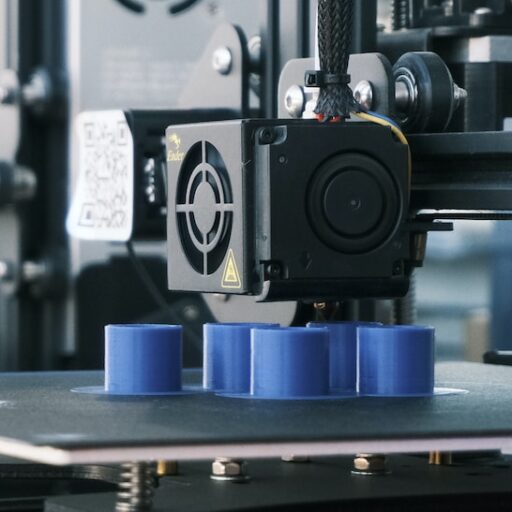
Fused Deposition Modeling (FDM), or Fused Filament Fabrication (FFF), is probably the most recognizable 3D printing technology. While often associated with hobbyist printers, industrial FDM machines are powerful tools for aerospace.
-
How it works: A thermoplastic
filament is heated and extruded through a nozzle, depositing material layer by layer to build the part. -
Why it’s great for aerospace:
-
✅ Excellent for large-scale tooling, jigs, and fixtures.
-
✅ Works with high-performance thermoplastics like ULTEM and PEEK.
-
✅ Relatively robust and easy to operate.
-
✅ Cost-effective for large prototypes and non-critical components.
❌ Layer lines are often visible, and surface finish might not be as smooth as SLA or MJF.
- ❌ Can be slower for very intricate parts compared to other methods.
- Real-world example: The
US Naval Academy uses FDM printers as part of their comprehensive MakerSpace, allowing students to progress from CAD to FDM, then SLA, then SLS, and finally 3D scanning. This hands-on approach is
crucial for future aerospace engineers. - 👉 Shop Industrial FDM 3D Printers:
- Stratasys F900: Stratasys Official Website
- Ultimaker S7: Ultimaker Official Website
Ultimately
, the choice of hardware depends on your specific application, material requirements, desired part properties, and production volume. Many aerospace companies, like the USNA, utilize a mix of technologies to cover their diverse needs.
✨ Post-Processing: From Rough Print to Flight-Ready Finish
You’ve just pulled a beautifully intricate part from your 3D printer
. High fives all around! 🎉 But hold on a second… for aerospace applications, that’s rarely the final step. The journey from a “rough print” to a “flight-ready finish” often involves a series of critical **
post-processing steps**. These aren’t just cosmetic; they’re essential for achieving the required mechanical properties, surface quality, and overall integrity demanded by the skies.
Think of it like building a house: laying the bricks is crucial
, but you still need to plaster the walls, install the plumbing, and paint to make it livable. Similarly, post-processing refines 3D printed components to meet aerospace standards.
Heat Treatment and Stress Relief
Especially for metal 3D printed parts, the rapid heating and cooling during the printing process can introduce internal stresses. If left unaddressed, these stresses can lead to warping, cracking
, or reduced mechanical performance.
- Annealing, Hot Isostatic Pressing (HIP), and Solution Treatment: These are common heat treatment processes.
- Annealing involves heating the part to a specific temperature and then
slowly cooling it, which helps to relieve internal stresses and improve ductility. - HIP applies both high temperature and high pressure, effectively closing any internal pores or voids, leading to a denser, stronger part.
Solution treatment** followed by aging can optimize the microstructure and enhance the strength of certain alloys.
These steps are absolutely vital for ensuring the material properties of the 3D printed part match or exceed those of traditionally manufactured components.
CNC Machining and Surface Finishing
While 3D printing offers incredible geometric freedom, it doesn’t always deliver the ultra-precise tolerances or mirror-smooth surface
finishes required for certain aerospace applications straight off the build plate.
- Hybrid Manufacturing: It’s common to see a hybrid approach where 3D printed parts undergo a final CNC machining step. This allows for critical
features like bolt holes, mating surfaces, or bearing seats to be machined to extremely tight tolerances. Hubs notes that metal 3D printed parts (DMLS/SLM/Binder Jetting) often require post-processing like smoothing, polishing,
or CNC machining for high accuracy. - Surface Smoothing and Polishing: For aerodynamic surfaces, internal flow channels, or aesthetic parts (like cabin interiors), surface roughness can be a concern. Various methods,
including media blasting, tumbling, chemical vapor smoothing, or manual polishing, are used to achieve the desired surface quality. This can reduce drag, improve fluid flow, and enhance the overall appearance of the component. Elliptika, for example, used SLA
for smooth surfaces before electroplating their antennas.
Non-Destructive Testing (NDT) and Quality Assurance
Before
any 3D printed component can be deemed flight-ready, it must undergo rigorous Non-Destructive Testing (NDT) and quality assurance checks. This ensures there are no hidden flaws or defects that could compromise safety.
- X
-ray Computed Tomography (CT Scanning): This is a powerful tool for inspecting the internal structure of 3D printed parts without damaging them. CT scans can detect internal porosity, cracks, or unfused powder, providing a comprehensive look
at the part’s integrity. - Ultrasonic Testing: Uses high-frequency sound waves to detect internal flaws and measure material thickness.
- Dye Penetrant Inspection (DPI) and Magnetic Particle Inspection (MPI):
These methods are used to detect surface cracks or defects. - Material Characterization: Beyond NDT, extensive material testing (tensile strength, fatigue life, creep resistance) is performed on samples printed under the same conditions as the flight
parts to validate their mechanical properties.
These meticulous post-processing steps are a testament to the aerospace industry’s unwavering commitment to safety and reliability. They transform a printed object into a certified, high-performance component ready to take to the skies.
🧠 Software and Simulation: Designing for Additive Manufacturing (DfAM)
You can have the most advanced 3D printer
and the most exotic materials, but without the right software and simulation tools, you’re essentially flying blind. In aerospace additive manufacturing, the design phase is paramount. This isn’t just about traditional CAD; it’s about Design
for Additive Manufacturing (DfAM), a specialized approach that unlocks the full potential of 3D printing. If you’re looking to get started with design, check out our 3D Design Software section.
Why is DfAM so crucial? Because 3D printing allows for geometries that are simply impossible or impractical with traditional manufacturing methods. If you design a part with
conventional constraints in mind, you’re leaving a huge amount of performance and efficiency on the table.
- Topology Optimization: This is a DfAM superpower! Software algorithms analyze the loads and constraints on a part and then generate an
optimized geometry that uses the minimum amount of material necessary to meet those requirements. The result often looks organic, almost bone-like, with intricate lattice structures and hollowed-out sections. This is how engineers achieve those incredible **strength-to-weight ratios
** that are so vital for aerospace. - Generative Design: Taking topology optimization a step further, generative design tools explore thousands of design variations based on specified parameters (materials, manufacturing methods, performance goals). The software then presents the best
options, often revealing designs that human engineers might never conceive. - Lattice Structure Generation: Creating internal lattice structures for lightweighting or energy absorption is a complex task. DfAM software provides tools to automatically generate and optimize these intricate
internal geometries, ensuring structural integrity while significantly reducing material usage. - Simulation and Analysis (FEA): Before a single gram of material is printed, engineers use Finite Element Analysis (FEA) and other simulation tools to
virtually test the part’s performance. This includes stress analysis, thermal analysis, fluid dynamics (for internal channels), and vibration analysis. This allows for design flaws to be identified and corrected early in the process, saving immense amounts of time and money
on physical prototypes. - Build Process Simulation: Even the printing process itself can be simulated. Software can predict potential issues like warping, residual stresses, or support structure failures before they happen on the actual printer. This helps optimize print
orientation, support placement, and build parameters, leading to higher success rates and better part quality. - Data Preparation and Slicing Software: Once the design is finalized, specialized software is used to prepare the 3D model
for printing. This involves slicing the model into thin layers, generating toolpaths for the printer, and managing parameters like layer height, infill density, and support structures. Brands like Materialise and Autodesk offer powerful solutions in this area.
The synergy
between advanced design software and 3D printing hardware is what truly propels aerospace innovation. It empowers engineers to push the boundaries of what’s possible, creating components that are lighter, stronger, more efficient, and ultimately, safer for flight
.
📜 Navigating Certification: FAA, EASA, and ISO Standards for
3D Printed Flight Parts
Okay, so we’ve talked about the amazing capabilities of 3D printing in aerospace, the materials, the software… but there’s an elephant in the room: certification. You can’t just
print a part, bolt it onto an airplane, and send it skyward. The aerospace industry operates under some of the most stringent regulatory frameworks on the planet, and for good reason! Ensuring the safety and reliability of every single component is non
-negotiable.
Navigating the certification landscape for 3D printed flight parts is a complex, multi-faceted journey, primarily governed by bodies like the FAA (Federal Aviation Administration) in the United States, EASA (European Union Aviation Safety Agency) in Europe, and various ISO (International Organization for Standardization) standards.
- The Challenge of Novelty: One of the biggest hurdles for additive manufacturing has been its relative novelty compared to established manufacturing processes like forging
, casting, or machining. Regulators are inherently cautious, and rightly so. They need robust data, proven methodologies, and a deep understanding of how 3D printed materials and parts behave under flight conditions. - Process Qualification
is Key: Unlike traditional manufacturing where material properties are often well-understood from standardized specifications, 3D printing is highly dependent on the specific machine, material batch, and process parameters used. This means that the entire additive manufacturing process itself
often needs to be qualified and controlled. This includes: - Material Characterization: Extensive testing of raw powder/filament properties.
- Machine Qualification: Ensuring the printer consistently performs within specified tolerances.
Process Parameter Validation: Documenting and controlling every aspect of the build, from laser power to layer height.
- Post-Processing Validation: Ensuring heat treatments, surface finishes, and other steps are consistently applied and achieve
desired results. - Part-Level Qualification: Beyond the process, each specific part design needs to be qualified. This involves:
- Design Data: Comprehensive documentation of the DfAM process, simulations, and
design choices. - Mechanical Testing: Rigorous testing of the actual printed parts for tensile strength, fatigue life, creep, fracture toughness, etc.
- Non-Destructive Testing (NDT):
As discussed, techniques like CT scanning are crucial for internal inspection. - Traceability: Maintaining a complete record of every step, from raw material to finished part, is paramount.
- Industry Standards and Guidelines: Organizations like ASTM
International (Additive Manufacturing Center of Excellence) and SAE International are actively developing standards and guidelines specifically for additive manufacturing in aerospace. These documents provide a framework for material specifications, process control, and qualification methodologies, helping to standardize the industry and ease the certification burden
. - Collaboration is Essential: Aerospace companies, material suppliers, printer manufacturers, and regulatory bodies are all working together to define and streamline the certification pathways. It’s a collaborative effort to ensure that the incredible benefits of 3
D printed components can be safely and reliably integrated into the next generation of aircraft and spacecraft.
While the certification process is rigorous and demanding, the industry is making significant strides. We’re seeing more and more 3D printed components receiving
flight certification, a testament to the growing maturity and reliability of additive manufacturing in aerospace. The future of flight is definitely being printed!
🌍 Real-World Case Studies: Major Aerospace Players Embracing Additive Tech

It’s one thing to talk about the potential of 3D printing; it’s another to see it in action with
real-world results. Major aerospace players, from established giants to nimble startups, are not just dabbling in additive manufacturing – they’re embracing it wholeheartedly. These case studies highlight the tangible benefits and innovative applications we’ve been discussing.
Airbus: Lighter Satellites, Stronger Brackets
-
Challenge: Satellite components need to be incredibly lightweight yet robust enough to withstand the extreme thermal cycling and mechanical stresses of space.
-
Solution:
Airbus utilized DMLS 3D printing to create titanium satellite brackets. These brackets were topology-optimized, consolidating multiple subcomponents into a single, lighter part. -
Impact: Reduced raw material waste, lower production costs, and
a significant reduction in part weight, which translates to fuel savings over the satellite’s life cycle. Talk about a cosmic win! -
GE Aviation: Revolutionizing Jet Engines
Innovation: GE has been a pioneer in 3D printing for jet engine components, notably with their LEAP engine fuel nozzle.
-
Impact: By 3D printing the nozzle, GE consolidated 20 separate parts into
a single component, reducing weight by 25% and increasing durability fivefold. This is a prime example of how additive manufacturing enables part consolidation and performance enhancement in critical systems. GE has also used titanium and aluminum for
3D printed jet engine components. -
NASA (Goddard Space Flight Center): Testing in the Cosmos
-
Mission: NASA is actively exploring how 3D printed parts perform in the harsh
environment of space. -
Experiment: They sent electroplated SLA brackets to the International Space Station (ISS) via the SpaceX CRS-25 mission. These lattice structures, made from electroplated Rigid 10K Resin,
are part of the Materials International Space Station Experiment (MISE-16). -
Goal: To analyze the performance of hybrid metal/resin parts in the external space environment, paving the way for future space applications. It’s literally printing for the stars!
-
Lufthansa Technik: Precision Tooling for Aircraft Interiors
-
Challenge: Producing precise, custom extrusion nozzles for “Guide U” self-luminous escape
route markings on aircraft. Traditional injection molding had limitations on shape adjustments and high minimum order quantities. -
Solution: Lufthansa Technik used a Formlabs Form 3L to 3D print 72 nozzles in
a single print run using Clear Resin. -
Impact: Avoided high minimum order quantities, allowed for flexible shape adjustments, and provided precise geometries quickly. As Ulrich Zarth, Project Engineer at Lufthansa
Technik, put it, “If you want precise geometries, especially in the plastics sector, and you want them quickly, I would always use 3D printing.” -
Masten
Space Systems: Propelling Rocketry Forward -
Innovation: Masten has been at the forefront of 3D printing rocket engines since 2014, scaling up to a 25,000-pound
thrust “Broadsword” engine by 2016. -
Impact: 3D printing allows them to model engines exactly as desired, where “adding complexity to improve performance doesn’t cost extra”. This freedom enables rapid iteration and optimization of high-temperature engine prototypes.
-
Elliptika: Faster, Cheaper Antennas
-
Challenge: Designing RF and microwave antennas and
filters with long lead times (3 months) and high costs (around 3,000 EUR) for external manufacturing. -
Solution: They adopted Stereolithography (SLA) for smooth surfaces, followed by electroplating
(a ~3µm layer of copper, often finished with tin). -
Impact: Reduced lead time to just 2 days (1 day printing, 1 day plating) and slashed costs to around 2
0 EUR per part. They achieved a positive ROI after just two jobs! This is a fantastic example of how specialized applications can benefit immensely from in-house AM.
These examples are just the tip of the iceberg
. From Nextech optimizing drone payloads to the US Naval Academy integrating 3D printing into student curricula for rapid iteration and learning, the aerospace industry is continuously finding new and innovative ways
to leverage additive manufacturing. It’s a testament to the technology’s versatility and its transformative power.
## 🚀 The Future Horizon: What’s Next for 3D Printed Aerospace Components?
If you thought what we’ve seen so far was impressive, buckle up! The future of 3D printed aerospace components is hurt
ling towards us faster than a hypersonically optimized jet. We, the team at 3D Printed™, are constantly looking ahead, and we see an even more integrated, intelligent, and extreme future for additive manufacturing in the skies and beyond.
What
‘s on the horizon? We’re talking about advancements that will push the boundaries of what’s currently possible:
-
Multi-Material Printing: Imagine printing a single component with varying material properties throughout – a part that’
s stiff in one section, flexible in another, and conductive in a third, all in one go! This is the holy grail of multi-material 3D printing, and it promises to create components with unprecedented functionality and performance. Think
integrated sensors, embedded electronics, and tailored thermal management within a single, complex structure. -
“Smart” Components with Embedded Sensors: The idea of printing components that can “feel” and “report” their own condition is incredibly
exciting. Future 3D printed aerospace parts could have embedded sensors directly within their structure, monitoring stress, temperature, vibration, and even micro-cracks in real-time. This would revolutionize predictive maintenance, allowing for proactive repairs
before failures occur, significantly enhancing safety and reducing downtime. -
In-Space Manufacturing and Repair: Why launch heavy spare parts from Earth when you can print them in orbit? The concept of in-space additive manufacturing is gaining
serious traction. Imagine a spacecraft or lunar base equipped with a 3D printer, capable of fabricating tools, replacement parts, or even structural elements using local resources or recycled materials. This would dramatically reduce mission costs and increase the autonomy of long
-duration space missions. NASA’s experiments on the ISS are already laying the groundwork for this. -
AI-Driven Generative Design: While generative design is already powerful, combining it with advanced Artificial Intelligence will
unlock new levels of optimization. AI could explore design spaces far beyond human comprehension, generating ultra-efficient, lightweight, and high-performance components specifically tailored for additive manufacturing, potentially even adapting designs on the fly based on changing mission parameters. -
Advanced Composite Integration: We’ll see even more sophisticated integration of continuous fiber composites (carbon fiber, fiberglass, Kevlar) into 3D printed structures. This will lead to parts with unparalleled strength-to-weight ratios and directional
properties, pushing the boundaries of lightweighting and structural integrity. -
Hypersonic and Extreme Environment Applications: As we venture into hypersonic flight and more extreme space environments, the demand for materials and manufacturing methods that can withstand incredible heat, pressure, and
radiation will only grow. Advanced 3D printing with ceramics, high-temperature superalloys, and refractory metals will be crucial for these next-generation vehicles.
The journey of 3D printed aerospace components is far from over;
in many ways, it’s just beginning. The convergence of material science, advanced software, and innovative hardware is creating a future where the only limit is our imagination. We’re on the cusp of an era where every component, from the
smallest bracket to the largest structural element, could be custom-designed and printed for optimal performance. The sky, quite literally, is no longer the limit!