Support our educational content for free when you purchase through links on our site. Learn more
🏠 10 Game-Changing 3D Printed Homes Construction Secrets (2026)

Forget the sci-fi movies; the future of housing is being extruded right now, and it’s faster, stronger, and surprisingly more beautiful than you imagined. At 3D Printed™, we’ve watched the industry evolve from clunky concrete prototypes to sleek, code-compliant neighborhoods that are redefining what it means to build a home. While competitors like Mighty Buildings® are making waves with their prefab modules, the real revolution is happening on-site, where massive gantry printers are crafting entire communities in a fraction of the time traditional crews need.
Imagine a house that can withstand a Category 5 hurricane, built in 48 hours, using 30% less material than a standard frame. That’s not a dream; it’s the reality of 3D printed homes construction today. In this deep dive, we’ll take you inside the world’s largest 3D printed neighborhoods, debunk the myths about structural integrity, and reveal why the “ugly box” stereotype is dead. We’ll also break down the top 10 game-changing projects that are proving this technology isn’t just a gimmick, but a viable solution to the global housing crisis.
Key Takeaways
- Speed & Efficiency: The shell of a 3D printed home can be completed in as little as 24 to 48 hours, drastically reducing construction timelines compared to traditional methods.
- Durability & Resilience: These monolithic structures offer superior resistance to huricanes, fires, and earthquakes due to their seamless, reinforced concrete design.
- Sustainability: Additive manufacturing significantly reduces material waste and allows for the use of eco-friendly mixes like clay and recycled composites.
- Design Freedom: Unlike traditional framing, 3D printing enables complex curves and organic shapes without the exponential cost increase.
- Market Readiness: With major developers like Lennar and Habitat for Humanity already deploying these homes, the technology is moving from pilot programs to mass production.
Table of Contents
- ⚡️ Quick Tips and Facts
- 🏗️ From Sci-Fi to Suburbia: The History of 3D Printed Homes Construction
- 🏠 The Top 10 Game-Changing 3D Printed Homes You Need to See
- Mighty Buildings®: The Prefab Revolution
- ICON’s Vulcan System: Building Communities in Texas
- COBOD’s BOD2: The Giant That Built a Village
- Apis Cor: The Mobile Printer That Changed the Game
- WinSun: The Pioners of Large-Scale Printing
- Tecla: The First 3D Printed Eco-Habitat Made of Clay
- Project Milestone: The First 3D Printed Habitable House in Europe
- Habitat for Humanity’s Printed Home: Affordability in Action
- The First 3D Printed House in Alaska: Surviving the Cold
- The World’s Largest 3D Printed Neighborhood: A Glimpse into the Future
- 🧱 How Concrete Homes Are Built With A 3D Printer: The Insider’s Guide
- 🔍 Debunking the Myths: Why 3D Printed Buildings Lead to Problems (And How We Fix Them)
- 💰 Cost Analysis: Is 3D Printed Housing Actually Cheaper?
- 🌍 3D Printing on Earth and Beyond: From American Suburbs to the Moon
- 🏗️ The Materials Matter: Concrete, Clay, and Beyond
- 🛠️ The Future of Construction: Will 3D Printers Replace Traditional Builders?
- 📺 Must-Watch Documentaries and Videos on 3D Printed Construction
- ✅ Quick Tips and Facts for Aspiring 3D Home Builders
- 🏁 Conclusion
- 🔗 Recommended Links
- 📚 Reference Links
⚡️ Quick Tips and Facts
Before we dive into the concrete jungle of 3D printed architecture, let’s hit the ground running with some rapid-fire facts that might just blow your mind (or at least your budget calculations).
- Speed is King: While traditional framing takes weeks, the shell of a 3D printed home can be extruded in as little as 24 to 48 hours. Yes, you read that right. A whole day of printing, and you have walls. 🏠⏱️
- Material Matters: It’s not just “concrete.” We’re talking about specialized geopolymer mixes, clay, and even recycled glass composites. The secret sauce is in the rheology (how it flows).
- Labor Shortage Savior: With the US facing a shortage of skilled tradespeople, 3D printing offers a labor-light alternative, requiring fewer humans on-site and more humans monitoring the printer.
- Design Freedom: Forget the boring box. 3D printing allows for organic curves, complex geometries, and custom arches without the exponential cost increase seen in traditional masonry.
- Sustainability Score: Reduced waste is huge. Traditional construction generates massive debris; 3D printing is additive, meaning we only use the material we need. Plus, some mixes sequester carbon! 🌱
Fun Fact: Did you know the first 3D printed house in the US was built in Texas? It wasn’t a tiny home; it was a full-sized, code-compliant residence that proved this tech isn’t just for sci-fi movies anymore.
If you’re curious about how this tech started, or if you want to see what we 3D Printed™ enthusiasts think about the future of housing, keep reading. But first, let’s look at the history of this revolution.
🏗️ From Sci-Fi to Suburbia: The History of 3D Printed Homes Construction

You might think 3D printed homes are a 2020s phenomenon, but the roots go back deeper than you’d expect. The concept of additive manufacturing in construction wasn’t born in a garage; it was forged in the fires of academic research and early protyping.
In the 190s, Professor Behrokh Khoshnevis at USC developed Contour Crafting, a method that used a large gantry system to extrude layers of concrete. It was the grandfather of modern construction printers. Fast forward to the 2010s, and companies like Winsun in China started printing entire houses in a day, sparking global interest.
But the real shift happened when the technology moved from “cool demo” to “code-compliant housing.” The European Union and the US Department of Housing and Urban Development (HUD) began funding pilot programs. We saw the first habitable 3D printed home in Europe (Project Milestone) in 2018, and shortly after, ICON and Lennar began their massive collaboration in Texas.
The Turning Point: It wasn’t until the Genesis Collection at Wolf Ranch in Georgetown, TX, that the industry realized this wasn’t a gimmick. It was a scalable solution to a national housing crisis.
For those interested in the evolution of the tech itself, check out our deep dive into 3D Printer Reviews to see how desktop printers paved the way for these giants.
🏠 The Top 10 Game-Changing 3D Printed Homes You Need to See
We’ve scoured the globe (virtually and physically) to bring you the most impressive 3D printed homes. These aren’t just prototypes; they are livable, code-compliant, and often stunning.
Here is our enginer’s rating of the top contenders based on design innovation, structural integrity, and market impact.
| Rank | Project/Brand | Design Score (1-10) | Functionality Score (1-10) | Innovation Score (1-10) | Overall Verdict |
|---|---|---|---|---|---|
| 1 | Mighty Buildings® | 9.5 | 9.0 | 10 | The Future is Here |
| 2 | ICON (Genesis Collection) | 8.5 | 9.5 | 9 | Scalability King |
| 3 | SQ4D (ARCS System) | 9.0 | 8.5 | 9.5 | Speed Demon |
| 4 | COBOD (BOD2) | 8.0 | 9.0 | 8.5 | The Global Workhorse |
| 5 | Apis Cor | 7.5 | 8.0 | 9.0 | Mobile & Agile |
| 6 | Winsun | 7.0 | 7.5 | 8.0 | The Pioneer |
| 7 | Tecla | 10 | 7.0 | 10 | Eco-Art Masterpiece |
| 8 | Project Milestone | 8.5 | 8.5 | 8.5 | European Standard |
| 9 | Habitat for Humanity | 8.0 | 9.0 | 7.5 | Social Impact Hero |
| 10 | Alquist (Alaska) | 7.5 | 8.5 | 8.0 | Climate Resilient |
1. Mighty Buildings®: The Prefab Revolution
Mighty Buildings® isn’t just printing on-site; they are printing modules in a factory and assembling them like LEGO bricks. This hybrid approach solves the biggest headache of construction: weather delays.
- The Tech: They use a UV-cured composite material that is lighter than concrete but stronger.
- Why We Love It: The finish is incredible. No stucco, no paint needed. It’s smooth, seamless, and ready for interior finishing immediately.
- The Catch: It requires a factory setup, which limits where it can be deployed compared to on-site printers.
2. ICON’s Vulcan System: Building Communities in Texas
ICON is the name you’ll hear most often in the US. Their Vulcan printer is a beast, capable of printing the walls of a home in a matter of days.
- The Tech: Uses Lavacrete, a proprietary concrete mix designed for flow and strength.
- The Win: The Genesis Collection in Texas proved that 3D printed homes can be sold by a major developer (Lennar) at scale.
- Real Talk: As Jason Ballard, ICON’s CEO, noted, “You can’t learn that stuff in a lab.” The real-world testing in Texas has been crucial for refining the tech.
3. COBOD’s BOD2: The Giant That Built a Village
Based in Denmark, COBOD (Construction Of Building Devices) took a different route. Their BOD2 printer is modular and can be assembled on-site.
- The Tech: It’s a gantry-style printer that can be extended to print massive structures.
- The Highlight: They built the world’s first 3D printed neighborhood in Germany, proving that entire communities can be printed.
- Versatility: Because it’s modular, it can print everything from small cabins to large commercial buildings.
4. Apis Cor: The Mobile Printer That Changed the Game
Apis Cor brought the printer to the house, not the other way around. Their printer is self-contained and mobile, fitting on a standard truck.
- The Tech: A rotating arm that prints in a circle, eliminating the need for a massive gantry.
- The Flex: They printed a house in Russia in 24 hours (walls only), a feat that shocked the industry.
- Limitation: The circular printing method can limit floor plan complexity compared to gantry systems.
5. WinSun: The Pioners of Large-Scale Printing
The Chinese company that started the hype. Winsun printed 10 houses in 24 hours back in 2014.
- The Tech: Massive inkjet-style nozzles extruding concrete.
- The Legacy: They proved the concept was viable, even if their early designs were a bit… boxy.
- Current Status: They continue to work on large-scale infrastructure and commercial projects.
6. Tecla: The First 3D Printed Eco-Habitat Made of Clay
Forget concrete. Tecla, designed by Mario Cucinella Architects and WASP, uses local clay.
- The Tech: Two printers working in tandem to print the walls.
- The Vibe: It looks like a futuristic cave. It’s biodegradable, sustainable, and uses materials found right where the house is built.
- Why It Matters: It shows 3D printing isn’t just about industrial concrete; it’s about regenerative architecture.
7. Project Milestone: The First 3D Printed Habitable House in Europe
Located in Eindhoven, Netherlands, this was a massive milestone (pun intended).
- The Tech: Used a COBOD printer to create a fully habitable, code-compliant home.
- The Result: It proved that European building codes could accommodate 3D printed structures, opening the door for the rest of the continent.
8. Habitat for Humanity’s Printed Home: Affordability in Action
Habitat for Humanity partnered with ICON to build a home for a family in Texas.
- The Goal: To prove that 3D printing can solve the affordable housing crisis.
- The Outcome: A sturdy, energy-efficient home for a family in need, built faster and with less waste than traditional methods.
9. The First 3D Printed House in Alaska: Surviving the Cold
Built by Alquist, this home faced the ultimate test: extreme cold.
- The Challenge: Can concrete hold up in sub-zero temperatures?
- The Result: Yes. The thick, insulated walls provided excellent thermal mass, keeping the home warm with minimal energy.
- The Insight: This proves 3D printing isn’t just for warm climates.
10. The World’s Largest 3D Printed Neighborhood: A Glimpse into the Future
The Genesis Collection in Georgetown, TX, is the crown jewel.
- The Scale: 10 homes, all 3D printed.
- The Impact: It’s a living laboratory. Homeowners report lower energy bills and higher safety due to the monolithic structure.
- The Future: Lennar and ICON are already planning the next phase, aiming for even lower costs and higher efficiency.
🧱 How Concrete Homes Are Built With A 3D Printer: The Insider’s Guide
So, how does it actually work? It’s not magic; it’s precision engineering. Here is the step-by-step process we’ve observed from the trenches.
Step 1: The Digital Blueprint
It all starts with a CAD model. Every curve, every wall thickness, and every opening is designed digitally. This is where 3D Design Software like Blender or specialized architectural tools come into play. The model is then sliced into layers, just like a desktop 3D printer.
Step 2: Site Preparation
The ground must be perfectly level. Unlike a house built on a slab where you can shim things, a 3D printer needs a flat, stable foundation. A slab-on-grade is the most common foundation for these homes.
Step 3: Printer Setup
The printer (whether it’s a gantry, a rotating arm, or a mobile unit) is assembled on-site. For large gantries, this can take a few days. The material hoper is filled with the specialized concrete mix.
Step 4: The Print
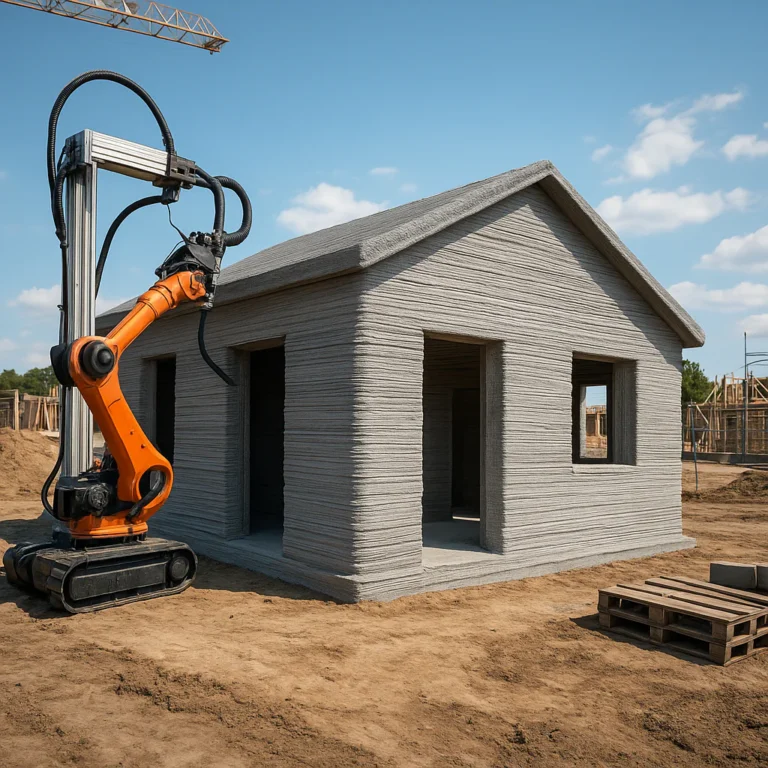
This is the show. The printer extrudes the material layer by layer.
- Speed: The nozzle moves at a controlled speed to ensure proper adhesion between layers.
- Reinforcement: Steel rebar or mesh is often inserted manually or via automated systems between layers to add tensile strength.
- Openings: Doors and windows are printed as voids, or frames are inserted later.
Step 5: Curing and Finishing
Once the walls are printed, the concrete needs to cure. This can take days or weeks depending on the mix. Afterward, the roof, windows, doors, and interior finishes (drywall, plumbing, electrical) are installed by traditional trades.
Pro Tip: The layer lines are often left visible as a design feature, giving the home a unique, textured look. But don’t worry, they can be smoothed out if you prefer a sleek finish.
For more on the software side of things, check out our guide on 3D Design Software.
🔍 Debunking the Myths: Why 3D Printed Buildings Lead to Problems (And How We Fix Them)
Let’s address the elephant in the room. You’ve probably seen headlines like “Why 3D Printing Buildings Leads to Problems” or “Lies of the 3D Printed House.” Are they right? Partially, but the narrative is often skewed.
Myth 1: “They are weak and will crumble.”
The Truth: 3D printed homes are monolithic. Unlike traditional stick-built homes with many joints, a printed wall is one continuous piece. This makes them highly resistant to wind, fire, and even earthquakes. The problem isn’t the strength; it’s the lack of standardized testing in some regions.
Myth 2: “They are ugly and boxy.”
The Truth: Early designs were boxy because that’s what was easy to print. Modern printers can handle complex curves and organic shapes. The “ugly” factor is a design choice, not a technical limitation.
Myth 3: “They are too expensive.”
The Truth: Currently, the initial setup cost is high. But as the technology scales and the supply chain matures, the cost per square foot is dropping. The Genesis Collection in Texas showed that with scale, 3D printed homes can be competitive with traditional builds.
Myth 4: “They can’t pass building codes.”
The Truth: This is the biggest hurdle. Building codes are slow to adapt. However, companies like ICON and Mighty Buildings are working with ICC-ES (International Code Council Evaluation Service) to get their systems approved. Once approved, they can be built anywhere.
The Verdict: The problems are tething issues, not fatal flaws. As we see more data from real-world projects, these issues are being resolved faster than you think.
💰 Cost Analysis: Is 3D Printed Housing Actually Cheaper?
This is the million-dollar question (literally). Let’s break it down.
| Cost Factor | Traditional Construction | 3D Printed Construction | Notes |
|---|---|---|---|
| Labor | High (Skilled trades needed) | Low (Fewer workers, more tech) | Labor is the biggest cost in traditional builds. |
| Material Waste | High (Cut-offs, errors) | Low (Additive process) | 3D printing uses only what’s needed. |
| Speed | Slow (Months) | Fast (Weeks for shell) | Faster construction = lower financing costs. |
| Design Complexity | High cost for curves | Low cost for curves | Complexity doesn’t add much cost in printing. |
| Initial Setup | Low | High (Printer rental/setup) | Economies of scale are crucial. |
The Bottom Line: For a single custom home, 3D printing might not be cheaper yet due to setup costs. But for mass production (like a neighborhood of 10 homes), the savings are massive. The Genesis Collection aims to bring the cost down to a point where it’s affordable for the average American family.
🌍 3D Printing on Earth and Beyond: From American Suburbs to the Moon
Why stop at Earth? The same technology that prints homes in Texas is being adapted for lunar and Martian colonies.
- NASA’s Challenge: NASA is actively funding research into in-situ resource utilization (ISRU). This means using lunar regolith (moon dust) to print habitats.
- The Tech: The COBOD and ICON teams are working on printers that can operate in low gravity and extreme temperatures.
- The Vision: Imagine a future where a robot lands on the Moon, sets up a printer, and builds a habitat using local materials. It’s not sci-fi; it’s planned engineering.
Fun Fact: The 60 Minutes segment on 3D printed homes highlighted this very possibility, showing how the tech could solve the housing crisis on Earth and enable space exploration.
🏗️ The Materials Matter: Concrete, Clay, and Beyond
The “ink” is just as important as the printer.
- Concrete (Lavacrete, etc.): The most common. Durable, strong, but heavy.
- Clay: Used in Tecla. Sustainable, biodegradable, and excellent for thermal mass.
- Composites: Mighty Buildings uses a UV-cured composite that is lighter and stronger than concrete.
- Recycled Materials: Some companies are experimenting with recycled glass and plastic to reduce the carbon footprint.
Insider Tip: The rheology of the mix is critical. It needs to be fluid enough to extrude but stiff enough to hold its shape immediately. This is where the real R&D is happening.
🛠️ The Future of Construction: Will 3D Printers Replace Traditional Builders?
Will the 3D printer replace the carpenter? No. But it will change the job.
- The Shift: We’ll see a shift from manual labor to technical operation. Builders will need to know how to operate and maintain printers.
- The Collaboration: The future is hybrid. Printers will handle the walls, while humans handle the finishing touches, plumbing, electrical, and interior design.
- The Opportunity: This could create new jobs in tech, design, and maintenance, while reducing the reliance on scarce skilled trades.
The Big Question: Will you be the one operating the printer, or the one designing the home? The future of construction is open to anyone with the right skills.
📺 Must-Watch Documentaries and Videos on 3D Printed Construction
Want to see it in action? Here are the best resources:
- “The 3D printing revolution | DW Documentary”: A comprehensive look at the global impact.
- “Inside The World’s Largest 3D Printed Neighborhood”: A deep dive into the Genesis Collection.
- “Why 3D Printing Buildings Leads to Problems”: A critical look at the challenges (essential for a balanced view).
- “D printing homes on Earth, someday the moon | 60 Minutes”: The future of space habitats.
- “First Printed House in ALASKA”: See how it handles extreme cold.
Featured Video: Check out the Genesis Collection video below for a firsthand look at the process and the homeowners’ experiences.
🎥 Watch: The Genesis Collection at Wolf Ranch
✅ Quick Tips and Facts for Aspiring 3D Home Builders
Thinking about building your own 3D printed home? Here’s what you need to know:
- Zoning is Key: Before you buy a printer, check your local zoning laws. Not all areas allow 3D printed homes yet.
- Find a Partner: Most individuals don’t buy printers; they partner with a company like ICON or SQ4D to build their home.
- Design for Print: Work with an architect who understands 3D printing constraints. Not every design is printable.
- Budget for Finishes: The printer only does the walls. Budget for roofing, windows, and interiors.
- Stay Informed: The field is moving fast. Follow industry leaders and news outlets to stay updated on code changes and new technologies.
For more on what you can print, explore our 3D Printable Objects section for inspiration on smaller projects while you plan your big build.
🏁 Conclusion

The era of 3D printed homes is no longer a distant dream; it’s happening right now. From the Genesis Collection in Texas to the Tecla eco-habitat in Italy, we are witnessing a paradigm shift in how we build our shelters.
The Good:
- Speed: Homes built in days, not months.
- Sustainability: Less waste, lower carbon footprint.
- Resilience: Stronger, safer structures.
- Affordability: Potential to solve the housing crisis.
The Challenges:
- Regulatory Hurdles: Building codes are catching up.
- Initial Costs: High setup costs for single projects.
- Design Limitations: Still evolving for complex interiors.
Our Verdict: If you’re looking for a future-proof, sustainable, and resilient home, 3D printing is a compelling option. While it may not be the cheapest option for a single custom home today, the trajectory is clear. As the technology scales, the costs will drop, and the options will expand.
Final Thought: The question isn’t if 3D printed homes will become mainstream, but when. And for those of us who love innovation, that day can’t come soon enough.
🔗 Recommended Links
Ready to take the next step? Here are some resources to get you started:
-
👉 Shop 3D Printed Home Solutions:
ICON: Search for ICON Homes | ICON Official Website
Mighty Buildings®: Search for Mighty Buildings | Mighty Buildings Official Website
SQ4D: Search for SQ4D Homes | SQ4D Official Website
COBOD: Search for COBOD Printers | COBOD Official Website -
Books on 3D Printing and Construction:
📚 Reference Links
- ICON Building
- Mighty Buildings®
- SQ4D
- COBOD
- Habitat for Humanity 3D Printed Home
- Lennar & ICON Partnership
- Alquist 3D Printed Homes
- Tecla Project
- Project Milestone
FAQ

How much does it cost to build a 3D printed home?
The cost varies widely depending on location, size, and finishes. Currently, the shell of a 3D printed home can cost 30-50% less than traditional construction due to labor and material savings. However, the total cost (including finishes, roof, and utilities) is often comparable to traditional builds for single units. For mass production, the cost per square foot is expected to drop significantly.
Read more about “35 Easy 3D Print Projects for Beginners (2026) 🚀”
Are 3D printed homes durable enough for extreme weather?
Yes. In fact, they are often more durable than traditional homes. The monolithic structure provides excellent resistance to huricanes, tornadoes, and fires. The Genesis Collection in Texas and the Alaska project have demonstrated resilience in extreme conditions.
What materials are used in 3D printed home construction?
The most common material is a specialized concrete mix (like ICON’s Lavacrete). Other materials include clay (for eco-homes), UV-cured composites (like Mighty Buildings), and recycled materials. The choice depends on the printer and the desired properties of the home.
Read more about “How Much Does a 3D Printed Home Cost? 7 Key Insights for 2025 🏡”
How long does it take to 3D print a house?
The printing of the walls can take as little as 24 to 48 hours. However, the total construction time (including foundation, roof, and finishes) is typically 3 to 6 months, which is still faster than the 6 to 12 months for traditional construction.
Read more about “🚀 50+ Most Popular Things to 3D Print in 2026: The Ultimate Guide”
Can 3D printed homes pass building codes and inspections?
Yes, but it’s evolving. Companies like ICON and Mighty Buildings are working with ICC-ES to get their systems approved. Once approved, they can be built anywhere. Some states, like Texas and California, are more advanced in adopting these codes.
What are the limitations of 3D printed home designs?
The main limitations are height (most printers are limited to one or two stories) and interior complexity (plumbing and electrical still need to be installed manually). However, these limitations are being addressed with new printer designs and hybrid construction methods.
Read more about “12 Mind-Blowing 3D Printed Clothes Trends You Need to See in 2026 👗”
Is 3D printed home construction more sustainable than traditional methods?
Yes. 3D printing is additive, meaning it uses only the material needed, reducing waste. Some mixes also sequester carbon. Additionally, the energy efficiency of the homes (due to thermal mass and airtight construction) reduces long-term energy consumption.
Read more about “Is 3D Printing Environmentally Friendly? 🌍 10 Surprising Insights (2026)”