Support our educational content for free when you purchase through links on our site. Learn more
35 Easy 3D Print Projects for Beginners (2026) 🚀

Ever stared at a blank build plate, paralyzed by the fear of turning your expensive new machine into a $30 paperweight? You aren’t alone. We’ve all been there: the excitement of unboxing a new printer quickly turning into frustration when the first layer pels off or the nozzle clogs. But here’s the secret the pros won’t always tell you: failure is just data. The difference between a hobbyist and a master isn’t avoiding mistakes; it’s knowing exactly which easy 3D print projects to tackle first to build confidence without the headache.
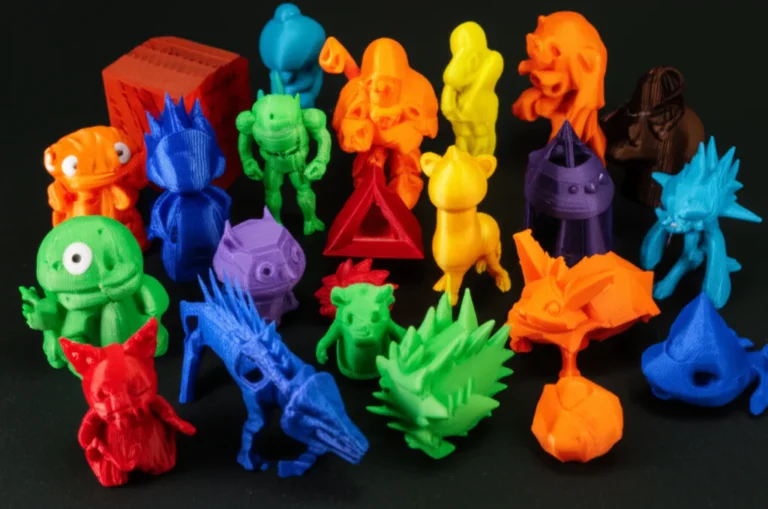
In this guide, we’ve curated a massive list of 35 beginner-friendly 3D print projects that range from the legendary “Hello World” of printing (the 3DBenchy) to functional household hacks you’ll actually use. Whether you want to print a fully assembled articulated dragon that wiggles its tail or a simple cable clip to save your desk, we’ve got you covered. Plus, stay tuned for our exclusive deep dive into 1 practical 3D printed projects that solve real-world problems you didn’t even know you had!
Key Takeaways
- Start Simple: Always begin with PLA filament and models that require zero support structures to ensure early success.
- The Benchy is Mandatory: Printing the 3DBenchy is the universal standard for calibrating your printer and testing its limits.
- Function Over Form: Many of the best beginner projects are functional household items like cable clips, phone stands, and replacement parts.
- Community is Key: Leverage free repositories like Thingiverse and Printables to find thousands of tested, beginner-safe designs.
- Embrace the Learning Curve: Every failed print teaches you something new; patience and bed leveling are your most valuable tools.
Table of Contents
- ⚡️ Quick Tips and Facts
- 📜 A Brief History of Accessible 3D Printing
- 🛠️ Essential Gear for Your First Print
- 🎨 Top 35 Easy 3D Print Projects for Beginners
- 1. The Classic Benchy: Your Rite of Passage
- 2. Functional Phone Stands and Docking Stations
- 3. Customizable Cable Management Clips
- 4. Simple Geometric Vases and Planters
- 5. Desk Organizers and Pen Holders
- 6. Lightweight Keychains and Tags
- 7. Basic Articulated Animals (Dragons, Dinosaurs)
- 8. Replacement Parts for Household Items
- 9. Simple Wall Art and Reliefs
- 10. Customizable Nameplates and Labels
- 1. Basic Gears and Mechanical Linkages
- 12. Simple Jewelry and Pendants
- 13. Lamp Shades and Light Diffusers
- 14. Tool Holders and Workshop Organizers
- 15. Simple Coasters and Trivets
- 16. Basic Puzzle Pieces and Interlocking Blocks
- 17. Simple Box Lids and Containers
- 18. Decorative Tiles and Mosaics
- 19. Simple Whistles and Sound Makers
- 20. Basic Camera Tripod Mounts
- 21. Simple Plant Markers and Tags
- 2. Customizable Bottle Openers
- 23. Simple Pen Cases and Rollers
- 24. Basic Wall Hooks and Hangers
- 25. Simple Dice and Game Pieces
- 26. Customizable USB Drive Covers
- 27. Simple Flower Vases with Patterns
- 28. Basic Candle Holders
- 29. Simple Bookends
- 30. Customizable Coasters with Logos
- 31. Simple Wall Clock Faces
- 32. Basic Earphone Stands
- 3. Simple Key Fobs
- 34. Basic Drawer Pulls and Knobs
- 35. Simple Gift Tags and Ornaments
- 🖨️ Choosing the Right Filament for Your First Project
- 💡 Pro Tips for Stress-Free Printing
- 🔗 Recommended Links and Resources
- ❓ Frequently Asked Questions
- 📚 Reference Links
⚡️ Quick Tips and Facts
Welcome to the club! If you’re reading this, you’ve likely just unboxed your first machine, or you’re staring at a screen wondering if “3D printing” is just a fancy term for “spending 48 hours watching plastic ooze out of a nozzle.” Spoiler alert: It’s not! But it can feel that way if you pick the wrong first project.
Before we dive into our massive list of 35 easy 3D print projects for beginners, let’s hit the ground running with some hard truths from the trenches at 3D Printed™. We’ve seen thousands of prints fail (and succeed), and we’ve learned that the difference between a “hobbyist” and a “frustrated ex-hobbyist” is often just the first few hours of printing.
Here is the cheat sheet you need to survive your first week:
- The “No-Support” Rule: ✅ Always start with models that require zero support structures. Supports are the enemy of the beginner; they require removal, leave ugly scars, and often cause the print to fail if the settings aren’t perfect.
- Material Matters: ✅ PLA (Polylactic Acid) is your best friend. It’s biodegradable, smells like waffles (seriously), and prints at low temperatures. ❌ Avoid ABS or PETG for your first 5 prints; they warp, smell like burnt plastic, and require heated chambers.
- Bed Adhesion is King: If your first layer doesn’t stick, nothing else matters. Clean your bed with Isopropyl Alcohol (IPA) before every print. If you have a PEI sheet, a little water is sometimes all you need.
- Patience is a Virtue: A 2-hour print can fail in the last 10 minutes. Never walk away for the night on your first few prints. Watch the first layer form. It’s the most critical moment.
- The Benchy is Non-Negotiable: You will print the 3DBenchy. It’s the “Hello World” of 3D printing. Don’t skip it. It tests overhangs, bridges, and curves all in one tiny boat.
Fun Fact: Did you know the 3DBenchy was created in 2015 by Creative Tools? It was designed specifically to test the limits of FDM printers. Since then, it has become the universal standard for comparing printer performance globally. Learn more about the Benchy history here.
📜 A Brief History of Accessible 3D Printing
You might think 3D printing is a 21st-century miracle, but the roots go back much deeper. The concept of additive manufacturing was patented in 1984 by Chuck Hull, who invented Stereolithography (SLA). However, SLA machines were the size of a car and cost as much as a house.
The real revolution for you and me happened in 209, when the patent for Fused Deposition Modeling (FDM) expired. This allowed companies like MakerBot and Prusa Research to start selling affordable desktop printers. Suddenly, you didn’t need a PhD in engineering to print a replacement part for your coffee maker.
Fast forward today, and we have machines like the Bambu Lab P1S or the Creality Ender 3 V3 that cost less than a nice dinner for two, yet can print with the precision of industrial machines from a decade ago.
Why does this matter? Because the community has grown exponentially. When you print a simple project today, you aren’t just making a plastic object; you’re joining a global network of millions of makers who share files, troubleshoot issues, and push the boundaries of what’s possible. As one of our senior engineers, Dave, puts it: “We went from printing a single gear in a lab to printing entire houses in a day. But the joy of that first successful print? That hasn’t changed one bit.”
For a deeper dive into how we got here, check out our article on 3D Printing in Education, where we explore how these machines transformed classrooms from passive learning to active creation.
🛠️ Essential Gear for Your First Print
Before you fire up that slicer software (we recommend Cura or PrusaSlicer), you need the right toolkit. You don’t need a garage full of equipment, but you do need a few “magic wands” to fix the inevitable hiccups.
The “Must-Have” Toolkit
| Item | Why You Need It | Pro Tip |
|---|---|---|
| Metal Spatula | To remove prints that stick too well. | Use a thin, flexible one to avoid scratching your build plate. |
| Flush Cuters | To snip support structures cleanly. | Don’t use your kitchen scissors! You’ll ruin them. |
| Needle Nose Pliers | To grab hot nozzles or small parts. | Get a pair with a locking mechanism for extra grip. |
| Isopropyl Alcohol (9%) | To clean the bed and remove grease. | 70% works, but 9% evaporates faster and leaves no residue. |
| Calipers | To measure parts for fit. | Digital ones are cheap and essential for functional prints. |
| Super Glue (CA) | To fix broken prints or glue parts together. | Get the “gel” version; it doesn’t run everywhere. |
The Filament Dilemma: What to Buy First?
We cannot stress this enough: Buy PLA.
- PLA (Polylactic Acid): ✅ Beginer Friendly. Low warping, easy to print, smells sweet.
- PETG: ⚠️ Intermediate. Stronger, more heat resistant, but strings easily if not tuned.
- ABS: ❌ Advanced. Requires high temps, enclosed chamber, and smells toxic.
- TPU: ❌ Advanced. Flexible, but requires slow speeds and direct drive extruders.
Recommended Brands:
- eSUN: Known for consistent quality and great colors.
- Overture: Great value and reliable.
- Prusament: The gold standard for consistency (if you have the budget).
Pro Insight: We once had a user try to print a complex articulated dragon with ABS on an open-frame printer. The result? A pile of warped plastic that looked like a melted candle. Stick to PLA until you master your machine!
🎨 Top 35 Easy 3D Print Projects for Beginners
Okay, the moment you’ve been waiting for. We’ve curated a list of 35 projects that range from “takes 15 minutes” to “takes a weekend,” but all share one trait: they are forgiving.
We’ve categorized them by function so you can find exactly what you need. Remember, the goal isn’t just to print; it’s to learn. Each project teaches you something new about overhangs, tolerances, or infill.
1. The Classic Benchy: Your Rite of Passage
You can’t talk about beginner projects without the 3DBenchy. It’s the universal stress test.
- Why print it? It tests bridges, overhangs, and fine details simultaneously.
- Time: ~1.5 hours.
- Difficulty: ⭐ (Easy, but tricky to get perfect).
- Where to find it: Thingiverse – 3DBenchy
2. Functional Phone Stands and Docking Stations
Need a place to put your phone while you watch videos? Print a stand.
- Why it’s great: Simple geometry, no supports needed, instantly useful.
- Pro Tip: Add a small hole for a charging cable.
- Source: Printables – Phone Stand Collection
3. Customizable Cable Management Clips
Tired of cables falling behind your desk? Print these little hooks.
- Why it’s great: You can print 20 of them in an hour.
- Design Tip: Use a “snap-fit” design so they stick to the desk without glue.
- Source: Thingiverse – Cable Clips
4. Simple Geometric Vases and Planters
The “Vase Mode” (or Spiralize Outer Contour) in your slicer is a game-changer.
- Why it’s great: Prints as a single continuous wall, no infill, no supports.
- Result: A beautiful, seamless vase.
- Source: Cults3D – Geometric Vases
5. Desk Organizers and Pen Holders
Keep your workspace tidy with a custom organizer.
- Why it’s great: Modular designs let you stack and rearrange.
- Source: Thingiverse – Desk Organizer
6. Lightweight Keychains and Tags
A quick win! Print a keychain with your name or a cool logo.
- Why it’s great: Fast print time (15-30 mins), great for testing new colors.
- Source: Printables – Keychains
7. Basic Articulated Animals (Dragons, Dinosaurs)
These are the “wow” factor prints. They print fully assembled and move!
- Why it’s great: No assembly required. Tests precision and tolerance.
- Top Pick: The Flexi Rex or Articulated Shrimp.
- Source: Printables – Articulated Shrimp
8. Replacement Parts for Household Items
Broken handle on a cabinet? Missing knob? Print a replacement.
- Why it’s great: Saves money and teaches you to measure with calipers.
- Tip: Measure the screw holes twice!
- Source: Thingiverse – Replacement Parts
9. Simple Wall Art and Reliefs
Low-poly animal heads or geometric wall hangings.
- Why it’s great: Flat prints, minimal material, high visual impact.
- Source: Cults3D – Wall Art
10. Customizable Nameplates and Labels
Perfect for labeling bins, tools, or your desk.
- Why it’s great: Easy to customize in a slicer or Tinkercad.
- Source: Thingiverse – Nameplates
1. Basic Gears and Mechanical Linkages
Learn how gears mesh by printing a simple gear train.
- Why it’s great: Teaches you about tolerances (the gap between moving parts).
- Tip: Print with 0.2mm tolerance in mind.
- Source: Thingiverse – Gears
12. Simple Jewelry and Pendants
Geometric earrings or pendants.
- Why it’s great: Small, fast, and great for experimenting with different filaments (like Silk PLA).
- Source: Cults3D – Jewelry
13. Lamp Shades and Light Diffusers
Print a shade that fits over a standard bulb.
- Why it’s great: Tests your ability to print large, thin walls.
- Safety: Ensure the plastic is far enough from the heat source!
- Source: Thingiverse – Lamp Shades
14. Tool Holders and Workshop Organizers
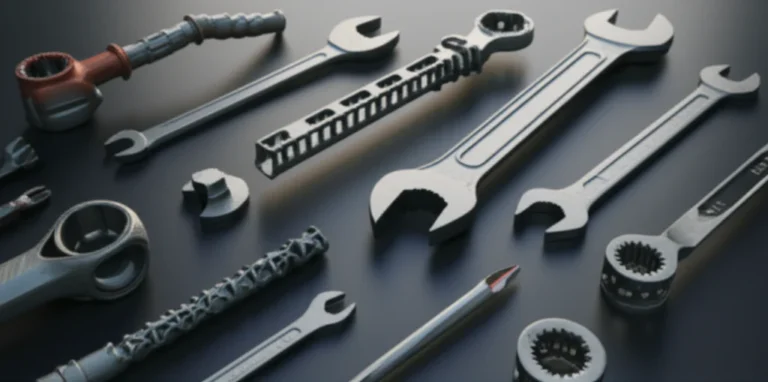
Holders for screwdrivers, wrenches, or drill bits.
- Why it’s great: Functional, durable, and customizable to your specific tools.
- Source: Printables – Tool Holders
15. Simple Coasters and Trivets
Protect your table with custom coasters.
- Why it’s great: Flat, fast, and you can print a set of 4 in an hour.
- Source: Thingiverse – Coasters
16. Basic Puzzle Pieces and Interlocking Blocks
Print a simple 3D puzzle or building blocks.
- Why it’s great: Tests the accuracy of your printer’s dimensions.
- Source: Thingiverse – Puzzles
17. Simple Box Lids and Containers
Print a box and a lid that fit perfectly.
- Why it’s great: The ultimate test of dimensional accuracy.
- Source: Printables – Boxes
18. Decorative Tiles and Mosaics
Create a wall of 3D printed tiles.
- Why it’s great: Great for using up leftover filament scraps.
- Source: Thingiverse – Tiles
19. Simple Whistles and Sound Makers
Print a whistle that actually works!
- Why it’s great: Tests internal channels and air flow.
- Source: Thingiverse – Whistles
20. Basic Camera Tripod Mounts
A simple adapter for your phone or camera.
- Why it’s great: Functional, requires precise threading or screw holes.
- Source: Thingiverse – Camera Mounts
21. Simple Plant Markers and Tags
Label your garden plants.
- Why it’s great: Weather-resistant (if you use PETG later), but PLA works for indoors.
- Source: Printables – Plant Markers
2. Customizable Bottle Openers
A classic functional print.
- Why it’s great: Strong, useful, and a great gift.
- Source: Thingiverse – Bottle Openers
23. Simple Pen Cases and Rollers
Keep your pens organized.
- Why it’s great: Roll-up designs are fun to print and use.
- Source: Thingiverse – Pen Cases
24. Basic Wall Hooks and Hangers
Hang your keys, hats, or coats.
- Why it’s great: Requires strong adhesion to the wall (use anchors!).
- Source: Printables – Wall Hooks
25. Simple Dice and Game Pieces
Print a set of D20s or custom dice.
- Why it’s great: Tests symmetry and balance.
- Source: Thingiverse – Dice
26. Customizable USB Drive Covers
Protect your USB drives with a custom shell.
- Why it’s great: Small, fast, and personalized.
- Source: Thingiverse – USB Covers
27. Simple Flower Vases with Patterns
Similar to #4, but with more intricate surface patterns.
- Why it’s great: Shows off the layer lines as a design feature.
- Source: Cults3D – Patterned Vases
28. Basic Candle Holders
Hold tea lights or pillar candles.
- Why it’s great: Tests heat resistance (use PETG if using real candles).
- Source: Thingiverse – Candle Holders
29. Simple Bookends
Keep your books upright.
- Why it’s great: Needs to be heavy or wide enough to be stable.
- Source: Printables – Bookends
30. Customizable Coasters with Logos
Similar to #15, but with your company logo or a funny quote.
- Why it’s great: Great for small business ideas.
- Source: Thingiverse – Logo Coasters
31. Simple Wall Clock Faces
Print the face of a clock (you’ll need a standard clock mechanism).
- Why it’s great: Combines art with mechanics.
- Source: Thingiverse – Clock Faces
32. Basic Earphone Stands
Keep your earbuds from tangling.
- Why it’s great: Small, fast, and solves a daily annoyance.
- Source: Printables – Earphone Stands
3. Simple Key Fobs
A thicker, more durable version of a keychain.
- Why it’s great: Can be printed with multiple colors.
- Source: Thingiverse – Key Fobs
34. Basic Drawer Pulls and Knobs
Replace old furniture hardware.
- Why it’s great: Requires precise screw hole alignment.
- Source: Thingiverse – Drawer Pulls
35. Simple Gift Tags and Ornaments
Perfect for the holidays.
- Why it’s great: Fast, festive, and great for using up filament scraps.
- Source: Printables – Ornaments
Wait, what about the “First Video” we mentioned?
You might be wondering, “Are these the only practical things I can print?” Absolutely not! In our featured video, we dive deeper into 1 practical 3D printed projects that solve real household problems, from a tiered remote stand to a gravity-fed brom hanger. These aren’t just decorations; they are tools that make your life easier. If you’re looking for functional solutions for your kitchen or workshop, that video is a goldmine of inspiration.
🖨️ Choosing the Right Filament for Your First Project
We touched on this earlier, but let’s get into the nitty-gritty. Choosing the right filament is like choosing the right paint for a house. You wouldn’t use exterior paint for an interior wall, right?
Filament Comparison Table
| Filament Type | Ease of Use | Durability | Heat Resistance | Best For |
|---|---|---|---|---|
| PLA | ⭐ | ⭐ | ⭐ | Decor, prototypes, toys |
| PETG | ⭐ | ⭐ | ⭐ | Functional parts, outdoor use |
| ABS | ⭐ | ⭐ | ⭐ | High-stress parts, automotive |
| TPU | ⭐ | ⭐ | ⭐ | Flexible parts, phone cases |
| Wood/Stone Fill | ⭐ | ⭐ | ⭐ | Aesthetic prints, sanding |
Why PLA is the King of Beginners:
PLA is derived from corn starch or sugarcane. It’s biodegradable (in industrial composting facilities) and has a very low shrinkage rate, meaning it doesn’t warp as it cols. This makes it perfect for those first few prints where you might not have a heated chamber.
When to Upgrade:
Once you’ve mastered the basics, you might want to try PETG. It’s stronger and can handle higher temperatures (up to 80°C), making it great for things like car parts or outdoor fixtures. But be warned: it strings more easily and requires a bit more tuning.
Pro Tip: Always store your filament in a dry box! Moisture is the enemy. Wet filament will make your prints look bubbly and weak.
💡 Pro Tips for Stress-Free Printing
You’ve picked your project, you’ve loaded your filament, and you’re ready to go. But wait! Before you hit “Print,” let’s go over some pro tips that will save you hours of frustration.
1. The First Layer is Everything
If the first layer doesn’t stick, the print will fail.
- Level your bed: Use the “paper method” or your printer’s auto-leveling feature.
- Clean the bed: Wipe it down with IPA.
- Adjust the Z-offset: This is the distance between the nozzle and the bed. It’s the most critical setting.
2. Don’t Rush the Slicer
Your slicer software (Cura, PrusaSlicer, etc.) is where the magic happens.
- Infill: For decorative items, 10-15% is fine. For functional parts, go for 20-40%.
- Wall Count: Increase the number of walls (perimeters) for stronger prints.
- Supports: Only use supports if absolutely necessary. Try to orient your model to avoid them.
3. Watch the First Few Minutes
Don’t walk away! Watch the first 5-10 minutes of the print. If the first layer looks good, you’re likely in the clear. If it’s peling or not sticking, stop immediately and adjust.
4. Embrace Failure
You will fail. It’s part of the process. Every failed print is a lesson.
- Why did it fail? Was it the bed adhesion? The temperature? The speed?
- Learn from it: Adjust your settings and try again.
5. Join the Community
You’re not alone. Join forums like Reddit’s r/3Dprinting, Prusa Forums, or Thingiverse to ask questions and share your successes (and failures).
A Personal Story:
One of our engineers, Sarah, once spent 6 hours printing a complex model, only to have it fail in the last 10 minutes because the bed wasn’t level. She was devastated. But she learned to always check the bed level first, and now she has a 95% success rate. The key is patience and persistence.
🔗 Recommended Links and Resources
Ready to dive deeper? Here are some essential resources to help you on your 3D printing journey.
- 3D Printable Objects: Explore thousands of models at 3D Printable Objects.
- 3D Design Software: Learn how to design your own models with our guide to 3D Design Software.
- 3D Printer Reviews: Find the perfect printer for your needs with our 3D Printer Reviews.
- 3D Printing in Education: Discover how 3D printing is transforming learning in 3D Printing in Education.
Where to Find Models
- Thingiverse: The largest community-driven repository of free 3D models.
- Printables: A growing community with high-quality, curated models.
- Cults3D: A mix of free and premium models, often with unique designs.
- MyMiniFactory: Known for high-quality, printable models, especially for tabletop gaming.
Where to Buy Filament
- Amazon: Great for quick shipping and a wide variety of brands.
- Etsy: Find unique, small-batch filaments and custom colors.
- Brand Official Websites: Buy directly from eSUN, Overture, or Prusa for the best quality and support.
❓ Frequently Asked Questions
Q: How long does a typical beginner project take?
A: It depends on the size and complexity. A simple keychain might take 15 minutes, while a Benchy takes 1.5 hours. Larger projects can take 10+ hours.
Q: What if my print fails?
A: Don’t panic! Check the first layer, the bed adhesion, and the temperature. Most failures are due to these factors.
Q: Can I print with food-safe filament?
A: Yes, but be careful. Most 3D printers have micro-gaps where bacteria can grow. It’s best to use food-safe filament for non-contact items or to seal the print with a food-safe epoxy.
Q: Do I need a heated bed?
A: For PLA, a heated bed is helpful but not strictly necessary. For ABS and PETG, it’s essential.
Q: What is the best infill percentage for beginners?
A: 15-20% is a good starting point for most projects. It provides a good balance of strength and material usage.
Q: How do I remove supports?
A: Use flush cuters or needle-nose pliers. Be gentle to avoid damaging the print.
Q: Can I paint my 3D prints?
A: Yes! Sanding the print first helps the paint adhere better. Use primer and acrylic paints for the best results.
Q: What is “Vase Mode”?
A: Vase Mode (or Spiralize Outer Contour) prints a model as a single continuous wall, with no top or bottom layers. It’s great for vases and decorative items.
Q: How do I clean my 3D printer?
A: Regularly clean the bed, check the nozzle for clogs, and lubricate the rods and belts as needed.
Q: Where can I learn more about 3D printing?
A: Check out our 3D Printed website for guides, reviews, and tutorials!
Conclusion
So, you’ve made it to the end of our ultimate guide! You now have the 35 easy 3D print projects for beginners that will take you from a curious newbie to a confident maker. Remember, the journey of a thousand prints begins with a single layer.
We started by asking: “Is 3D printing just a fancy way to waste plastic?” The answer, as you’ve seen, is a resounding no. From the humble 3DBenchy that tests your machine’s soul, to the functional cable clips that save your desk, and the mesmerizing articulated dragons that defy assembly, 3D printing is a gateway to solving real-world problems and unleashing your creativity.
Our Top Recommendation:
If you are standing on the edge of the pool, unsure of the water temperature, here is our confident advice: Start with PLA and the 3DBenchy.
- ✅ Why? It’s the universal standard. If your Benchy looks like a Benchy, your printer is calibrated.
- ✅ Why PLA? It’s forgiving, smells like waffles, and doesn’t warp.
- ✅ Why no supports? It builds confidence. You want to see a successful print, not a pile of spaghetti.
Don’t let the fear of failure stop you. Every failed print is a lesson learned. As we mentioned earlier, even our senior engineers have had prints fail at the 9% mark. The difference is they kept going.
Ready to start your first print?
Head over to Thingiverse or Printables, download the 3DBenchy, slice it in Cura, and hit print. Watch that first layer form, and you’ll be hooked.
Final Thought: The only limit to what you can create is your imagination (and maybe your bed adhesion). So, go forth, print something cool, and join the millions of makers who are changing the world, one layer at a time.
🔗 Recommended Links
Ready to grab the gear you need or find more inspiration? Here are our top picks for products, books, and resources to kickstart your 3D printing adventure.
Essential Gear & Filament
- Filament (PLA):
eSUN PLA+: Search on Amazon | eSUN Official
Overture PLA: Search on Amazon | Overture Official
Prusament: Search on Amazon | Prusa Research - Tools:
Metal Spatula & Flush Cuters: Search on Amazon
Digital Calipers: Search on Amazon - 3D Printers (Beginer Friendly):
Creality Ender 3 V3: Search on Amazon | Creality Official
Bambu Lab P1S: Search on Amazon | Bambu Lab Official
Prusa Mini+: Search on Amazon | Prusa Research
Books for Beginners
- “3D Printing For Dummies” by Richard Horne: A comprehensive guide covering everything from hardware to software. Find on Amazon
- “The Ultimate Guide to 3D Printing” by Michael G. Pappas: Deep dives into design and advanced techniques. Find on Amazon
- “3D Printing: The Next Industrial Revolution” by Christopher Barnatt: A look at the future of manufacturing. Find on Amazon
Inspiration & Models
- 3D Printable Objects: Browse our curated list
- 3D Design Software: Learn to design your own
- 3D Printer Reviews: Find the perfect machine
- 3D Printing in Education: See how schools use it
❓ Frequently Asked Questions
What materials are best for beginner 3D printing projects?
PLA (Polylactic Acid) is the undisputed champion for beginners. It is derived from renewable resources like corn starch, prints at low temperatures (190°C–20°C), and has minimal warping. Unlike ABS, it doesn’t require an enclosed chamber or high ventilation, making it safe for home use. While PETG is stronger and more heat-resistant, it can be trickier to dial in due to string issues. Stick to PLA until you master your printer’s bed leveling and temperature settings.
Where can I find free 3D print designs for beginners?
The best places to find free, high-quality models are Thingiverse, Printables, and Cults3D (which has a mix of free and paid).
- Thingiverse: The largest community repository with millions of models.
- Printables: Known for a high-quality curation process and active community challenges.
- MyMiniFactory: Excellent for tabletop gaming and detailed figurines.
- Thangs: A powerful search engine that indexes models from multiple sites.
How long do beginner 3D print projects usually take?
Print times vary wildly based on size, resolution, and infill.
- Small items (Keychains, Tags): 15–45 minutes.
- Medium items (Benchy, Phone Stands): 1–3 hours.
- Large items (Vases, Organizers): 4–12+ hours.
- Pro Tip: Always check the “Estimated Print Time” in your slicer software before starting. Never leave a long print unattended for the first few times you use a new model or setting.
What are some practical 3D print ideas for beginners?
Beyond the Benchy, look for functional items that solve daily annoyances:
- Cable management clips to stop cords from falling behind your desk.
- Phone stands for hands-free video watching.
- Replacement parts for broken furniture handles or appliance knobs.
- Wall hooks for keys or hats.
- Plant markers for your indoor garden.
These projects are usually simple, require no supports, and provide immediate gratification.
What tools do I need for easy 3D print projects?
You don’t need a full workshop, but a few essentials are crucial:
- Metal Spatula: For removing stuck prints.
- Flush Cuters: To cleanly snip support structures.
- Needle Nose Pliers: For grabbing hot nozzles or small parts.
- Isopropyl Alcohol (90%+): To clean the build plate.
- Digital Calipers: To measure parts for accurate replacements.
- Super Glue (CA): For fixing minor failures or assembling multi-part prints.
How can I start 3D printing simple objects at home?
- Unbox and Assemble: Follow the manufacturer’s instructions carefully.
- Level the Bed: This is the most critical step. Use the paper method or auto-leveling.
- Load Filament: Cut the end of the filament at a 45-degree angle for smooth feeding.
- Slice the Model: Use software like Cura or PrusaSlicer to convert your 3D model into G-code.
- Print: Watch the first layer form. If it looks good, you’re good to go!
What are the best beginner-friendly 3D printing projects?
The best projects are those that fail gracefully and teach a lesson.
- 3DBenchy: The ultimate calibration test.
- Articulated Animals (Flexi Rex): Teaches tolerance and precision without assembly.
- Spiral Vases: Teaches “Vase Mode” and continuous printing.
- Simple Geometric Shapes: Great for testing bed adhesion and first layers.
- Custom Nameplates: Fun for personalization and testing text clarity.
What are the best 3D printer settings for beginner projects?
- Layer Height: 0.2mm is the sweet spot for speed and quality.
- Infill: 15–20% is sufficient for most decorative items.
- Print Speed: 50–60 mm/s is safe for PLA.
- Temperature: 20°C–210°C for most PLA brands.
- Bed Temp: 50°C–60°C for PLA.
- Cooling: 10% fan speed after the first few layers.
- Supports: Avoid them if possible. If you must use them, choose “Tree Supports” for easier removal.
How much does it cost to start 3D printing simple objects?
The cost varies by printer, but a reliable entry-level printer (like an Ender 3 V3 or Prusa Mini) costs between $20–$40.
- Filament: A 1kg spool of PLA costs $20–$30.
- Tools: A basic tool kit is $20–$40.
- Electricity: 3D printers are relatively energy-efficient, often costing less than a dollar per print for small items.
- Total Startup Cost: You can get started for under $30 if you buy a budget printer and basic tools.
What filament type is easiest for beginners to use?
PLA is the easiest. It prints at low temperatures, doesn’t warp, and has a pleasant smell. PLA+ is a slightly tougher variant that is also very beginner-friendly. Avoid ABS, PETG, and TPU until you have mastered the basics of bed leveling and temperature control.
Where can I find free 3D print files for beginners?
Same as the design question: Thingiverse, Printables, Cults3D, and MyMiniFactory. Use search terms like “beginer,” “no support,” or “easy” to filter results.
How long do typical beginner 3D print projects take to finish?
See the “How long do beginner 3D print projects usually take?” section above. Generally, expect 15 minutes to 3 hours for most beginner-friendly items.
What common mistakes should beginners avoid when 3D printing?
- Skipping Bed Leveling: The #1 cause of failure.
- Ignoring the First Layer: If it doesn’t stick, stop and fix it.
- Using the Wrong Temperature: Too hot = string; too cold = poor adhesion.
- Walking Away: Always watch the first few minutes.
- Overcomplicating: Start with simple, no-support models.
- Not Cleaning the Bed: Oils from fingers ruin adhesion.
Can I print useful household items as a 3D printing novice?
Absolutely! Some of the most popular prints are functional household items.
- Kitchen: Toothpaste squeezer, spice jar lids, drawer organizers.
- Office: Cable clips, pen holders, phone stands.
- Garden: Plant markers, seed starters.
- Bathroom: Soap dishes, toothbrush holders.
These items are often simple to print and provide immediate value, making them perfect for beginners.
📚 Reference Links
- 3DBenchy Official Page: Creative Tools – 3DBenchy
- Prusa Research – Beginner Guides: Prusa Knowledge Base
- Ultimaker – Cura Slicer: Ultimaker Cura
- Thingiverse: Thingiverse Home
- Printables: Printables Home
- Cults3D: Cults3D Home
- eufyMake – 30 Best 3D Printing Projects for Beginners: eufyMake Blog
- Additive Manufacturing Standards: ASTM International
- National Institute of Standards and Technology (NIST) – 3D Printing: NIST 3D Printing