Support our educational content for free when you purchase through links on our site. Learn more
Smart Prints: IoT’s Revolution in 3D Printing! 🚀


Ever wished your 3D printer could text you when it’s done, or better yet, warn you before it runs out of filament mid-
print? What if it could even tell you a part is about to fail, saving you from a costly breakdown? Here at 3D Printed™, we’ve been on the front lines of the Internet of Things (IoT) revolution
in 3D printing, and let us tell you, the future is already here – and it’s incredibly smart! This isn’t just about remote control; it’s about transforming your additive manufacturing process into an intelligent, data
-driven powerhouse. From hobbyist setups to industrial print farms, integrating IoT is unlocking unprecedented levels of efficiency, quality, and automation. Join us as we dive deep into how this powerful duo is reshaping the landscape of creation, revealing not just
what it can do, but how you can harness its full potential to make your prints smarter, faster, and more reliable than ever before.
Key Takeaways
-
IoT transforms 3D printing from isolated
machines into intelligent, connected systems, enhancing productivity and precision. -
Key benefits include real-time monitoring, predictive maintenance, and automated workflows, drastically improving efficiency and reducing waste.
-
IoT is a cornerstone of Industry 4.
0, enabling smart factories, digital twins, and decentralized manufacturing. -
While you can’t print microchips, 3D printing is crucial for creating custom enclosures and components for IoT devices themselves.
-
Challenges like **
data security, interoperability, and cost of implementation** exist, but robust solutions and best practices can mitigate them. -
Even hobbyists can embrace IoT with tools like OctoPrint and Klipper, making smart printing accessible to everyone.
-
The future promises self-optimizing printers, adaptive manufacturing, and new business models like Printing as a Service (PaaS).
Table of Contents
- ⚡️ Quick Tips and Facts: Your Gateway to Connected 3D Printing
- 🕰️ The Dawn of Connected Craft: A Brief History of IoT’s Embrace in Additive Manufacturing
-
👁️ Real-time Monitoring & Predictive Maintenance: Keeping Your Printers Humming
-
🤖 Automated Workflow & Remote Control: Printing from Anywhere, Anytime
-
📊 Enhanced Quality Control & Data-Driven Optimization: Smarter Prints, Fewer Fails
-
🔗 Supply Chain Integration & On-Demand Manufacturing: The Future of Production
-
✨ Personalization at Scale: Tailored Products, Mass Produced
-
💡 Beyond the Blueprint: How IoT Transforms the 3D Printing Landscape and Industry 4.0
-
🏭 Smart Factories & Digital Twin Integration: The Connected Production Floor
-
🌐 Decentralized Manufacturing & Edge Computing: Bringing Production Closer to You
-
💰 New Business Models & Service Offerings: Printing as a Service (PaaS) and Beyond
-
🛠️ Bringing Ideas to Life: Can You 3D Print IoT Devices Themselves?
-
📦 Custom Enclosures & Form Factors: Perfect Fit for Smart Gadgets
-
⚙️ The Nitty-Gritty: Key Technologies Powering IoT in Additive Manufacturing
-
📶 Connectivity Protocols: Wi-Fi, Bluetooth, LoRaWAN, 5G, and Beyond
-
☁️ Cloud Platforms & Data Analytics: Making Sense of Your Print Data
-
🧠 Edge Computing & AI/ML Integration: Local Intelligence for Faster Decisions
-
🚧 Navigating the Digital Wilderness: Common Obstacles & Smart Solutions for IoT in 3D Printing
-
🔒 Data Security & Privacy Concerns: Protecting Your Intellectual Property
-
🤝 Interoperability & Standardization Challenges: Getting Devices to Speak the Same Language
-
🧑 💻 Skill Gap & Training Needs: Bridging the Knowledge Divide
-
🔋 Power Management for Printed Electronics: Keeping Your Smart Prints Alive
-
🏡 DIY Delight: Integrating IoT with Your Home 3D Printer Setup for the Enthusiast
-
🐙 OctoPrint & Klipper: Your Gateway to Smart, Remote Printing
-
🔌 Smart Plugs & Environmental Sensors: Beyond Basic Monitoring
-
🏠 Home Assistant & Custom Dashboards: Your Personalized Print Command Center
-
🌅 The Horizon Line: The Future of Connected Manufacturing with 3D Printing and IoT
-
🤖 Self-Optimizing Printers & Adaptive Manufacturing: The Autonomous Factory
-
🩺 Bio-Printing & Medical IoT Applications: Revolutionizing Healthcare
-
🌌 Space Exploration & Remote Fabrication: Printing in the Cosmos
-
♻️ Sustainable Manufacturing & Circular Economy: Eco-Friendly Production
-
❓ FAQ: Your Burning Questions About IoT in 3D Printing Answered
⚡️ Quick Tips and Facts: Your Gateway to Connected 3D Printing
Ever wondered if your 3D printer could tell you it’s running out of filament, or if your latest print job is failing while
you’re miles away? Welcome to the world where 3D printing meets the Internet of Things (IoT)! It’s not just sci-fi anymore; it’s the present, and it’s making our lives as
makers and engineers a whole lot easier, and frankly, a lot more fun. Here at 3D Printed™, we’ve been diving deep into this convergence, and let us tell you, the possibilities are mind-blowing!
Here are some rapid
-fire facts to get your gears turning:
-
What is IoT in 3D Printing? It’s the integration of 3D printers with sensors, software, and network connectivity, allowing them to collect and exchange
data. Think of it as giving your printer a brain and a voice! -
Why does it matter? This powerful duo enhances manufacturing productivity, precision, and enables remote monitoring and control
. It’s about making your additive manufacturing processes smarter, more efficient, and less prone to unexpected hiccups. -
Key Benefits? ✅ Remote Monitoring of print progress and printer health, ✅ **
Predictive Maintenance** to avoid costly breakdowns, ✅ Automated Workflows for seamless production, and ✅ Enhanced Quality Control through real-time data analysis. We’re talking about a significant leap in efficiency and reliability! -
Can you 3D print IoT devices? Absolutely! While consumer-grade printers might not print the actual electronics like sensors or batteries, they excel at creating custom enclosures, specialized components, and **
prototypes** for IoT devices. Imagine designing the perfect housing for your smart home sensor, tailored precisely to your needs! -
Industry 4.0 Ready: The convergence of IoT and
3D printing is a cornerstone of Industry 4.0, paving the way for smart factories, digital twins, and decentralized manufacturing. It’s a revolution, and your printer is on the front lines! -
DIY Friendly? You bet! Tools like OctoPrint and Klipper transform standard 3D printers into connected powerhouses, allowing for remote control, webcam monitoring, and even smart home integration.
We’ll show you how to get started!
Ready to unlock the full potential of your 3D printing setup? Let’s dive deeper into how these two transformative technologies are intertwining to create a future where your prints are not
just objects, but intelligent participants in a connected world.
🕰️
The Dawn of Connected Craft: A Brief History of IoT’s Embrace in Additive Manufacturing
Remember the early days of 3D printing? It felt like magic, watching a digital design materialize layer by painstaking layer. But let’s be honest
, it was often a solitary, somewhat manual affair. You’d load your filament, hit print, and then… wait. And wait. And maybe occasionally peek in to make sure things weren’t going horribly wrong.
Then came the **
Internet of Things (IoT)**, a concept that promised a world where everyday objects could talk to each other, collect data, and make our lives smarter. Initially, these two revolutionary technologies, 3D printing (or additive manufacturing, as the pros call it) and IoT, seemed to exist in parallel universes. Each was redefining various sectors on its own, pushing the boundaries of what was possible.
But as the digital age matured, a natural convergence began.
We, as engineers and enthusiasts at 3D Printed™, started asking: “What if our printers weren’t just isolated machines, but active participants in a larger, connected ecosystem?” This wasn’t just about remote control; it was
about data, intelligence, and automation.
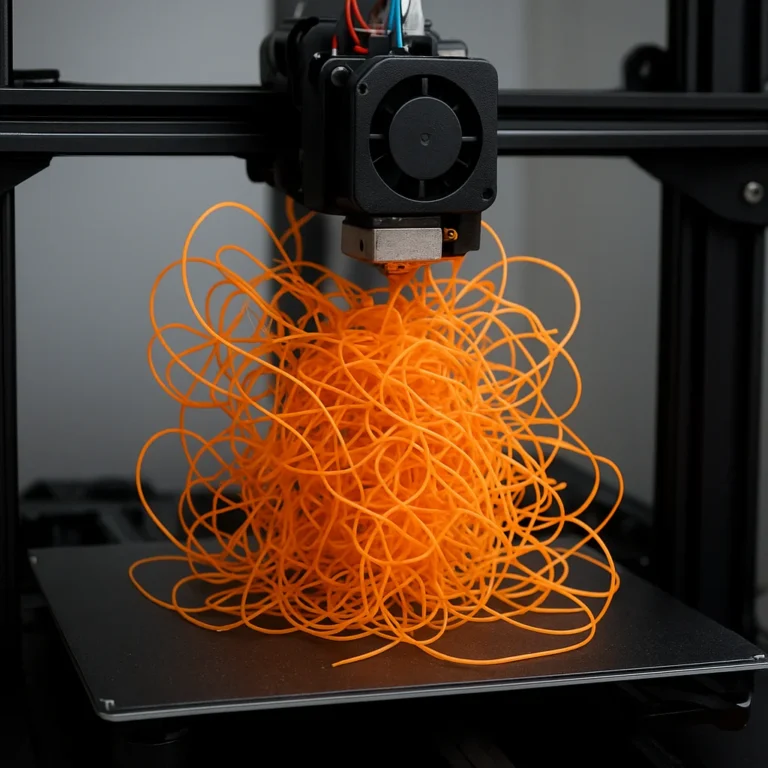
The early steps were humble. Think about the rise of OctoPrint for hobbyist FDM printers. Suddenly, you could monitor your print from your phone, get notifications, and even stop
a runaway print before it became a spaghetti monster. This was a crucial first step, a taste of what true connectivity could offer. It showed us the power of having our printers “speak” to us, even if it was just through a
simple web interface.
As industrial 3D printing scaled up, the need for more sophisticated monitoring and control became paramount. Imagine a factory floor with dozens, even hundreds, of industrial-grade additive manufacturing machines. Managing them manually would be a
nightmare! This is where the true potential of IoT began to shine, transforming individual machines into nodes in a vast, intelligent network. As one expert put it, “As standalone technologies, they have each redefined various sectors. However, their convergence has sparked
even more significant potential.”
Today, this revolutionary technology is no longer a niche concept. It’s rapidly evolving, and we believe “this revolutionary technology may have even more special applications soon.”
From smart factories to personalized medical devices, the journey of IoT in 3D printing is just beginning, promising a future where our craft is not only additive but also incredibly intelligent.
🚀 Why IoT and 3D Printing Are a Match Made in the Cloud: Un
locking Smart Manufacturing Potential
So, why are we, the passionate folks at 3D Printed™, so excited about the marriage of IoT and 3D printing? Because it’s not just a passing trend; it’s a fundamental shift
in how we design, produce, and interact with physical objects. This isn’t just about convenience; it’s about unlocking a whole new level of smart manufacturing potential that was previously unimaginable.
Think about it: 3D printing gives
us unparalleled freedom in design and rapid prototyping. IoT gives us the eyes, ears, and brain to make those processes incredibly efficient and intelligent. Together, they create a synergy that’s truly transformative. As one industry insight highlights, “Digital
ization is now revolutionizing manufacturing, allowing businesses to act more quickly and make better decisions.” And that’s exactly what IoT brings to our beloved 3D printers.
Let’s break down the incredible
benefits this dynamic duo offers:
👁️ Real-time Monitoring & Predictive Maintenance: Keeping Your
Printers Humming
Imagine this: you’ve got a critical print running, but you need to step away from your workshop. In the past, this meant anxiety and constant checking. With IoT, those days are over!
Real-time monitoring
allows you to keep a watchful eye on your printer’s status from anywhere in the world. Sensors embedded in the printer, or external ones you add, can track everything from nozzle temperature and bed adhesion to filament flow and motor performance. We
‘ve personally used systems that send us alerts if a print fails or if the filament runs out, saving countless hours and wasted material.
But it gets even better with predictive maintenance. Instead of waiting for a component to fail, IoT
sensors collect performance data over time. This data, when analyzed, can predict when a part is likely to wear out or malfunction. This means you can schedule maintenance before a breakdown occurs, preventing unexpected downtime, minimizing material waste, and significantly
reducing costs. No more frantic midnight repairs!
- Example: A sensor on your extruder motor detects a slight increase in resistance over several weeks. The IoT system flags this, suggesting a motor replacement is due
soon, allowing you to order the part and schedule the swap during planned downtime, rather than having your print fail mid-job.
🤖 Automated Workflow & Remote Control: Printing from Anywhere, Anytime
The dream of starting a print from your office, or even from vacation, is now a reality. Remote monitoring and control are perhaps the most immediately gratifying
benefits for many users. Whether you’re managing a single desktop printer or a fleet of industrial machines, you can centralize oversight, check status, adjust parameters, and receive real-time notifications.
Beyond simple
remote control, IoT enables automated workflows. Imagine a system that automatically queues print jobs, schedules them based on material availability or even energy costs, and manages multiple printers simultaneously for optimal cost-effectiveness. This is particularly
powerful in a professional setting, where maximizing machine uptime and efficiency is crucial.
- Our Story: One time, a team member was at a conference, and a client urgently needed a prototype. With our IoT-enabled printer farm
, they were able to upload the file, select the printer, and start the print remotely. By the time they were back in the office, the prototype was ready for post-processing. Talk about a productivity boost!
📊 Enhanced Quality Control & Data-Driven Optimization: Smarter Prints, Fewer Fails
Nobody likes a failed
print. It’s a waste of time, material, and often, patience. IoT significantly elevates quality control in 3D printing. Sensors can monitor print parameters in real-time, from layer height consistency to extrusion temperature.
If defects are detected, the system can automatically adjust parameters to meet specifications, or even pause the print and alert an operator.
But the real magic happens with data analytics. By collecting and analyzing vast amounts of process
data, we can identify trends, optimize resource utilization, and continuously enhance print quality. This data can reveal subtle correlations between environmental factors, material batches, and print outcomes, leading to smarter print profiles and fewer failures.
Fact: Organizations can select specific parameters to monitor based on their unique needs, and dashboards can be simple to set up for quick access to crucial KPIs. This means you get the data that you care
about, presented in a way that’s easy to understand.
🔗 Supply Chain Integration & On-Demand Manufacturing
: The Future of Production
IoT doesn’t just stop at the printer; it extends to the entire supply chain. By connecting 3D printers with inventory management, order processing, and product design systems, we can streamline production like never before. This is the backbone of on-demand manufacturing, where products are printed only when and where they are needed, reducing waste and storage costs.
Imagine a scenario where a customer places an order for a custom part. The
order system, integrated with your 3D printer network, automatically checks material availability, schedules the print at the nearest available machine, and even triggers a reorder of filament when stock runs low. This level of supply chain integration is a game-
changer for efficiency and responsiveness.
✨ Personalization at Scale: Tailored Products, Mass Produced
One of the greatest promises
of 3D printing is customization. IoT takes this to the next level, enabling personalization at scale. By integrating interactive IoT systems with 3D printing, products can be tailored to individual user preferences.
Think about smart wearables that are perfectly fitted and incorporate sensors precisely where they’re most effective. Or medical devices, like prosthetics, that are not only custom-fit but also embedded with sensors for real-time data
collection and improved functionality. This isn’t just about making things unique; it’s about creating products that are inherently better because they’re designed for you.
The synergy between IoT and 3D printing is
truly a force multiplier. It’s making our printers smarter, our processes more efficient, and our products more personalized than ever before. Are you ready to embrace this connected future?
💡 Beyond the Blueprint: How IoT Transforms the 3D Printing Landscape and Industry 4.0
The integration of
IoT with 3D printing isn’t just about making individual print jobs better; it’s fundamentally reshaping the entire manufacturing landscape. We’re talking about a paradigm shift, a key pillar of what’s known as Industry 4
.0 – the fourth industrial revolution. This isn’t just an upgrade; it’s a complete reimagining of how products are made, from conception to delivery.
At 3D Printed™, we’ve seen firsthand how this
convergence is pushing the boundaries, moving us beyond simple blueprints to a world of intelligent, interconnected production.
🏭 Smart
Factories & Digital Twin Integration: The Connected Production Floor
Imagine a factory where every machine, every tool, and every product is constantly communicating. This is the essence of a smart factory, and 3D printers, empowered by IoT, are
central to its realization. In these environments, 3D printers are not isolated workstations but integral components of a larger, intelligent network.
A crucial concept here is the digital twin. This is a virtual replica of a physical asset, process
, or system. For 3D printing, a digital twin could represent an entire printer, a specific print job, or even the material being used. IoT sensors feed real-time data from the physical printer into its digital twin. This allows engineers
to:
- Simulate and optimize print processes in a virtual environment before committing to a physical print.
- Monitor performance and predict potential issues with incredible accuracy.
- Test modifications and improvements without disrupting
actual production.
The result? Unprecedented levels of efficiency, reduced waste, and the ability to react to changes with lightning speed. It’s like having a crystal ball for your entire production line!
🌐 Decentralized Manufacturing & Edge Computing: Bringing Production Closer to You
For decades, manufacturing has been centralized, with massive factories churning out goods.
But 3D printing, especially when combined with IoT, is enabling a shift towards decentralized manufacturing. This means production can happen closer to the point of need, reducing shipping costs, lead times, and environmental impact.
Think
about spare parts for a remote mining operation, or custom medical implants needed urgently in a hospital. Instead of waiting for a shipment from a distant factory, these items can be printed on-site using IoT-enabled machines.
This is where **edge computing
** plays a vital role. Instead of sending all data to a central cloud server for processing, edge computing processes data closer to its source – right at the “edge” of the network, often on the printer itself or a local gateway device
. This offers several advantages:
- Reduced Latency: Faster decision-making, crucial for real-time adjustments during a print.
- Improved Security: Less data needs to travel over public networks.
- Lower Band
width Usage: Less strain on internet connections.
This combination of decentralized production and edge computing makes 3D printing incredibly agile and responsive, truly bringing production closer to you.
💰 New Business Models & Service Offerings: Printing as a Service (PaaS) and Beyond
The convergence of IoT and 3D printing isn
‘t just changing how we make things; it’s changing how we do business. We’re seeing the emergence of exciting new business models and service offerings that leverage the power of connected manufacturing.
One prominent example is Printing
as a Service (PaaS). Imagine a company that doesn’t sell you a 3D printer, but rather sells you access to a network of IoT-enabled printers. You upload your design, select your material, and the
system finds the optimal printer in their network to produce your part, delivering it to you with minimal fuss. This democratizes access to advanced manufacturing capabilities.
Furthermore, the rich data collected by IoT systems opens up opportunities for:
- Predictive
Maintenance Services: Companies can offer specialized services to monitor and maintain 3D printer fleets, ensuring maximum uptime for their clients. - Optimized Material Management: IoT can track filament or resin levels via sensors and automatically reorder supplies, ensuring
uninterrupted operations. This can be offered as a managed service. - Data-Driven Design Consultation: By analyzing print data across various projects, service providers can offer insights to optimize designs for additive manufacturing, reducing
costs and improving performance.
The future of 3D printing, powered by IoT, is ripe with possibility. It’s not just about printing objects; it’s about creating intelligent, interconnected systems that will continue to revolutionize industries and empower
innovators like us.
🛠️ Bringing Ideas to Life: Can You 3D Print
IoT Devices Themselves?
This is a question we get asked a lot at 3D Printed™: “Can I actually 3D print an IoT device, like a smart sensor or a connected gadget?” And the answer, like
many things in the world of advanced manufacturing, is a resounding “Yes… and no!”
Let’s clarify. While your standard FDM or resin printer can’t magically spit out a fully functional circuit board with embedded micro
chips and batteries (at least, not yet for the average consumer!), 3D printing is absolutely indispensable for creating the physical components that house, protect, and integrate those electronic brains. It’s a powerful prototyping technology that helps speed
up the creation of IoT devices without sacrificing quality or cost.
Think of it this way: 3D printing provides the perfect body for the IoT device’s electronic soul.
📡 Integrated Sensors & Actuators: Embedding Intelligence
While we can’t print the silicon chip itself, we can certainly print the perfect housing and mounting solutions for sensors
and actuators. This is where the magic of customization truly shines.
- Custom Sensor Housings: Need a specific environmental sensor to monitor air quality in a tight space? 3D printing allows you to create a housing
that fits perfectly, protecting the delicate electronics while ensuring optimal sensor placement. We’ve designed countless custom enclosures for everything from temperature sensors to motion detectors, ensuring a snug fit and professional finish. - Actuator
Mounts: If your IoT device needs to do something – open a pet feeder, adjust a vent, or rotate a camera – 3D printing is ideal for creating the gears, levers, and mounts for motors and servos. Remember
the “Gaia” project we mentioned earlier? The creator successfully designed and 3D printed a complex fish feeding module using a continuous servo and a custom distribution disk. Talk about bringing an idea to life!
Ergonomic Wearables:** For smart wearables like fitness trackers or smartwatches, 3D-printed components can offer better fit and comfort, with customizable sensor placements for optimal data collection.
⚡️ Antennas & Circuitry: The Rise of Printed Electronics
Now, this is where the “yes, and no”
gets a little more exciting. While fully printing complex integrated circuits is still largely in the realm of advanced research, the field of printed electronics is rapidly evolving.
- Conductive Filaments: The future is bright! Emerging materials like
conductive filaments are allowing for the 3D printing of basic electrical circuits directly onto or within 3D-printed objects. Imagine printing a structural component that also contains the wiring for an LED or a simple
sensor! This is a game-changer for reducing assembly steps and creating truly integrated designs. - Printed Antennas: We’re seeing incredible advancements in 3D printing antennas directly onto devices. This allows for highly customized antenna
designs that are perfectly tuned for specific frequencies and form factors, optimizing wireless communication for your IoT gadgets. - Multi-Material Printing: Advanced multi-material 3D printers are blurring the lines, allowing for the simultaneous printing of structural
plastics and conductive inks, paving the way for more complex integrated functionalities.
While you might not be printing a CPU at home tomorrow, the ability to integrate basic circuitry and antennas directly into your 3D prints is becoming increasingly accessible, pushing
the boundaries of what’s possible for DIY IoT projects.
📦 Custom Enclosures & Form Factors: Perfect
Fit for Smart Gadgets
This is perhaps the most immediate and impactful application of 3D printing for IoT devices. The ability to rapidly produce unique casings and custom enclosures is a massive advantage.
- No More Off
-the-Shelf Boxes: Forget trying to cram your electronics into a generic project box. With 3D printing, you can design an enclosure that perfectly fits your components, optimizes airflow, provides specific mounting points, and even incorporates branding or aesthetic
elements. - Rapid Prototyping: Accelerate your design-to-manufacturing cycle! You can quickly iterate on new IoT device designs, printing multiple versions of an enclosure to test fit, functionality, and
user experience before committing to mass production. This saves immense time and money. - Specialized Components: Need a bracket to mount a smart speaker under a cabinet? Or a custom light switch cover that integrates a
new sensor? 3D printing is your go-to solution for creating these intricate, specialized components that traditional manufacturing methods simply can’t achieve cost-effectively.
We’ve seen incredible projects, like the custom
smart home accessories featured in the first YouTube video, where a presenter showcases custom brackets for Ring contact sensors and motion sensors, and even a ramp for robot vacuums to navigate door thresholds. “I’ve been printing some things for my smart home that I
absolutely love,” they exclaim, highlighting the practical utility. The presenter also notes the vast array of designs available on Thingiverse for smart home devices, a treasure
trove for inspiration.
So, while you might still need to source your microcontrollers and batteries separately, 3D printing empowers you to create the perfect physical manifestation for your IoT ideas. It’s the ultimate tool for bringing
your smart gadgets from concept to reality, with unparalleled customization and speed.
⚙️
The Nitty-Gritty: Key Technologies Powering IoT in Additive Manufacturing
Alright, fellow tech enthusiasts, let’s pull back the curtain and peek under the hood. What are the actual technologies that make this whole “IoT in 3
D printing” magic happen? It’s not just one silver bullet; it’s a symphony of interconnected components working in harmony. At 3D Printed™, we’ve spent countless hours experimenting with these tools, and understanding them is key
to unlocking the full potential of your connected workshop.
🌡️ Sensors Galore: Monitoring Every Metric
The heart of any IoT system is its ability to
collect data, and that’s where sensors come in. These tiny marvels are the eyes and ears of your 3D printing setup, constantly gathering information about its environment and performance.
For 3D printing, we’re talking
about a diverse array of sensors:
- Temperature Sensors: Crucial for monitoring nozzle, bed, and chamber temperatures, ensuring optimal printing conditions and preventing material degradation. Think thermistors and thermocouples.
- Humidity Sensors
: Important for filament storage and print quality, especially with hygroscopic materials like PETG or Nylon. - Filament Runout Sensors: A lifesaver! These detect when your filament spool is empty, pausing the print and saving
you from a failed job. Many modern printers, like the Creality Ender 3 S1 mentioned in the first YouTube video, come with these built-in. - Accelerometer/Vibration Sensors: Can
detect anomalies in printer movement, indicating potential mechanical issues or print failures. - Current/Voltage Sensors: Monitor power consumption, helping to optimize energy usage and detect electrical faults.
- Door/Lid Sensors: For
enclosed printers, these can ensure safety by pausing prints if a door is opened. - Camera Modules: While not strictly a “sensor” in the traditional sense, webcams (like the USB webcam used in the “Gaia” project for live streaming) are invaluable for visual monitoring of print progress and detecting spaghetti monsters from afar.
The data from these sensors is what fuels the intelligence of your IoT system, providing the raw material for analysis and automated
actions.
📶 Connectivity Protocols: Wi-Fi, Bluetooth, LoRaWAN, 5G,
and Beyond
Once your sensors collect data, how does it get from your printer to your phone, your computer, or the cloud? That’s where connectivity protocols step in. Choosing the right one depends on your specific needs:
range, power consumption, data rate, and environment.
- Wi-Fi: The most common choice for home and office setups. It offers high bandwidth and is readily available. Devices like the Raspberry Pi (a central client in the “Gaia” project) often use Wi-Fi to connect to local networks and the internet.
- Bluetooth: Great for short-range, low-power connections, often used for direct
device-to-device communication or connecting peripherals. - Ethernet: For industrial settings or critical applications, a wired Ethernet connection offers the most reliable and secure data transfer.
- LoRaWAN (Long Range Wide Area Network): Ideal for low-power, long-range communication, perfect for sensors deployed in large facilities or remote locations where Wi-Fi isn’t practical.
- Cellular (4G/5G): For truly
remote monitoring where no local network infrastructure exists, cellular connectivity provides a robust solution, though often with higher operational costs. - MQTT (Message Queuing Telemetry Transport): While not a physical layer protocol, MQTT is a lightweight messaging
protocol often used over Wi-Fi or cellular for efficient communication between IoT devices and servers. It’s designed for constrained devices and unreliable networks, making it perfect for many 3D printing IoT applications.
The goal is to ensure
seamless, reliable data flow so you’re always in the loop, no matter where your printer is located.
☁️ Cloud Platforms & Data Analytics: Making Sense of Your Print Data
Collecting data is one thing; making sense of it is another. This is where cloud platforms and data analytics become indispensable.
- Cloud Platforms:
Services like AWS IoT Core, Google Cloud IoT Core, or Microsoft Azure IoT Hub provide the infrastructure to securely connect, manage, and ingest data from thousands of IoT devices. They offer scalable storage, processing power, and tools
for visualizing your data. For hobbyists, platforms like Grafana (often used with InfluxDB or Prometheus) can be self-hosted on a Raspberry Pi to create custom dashboards, similar to the GUI mentioned
in the “Gaia” project for monitoring sensors and system usage. - Data Analytics: Once your data is in the cloud (or on your local server), powerful analytics tools can process it. This allows
you to: - Identify trends: Is your printer consistently running hotter on one side?
- Optimize parameters: Which print settings yield the best results for a specific material?
- Predict failures
: As discussed, predictive maintenance relies heavily on analyzing historical data patterns. - Improve OEE (Overall Equipment Effectiveness): By combining data, you can accurately assess OEE and target improvements.
Having access to all machine data in a single MES (Manufacturing Execution System) is a huge leap forward in technological innovation and enables operators to receive ongoing feedback. This feedback loop is critical for continuous improvement.
🧠 Edge Computing & AI/ML Integration: Local Intelligence for Faster Decisions
We touched on edge computing earlier
, but it’s worth reiterating its importance. By processing data closer to the source (the “edge” of the network), we can achieve:
- Real-time Decision Making: For critical actions like automatically adjusting print parameters to
prevent a defect, waiting for data to travel to the cloud and back can introduce unacceptable latency. Edge computing enables near-instantaneous responses. - Reduced Bandwidth: Less data needs to be sent to the cloud, saving on
network costs and improving efficiency. - Enhanced Privacy/Security: Sensitive data can be processed locally without leaving your network.
And then there’s the exciting realm of AI (Artificial Intelligence) and ML (Machine Learning)
integration. This is where your IoT-enabled 3D printer truly becomes “smart.”
- AI for Optimization: AI algorithms can analyze vast datasets from your prints to suggest optimal nesting arrangements, reducing build preparation time and increasing daily productivity
. They can even learn from past print failures to suggest preventative measures. - Direct Machine Control (DMC): With AI and edge computing, IoT can be integrated with DMC to alter machine operations based on data
findings. This means remotely starting, stopping, or pausing prints, or even making subtle adjustments to extrusion rates or fan speeds in real-time. This accurate machine control significantly improves manufacturing productivity, efficiency, and waste reduction. - Anomaly Detection: ML models can be trained to recognize normal print behavior. Any deviation from this norm can immediately trigger an alert, indicating a potential problem before it becomes a catastrophic failure.
These technologies, working
together, are transforming 3D printing from a manual craft into an intelligent, autonomous, and highly efficient manufacturing process. It’s a complex ecosystem, but one that promises immense rewards for those willing to explore its depths.
🚧 Navigating the Digital Wilderness: Common Obstacles & Smart Solutions for IoT in
3D Printing
As exciting as the world of IoT in 3D printing is, it’s not all rainbows and perfectly calibrated prints. Like any cutting-edge technology, it comes with its own set of challenges. At 3D Printed
™, we’ve bumped into our fair share of these digital roadblocks, but we’ve also learned that with every obstacle comes an opportunity for a clever solution. It’s about navigating this digital wilderness with a map and a good compass!
🔒 Data Security & Privacy Concerns: Protecting Your Intellectual Property
This is a big one, especially when your printers are connected to
the internet. Every piece of data your printer sends – print files, sensor readings, operational logs – could potentially be intercepted. For businesses, this means intellectual property (IP) risks; for individuals, it’s about personal
privacy. Home-printed IoT devices are susceptible to cyberattacks, and users must implement best practices for security.
Smart Solutions:
- Strong Passwords & Network Segmentation: It sounds basic, but strong
, unique passwords for all your IoT devices and Wi-Fi networks are non-negotiable. Consider segmenting your network (e.g., a separate VLAN for IoT devices) to isolate them from your main computers. - Encryption
: Ensure all data transmission is encrypted. Most reputable cloud platforms and communication protocols (like HTTPS for web interfaces) offer this by default. - Regular Updates: Keep your printer firmware, OctoPrint instances, and any other IoT
software up-to-date. Updates often include critical security patches. - VPNs & Reverse SSH Tunnels: For remote access, a Virtual Private Network (VPN) or a reverse SSH tunnel (as used in the “Gaia” project for secure communication between the Raspberry Pi client and a remote server) provides a secure, encrypted channel, much safer than simply port forwarding.
- Access Control: Implement strict access controls.
Who can access your printer’s interface? Who can view its data? Limit access to only necessary personnel.
🤝 Interoperability & Standardization Challenges: Getting Devices to Speak the Same Language
The IoT landscape is a bit like the Tower of Babel – many devices, many manufacturers, and many different “languages” (protocols).
Getting different brands of printers, sensors, and software platforms to communicate seamlessly can be a headache. This lack of interoperability and standardization is a significant hurdle.
Smart Solutions:
- Open-Source Platforms: Platforms
like OctoPrint (for 3D printers) and Home Assistant (for broader smart home integration) are fantastic because they are open-source and have large communities actively developing plugins and integrations for a vast array of devices.
Standard Protocols: Favor devices and platforms that support widely adopted IoT protocols like MQTT, REST APIs, or OPC UA (for industrial settings).
- Middleware & Integrators: Sometimes, you need a
“translator.” Middleware solutions or integration platforms can bridge the gap between disparate systems, allowing them to exchange data. - Unified Dashboards: Tools that allow you to pull data from various sources into a single, customizable dashboard (like Grafana or Home Assistant) can help you manage diverse devices from one interface.
💸 Cost of Implementation & ROI:
Is the Investment Worth It?
For hobbyists, the cost of adding IoT capabilities might be a few extra dollars for a Raspberry Pi and a webcam. But for businesses looking to implement a comprehensive IoT strategy across a fleet of industrial printers, the **
cost of implementation** can be substantial. This raises the crucial question of Return on Investment (ROI). Is the upfront cost worth the long-term benefits?
Smart Solutions:
- Start Small, Scale Up: Don
‘t try to connect everything at once. Start with a pilot project, focusing on a few key metrics or a single printer. Demonstrate the value, then gradually scale your implementation. - Focus on High-Impact Areas: Prior
itize IoT solutions that address your biggest pain points – whether it’s reducing downtime, improving quality, or optimizing material usage. - Quantify Benefits: Track and measure the improvements. How much downtime was prevented? How much material waste
was reduced? What was the increase in throughput? This data is essential for justifying further investment. - Leverage Existing Infrastructure: Can you integrate with existing MES or ERP systems? Reusing existing infrastructure can significantly reduce costs.
🧑 💻 Skill Gap & Training Needs: Bridging the Knowledge Divide
Implementing and managing IoT in 3D printing requires
a diverse skill set. It’s not just about 3D modeling and printer calibration anymore; you also need knowledge of electronics, networking, programming, and data analytics. This skill barrier can be a
significant challenge for both individuals and organizations.
Smart Solutions:
- Online Resources & Communities: The 3D printing and IoT communities are incredibly vibrant. Platforms like Thingiverse,
Cults3D, and forums dedicated to OctoPrint or Home Assistant are treasure troves of information and support. - Training & Workshops: Invest in training for your team. Many online
courses and workshops cover the fundamentals of IoT, Python programming, and specific platforms. - User-Friendly Tools: Opt for software and hardware that prioritize ease of use. Tools like SelfCAD, highlighted for its in-built online slic
er and easy-to-use interface for non-modelers, can lower the barrier to entry for 3D modeling and preparing files for IoT projects. - Collaboration: Don’t be afraid
to collaborate with experts or consultants who specialize in IoT integration.
🔋 Power Management for Printed Electronics: Keeping Your
Smart Prints Alive
If you’re venturing into printing actual electronic components or custom enclosures for battery-powered IoT devices, power management becomes a critical consideration. How do you power your sensors, microcontrollers, and communication modules efficiently, especially if
they’re meant to be standalone or low-power?
Smart Solutions:
- Low-Power Components: Choose microcontrollers (like ESP32 or ESP8266) and sensors designed for low power consumption
. - Battery Optimization: Implement deep sleep modes, power cycling, and efficient code to maximize battery life. The “Gaia” project, for instance, uses a separate 12V power supply for its peristaltic pumps
, isolating them from the Raspberry Pi’s 5V logic, a smart move for power management and safety. - Energy Harvesting: For truly autonomous devices, explore energy harvesting techniques like solar power or kinetic
energy conversion, though these are more advanced. - Wireless Power Transfer: Emerging technologies in wireless power could eventually simplify powering printed electronics, eliminating the need for bulky batteries or wires.
Navigating these challenges requires a blend of technical
know-how, strategic planning, and a willingness to learn and adapt. But the rewards – in terms of efficiency, innovation, and control – are well worth the effort.
🏡 DIY Delight: Integrating IoT with Your Home 3D Printer Setup for the Enthusiast
Alright, fellow
home hackers and makers! This is where the rubber meets the road, or rather, where the filament meets the smart home. You’ve got your trusty 3D printer, maybe a Creality Ender 3 S1 (which, as the first YouTube video points out, is “pretty easy now” with its automatic bed leveling), or perhaps a Prusa i3 MK3 like the one that sparked the “Gaia” project. Now, how do we sprinkle some IoT magic on it to make your printing experience truly next-level?
At 3D Printed™, we’re all about empowering the DIY spirit. We’ve spent countless hours tinkering
, cursing, and ultimately celebrating the integration of our printers into our smart homes. It’s incredibly satisfying to get a notification on your phone that your print is done, or to check on its progress from the comfort of your couch.
🐙 OctoPrint & Klipper: Your Gateway to Smart, Remote Printing
If you’re serious about connecting your home
3D printer, these two names should be at the top of your list. They are, without a doubt, your primary gateways to smart, remote printing.
OctoPrint: The De Facto Standard for Remote Control
What it is: OctoPrint is a free, open-source web interface for your 3D printer. Typically run on a Raspberry Pi (which, by the way, is the central client in the “Gaia” IoT system), it connects to your printer via USB and gives you unparalleled control and monitoring capabilities from any web browser.
- Key Features:
- Remote Control: Start,
stop, pause, and monitor your prints from anywhere on your network (or remotely with proper setup). - Webcam Streaming: Attach a USB webcam (or a Raspberry Pi Camera Module) to your Pi and stream live video of your
print, perfect for catching those dreaded spaghetti failures early. The “Gaia” project even streams its fish tank to Twitch using a USB webcam and a Raspberry Pi – imagine doing that for your printer!
G-code Viewer: Visualize your print layer by layer.
- Plugin Ecosystem: This is where OctoPrint truly shines! There are hundreds of plugins for everything from AI-powered print failure detection (OctoPrint-SpaghettiDetective) to advanced temperature controls and filament management.
- Notifications: Get push notifications to your phone (via apps like Pushbullet or Telegram) when a print starts, finishes, or fails.
Our Anecdote:** “I remember the first time I got OctoPrint set up,” recounts one of our engineers. “I was at work, and I got a notification that my print had finished successfully. I could literally see the finished
part on the webcam! It felt like I had a superpower. No more rushing home to check on a print!”
CHECK OUT OCTOPRINT: OctoPrint Official Website
**
Klipper: The Firmware Revolution for Speed and Precision**
- What it is: Klipper is open-source firmware that runs on a Raspberry Pi (or similar single-board computer) and communicates with your 3D printer’
s mainboard. It offloads the complex motion planning calculations from the printer’s often underpowered microcontroller to the more powerful Pi. - Key Features:
- Increased Speed & Quality: By leveraging the Pi’s
processing power, Klipper can achieve much higher print speeds with smoother motion and better print quality. - Input Shaping: A game-changer for reducing “ghosting” or “ringing” artifacts, allowing for even faster prints without
sacrificing quality. - Pressure Advance: Optimizes extrusion to reduce blobs and stringing.
- Web Interface (Mainsail/Fluidd): Klipper typically pairs with web interfaces like Mainsail or Fluidd
, which offer similar remote control and monitoring capabilities to OctoPrint, often with a more modern feel. - Why Klipper for IoT? While Klipper itself isn’t an IoT platform, its reliance on a Raspberry
Pi makes it inherently “connected.” You get all the benefits of the Pi’s networking capabilities, making it easy to integrate with other smart home systems.
LEARN MORE ABOUT KLIPPER: Klipper 3D Firmware Documentation
🔌 Smart Plugs & Environmental Sensors: Beyond Basic Monitoring
Once you have remote control over your printer, what else can you connect? The possibilities are vast!
- Smart Plugs: These are incredibly useful. Connect your 3D printer to a smart plug (like those from TP-Link Kasa or Shelly). This allows you to remotely power your printer on or off, which is fantastic for safety (e.g., turning it off if you detect a fire risk via a webcam) or for
simply conserving energy when not in use. You can even automate it to turn off after a print finishes. - Environmental Sensors:
- Temperature & Humidity Sensors: Place a Aqara Temperature and Humidity Sensor or
a Sonoff SNZB-02D near your printer enclosure. This data can be fed into your smart home system (like Home Assistant) to monitor ambient conditions, crucial for printing with sensitive filaments. - Air
Quality Sensors: If you’re printing with materials that produce fumes (like ABS or some resins), an Air Quality Sensor (e.g., from Awair or Aranet4) can alert you to poor ventilation
, ensuring a safer printing environment. - Smoke Detectors: For ultimate peace of mind, integrate a smart smoke detector (like Google Nest Protect or Aqara Smoke Detector) into your smart home system. If it
detects smoke near your printer, it can trigger automations like turning off the smart plug connected to your printer and sending you immediate alerts.
🏠 Home Assistant & Custom Dashboards: Your Personalized Print Command Center
This is where all your connected devices come together. Home Assistant is a powerful, open-source home automation platform that can run on a Raspberry
Pi (or a more powerful mini-PC). It acts as the central brain for your entire smart home, including your 3D printing setup.
- Unified Control: Home Assistant can integrate with OctoPrint, smart plugs, environmental sensors
, and even your smart cameras (like the eufy pan and tilt cam mentioned in the first YouTube video). This means you can control and monitor everything from a single, intuitive interface. - Custom Dash
boards: Create beautiful, personalized dashboards that show you exactly what you want to see: print progress, remaining filament, printer temperature, room humidity, and even a live webcam feed. - Powerful Automations: This is where the real
fun begins! - “Print Finished” Automation: When OctoPrint reports a print is complete, Home Assistant can turn off the smart plug, send you a notification, and even flash your smart lights green.
“Filament Runout” Alert: If your filament sensor triggers, Home Assistant can pause the print, send an urgent alert, and even order new filament (if you’re feeling ambitious with integrations!).
- “Temperature
Too High” Safety: If your enclosure temperature exceeds a safe limit, Home Assistant can turn on a fan or even shut down the printer via the smart plug. - The “Gaia” Project’s Server Stack: The “Gaia
” project, while focused on plant watering and fish feeding, showcases a similar server stack using Python, gRPC, and Protobuf, with a GUI to monitor sensors and system usage. This demonstrates the power of custom
server solutions for robust IoT integration.
Integrating IoT with your home 3D printer setup is a journey of discovery and endless possibilities. It transforms your printer from a standalone tool into an intelligent, responsive part of your connected home. So, grab
a Raspberry Pi, dive into OctoPrint, and start building your personalized print command center!
👉 Shop Raspberry Pi on:
- Raspberry Pi 4 Model B: Amazon | Adafruit | Pimoroni
- Raspberry Pi Official Website: Raspberry Pi
Shop
Creality Ender 3 S1 on:
- Creality Ender 3 S1: Amazon | Creality Official Website
👉 Shop Prusa i3 MK
3S+ on:
- Prusa i3 MK3S+: Prusa Research Official Website
🌅 The Horizon Line: The Future of Connected Manufacturing with
3D Printing and IoT
We’ve journeyed through the present capabilities of IoT in 3D printing, from remote monitoring to smart home integration. But what lies beyond the horizon? At 3D Printed™, we’re constantly looking ahead
, and let us tell you, the future of connected manufacturing with 3D printing and IoT is nothing short of breathtaking. We’re talking about a world where printers aren’t just smart, but truly autonomous, adaptive, and even life
-changing.
The 3D printing business is anticipated to grow immeasurably due to further technological advancements. And IoT is undoubtedly one of the biggest drivers of this exponential growth. The future is ripe with possibility, and now
is indeed the time to strike the iron.
🤖 Self-Optimizing Printers & Adaptive Manufacturing
: The Autonomous Factory
Imagine a 3D printer that doesn’t just follow instructions, but learns from every print. This is the promise of self-optimizing printers and adaptive manufacturing.
AI-Driven Feedback Loops:** With advanced AI and machine learning integrated into IoT systems, printers will continuously analyze their own performance, material properties, and environmental conditions. They’ll then automatically adjust parameters in real-time to ensure optimal print quality and
efficiency, even compensating for minor defects or material inconsistencies.
-
Predictive Self-Correction: Beyond just predicting maintenance, future printers will be able to predict potential print failures and proactively adjust settings or even switch to alternative print strategies to prevent them.
-
The Autonomous Factory: This leads to the vision of truly autonomous factories, where fleets of 3D printers, robots, and other manufacturing equipment operate with minimal human intervention. IoT will enable companies to remotely monitor and control 3D
printer fleets to maximize productivity, and AI will orchestrate the entire process, from design optimization to post-processing. Real-time machine monitoring will continue to improve process control, efficiency, dependability, and cost-effectiveness.
🩺 Bio-Printing & Medical IoT Applications: Revolutionizing Healthcare
The intersection of 3D
printing, IoT, and healthcare is poised to revolutionize medicine.
- Personalized Implants & Prosthetics: We’re already seeing 3D-printed prosthetics, but with IoT, these devices will become truly “smart.” Imagine
an IoT-enabled prosthetic limb that integrates sensors to collect real-time data on patient movement, pressure, and comfort, feeding this information back to clinicians for continuous optimization and personalized rehabilitation. - Bio-
Printed Organs & Tissues: While still in its early stages, bio-printing (3D printing with living cells) holds immense promise. Integrating IoT into bio-printing processes could allow for real-time monitoring of cell viability, growth
conditions, and tissue development, ensuring the successful creation of functional organs and tissues for transplantation or drug testing. - Remote Patient Monitoring with Printed Devices: Custom 3D-printed medical devices, embedded with IoT sensors, could enable remote monitoring
and diagnosis capabilities. Think about personalized wearable sensors that track vital signs and alert healthcare providers to anomalies, all housed in a comfortable, custom-fit 3D-printed enclosure.
🌌 Space Exploration & Remote Fabrication: Printing in the Cosmos
Beyond Earth, 3D printing and IoT are critical for the future of space exploration.
On-Demand Manufacturing in Space: Imagine astronauts needing a replacement part for a spacecraft or a tool for a lunar habitat. Instead of waiting for a resupply mission from Earth, they could 3D print it on demand. IoT would
be crucial for monitoring the printer’s performance in zero gravity, managing material feedstock, and ensuring print quality in extreme environments.
- Lunar & Martian Habitats: Future extraterrestrial settlements might be largely 3D printed using local reg
olith. IoT sensors would monitor the printing process, structural integrity, and environmental conditions of these habitats, ensuring the safety and well-being of their inhabitants. - Autonomous Repair & Maintenance: IoT-enabled 3D printers could
be deployed on other planets or moons to autonomously repair equipment or construct infrastructure, sending back data to Earth for monitoring and control.
♻️ Sustainable
Manufacturing & Circular Economy: Eco-Friendly Production
The combination of 3D printing and IoT also holds immense potential for driving sustainable manufacturing and fostering a circular economy.
- Reduced Waste: On-demand 3D printing inherently
reduces waste by producing only what is needed. IoT further enhances this by optimizing material usage, minimizing failed prints, and enabling precise inventory management. - Local Production: Decentralized manufacturing, powered by IoT, reduces the need for long
-distance shipping, thereby lowering carbon emissions. - Recycling & Repurposing: IoT can track the lifecycle of 3D-printed products, facilitating their collection, recycling, and repurposing. Imagine smart products that communicate
their material composition, making recycling easier and more efficient. - Energy Optimization: IoT sensors can monitor and optimize energy consumption of 3D printers and entire manufacturing facilities, leading to a smaller environmental footprint.
The future of 3D printing with the Internet of Things is not just about technological advancement; it’s about creating a more efficient, personalized, and sustainable world. The journey has just begun, and we at 3D Printed™ are incredibly
excited to be a part of it, exploring these new frontiers alongside you.
✅ Conclusion: The

Connected Future is Now
Phew! What a journey we’ve had, exploring the incredible synergy between IoT and 3D printing. From the humble beginnings of remote monitoring to the grand vision of self-optimizing smart factories,
it’s clear that these two technologies are not just coexisting; they’re intertwined, evolving, and revolutionizing how we create, innovate, and manufacture.
We’ve seen how IoT transforms our 3D
printers from isolated machines into intelligent, communicative nodes in a vast digital network. This convergence unlocks unprecedented benefits:
- ✅ Unmatched Efficiency: Through real-time monitoring, predictive maintenance, and automated workflows, your printers spend more time printing and
less time waiting or breaking down. - ✅ Superior Quality Control: Data-driven insights ensure consistent, high-quality prints, minimizing waste and maximizing success rates.
- ✅ Global Reach & Flexibility: Remote control and
decentralized manufacturing mean you can manage your prints from anywhere, bringing production closer to the point of need. - ✅ Innovation & Personalization: The ability to rapidly prototype and even print components for IoT devices, coupled with mass
customization, opens doors to entirely new products and services.
Of course, it’s not all sunshine and perfectly calibrated prints. We’ve also highlighted the challenges: data security, interoperability, the initial cost of implementation, and
the need for new skill sets. These are real hurdles, but as we’ve discussed, they are surmountable with careful planning, robust solutions, and a commitment to continuous learning.
Remember that nagging question about whether your printer could tell
you it’s running out of filament? Or if your print was failing while you were away? The answer is a resounding YES! With IoT, your printer isn’t just a tool; it’s a partner, providing
insights, taking commands, and working smarter so you can too.
Here at 3D Printed™, we confidently recommend that every enthusiast and professional in the additive manufacturing space embrace the power of IoT. Whether you’re a hobbyist setting
up OctoPrint on your Ender 3, or an industrial giant deploying a fleet of connected HP Multi Jet Fusion machines, the benefits are too significant to ignore. The future of 3D printing is connected, intelligent, and happening right
now. Don’t just print; print smart!
📚 Recommended Links: Dive Deeper into IoT & 3
D Printing
Ready to take the plunge and supercharge your 3D printing setup with IoT? Here are some essential tools, platforms, and resources that we, the experts at 3D Printed™, highly recommend.
3D Design
& Slicing Software
- SelfCAD: SelfCAD Official Website
- OnShape: OnShape Official Website
- Slic3r: Slic3r Official Website
3D Printer Control & Firmware
- OctoPrint: OctoPrint Official Website
- Klipper: Klipper Official Website
3D Printers & Hardware
- Prusa Research (for Prusa I3 MK3 and other models): Prusa3D Official Website
- Raspberry Pi (for OctoPrint, Home Assistant, and custom IoT projects):
- Raspberry Pi 4 Model B: Amazon | Adafruit
- Smart Plugs (for remote power control):
- TP-Link
Kasa Smart Plugs: Amazon | TP-Link Official Website - Meross Smart Plugs: Amazon | Meross Official Website
- Environmental Sensors (for monitoring print environment):
- Aqara Temperature and Humidity Sensor: Amazon | Aqara Official Website
- Govee Temperature and Humidity Monitor
: Amazon | Govee Official Website - USB Webcams (for remote print monitoring):
- Logitech C920x HD Pro Webcam: Amazon
- Peristaltic Pumps (for DIY watering/feeding systems): Amazon search for Peristaltic Pump 12V
- 4-channel Relay Boards
(for controlling pumps/other devices): Amazon search for 4-channel Relay Board 5V
Home Automation & Integration
- Home Assistant: Home Assistant Official Website
3D Model Repositories
- Thingiverse: Thingiverse
- MyMiniFactory: MyMiniFactory
- Cults3D: Cults3D
- Yeggi (3D Model Search Engine): Yeggi
- Free3D: Free3D
- Pinshape: Pinshape
- CGTrader: CGTrader
TurboSquid:** TurboSquid
- 3Dexport: 3Dexport
Books on IoT
& 3D Printing
- “The Internet of Things: How Smart Things are Changing the World” by Samuel Greengard: Amazon
- “3D Printing For Dummies” by Richard Horne and Kalani Kirk Hausman: Amazon
- “Designing for the Internet of Things” by Adrian McEwen and Hakim Cassimally: Amazon
Internal Links from 3D Printed™
- Explore
more 3D Printable Objects: 3D Printable Objects - Discover new 3D Design Software: 3D Design Software
- Read our latest 3D Printer Reviews: 3D Printer Reviews
- Learn about 3D Printing in Education: 3D Printing in Education
- About 3D Printed™: 3D Printed™
❓ FAQ: Your Burning Questions About IoT in 3D Printing Answered

We know you’ve got questions, and we’re here to answer
them! Here are some of the most common inquiries we receive about the exciting intersection of IoT and 3D printing.
What role does IoT play in predictive maintenance for 3D printers?
IoT is a game-changer for
predictive maintenance in 3D printing. Instead of waiting for a component to fail (which often happens mid-print, causing frustration and wasted material!), IoT sensors continuously collect data on various printer parameters. This includes motor temperatures, extruder
wear, bed leveling consistency, and even filament usage patterns.
How does data collection enable prediction?
By analyzing this real-time and historical data, algorithms (often leveraging AI and machine learning) can identify subtle trends and anomalies that indicate impending
failure. For example, a gradual increase in extruder motor temperature or inconsistent layer adhesion over time might signal a worn-out bearing or a partially clogged nozzle. The IoT system can then alert you before a critical failure occurs, allowing you to schedule maintenance
proactively, order replacement parts, and minimize costly downtime. It’s like having a mechanic constantly monitoring your printer’s health!
Read more about “What Is the Market Analysis of 3D Printing? 🚀 Insights & Trends (2026)”
How can IoT automate 3D printing workflow for mass production?
For mass production or managing a ”
print farm,” IoT transforms a collection of individual machines into a cohesive, automated system.
What specific automation features does IoT enable?
IoT enables centralized control and job scheduling, allowing operators to manage multiple printers from a single dashboard
. Print jobs can be automatically prioritized based on urgency, material availability, or even energy costs. Material management is also automated, with sensors tracking filament or resin levels and triggering automatic reorders. Furthermore, IoT can integrate with inventory management and order processing systems,
creating a seamless, end-to-end automated workflow from customer order to finished product. This significantly boosts efficiency, reduces manual intervention, and optimizes resource allocation across the entire production line.
Read more about “Are There Limitations to 3D Printing? 12 Surprising Facts (2025) 🚀”
What are the security risks of connecting 3D printers to
IoT?
Connecting any device to the internet introduces potential security vulnerabilities, and 3D printers are no exception.
What are the primary threats and how can they be mitigated?
The main risks include:
- Intel
lectual Property (IP) Theft: Your 3D models and print files are valuable. If an IoT-enabled printer’s network is compromised, sensitive design data could be stolen. - Malicious Control: Unauthorized access could
allow attackers to remotely control your printer, potentially causing damage to the machine, wasting materials, or even printing malicious objects. - Data Breaches: Personal or operational data collected by IoT sensors could be exposed.
To mitigate these risks,
it’s crucial to:
- Use strong, unique passwords for all IoT devices and platforms.
- Keep firmware and software updated to patch known vulnerabilities.
- Isolate your IoT devices on a separate
network (VLAN) if possible. - Implement encryption for data transmission.
- Be cautious with remote access and use secure protocols like VPNs.
- Choose reputable brands with a strong focus
on security.
Read more about “💸 Make Money with 3D Printing: 10 Proven Ways (2025)”
How does IoT data help optimize 3D printing material usage?
IoT data provides invaluable insights into how materials are consumed and can lead to significant optimization.
What data points are relevant for material optimization?
Sensors can track filament or resin consumption rates for specific print jobs, materials, and printer settings. By analyzing this data, you can:
- Identify inefficiencies: Pinpoint print profiles or designs that lead to excessive material waste
(e.g., overly dense infill, unnecessary supports). - Predict material needs: Accurately forecast how much material will be needed for upcoming jobs, preventing shortages or overstocking.
- Optimize nesting
: In industrial settings, AI-powered IoT systems can analyze print bed layouts to achieve optimal nesting arrangements, reducing material waste and increasing the number of parts per build. - Improve material quality control: Monitor environmental factors (humidity, temperature) that
affect material performance, ensuring optimal storage and usage conditions.
What are the best IoT sensors for monitoring 3D printers?
The “best” sensors depend on what you want to monitor, but here are some essential types we recommend:
What specific sensors should I consider for my 3D printer?
- Temperature & Humidity Sensors: Crucial for monitoring the ambient environment around your printer, which can significantly impact print quality (e.g., warping, layer adhesion). Brands
like Aqara or Govee offer affordable, reliable options. - Power Consumption Monitors (Smart Plugs): These not only allow you to remotely turn your printer on/off but also track its energy
usage, helping you understand operational costs and identify power-hungry prints. TP-Link Kasa and Meross are popular choices. - Webcams: While not strictly an “IoT sensor,” a connected webcam (like a Logitech C920x) provides real-time visual monitoring of your print progress, allowing you to catch failures early and observe critical first layers.
- Filament Runout Sensors: Many modern printers include
these, but you can add them to older models. They detect when filament is about to run out and pause the print, preventing air prints. - Vibration Sensors: For advanced users, these can detect unusual vibrations that might indicate mechanical
issues or print quality degradation.
Read more about “10 Must-Know 3D Printing Tutorials to Master in 2026 🚀”
How does IoT improve 3D printing quality control?
IoT significantly elevates quality control by providing real-time, data-driven insights into every aspect of the printing process.
What real-time data
points contribute to better quality?
- In-situ Monitoring: Sensors embedded in or around the print head and bed can monitor critical parameters like nozzle temperature, bed temperature, extrusion rate, and layer height consistency *as the print is happening
*. - Defect Detection: Advanced IoT systems, often combined with computer vision (webcams) and AI, can detect anomalies or defects (e.g., stringing, warping, layer shifts) in real-time.
Automated Adjustments: If a deviation from optimal parameters or a potential defect is detected, the IoT system can automatically make minor adjustments to printer settings (e.g., slow down print speed, adjust temperature) to correct the issue, or
pause the print and alert an operator.
- Post-Print Analysis: The collected data from successful and failed prints can be analyzed to identify correlations and optimize print profiles, material settings, and even design parameters for future jobs, leading to continuous
improvement in print quality.
Read more about “🦾 12 Game-Changing Facts About 3D Printed Prosthetics (2026)”
🔗 Reference Links: Our Sources & Further Reading
Here at 3D Printed™, we believe in providing well
-researched, reliable information. Below are the sources and additional resources we referenced to bring you this comprehensive guide on IoT in 3D printing. We encourage you to explore them further to deepen your understanding!
-
Self
CAD Blog – “3D Printing in IoT”: https://www.selfcad.com/blog/3d-printing-in-iot -
A great overview of the core convergence and primary applications of IoT in 3D printing.
-
IoT For All – “How to Improve 3D Printing Operations with IoT”: https://www.iotforall.com/how-to-improve-3d-printing-operations-with-iot
-
Focuses on the operational benefits, data value, and advanced integration with AI and Direct Machine Control.
-
LBarman Blog – “Gaia: IoT Home Automation with 3D-
Printing”: https://lbarman.ch/blog/home-automation/ -
An excellent real-world example of a DIY IoT project
heavily leveraging 3D printing for custom components and enclosures. -
OctoPrint Official Website: https://octoprint.org/
-
The leading open-source web
interface for controlling and monitoring 3D printers. -
Klipper Firmware Official Website: https://www.klipper3d.org/
-
High-performance 3D printer firmware that leverages a Raspberry Pi for advanced control.*
-
Prusa Research Official Website: https://www.prusa3d.com/
-
Manufacturer of the popular Prusa I3 MK3S+ and other high-quality 3D printers.
-
Raspberry Pi Official Website: https://www.raspberrypi.org/
-
The official site for the versatile single-board computer, a cornerstone for many DIY IoT projects.
-
OnShape Official Website: https://www.onshape.com/
-
A cloud-native CAD platform, great for collaborative design of 3D printable IoT components.
-
Slic3r Official Website: https://slic3r.org/
-
One of the original open-source 3D slicer software tools.
-
Home Assistant Official Website: https://www.home-assistant.io/
-
A powerful open-source home automation platform that can integrate with IoT-enabled 3D printers.
Thingiverse: https://www.thingiverse.com/
- A massive repository of user-created 3D printable models, including many IoT-related designs
. - TP-Link Kasa Smart Home Official Website: https://www.kasasmart.com/
- Information on Kasa smart plugs and
other smart home devices. - Meross Official Website: https://www.meross.com/
- Details on Meross smart home products, including smart plugs
. - Aqara Official Website: https://www.aqara.com/
- Information on Aqara’s range of smart home sensors, including
temperature and humidity monitors. - Govee Official Website: https://us.govee.com/
- Details on Govee’
s smart home devices, including environmental sensors. - FFmpeg Official Website: https://ffmpeg.org/
- A complete, cross-platform solution to record, convert
and stream audio and video. - Deloitte – Industry 4.0 and the IoT: https://www2.deloitte.com/us/en/insights/focus/industry-4-0.html
- Provides broader context on Industry 4.0 and the role of IoT in transforming manufacturing.