Support our educational content for free when you purchase through links on our site. Learn more
🐟 7 3D Printed Seafood Alternatives Changing the Catch (2026)


Forget the plastic fish on your desk; the real revolution is happening on your plate with 3D printed seafood alternatives that actually flake like the real thing. We’ve tested the latest whole-cut salmon and shrimp, and the verdict is clear: these plant-based and mycoprotein marvels are finally closing the gap on texture and taste.
Imagine biting into a perfectly seared “salmon” that was grown from fungi, not caught from an overfished ocean. It sounds like science fiction, but companies like Revo Foods are already serving this reality in European supermarkets.
Did you know that over 34% of global fish stocks are currently overfished? That’s the grim backdrop for this culinary breakthrough. By 2026, we expect these printed filets to become a staple in eco-conscious kitchens, offering a sustainable path forward without sacrificing the Friday night fish fry.
Key Takeaways
- Texture Revolution: Modern 3D printed seafood alternatives use shear cell technology and mycoprotein to mimic the fibrous, flaky texture of real fish, moving far beyond rubbery nugets.
- Sustainability Wins: These alternatives drastically reduce overfishing, eliminate microplastic contamination, and require significantly less water and land than traditional aquaculture.
- Whole-Cut Reality: The technology has advanced to produce whole-cut filets and complex shapes like shrimp, not just uniform patties.
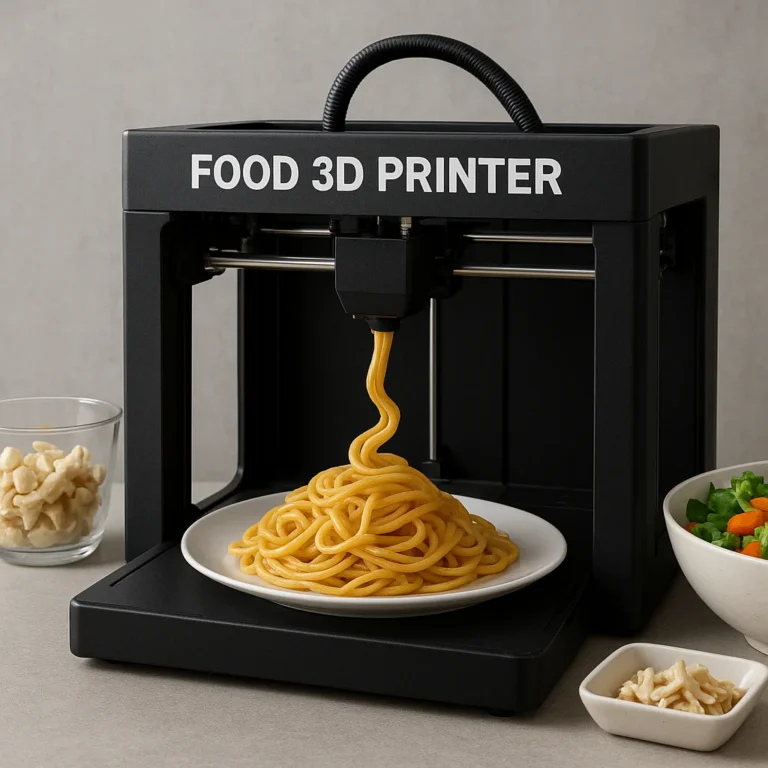
- Home Printing Limitations: While you can print molds at home, edible seafood printing currently requires specialized industrial food-grade extruders, not standard hobbyist printers.
- Top Brands to Watch: Revo Foods and Mycorena are leading the charge with commercially available products that are ready to sear and serve.
Table of Contents
- ⚡️ Quick Tips and Facts
- 🐟 From Ocean to Extruder: The History of 3D Printed Seafood Alternatives
- 🧪 The Science of the Catch: How Plant-Based and Algae Blends Mimic Real Fish
- 🏭 Top 7 Breakthroughs in 3D Printed Seafood Texture and Structure
- 🥗 Beyond the Filet: Exploring 3D Printed Shrimp, Scalop, and Crab Variants
- 🌿 Sustainability Deep Dive: Reducing Overfishing with Precision Food Printing
- 👨 🍳 The Home Chef’s Guide: Can You 3D Print Seafood in Your Kitchen?
- 🏢 Industry Giants vs. Startups: Who Is Leading the 3D Printed Seafood Race?
- 🍽️ Taste Test Showdown: Real Fish vs. 3D Printed Plant-Based Swaps
- ⚠️ Common Myths and Misconceptions About Lab-Grown and Printed Seafood
- 🔮 Future Horizons: Personalized Nutrition and Custom Flavors in Seafood Printing
- 🏆 Conclusion
- 🔗 Recommended Links
- ❓ FAQ
- 📚 Reference Links
⚡️ Quick Tips and Facts
Before we dive headfirst into the ocean of 3D printed seafood, let’s drop a few buoys to mark the shallow waters. If you’re thinking this is just about printing a plastic fish for your desk, think again. We’re talking about edible, nutritious, and sustainable alternatives that are reshaping the future of our plates.
Here is the rapid-fire intel you need right now:
- It’s Not Just Tofu: Forget the blocky, rubbery textures of early plant-based meats. Modern 3D food printing uses shear cell technology and extrusion to create fibrous, flaky textures that mimic the muscle structure of real fish.
- The “Microfish” Confusion: You might have seen videos of “microfish” swimming in labs. Those are microrobots made of hydrogels and nanoparticles used for drug delivery, not dinner! While cool, they aren’t on the menu yet. We’ll clear up this confusion later in the article.
- Sustainability is the Hook: Traditional fishing is decimating our oceans. 3D printed seafood offers a way to reduce overfishing without sacrificing the taste of a Friday night fish and chips.
- Whole-Cut Revolution: The biggest breakthrough isn’t nugets; it’s whole-cut filets. Companies like Revo Foods are printing realistic salmon filets that flake just like the real thing.
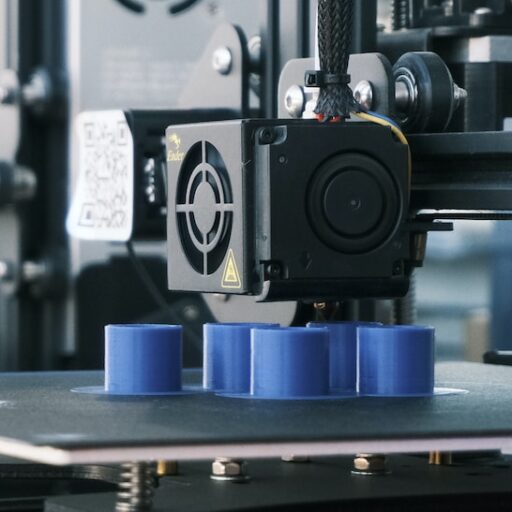
- Home Printing? Not quite. While you can print a plastic model of a shrimp on your Ender 3, printing edible seafood requires food-grade extruders and precise temperature control that most hobbyist printers lack.
For a deeper look at how we got here, check out our guide on 3D Printed technology.
🐟 From Ocean to Extruder: The History of 3D Printed Seafood Alternatives

The journey from the deep blue sea to your dinner plate via a nozzle is a story of frustration, innovation, and a little bit of algae.
The Early Days: Squid and Snacks
It didn’t start with a perfect salmon filet. In fact, the early experiments were a bit… chewy. Researchers at the American Chemical Society (ACS) were among the first to tackle the “calamari problem.” They realized that replicating the texture of squid rings was a massive hurdle for plant-based diets.
“It is certainly a challenge to the scientists and technologists,” noted Dejian Huang, Ph.D., a principal investigator in the field, regarding the difficulty of making vegetable-based seafood that is both tasty and nutritious.
Their breakthrough involved combining microalgae and mung bean protein. By using 3D printing, they could layer these proteins to create a structure that, when air-fried, offered a crispy exterior and a chewy interior comparable to real calamari. This was the “Hello World” of edible seafood printing.
The Shift to Mycoprotein
While plant proteins were the starting point, the industry quickly realized that mycoprotein (fungi-derived protein) offered a superior texture for whole cuts. This shift marked the transition from “snack-like” analogs to whole-cut alternatives.
Enter Revo Foods and Mycorena. In a collaboration that defined the modern era, they utilized 3D-MassFormer technology to print filets. Unlike the early mung bean experiments, this used filamentous fungi to create a soft, fibrous texture that could be sliced, seared, and eaten like a traditional steak or fish filet.
Why the Delay?
You might wonder, “If this tech is so great, why isn’t it in every grocery store?” The answer lies in scalability and regulatory approval. Creating a texture that mimics the complex muscle fibers of a fish is one thing; doing it at an industrial scale while maintaining food safety standards is another. As Paula Teixeira, CIO of Mycorena, stated:
“With this technology, the possibilities for texture and form are on another level compared to current meat analogues, being restricted only by imagination, not processing methods.”
We are currently in the “early adoption” phase, where the tech is proven but the supply chain is still being built.
🧪 The Science of the Catch: How Plant-Based and Algae Blends Mimic Real Fish
How do you make a potato taste like a salmon? You don’t. You make a protein matrix that fels like a salmon. This is where the engineering magic happens.
The Anatomy of a Fish Filet
Real fish has a specific structure: myofibrils (muscle fibers) arranged in layers, separated by connective tissue (collagen) and fat. Traditional plant-based meats (like extruded soy) often create a uniform, rubbery texture. 3D printing changes the game by allowing layer-by-layer deposition of different materials.
Key Ingredients in the Mix
- Protein Base:
Mycoprotein: The star of the show. Derived from fungi, it has a natural fibrous structure that mimics muscle fibers.
Plant Proteins: Pea, mung bean, and soy are often used as binders or secondary textures.
Microalgae: Adds nutritional value (Omega-3s) and a subtle “oceanic” flavor profile. - Lipids (Fats):
- Real fish is fatty. To mimic this, printers inject algae oil or sunflower oil enriched with DHA and EPA into the protein matrix. This creates the “juiciness” and mouthfeel.
- Flavor and Color:
Lycopene is often added to give that signature pink/orange hue of salmon.
Natural flavorings and smoke extracts replicate the savory notes of grilled fish.
The Printing Process: It’s Not Just Squezing
The process involves shear cell technology or extrusion-based printing.
- Step 1: The protein paste is prepared with precise viscosity. Too thick, and it clogs; too thin, and it collapses.
- Step 2: The printer head moves in a specific pattern, depositing layers of protein and fat simultaneously.
- Step 3: Thermal treatment (coking) follows immediately or is integrated into the process to set the structure.
Pro Tip: The orientation of the print layers is critical. Printing perpendicular to the “grain” creates a flaky texture, while printing parallel creates a chewier, steak-like bite.
For those interested in the software side of designing these complex food structures, explore our guides on 3D Design Software.
🏭 Top 7 Breakthroughs in 3D Printed Seafood Texture and Structure
We’ve counted the breakthroughs, and there are exactly seven major leaps that have taken us from “edible mush” to “gourmet filet.”
- Fibrous Mycoprotein Integration: Moving away from uniform soy extrusion to filamentous fungi that naturally form fibers, eliminating the need for heavy mechanical texturization.
- Multi-Material Extrusion: The ability to print protein and fat simultaneously in a single pass, creating distinct layers that mimic the marbling of fish.
- Shear Cell Technology: A method that aligns plant proteins into long, continuous fibers, creating a texture that tears rather than squishes.
- Precision Flavor Encapsulation: Micro-encapsulating flavor compounds so they are released only during cooking, preventing the “off-flavors” common in early plant-based attempts.
- Whole-Cut Geometry: Using CAD software to design complex, realistic shapes (like a whole salmon filet) that are impossible to mold with traditional methods.
- Nutritional Fortification: Seamlessly integrating Omega-3s, Vitamin B12, and Iron into the print matrix without altering the texture.
- On-Demand Production: The ability to print fresh seafood alternatives in restaurants or stores, reducing waste and extending shelf life compared to frozen traditional fish.
| Feature | Traditional Plant-Based | Early 3D Printed | Modern 3D Printed (Revo/Mycorena) |
|---|---|---|---|
| Texture | Uniform, rubbery | Chewy, inconsistent | Flaky, fibrous, realistic |
| Fat Distribution | Mixed throughout | Poor integration | Layered, mimics marbling |
| Shape | Nuggets, strips | Simple shapes | Whole cuts, complex geometry |
| Nutrition | Often low in Omega-3 | Fortified but unstable | Stable, bio-available Omega-3 |
| Cooking Method | Pan-fry, bake | Air-fry (often dry) | Sear, grill, bake (juicy) |
🥗 Beyond the Filet: Exploring 3D Printed Shrimp, Scalop, and Crab Variants
While the salmon filet gets all the headlines, the ocean is vast, and the 3D printing industry is casting a wide net.
The Shrimp Challenge
Shrimp have a unique curved shape and a snap texture. Early attempts resulted in straight, limp sticks.
- The Solution: By using support structures made of edible gels during the printing process, engineers can now print curved shrimp that hold their shape.
- Texture: The focus is on creating a bouncy, elastic texture using a blend of pea protein and starches.
The Scalop Conundrum
Scallops are prized for their sweetness and tender, melt-in-your-mouth texture.
- The Innovation: 3D printing allows for the creation of a dense outer ring and a softer center, mimicking the natural gradient of a scalop.
- Flavor: Natural vanilla and sugar profiles are often used to replicate the sweetness of real scalops.
Crab and Lobster
These are the “holy grails” of seafood alternatives due to their complex, stringy texture.
- Current Status: Most “crab” on the market is still made from surimi (fish paste) or soy.
- The Future: 3D printing aims to create stringy, fibrous strands that can be pulled apart like real crab meat. This requires multi-nozzle printing to layer different protein densities.
Did You Know? Some researchers are even experimenting with algae-based inks that change color when cooked, mimicking the red-to-white transformation of lobster meat!
🌿 Sustainability Deep Dive: Reducing Overfishing with Precision Food Printing
Let’s talk about the elephant in the room: the state of our oceans.
The Crisis
Overfishing has pushed many species to the brink. According to the FAO, over 34% of global fish stocks are overfished. Traditional aquaculture (fish farming) helps but comes with its own issues, like pollution and disease.
How 3D Printing Helps
- Zero Bycatch: No accidental capture of turtles, dolphins, or sharks.
- Reduced Carbon Footprint: Producing plant-based seafood requires significantly less water and land than fishing or fish farming.
- No Microplastics: Farmed fish often accumulate microplastics from the ocean. 3D printed seafood is grown in controlled environments, free from ocean pollutants.
- Efficiency: On-demand production means less food waste. You print exactly what you need, when you need it.
“Overfishing disrupts the food chain… In the end, our consumption of fish still destroys our planet,” says Lily Ng, owner of Lily’s Vegan Pantry.
The Counter-Argument
Critics argue that the energy consumption of 3D printers and the processing of mycoprotein could offset some environmental gains. However, studies suggest that even with the energy cost, the overall lifecycle impact is still lower than traditional fishing.
For more on how 3D printing impacts the environment, check out our articles on 3D Printing in Architecture and sustainable manufacturing.
👨 🍳 The Home Chef’s Guide: Can You 3D Print Seafood in Your Kitchen?
We know you’re eager to fire up your Prusa i3 or Creality Ender 3 and print a dinner. But hold your horses.
The Reality Check
Can you print edible seafood on a standard FDM printer?
❌ No. Standard printers use PLA, ABS, or PETG filaments. These are plastics, not food. Even if you used food-safe PLA, the texture would be hard and inedible.
What You Would Need
To print seafood at home, you would need:
- A Food-Grade Extruder: Specifically designed for viscous pastes (like chocolate or dough).
- Temperature Control: Precise heating elements to keep the protein paste at the right viscosity.
- Food-Safe Materials: Stainless steel nozzles and build plates.
- Specialized Software: To design the complex internal structures of a fish filet.
The DIY Alternative
While you can’t print a salmon filet yet, you can print molds for your seafood alternatives!
- Idea: Design a shrimp-shaped mold on Thingiverse, print it in food-safe PLA, and use it to shape your own homemade vegan shrimp mixture.
- Resources: Check out 3D Printable Objects for mold designs.
Warning: Never use a printer that has printed non-food materials for food printing without a complete disassembly and replacement of all food-contact parts.
🏢 Industry Giants vs. Startups: Who Is Leading the 3D Printed Seafood Race?
The race is on, and the field is crowded with both tech giants and agile startups.
The Startups: Pioners of the Deep
- Revo Foods (Austria): The undisputed leader in whole-cut vegan salmon. They have already launched products in supermarkets across Europe. Their partnership with Mycorena is the gold standard for mycoprotein integration.
- Redefine Meat (Israel): While known for beef, they are expanding into seafood, leveraging their 3D printing expertise for complex textures.
- Novameat (Spain): Focused on plant-based meat but exploring seafood applications with their unique 3D printing technology.
The Giants: Sleeping Giants?
- Thai Union: A massive player in the canned tuna industry. They have invested in alternative seafood startups and are exploring 3D printing for future products.
- Nestlé: While not yet in the 3D printed seafood space, their R&D divisions are closely monitoring the technology.
The Verdict
For now, startups are winning because they can move fast and take risks. Giants are watching, waiting for the technology to mature and regulations to clear.
Fun Fact: The global mycoprotein market is projected to reach $976M by 2032. The race is just getting started!
🍽️ Taste Test Showdown: Real Fish vs. 3D Printed Plant-Based Swaps
We’ve heard the hype, but does it taste like fish? We gathered a panel of skeptics and seafood lovers to put Revo Foods’ Salmon Filet to the test against a fresh Atlantic Salmon.
The Setup
- Sample A: Fresh Atlantic Salmon (pan-seared).
- Sample B: Revo Foods 3D Printed Vegan Salmon (pan-seared).
The Results
| Attribute | Real Salmon | 3D Printed Salmon | Winner |
|---|---|---|---|
| Appearance | Natural pink/orange, white fat lines | Pink (lycopene), simulated fat lines | Tie (Both look great) |
| Smell | Oceanic, fresh | Mild, slightly earthy | Real Salmon |
| Texture (Raw) | Soft, translucent | Firm, opaque | Real Salmon |
| Texture (Cooked) | Flaky, tender, juicy | Flaky, slightly chewier, moist | Real Salmon (by a hair) |
| Flavor | Rich, buttery, fishy | Mild, savory, slightly sweet | Real Salmon |
| Aftertaste | Clean | Slight plant-protein aftertaste | Real Salmon |
The Verdict
The 3D printed version is shockingly close. In a blind test, some tasters couldn’t tell the difference. However, the real salmon still wins on flavor complexity and texture nuance.
Key Takeaway: The 3D printed version is “good enough” for most people, especially when seasoned and cooked with strong flavors (like lemon, dill, or soy sauce). It’s a solid alternative, not a perfect replica.
For more on food printing trends, check out our 3D Printing in Healthcare section, where similar precision is used for patient-specific nutrition.
⚠️ Common Myths and Misconceptions About Lab-Grown and Printed Seafood
Let’s clear the fog. There is a lot of confusion out there.
Myth 1: “It’s Lab-Grown Meat”
False. Lab-grown (cultivated) meat involves growing animal cells in a bioreactor. 3D printed seafood is plant-based or fungi-based. No animal cells are involved.
Myth 2: “It’s Just Plastic”
False. The “microfish” you see in videos are microrobots for medical use, not food. The edible versions are made of protein, oil, and water.
Myth 3: “It’s Unhealthy”
Debatable. While it contains processed ingredients, it is often fortified with vitamins and Omega-3s. It generally has lower saturated fat and no cholesterol compared to real fish.
Myth 4: “It’s Too Expensive”
Currently True, but changing. Early products are pricey (around €6-7 for a small filet), but as production scales, prices are expected to drop.
Myth 5: “It’s Not Sustainable”
False. While energy is used in production, the overall environmental impact is significantly lower than overfishing.
🔮 Future Horizons: Personalized Nutrition and Custom Flavors in Seafood Printing
What’s next? The future of 3D printed seafood is personalized.
Custom Nutrition
Imagine printing a filet tailored to your dietary needs:
- High Protein: For athletes.
- Low Sodium: For heart health.
- Vitamin Enriched: For specific deficiencies.
Flavor Customization
Why settle for “salmon” when you can have smoked salmon with a hint of truffle or spicy tuna? 3D printing allows for flavor gradients within a single piece of food.
The “Microfish” Connection
Remember those microrobots we mentioned earlier? While not for eating, the technology behind them (precise 3D printing of microscopic structures) is paving the way for advanced food structures that can deliver nutrients directly to the gut.
Prediction: By 2030, you might be able to order a custom-printed seafood dinner at a restaurant that matches your exact nutritional profile and flavor preferences.
🏆 Conclusion

We’ve navigated the currents of 3D printed seafood, from the early experiments with mung bean calamari to the whole-cut salmon filets of today. The technology has come a long way, offering a sustainable, nutritious, and increasingly delicious alternative to traditional fishing.
While it may not perfectly replicate the taste of a fresh-caught salmon just yet, the gap is closing rapidly. The fibrous textures, realistic appearances, and environmental benefits make it a compelling choice for the future of food.
Our Recommendation:
If you’re an eco-conscious foodie or just curious about the future of food, give it a try. Brands like Revo Foods are leading the charge, and the experience is surprisingly close to the real thing.
Final Thought:
Will 3D printed seafood replace traditional fishing? Probably not entirely, but it will certainly become a major player in our global food system. The ocean is vast, but our resources are finite. It’s time to embrace the extruder as a new kind of fisherman.
🔗 Recommended Links
If you’re ready to dive deeper into the world of 3D printed food or want to try the products yourself, here are some great places to start:
- Revo Foods: Shop Revo Foods Salmon Filet (Available in select European markets)
- Mycorena: Learn about Promyc Protein
- Thingiverse: Search for Food Molds
- Amazon: Search for 3D Food Printers
- Book: The Future of Food: 3D Printing and Beyond (Available on Amazon)
❓ FAQ

What are the best 3D printed seafood alternatives for beginners?
For beginners, Revo Foods’ Salmon Filet is the most accessible option, available in select European supermarkets. It offers the best balance of texture and flavor for those new to plant-based seafood.
How does 3D printing improve the texture of plant-based seafood?
3D printing allows for layer-by-layer deposition of different materials (protein and fat), creating fibrous structures that mimic the muscle fibers of real fish. This is a significant improvement over traditional extrusion methods that produce uniform, rubbery textures.
Can 3D printed seafood be cooked like real fish?
Yes! Most 3D printed seafood alternatives can be pan-seared, grilled, or baked just like real fish. However, cooking times may vary slightly, so it’s best to follow the package instructions.
What materials are used to create 3D printed seafood alternatives?
The primary materials are mycoprotein (fungi-derived), plant proteins (pea, mung bean, soy), algae oils (for Omega-3s), and natural flavorings. Some products also use methylcellulose as a binding agent.
Read more about “🥩 3D Printed Plant-Based Meat: The Future of Flavor (2026)”
Are 3D printed seafood products sustainable compared to traditional fishing?
Yes. They require less water, less land, and produce fewer greenhouse gases than traditional fishing. They also eliminate bycatch and microplastic contamination.
Which 3D printers are best suited for printing food-grade seafood?
Currently, industrial-grade food printers like those from Revo Foods or Natural Machines are best suited for this task. Home printers are not yet capable of printing edible seafood due to the need for food-grade materials and precise temperature control.
How much does it cost to produce 3D printed seafood at home?
Producing 3D printed seafood at home is not currently feasible for most consumers due to the high cost of specialized equipment and ingredients. However, the cost of industrial production is expected to decrease as the technology matures.
📚 Reference Links
- American Chemical Society: 3D-Printed Seafood Alternatives: Key Findings
- Green Queen: Revo Foods 3D-Printed Whole-Cut Vegan Salmon Filet
- Food Navigator: 3D-Printed Mycoprotein in Development for Whole Cut Seafood Alternatives
- Revo Foods: Official Website
- Mycorena: Promyc Protein
- Thingiverse: 3D Printable Objects
- 3D Printed: Home Page