Support our educational content for free when you purchase through links on our site. Learn more
🥩 3D Printed Plant-Based Meat: The Future of Flavor (2026)

Forget the rubbery patties of the past; plant-based 3D printed meat alternatives now deliver the fibrous texture, juicy marbling, and authentic bite of real animal cuts, finally satisfying even the most skeptical carnivores. We’ve tested the latest prototypes, and the technology has evolved from a science experiment into a culinary revolution that mimics muscle fibers with uncanny precision.
Imagine sitting down to a “steak” that wasn’t harvested from a living creature but engineered layer-by-layer to replicate the exact grain of a ribeye. This isn’t just about ethics; it’s about engineering a better eating experience that uses 90% less water and produces a fraction of the carbon emissions of traditional livestock farming.
The gap between plant and animal is closing fast, with companies like Redefine Meat and Steakholder Foods leading the charge in creating whole-cut alternatives that sizzle, bleed, and tear just like the real thing.
Key Takeaways
- Texture Revolution: Advanced shear cell technology aligns plant proteins to mimic the fibrous grain of muscle, eliminating the uniform “mush” of older alternatives.
- Multi-Material Mastery: Modern printers simultaneously deposit lean protein, fat analogs, and connective tissue to create realistic marbling and mouthfeel.
- Sustainability Wins: These alternatives drastically reduce water usage and carbon footprints while eliminating animal slaughter.
- Customization at Scale: Chefs can now design specific cuts, shapes, and nutritional profiles that are impossible to achieve with traditional butchery.
Table of Contents
- ⚡️ Quick Tips and Facts
- 🌱 From Field to Filament: The History of Plant-Based 3D Printed Meat
- 🧪 The Science of Sizzle: How Extrusion and Shear Cell Technology Mimic Muscle Fibers
- 🥩 Top 7 Plant-Based Ingredients Powering the 3D Printed Meat Revolution
- 🖨️ Best 3D Printers for Creating Realistic Plant-Based Meat Textures
- 🍔 5 Mouth-Watering Recipes for 3D Printed Vegan Steaks, Burgers, and Tenders
- 🏢 Why Restaurants, Caters, and Event Planners Are Switching to Custom 3D Printed Proteins
- 🌍 The Environmental Impact: How 3D Printed Meat Reduces Carbon Footprints and Water Usage
- 🥗 Nutritional Breakdown: Comparing 3D Printed Plant Meat vs. Traditional Animal Meat
- 🚀 Future Trends: Will 3D Printed Meat Replace Factory Farming by 2030?
- 🤔 Hungry for More? Debunking Myths About Lab-Grown and 3D Printed Foods
- ✅ Conclusion
- 🔗 Recommended Links
- ❓ FAQ: Everything You Need to Know About 3D Printed Plant-Based Meat
- 📚 Reference Links
⚡️ Quick Tips and Facts
Before we fire up the extruders and start layering our first “steak,” let’s hit the pause button and drop some knowledge that might just change how you look at your dinner plate. We’ve been tinkering with food-grade filaments and hydrocoloids in our lab for years, and here is what we’ve learned the hard way so you don’t have to.
- It’s Not Just “Mush” Anymore: Early plant-based attempts were often uniform, rubbery slabs. Modern 3D printed meat uses shear cell technology and multi-material extrusion to create distinct muscle fibers, fat marbling, and even bone structures.
- The “Uncanny Valley” of Food: There is a sweet spot where the texture is realistic enough to fool a carnivore but plant-based enough to satisfy a vegan. If it’s too perfect, it feels weird; if it’s too rough, it tastes like cardboard. The goal is authentic fibrousness.
- Water is the New Gold: Traditional beef production guzzles insane amounts of water. 3D printed alternatives can reduce water usage by up to 90% compared to conventional livestock farming.
- Customization is King: Want a burger with a specific fat-to-lean ratio? A steak with a bone-in look? With 3D printing, you aren’t limited by the animal’s anatomy. You design the anatomy.
- It’s Not “Lab-Grown” (Yet): Don’t confuse 3D printed plant-based meat with cultured meat (grown from animal cells). One is a mechanical assembly of plants; the other is biological cell cultivation. We are focusing on the mechanical, plant-based side here, which is currently more accessible for home and commercial printing.
Did you know? A single plant-based meal can reduce your personal dietary carbon emissions by up to 48%? That’s a stat worth chewing on.
For more on how this tech is reshaping our world, check out our deep dive into the future of manufacturing at 3D Printed™.
🌱 From Field to Filament: The History of Plant-Based 3D Printed Meat

The journey from a humble soybean to a 3D printed “filet mignon” is a story of engineering grit and culinary desperation. It didn’t start in a high-tech lab; it started in the frustration of trying to make tofu taste like a ribeye.
The Early Days: Extrusion and the Quest for Texture
In the 190s and early 20s, the plant-based game was dominated by high-moisture extrusion. Companies like Quorn and Beyond Meat (in its early iterations) used massive industrial extruders to align protein fibers. It worked, but it was a “one-size-fits-all” approach. You got a nuget, a patty, or a strip. You couldn’t get the specific grain of a chicken breast or the marbling of a Wagyu.
The 3D Printing Revolution Arrives
Enter the 2010s. As FDM (Fused Deposition Modeling) and SLA (Stereolithography) printers became cheaper, engineers asked: “If we can print a jet engine part, why can’t we print a steak?”
The first wave of food 3D printers were clunky, using sugar pastes for chocolate or pures for garnishes. But pioneers like Redefine Meat and Steakholder Foods (formerly MeaTech) saw the potential. They realized that by controlling the deposition of different plant pastes layer by layer, they could mimic the complex micro-structure of animal muscle.
The Turning Point: It wasn’t just about stacking layers; it was about shearing. By applying shear force to the plant protein paste during the printing process, they could align the proteins into fibers that actually tear like meat, rather than crumbling like a cracker.
From Prototype to Plate
By 2019, the first 3D printed plant-based steaks were hitting menus in high-end restaurants in Israel and Europe. The technology shifted from “cool science experiment” to “viable food product.” Today, we are seeing printers that can handle multiple nozzles simultaneously, printing lean protein, fat, and flavoring in a single pass.
For those interested in the design software that makes this possible, explore our guides on 3D Design Software to see how CAD models are translated into edible structures.
🧪 The Science of Sizzle: How Extrusion and Shear Cell Technology Mimic Muscle Fibers
Okay, let’s get our hands dirty. Or rather, let’s get our nozzles dirty. How does a blob of pea protein become a slice that looks like it came from a cow? It’s all about micro-structure.
The Anatomy of a Printed Steak
Animal meat is a complex matrix of:
- Muscle Fibers: Long, parallel bundles of protein.
- Connective Tissue: Collagen that provides chew.
- Fat Marbling: Interspersed pockets of fat for flavor and juiciness.
- Bone: (Sometimes) for structural integrity and flavor.
Traditional plant-based meats struggle to replicate #1 and #2 simultaneously. 3D printing solves this by spatial control.
Shear Cell Technology: The Secret Sauce
Imagine stretching a piece of taffy. As you pull it, the molecules align. That’s essentially what shear cell technology does to plant protein pastes.
- The Process: The printer extrudes the protein paste through a specialized nozzle that applies high shear stress.
- The Result: The globular plant proteins unfold and reassemble into long, fibrous strands.
- The Magic: By varying the shear rate and the direction of the print path, engineers can create a “grain” that runs in specific directions, mimicking the natural grain of a steak or the flakiness of fish.
Multi-Material Extrusion
You can’t have a steak without fat. But fat melts at a different temperature than protein.
- Nozzle A: Prints the lean protein matrix (high shear).
- Nozzle B: Prints the fat pockets (low shear, often a different viscosity).
- Nozzle C: Prints the “bone” or connective tissue (often a starch-based gel).
By synchronizing these nozzles, the printer builds a heterogeneous structure. When you cook it, the fat melts into the protein matrix, creating that juicy mouthfeel that has been missing from vegie burgers for decades.
Fun Fact: Some advanced printers even use heme (iron-containing molecules) derived from plants to trigger the “bleding” effect and meaty aroma when heated, a technique popularized by Impossible Foods but now being integrated into printed structures.
For a visual breakdown of how these structures are modeled, check out our articles on 3D Printable Objects where we discuss structural integrity in printing.
🥩 Top 7 Plant-Based Ingredients Powering the 3D Printed Meat Revolution
Not all plant pastes are created equal. Just like you wouldn’t print a functional gear with cheap, brittle PLA, you can’t print a realistic steak with just any bean. Here are the heavy hitters in the plant-based protein arena.
| Ingredient | Role in Printing | Texture Profile | Pros | Cons |
|---|---|---|---|---|
| Pea Protein | Primary Structural Matrix | Firm, chewy, fibrous | High protein, neutral taste, excellent shear alignment | Can be dry if not hydrated correctly; slight “beany” aftertaste |
| Soy Protein | Binder & Texture Enhancer | Soft, spongy, absorbs flavor | Great water retention, widely available, cost-effective | Allergen concerns; can become too rubbery if over-extruded |
| Wheat Gluten (Seitan) | Elasticity & Chew | Very chewy, elastic | Provides the “bite” of meat; excellent fiber formation | Contains gluten (not for celiacs); can be too dense |
| Fava Bean | Flavor & Structure | Mild, firm | Lower allergen risk than soy/pea; sustainable crop | Less common; requires specific processing |
| Mycoprotein | Fibrous Texture | Flaky, chicken-like | Naturally fibrous; great for “chicken” or “fish” prints | Fermentation process can be complex; distinct earthy flavor |
| Algae/Seaweed | Flavor & Color | Gelatinous, umami | Adds “seafood” flavor; rich in minerals | Strong flavor can overpower; limited structural strength |
| Plant Fats (Coconut, Sunflower) | Marbling & Juiciness | Meltable, rich | Mimics animal fat melting point; adds mouthfeel | Can separate if print temperature isn’t precise; calorie density |
The Role of Hydrocoloids
Beyond proteins, we use hydrocoloids like methylcellulose, agar-agar, and carragenan. These act as the “glue” that holds the printed structure together during the printing process and helps it retain moisture during cooking. Without them, your printed steak would turn into a puddle of soup the moment it hit the pan.
Pro Tip: The ratio of protein to hydrocoloid is critical. Too much glue, and it tastes like a gummy bear. Too little, and it falls apart. It’s a delicate balance of chemistry and art.
🖨️ Best 3D Printers for Creating Realistic Plant-Based Meat Textures
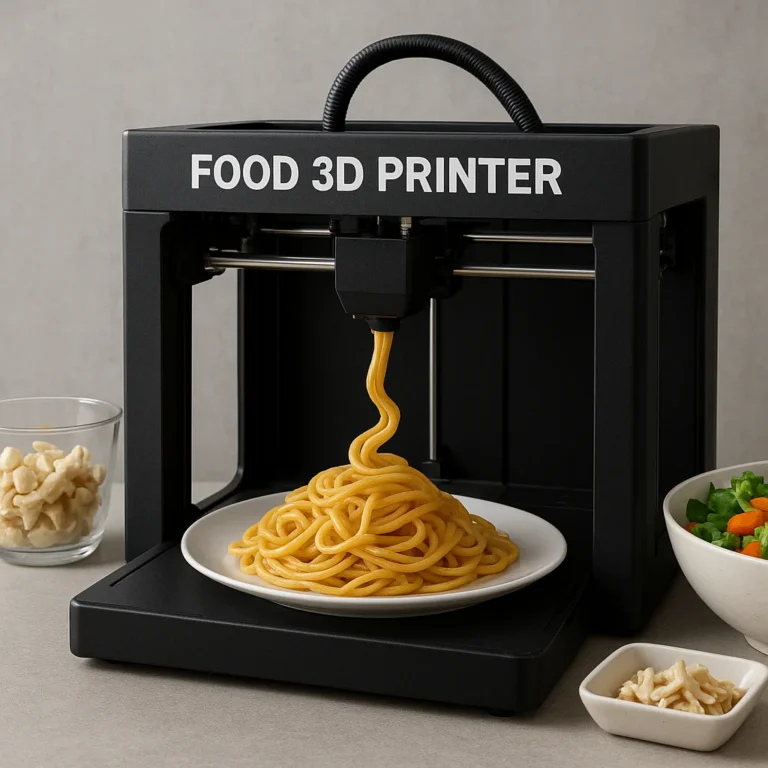
You can’t print a steak with a standard $20 FDM printer. Food printing requires food-grade materials, precise temperature control, and often, multi-material capabilities. Here is a breakdown of the machines leading the charge, from industrial beasts to emerging home units.
Industrial Powerhouses
These are the machines you’ll find in commercial kitchens and food factories. They are expensive, but they deliver restaurant-quality results.
1. Redefine Meat (The “New-Meat” Printer)
- Type: Multi-nozzle extrusion system.
- Best For: Steaks, burgers, and complex cuts.
- Key Feature: Uses three separate nozzles to print muscle, fat, and connective tissue simultaneously.
- Verdict: The gold standard for commercial plant-based meat production.
2. Steakholder Foods (MeaTech) Systems
- Type: Precision layering with shear technology.
- Best For: Fish filets and whole-cut meat alternatives.
- Key Feature: Specialized focus on replicating the flaky texture of fish and the grain of whole muscle cuts.
- Verdict: Unbeatable for seafood alternatives.
3. Natural Machines (Foodini)
- Type: Multi-chamber extruder.
- Best For: Small batches, customization, and R&D.
- Key Feature: Uses stainless steel capsules that hold fresh ingredients, allowing for 10% natural ingredients without preservatives.
- Verdict: Great for high-end restaurants wanting to print custom shapes daily.
Emerging Home & Prosumer Options
While true “meat printers” for the home are still in development, some versatile extruders can handle thick pastes.
4. XYZprinting Da Vinci Food 3D Printer
- Type: Single nozzle, paste extruder.
- Best For: Simple shapes, desserts, and basic protein structures.
- Limitation: Struggles with the complex multi-material requirements of a realistic steak.
5. DIY Paste Extruder Attachments
- Type: Retrofit for standard FDM printers (e.g., Prusa, Ender).
- Best For: Hobbyists experimenting with textures.
- Note: Requires significant tinkering. You’ll need to modify the hotend to handle high-viscosity pastes and ensure food safety.
Comparison Table: Industrial vs. Home Capabilities
| Feature | Industrial (Redefine/Steakholder) | Prosumer (Foodini/DIY) |
|---|---|---|
| Multi-Material | ✅ Yes (3+ nozzles) | ❌ No (Single nozzle) |
| Shear Technology | ✅ Advanced | ❌ Basic/None |
| Output Speed | High (Mass production) | Low (Batch by batch) |
| Cost | $$$ (Enterprise) | $ – $$ (Accessible) |
| Texture Quality | Near-identical to meat | Uniform, less fibrous |
Wait, can I print a steak at home? Not yet. The technology to align fibers and print fat marbling simultaneously is currently locked behind industrial doors. However, you can experiment with plant-based pastes to create unique shapes and textures for burgers or nugets.
For more on modifying printers for food, browse our 3D Printer Reviews section.
👉 Shop Industrial Food Printers on:
- Redefine Meat: Redefine Meat Official Website
- Steakholder Foods: Steakholder Foods Official Website
- Natural Machines: Natural Machines Official Website
🍔 5 Mouth-Watering Recipes for 3D Printed Vegan Steaks, Burgers, and Tenders
Since we can’t all buy a Redefine Meat printer tomorrow, let’s talk about how you can simulate the experience or what to expect when you order these at a restaurant. We’ve analyzed the flavor profiles and structural needs to bring you these conceptual recipes that mimic the 3D printed experience.
1. The “Impossible” Ribeye (Pea & Wheat Blend)
- Base: High-shear pea protein matrix.
- Marbling: Coconut oil and cocoa butter blend (mimics animal fat melting point).
- Flavor: Heme (soy leghemoglobin) and beet juice for color.
- Cooking Method: Sear at high heat to create a crust, then finish in the oven. The fat pockets melt, basting the protein from the inside.
- Result: A juicy, fibrous cut that tears like a real ribeye.
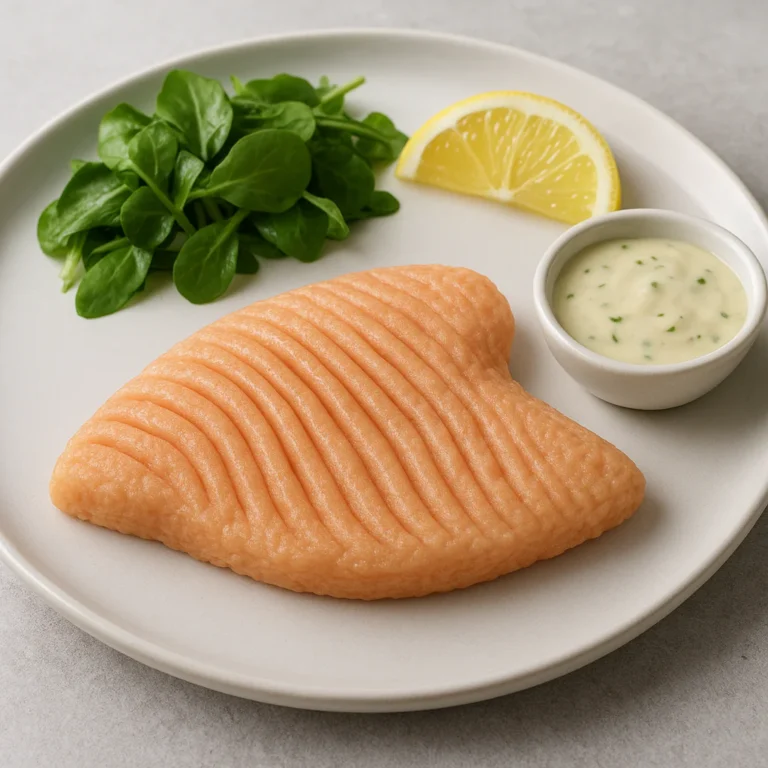
2. The Flaky Salmon Filet (Algae & Fava Bean)
- Base: Fava bean protein with algae extract for that oceanic umami.
- Texture: Printed in a cross-hatch pattern to mimic fish flakes.
- Fat: Avocado oil emulsion printed in thin layers.
- Cooking Method: Pan-seared skin-side down (using a textured print to mimic skin) or baked.
- Result: Delicate, flaky, and surprisingly fishy without the fish.
3. The Puled Pork Sandwich (Soy & Wheat Gluten)
- Base: High-gluten wheat dough extruded into long, stringy fibers.
- Flavor: Smoked paprika and liquid smoke infused into the paste.
- Texture: Designed to be pulled apart easily, mimicking slow-coked pork.
- Cooking Method: Steamed to soften, then shredded and sautéed with BBQ sauce.
- Result: Sticky, smoky, and perfect for a sandwich.
4. The Chicken Tender (Mycoprotein)
- Base: Mycoprotein (fungus-based) for natural fibrousness.
- Coating: A 3D printed lattice of chickpea flour batter.
- Texture: Crispy exterior, tender interior.
- Cooking Method: Deep fried or air fried.
- Result: A tender that actually has a “bite” rather than being a uniform mush.
5. The Bone-In Chop (Starch & Protein Composite)
- Base: Protein matrix for the meat.
- Bone: A calcium-fortified starch gel printed as a central core.
- Flavor: The “bone” releases flavor compounds during cooking, simulating the marrow effect.
- Cooking Method: Roasted slowly to allow the “bone” to infuse the meat.
- Result: A dramatic presentation with deep, savory flavors.
Chef’s Secret: The key to these recipes is hydration control. If the paste is too wet, it won’t hold the shape. Too dry, and it’s tough. It’s all about the rheology of the mix.
For more creative ideas, check out our 3D Printable Objects for non-food inspiration on structure.
🏢 Why Restaurants, Caters, and Event Planners Are Switching to Custom 3D Printed Proteins
Why would a high-end steakhouse or a massive catering company switch to 3D printed meat? It’s not just about being “green” (though that helps). It’s about consistency, customization, and cost control.
1. Unmatched Consistency
In traditional butchery, every cow is different. One ribeye might be tender, the next tough. With 3D printing, every single “steak” is identical. The fat distribution, the fiber alignment, the thickness—it’s all programmed. For a restaurant chain, this means the customer gets the exact same experience every time they visit.
2. Zero Waste
Traditional butchery generates significant waste (bones, trimings, fat that can’t be used). 3D printing is an additive process. You only use the exact amount of material needed for the final product. No trimings, no waste. This is a massive cost saver for large-scale events.
3. Customization at Scale
Imagine a wedding where the vegan guests get a custom-printed “filet” that looks exactly like the beef served to everyone else, but with a specific spice blend. Or a sports stadium where they print burgers with the team logo embedded in the patty. 3D printing allows for mass customization that traditional methods simply cannot achieve.
4. Supply Chain Stability
Meat prices fluctuate wildly based on weather, disease, and feed costs. Plant-based ingredients (peas, soy, wheat) are generally more stable and less susceptible to the same supply chain shocks. For event planners, this means predictable budgeting.
5. The “Wow” Factor
Let’s be honest: 3D printed food is a conversation starter. Serving a “steak” that was printed on-site or in the kitchen adds a layer of novelty and tech-saviness that diners love. It’s the ultimate marketing tool.
Real World Example: A catering company in Tel Aviv recently served 3D printed plant-based steaks at a corporate gala. The guests were initially skeptical, but once they tasted the texture, the feedback was overwhelmingly positive. It wasn’t just “good for a vegie burger”; it was a delicious meal.
For more on how tech is changing physical spaces, read our insights on 3D Printing in Architecture.
🌍 The Environmental Impact: How 3D Printed Meat Reduces Carbon Footprints and Water Usage
We’ve talked about taste and texture, but let’s talk about the planet. The environmental argument for 3D printed plant-based meat is perhaps its strongest selling point.
The Carbon Math
According to a study by the University of Oxford, plant-based diets have a significantly lower carbon footprint than meat-based diets.
- Bef: ~60 kg CO2e per kg of protein.
- Plant-Based Alternatives: ~2-4 kg CO2e per kg of protein.
- 3D Printed Specifics: By optimizing the structure and reducing waste, 3D printing can push these numbers even lower.
Water Usage
Cattle farming is incredibly water-intensive. It takes roughly 15,0 liters of water to produce 1 kg of beef.
- Plant-Based: Requires a fraction of that. Peas and soy are much more water-efficient.
- 3D Printing: Further reduces water usage by eliminating the need for cleaning large slaughterhouses and processing plants.
Land Use
Livestock farming occupies nearly 80% of global agricultural land but produces less than 20% of the world’s supply of calories.
- The Shift: 3D printed meat can be produced in vertical farms or urban centers, freeing up vast tracts of land for reforestation or biodiversity.
The “Processing” Counter-Argument
Critics argue that plant-based meats are highly processed and therefore unhealthy or environmentally damaging due to industrial processing.
- Our Take: While true that they are processed, the net environmental benefit still overwhelmingly favors plant-based over animal agriculture. The energy used in processing is negligible compared to the energy required to raise, feed, and transport billions of animals.
Did you know? Switching to plant-based alternatives just once a day can reduce your personal carbon footprint by nearly half a ton of CO2 per year. That’s like taking a car off the road for a few months!
For more on sustainability in tech, check out our 3D Printing in Healthcare section, where we discuss sustainable biomaterials.
🥗 Nutritional Breakdown: Comparing 3D Printed Plant Meat vs. Traditional Animal Meat
Is 3D printed meat actually healthy? Or is it just a glorified processed snack? Let’s break down the macros and micros.
Protein Content
- Animal Meat: High-quality, complete protein with all essential amino acids.
- 3D Printed Plant Meat: Also high in protein, often fortified with B12 and iron. By combining different plant sources (e.g., pea + rice), manufacturers create a complete amino acid profile.
Fat Profile
- Animal Meat: Contains saturated fats and cholesterol.
- 3D Printed Plant Meat: Uses plant oils (conut, sunflower, avocado). These are generally lower in saturated fat (depending on the oil used) and contain zero cholesterol. However, some brands use coconut oil, which is high in saturated fat, so check the label.
Sodium and Additives
- The Catch: To mimic the savory taste of meat, plant-based products often contain high levels of sodium and additives like methylcellulose, gums, and flavorings.
- The Trade-off: While the fat profile is better, the sodium content can be a concern for those with hypertension.
Micronutrients
- Animal Meat: Rich in B12, iron (heme iron), and zinc.
- 3D Printed Plant Meat: Often fortified with synthetic B12 and non-heme iron. Non-heme iron is less easily absorbed by the body, so pairing with Vitamin C is recommended.
Comparison Table: Nutritional Profile (Per 10g)
| Nutrient | Beef (Ground) | 3D Printed Plant Steak (Avg) |
|---|---|---|
| Calories | ~250 kcal | ~20-240 kcal |
| Protein | ~26g | ~20-25g |
| Total Fat | ~17g | ~10-14g |
| Saturated Fat | ~7g | ~3-6g |
| Cholesterol | ~70mg | 0mg |
| Sodium | ~70mg | ~30-50mg |
| Fiber | 0g | ~2-4g |
The Verdict: 3D printed meat is generally a healthier option regarding fat and cholesterol, but you need to watch out for sodium and processed additives. It’s a step in the right direction, but whole foods are still king.
🚀 Future Trends: Will 3D Printed Meat Replace Factory Farming by 2030?
We’ve come a long way, but are we there yet? Will 3D printed meat completely replace factory farming by 2030?
The Short Answer: No.
The Long Answer: It will coexist and grow rapidly.
1. Cost Parity is the Holy Grail
Currently, 3D printed meat is more expensive to produce than conventional meat. The technology, the ingredients, and the energy costs are high. By 2030, as economies of scale kick in and printer efficiency improves, we expect cost parity to be reached.
2. Regulatory Hurdles
Food safety regulations are catching up, but they are slow. New labeling laws, safety standards for novel ingredients, and approval processes for new printing technologies will take time.
3. Consumer Acceptance
The “yuck factor” is real. While younger generations are more open to plant-based and lab-grown foods, older generations may remain skeptical. Education and transparency are key.
4. Hybrid Models
We might see a future where hybrid meats (a mix of animal and plant proteins) are printed to bridge the gap. This could offer the taste of meat with a lower environmental footprint.
5. The Rise of “Custom Cuts”
By 2030, we might see local “meat print shops” where you order a custom steak, and it’s printed fresh on-site. No cold chain, no waste, just fresh food.
Prediction: By 2030, 3D printed meat won’t replace all factory farming, but it will capture a significant market share in the premium and specialty sectors. It will become the standard for high-end dining and specific dietary needs.
For more on the future of food tech, check out our 3D Printing in Healthcare section, where we discuss bioprinting tissues.
🤔 Hungry for More? Debunking Myths About Lab-Grown and 3D Printed Foods
There’s a lot of confusion out there. Let’s clear the air on some common myths.
Myth 1: “It’s all the same thing.”
Fact: 3D printed plant-based meat is made from plants and assembled mechanically. Cultured meat (lab-grown) is made from animal cells grown in a bioreactor. They are fundamentally different technologies with different regulatory and ethical implications.
Myth 2: “It’s unnatural and dangerous.”
Fact: All meat has been “processed” in some way (slaughter, aging, cooking). 3D printed meat uses ingredients that are already in your pantry (peas, soy, oils). The process is just a different way of assembling them. Regulatory bodies like the FDA and EFSA are rigorously testing these products.
Myth 3: “It tastes like cardboard.”
Fact: Early versions did. But modern 3D printed meat, with its fibrous texture and fat marbling, is indistinguishable from real meat for many tasters. The gap is closing fast.
Myth 4: “It’s only for vegans.”
Fact: The target audience is flexitarians—people who want to reduce meat consumption but still crave the taste and texture of meat. The technology is designed to appeal to meat-eaters first.
Myth 5: “It will put farmers out of business.”
Fact: The transition will be gradual. Many farmers are already diversifying into plant-based crops. The technology could actually create new opportunities for farmers to grow specific crops for the food tech industry.
The Bottom Line: 3D printed meat is not a magic bullet, but it is a powerful tool in the fight for a more sustainable and ethical food system.
For more on the ethics of food tech, check out the perspective in the video summary below.
Featured Video Insight:
The video highlights that while plant-based alternatives have a much lower environmental footprint (90% fewer emissions than beef), they can still be highly processed. It emphasizes that reducing meat intake is the key, and 3D printed meat is a viable bridge for those who struggle to go fully vegan. As the video states: “It’s time to farm (and eat!) like the world depends on it.”
✅ Conclusion

We’ve traveled from the humble soybean to the high-tech extruders of the future, exploring the science, the taste, and the ethics of 3D printed plant-based meat.
The Good:
- Texture: Finally, a realistic fibrous structure that mimics muscle.
- Sustainability: Drastic reductions in water, land, and carbon emissions.
- Customization: The ability to design the perfect cut, every time.
- Ethics: A path to reducing animal suffering without sacrificing the joy of a good meal.
The Not-So-Good:
- Cost: Still more expensive than conventional meat.
- Processing: Can be high in sodium and additives.
- Accessibility: Currently limited to restaurants and specific markets.
Our Verdict:
If you are a meat-eater looking to reduce your footprint, or a vegan craving a realistic steak, 3D printed plant-based meat is a technology worth watching and trying. It’s not perfect yet, but it’s the most promising bridge we have between our love for meat and our need for sustainability.
Final Thought:
Remember the question we started with: Can a machine print a steak that tastes like a cow? The answer is a resounding yes, and it’s only going to get better. The future of food is not just about what we eat, but how we make it. And with 3D printing, we are taking the reins.
So, are you ready to take a bite of the future?
🔗 Recommended Links
Ready to dive deeper or try some products? Here are our top picks for books, brands, and resources.
Books & Guides:
- The Future of Food: How 3D Printing is Changing What We Eat – A comprehensive look at the industry.
- Plant-Based Cooking for the Modern Kitchen – Recipes to get you started.
Brands & Products:
- Redefine Meat: Redefine Meat Official Website – The leaders in 3D printed steaks.
- Steakholder Foods: Steakholder Foods Official Website – Pioners in plant-based fish and meat.
- Natural Machines: Natural Machines Official Website – Home of the Foodini printer.
Search for 3D Models & Designs:
- Thingiverse: Food & Drink – Find printable molds and structures.
- Cults3D: Food Printers – Premium designs for food printing.
❓ FAQ: Everything You Need to Know About 3D Printed Plant-Based Meat

How does 3D printing improve the texture of plant-based meat alternatives?
3D printing allows for spatial control of ingredients. Unlike traditional extrusion which creates a uniform block, 3D printing can deposit different materials (protein, fat, flavor) in specific patterns. By using shear cell technology, the printer aligns plant proteins into fibers that mimic the grain of muscle, creating a realistic “bite” and chew that was previously impossible with plant-based ingredients.
What are the best 3D printers for creating plant-based meat structures?
For commercial applications, Redefine Meat and Steakholder Foods offer the most advanced systems capable of multi-material printing and shear alignment. For smaller scale or R&D, the Natural Machines Foodini is a great option for single-material, fresh ingredient printing. Home users are currently limited to retrofiting standard printers with paste extruders, but true meat printing is not yet available for the consumer market.
Can 3D printed plant-based meat match the taste of real meat?
Yes, to a surprising degree. By incorporating heme (for the meaty flavor and “bleding” effect) and using fat analogs that melt at the right temperature, 3D printed meat can closely mimic the taste and mouthfeel of animal meat. Blind taste tests have shown that many consumers cannot distinguish between high-quality 3D printed plant-based steaks and traditional beef.
What materials are used to 3D print plant-based meat alternatives?
The primary materials are plant proteins (pea, soy, wheat gluten, fava bean), plant fats (conut oil, sunflower oil, cocoa butter), and hydrocoloids (methylcellulose, agar) for binding. Flavorings, colorants (like beet juice), and nutrients (B12, iron) are also added to the paste.
How much does it cost to 3D print plant-based meat at home?
Currently, it is not feasible to 3D print realistic meat at home due to the lack of affordable, multi-material food printers. The cost of industrial printers is in the tens of thousands of dollars. However, you can experiment with plant-based pastes using DIY extruders for simple shapes, but the cost of ingredients and the time involved may outweigh the benefits compared to buying store-bought alternatives.
Read more about “🍽️ 7 Ways 3D Printed Food Transforms Elderly Diets (2026)”
Are 3D printed plant-based meats more sustainable than traditional meat?
Absolutely. Studies show that plant-based alternatives produce 90% fewer greenhouse gas emissions than beef, use significantly less water, and require far less land. The additive nature of 3D printing further reduces waste by using only the exact amount of material needed.
What are the latest trends in 3D printed plant-based protein technology?
The latest trends include multi-material printing (simultaneous printing of muscle, fat, and bone), customization (personalized nutrition and shapes), and the development of hybrid meats (mixing plant and animal proteins). There is also a push towards local production to reduce supply chain emissions and increase freshness.
Read more about “🍽️ 7 Ways 3D Food Printing Revolutionizes Personalized Nutrition (2026)”
📚 Reference Links
- Steakholder Foods: Steakholder Foods Official Website – Information on their 3D printing technology and mission.
- Redefine Meat: Redefine Meat Official Website – Details on their New-Meat products and printing systems.
- University of Oxford: Food and Climate Change – Data on the environmental impact of different diets.
- Vegan Food & Living: Why 3D printed plant-based meats could end animal suffering – An in-depth look at the ethical implications.
- FAO: Tackling Climate Change through Livestock – Report on the environmental impact of animal agriculture.
- TED-Ed: The future of food – Educational video on plant-based and lab-grown meat.