Support our educational content for free when you purchase through links on our site. Learn more
🛠️ 10+ Ways Hobbyists Use 3D Printing (2026 Guide)

Remember the first time you held a plastic object you designed yourself? That moment of pure magic, where a digital file transformed into a tangible reality right before your eyes, is the heartbeat of the hobbyist 3D printing revolution. While industry reports like Sculpteo’s “State of 3D Printing” offer fascinating data on market trends, they often miss the raw, unfiltered creativity happening in garages and home offices worldwide. From replacing a single, obsolete gear in a vintage toaster to engineering custom prosthetics for children, the scope of what you can achieve is limited only by your imagination.
In this comprehensive guide, we dive deep into the top 10+ practical and creative applications of 3D printing for hobbyists in 2026. We’ll explore how rapid protyping is shrinking development cycles from weeks to hours, how the community is solving the “right-to-repair” crisis one print at a time, and why the “Benchy” boat is actually a serious engineering test. Whether you are a total newbie wondering if you need a resin printer or a seasoned maker looking for your next big project, we’ve got the insights, real-world anecdotes, and expert tips you need to unlock the full potential of your machine.
Key Takeaways
- Versatility is King: 3D printing usage by hobbyists spans functional repairs, custom gaming miniatures, educational STEM tools, and small-batch entrepreneurship.
- Rapid Iteration: The ability to print, test, and redesign in hours allows hobbyists to innovate faster than traditional manufacturing ever could.
- Material Matters: Choosing the right filament (PLA, PETG, TPU) or resin is critical; PLA is best for beginners, while PETG and ABS offer superior strength for functional parts.
- Community Power: Success relies on open-source collaboration, with millions of free designs available on platforms like Thingiverse and MyMiniFactory.
- Start Simple: You don’t need a $2,0 machine to begin; reliable entry-level FDM printers can produce professional-quality results with the right calibration.
Table of Contents
- ⚡️ Quick Tips and Facts
- 🕰️ From Sci-Fi Dreams to Desk Reality: A Brief History of Hobbyist 3D Printing
- 🛠️ The Ultimate Guide to 3D Printing Usage by Hobbyists: What Can You Actually Make?
- 1. Rapid Protyping and Iterative Design for Makers
- 2. Replacing Broken, Obsolete, or Hard-to-Find Parts
- 3. Customizing Gaming Miniatures and Tabletop Accessories
- 4. Creating Personalized Home Decor and Functional Organization
- 5. Engineering Custom Camera Gear and Photography Accessories
- 6. Designing and Printing Wearable Tech and Prosthetics
- 7. Building Custom Tools, Jigs, and Workshop Solutions
- 8. Crafting Unique Gifts for Every Occasion (Valentine’s, Mother’s, Father’s, Holidays)
- 9. Educational Projects and STEM Learning for Kids
- 10. Producing Small-Batch Products for Side Hustles
- 🧠 What Every Hobbyist Needs to Know to Master Their 3D Printer
- Choosing the Right FDM vs. SLA/DLP Resin Printer for Your Needs
- Understanding Slicing Software: From Cura to PrusaSlicer
- Mastering 3D Modeling (CAD) for Custom Designs
- Selecting the Best 3D Printing Materials: PLA, PETG, ABS, TPU, and Resins
- Troubleshooting Common Print Failures and Calibration Tips
- 📈 The State of the Hobbyist Market: Trends and Industry Insights
- 🎓 Digital Fabrication in Education and the Workplace
- 🎬 Real Stories: The Experience of a Hobbyist Who’s Been There
- 📺 Resources: Podcasts, Video Series, and Community Forums
- 🔗 Recommended Links
- 📚 Reference Links
- 🏁 Conclusion
⚡️ Quick Tips and Facts
Before we dive into the deep end of the additive manufacturing ocean, let’s drop anchor with some crucial truths that every hobbyist needs to know. We’ve seen too many folks burn out because they skipped the basics, so here is the 3D Printed™ cheat sheet:
- Start with PLA: If you are new, Polylactic Acid (PLA) is your best friend. It prints easily, smells like waffles (not burning plastic), and rarely warps. Save the tricky ABS or Nylon for when you’ve earned your stripes.
- Leveling is Life: 90% of print failures happen because the bed isn’t leveled. If your first layer looks like spaghetti, check your bed leveling before blaming the filament.
- The “Boat” Test: Every printer comes with a test file, usually a small boat (the famous “Benchy”). If you can print a perfect Benchy, you can print almost anything.
- Ventilation Matters: Even though PLA is safe, printing in a closed room without airflow isn’t great. A small fan or an open window works wonders.
- Community is Key: You aren’t alone. The Maker Movement is massive. If you have a problem, someone on Reddit or Discord has already solved it.
Did you know? According to statistics about 3D printing, the hobbyist market has exploded, with millions of users worldwide now capable of manufacturing parts that were once impossible to create at home.
🕰️ From Sci-Fi Dreams to Desk Reality: A Brief History of Hobbyist 3D Printing
It wasn’t that long ago that “3D printing” was a term reserved for industrial labs with budgets bigger than your car. In the 1980s, the first commercial 3D printers cost upwards of $30,0 (equivalent to nearly $650,0 today). Only big corporations could afford to turn digital dreams into physical reality.
But then, the RepRap project happened.
Launched in 204 by Adrian Bowyer at the University of Bath, RepRap (Replicating Rapid-protyper) was a revolutionary open-source project with a simple goal: create a machine that could print most of its own parts. This sparked a firestorm of innovation. When the core Fused Deposition Modeling (FDM) patents expired in 209, the floodgates opened.
Suddenly, machines that cost $20 could appear on your desk. As noted in historical records, the shift from expensive industrial tools to consumer-friendly desktop units democratized innovation. Today, as Wikipedia notes, an estimated 2 million people worldwide had purchased a 3D printer for hobby use by 2019 alone.
The Turning Point: The expiration of patents didn’t just lower prices; it unleashed a wave of creativity. Hobbyists went from passive consumers to active creators, bridging the gap between “I wish I had this” and “I made this.”
🛠️ The Ultimate Guide to 3D Printing Usage by Hobbyists: What Can You Actually Make?
So, you have a printer. Now what? The answer is: Almost anything.
The versatility of 3D printing usage by hobbyists is staggering. From fixing a broken dishwasher knob to engineering a custom drone frame, the applications are limited only by your imagination (and your build volume). Let’s break down the top 10 ways hobbyists are using this technology right now.
1. Rapid Protyping and Iterative Design for Makers
Remember the days of waiting weeks for a prototype to arrive from a machine shop? Those days are gone. With a desktop 3D printer, you can go from a digital idea to a physical object in hours, not days.
- The Workflow: Design in CAD → Slice → Print → Test → Fail → Redesign → Print Again.
- Why it matters: This iterative loop allows you to find hidden flaws in your design that software simulations miss. You can hold the part, feel the weight, and test the fit immediately.
- Real-World Example: As highlighted industry reports, this rapid development cycle allows hobbyists to produce prototypes that are “every bit as professional looking and functional as prototypes developed by professional manufacturers.”
2. Replacing Broken, Obsolete, or Hard-to-Find Parts
This is the “superpower” of 3D printing. Have you ever dropped a plastic gear on your coffee maker, only to find the manufacturer stopped making it ten years ago? Or maybe you need a specific bracket for a vintage car that no longer exists?
- The Solution: Scan the broken part (or measure it carefully), model a replacement, and print it.
- Impact: This saves hours of searching junkyards or paying exorbitant fees for custom machining. It breathes new life into obsolete appliances and machinery.
3. Customizing Gaming Miniatures and Tabletop Accessories
The tabletop gaming community (Dungeons & Dragons, Warhammer, etc.) has embraced 3D printing with open arms.
- What’s being printed: Custom miniatures, terrain pieces, dice towers, and card holders.
- The Tech: While FDM is great for terrain, SLA (Stereolithography) resin printers are the gold standard for high-detail miniatures.
- Community Hub: Check out Thingiverse or MyMiniFactory for thousands of free and paid models.
4. Creating Personalized Home Decor and Functional Organization
Why buy generic organizers when you can print ones that fit your specific drawer dimensions perfectly?
- Ideas: Cable management clips, custom wall art, planters with your pet’s name, and modular storage systems.
- Design Tip: Use parametric design tools like OpenSCAD to create adjustable sizes for your projects.
5. Engineering Custom Camera Gear and Photography Accessories
Photographers love 3D printing because it allows for custom-fit solutions that mass production can’t match.
- Common Prints: Lens caps, tripod mounts, drone gimbals, and unique camera straps.
- Case Study: As mentioned in defense applications, rapid protyping allows for the creation of specialized camera brackets that are lightweight and durable. Hobbyists use similar logic to create custom rigs for their vlogging setups.
6. Designing and Printing Wearable Tech and Prosthetics
This is perhaps the most heartwarming application. The e-NABLE community connects volunteers who 3D print prosthetic hands for children who cannot afford them.
- Materials: Flexible filaments like TPU are often used for comfortable, wearable parts.
- Impact: These aren’t just toys; they are functional, life-changing devices that empower users.
7. Building Custom Tools, Jigs, and Workshop Solutions
A well-equipped workshop is a happy workshop. 3D printing allows you to create jigs and fixtures that make your other tools work better.
- Examples: Drill guides, sanding blocks, router templates, and tool holders that snap onto your workbench.
- Efficiency: These small investments in time pay off by saving minutes on every project you build.
8. Crafting Unique Gifts for Every Occasion (Valentine’s, Mother’s, Father’s, Holidays)
Nothing says “I love you” like a gift you made yourself.
- Seasonal Projects: From Valentine’s Day heart boxes to Father’s Day tool organizers, the possibilities are endless.
- Personalization: Add names, dates, or inside jokes to your designs.
- Inspiration: Look for “Top Mother’s Day Gift Files” or “Fun Holiday 3D Printed Designs” on Cults3D for ready-to-print ideas.
9. Educational Projects and STEM Learning for Kids
3D printing is a fantastic tool for teaching STEM (Science, Technology, Engineering, Math) concepts.
- Classroom Use: Students can design and print geometric shapes, historical artifacts, or functional machines.
- Skill Building: It teaches spatial reasoning, problem-solving, and basic engineering principles.
- Resource: Explore more about 3D Printing in Education to see how schools are integrating this tech.
10. Producing Small-Batch Products for Side Hustles
Many hobbyists turn their passion into profit.
- The Model: Design a unique product, print a small batch, and sell on Etsy or at local craft fairs.
- Caution: Be mindful of Intelectual Property (IP) rights. Don’t sell copyrighted characters or patented designs without permission.
- Success Stories: From custom phone cases to specialized kitchen gadgets, the “maker economy” is thriving.
🧠 What Every Hobbyist Needs to Know to Master Their 3D Printer
You’ve got the ideas, but do you have the skills? Mastering a 3D printer is a journey. Here is what you need to know to go from “spaghetti maker” to “print wizard.”
Choosing the Right FDM vs. SLA/DLP Resin Printer for Your Needs
The first big decision is FDM (Fused Deposition Modeling) vs. SLA/DLP (Resin).
| Feature | FDM (Filament) | SLA/DLP (Resin) |
|---|---|---|
| Best For | Functional parts, large objects, tools | Miniatures, jewelry, high detail |
| Ease of Use | Easier, less messy | Harder, requires chemical handling |
| Material Cost | Lower | Higher |
| Safety | Generally safe (PLA) | Requires ventilation & gloves |
| Speed | Slower for small details | Faster for small, detailed parts |
| Post-Processing | Minimal (support removal) | Washing & Curing required |
- Recommendation: If you are a beginner, start with an FDM printer like the Creality Ender 3 or Prusa Mini. If you are obsessed with miniatures, look at the Elegoo Mars or Anycubic Photon series.
👉 CHECK PRICE on:
- Creality Ender 3 V3 SE: Amazon | Official Site
- Prusa Mini+: Amazon | Official Site
- Elegoo Mars 4: Amazon | Official Site
Understanding Slicing Software: From Cura to PrusaSlicer
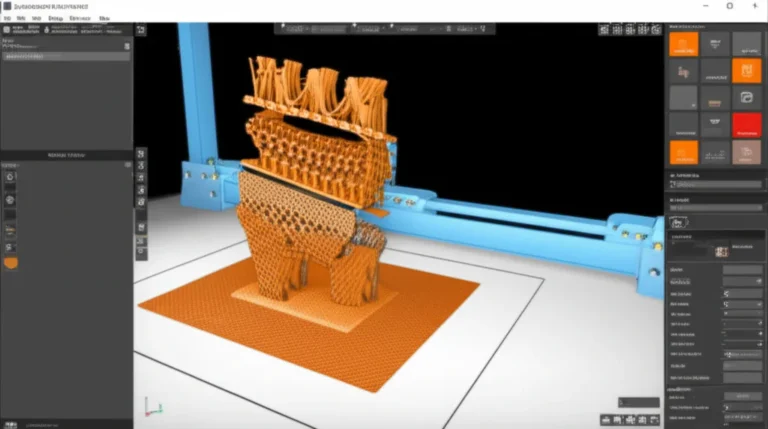
Your printer is only as good as the slicer you use. The slicer translates your 3D model (STL file) into G-code (instructions for the printer).
- Ultimaker Cura: The most popular, free, and user-friendly slicer. Great for beginners.
- PrusaSlicer: Excellent for Prusa printers but works with others too. Known for great support generation.
- OrcaSlicer: A rising star in the community, offering advanced tuning features for speed and quality.
Pro Tip: Don’t just use default settings. Learn about infill density, layer height, and retraction to optimize your prints.
Mastering 3D Modeling (CAD) for Custom Designs
You don’t need to be a pro to start designing.
- Tinkercad: Perfect for absolute beginners. It’s browser-based and uses simple shapes.
- Fusion 360: The industry standard for parametric design. It has a free license for hobbyists.
- Blender: Best for organic shapes and artistic modeling (step learning curve).
Explore more tools in our 3D Design Software category.
Selecting the Best 3D Printing Materials: PLA, PETG, ABS, TPU, and Resins
- PLA: Easy, biodegradable, low temp. Best for: Decor, prototypes.
- PETG: Stronger, slightly flexible, heat resistant. Best for: Functional parts, outdoor use.
- ABS: Tough, heat resistant, but warps easily and smells. Best for: Automotive parts, enclosures.
- TPU: Flexible like rubber. Best for: Phone cases, gaskets, tires.
- Resin: High detail, brittle. Best for: Miniatures, jewelry.
Troubleshooting Common Print Failures and Calibration Tips
- Warping: Caused by poor bed adhesion or cooling. Fix: Use a heated bed, glue stick, or PEI sheet.
- String: Filament ozing between parts. Fix: Increase retraction distance and temperature.
- Layer Shifting: Layers are misaligned. Fix: Check belt tension and stepper motor connections.
📈 The State of the Hobbyist Market: Trends and Industry Insights
The hobbyist market isn’t just growing; it’s evolving. According to the Sculpteo “State of 3D Printing” Industry Report, the landscape is shifting rapidly.
- Demographics: The report surveyed 30 self-proclaimed hobbyists, finding that 46% are beginners, 42% are intermediates, and 13% are experts.
- Spending: A staggering 87% of hobbyists spend between $1 and $1,0 annually on the hobby, with plastics being the dominant material (79%).
- Usage: 54% of hobbyists use 3D printing primarily for leisure, while 43% use it for protyping.
Key Insight: The report highlights that despite varying experience levels, there is a “growing enthusiasm for 3D printing technology” across the board. The barrier to entry is lower than ever, and the community is more supportive than ever.
🎓 Digital Fabrication in Education and the Workplace
It’s not just about fun and games. Digital fabrication is reshaping how we learn and work.
- In Schools: Teachers are using 3D printers to bring abstract concepts to life. Students can print molecular structures, historical artifacts, and engineering prototypes.
- In the Workplace: Small businesses are using 3D printing for rapid protyping, reducing the time-to-market for new products.
- Collaboration: The ability to share digital files means a designer in New York can print a part in Tokyo instantly.
For more on this, check out our 3D Printing in Education and Digital Fabrication in the Workplace sections.
🎬 Real Stories: The Experience of a Hobbyist Who’s Been There
Let’s talk about James Beswick, an RC car enthusiast from the UK. He didn’t just buy a car; he built the world’s fastest model RC car using a personal 3D printer.
“The main benefit is, I can create shapes with a printer that you cannot create easily with any other means,” James said.
He used his printer to manufacture key components that were impossible to buy off the shelf. This is the essence of the hobbyist experience: empowerment. You aren’t limited by what’s on the shelf; you are limited only by your imagination.
But what if you’re just starting? You might feel overwhelmed. That’s where the community comes in. As one veteran hobbyist put it, “If you aren’t keeping a notebook, start.” Document your failures, your successes, and your ideas. The journey is just as important as the destination.
📺 Resources: Podcasts, Video Series, and Community Forums
You don’t have to figure it all out alone. Here are some resources to keep you inspired:
- D Universe Untethered Video Podcast Series: A great source for interviews with makers and deep dives into projects.
- YouTube Tutorials: From basic setup to advanced tuning, there’s a video for everything.
- Forums: Reddit’s r/3Dprinting, Prusa Forum, and Creality Forum are goldmines of knowledge.
Featured Video: For a visual guide to getting started, check out this beginner’s guide that covers everything from filament types to safety tips. It’s the perfect companion to this article.
▶️ Watch: The Ultimate Beginner’s Guide to 3D Printing
Conclusion

So, what’s the verdict on 3D printing usage by hobbyists? It’s not just a trend; it’s a revolution. From replacing a broken gear in your toaster to engineering a prosthetic hand for a child, the impact is profound.
The Pros:
- ✅ Unlimited Creativity: Make anything you can imagine.
- ✅ Cost-Effective: Save money on repairs and custom parts.
- ✅ Rapid Innovation: Iterate and improve designs in hours.
- ✅ Community: Join a global network of makers.
The Cons:
- ❌ Learning Curve: It takes time to master the tech.
- ❌ Time-Consuming: Prints can take hours or days.
- ❌ Maintenance: Printers need tuning and care.
Our Recommendation: If you have the curiosity and the patience, get a 3D printer. Start with a reliable FDM machine, learn the basics of slicing, and dive into the world of open-source models. The journey from “I wish I had this” to “I made this” is one of the most rewarding experiences you can have.
Don’t let the fear of failure stop you. Every failed print is a lesson learned. And remember, the best time to start was yesterday; the second best time is now.
Recommended Links
Ready to dive in? Here are some top picks for gear and resources:
- Best Starter FDM Printer:
Creality Ender 3 V3 SE: Amazon | Official Site
Bambu Lab A1 Mini: Amazon | Official Site - Best Resin Printer for Miniatures:
Elegoo Mars 4: Amazon | Official Site - Best Slicing Software:
Ultimaker Cura: Download
PrusaSlicer: Download - Books for Beginners:
3D Printing For Dummies by Richard Horne: Amazon
The Ultimate Guide to 3D Printing by various authors: Amazon
Reference Links
- Sculpteo Report: Sculpteo Details the Hobbyist Market in Their “State of 3D Printing” Industry Report
- Wikipedia: 3D Printing
- Thingiverse: Free 3D Models
- Prusa Research: PrusaSlicer
- Creality: Official Website
- Elegoo: Official Website
- Bambu Lab: Official Website
FAQ

What are some safety precautions I should take when 3D printing at home?
Safety is paramount. Always ensure proper ventilation, especially when printing with ABS or resin, as they can release harmful fumes. Wear gloves and a mask when handling resin, and never leave a printer unattended for long periods. Keep a fire extinguisher nearby and ensure your printer is on a non-flammable surface.
Read more about “15 Mind-Blowing 3D Printed Creations & Tips You Must See (2026) 🎉”
How do I design my own 3D printing models for personal use?
Start with Tinkercad for simple shapes or Fusion 360 for more complex, parametric designs. There are countless tutorials online to help you learn the basics of CAD. Once you have a design, export it as an STL file and import it into your slicer.
Read more about “🚀 50+ Most Popular Things to 3D Print in 2026: The Ultimate Guide”
Can I make money selling 3D printed items as a hobbyist?
Yes, many hobbyists turn their passion into a side hustle by selling custom prints on platforms like Etsy. However, be mindful of Intelectual Property (IP) laws. You cannot sell copyrighted characters or patented designs without permission.
Read more about “Ultimate 3D Printer Buying Guide: 15 Must-Know Tips for 2026 🖨️”
What are the best 3D printing materials for hobbyists to use?
For beginners, PLA is the best choice due to its ease of use and low odor. For functional parts, PETG offers a good balance of strength and flexibility. TPU is great for flexible items, while ABS is suitable for high-heat applications but requires more skill to print.
Read more about “🚀 12 Top Digital Inventories for 3D Printing (2026)”
What are some creative things to 3D print at home?
The possibilities are endless! Try printing custom phone cases, organizers, gaming miniatures, planters, or even replacement parts for household appliances. Look for inspiration on Thingiverse or Cults3D.
Read more about “35 Easy 3D Print Projects for Beginners (2026) 🚀”
How do I choose the right 3D printer for my hobby needs?
Consider your budget, print size, and material preferences. If you want to print miniatures, go for a resin printer. If you need functional parts, an FDM printer is better. Read reviews and compare specs before making a decision.
Read more about “What Percentage of 3D Printing Is Used for Prototyping vs. Production? (2026) 🚀”
What are the most popular 3D printing projects for beginners?
Start with simple projects like keychains, phone stands, or coasters. These are quick to print and help you get comfortable with the process. The famous “Benchy” boat is also a great test project.
Read more about “📊 10 Essential 3D Printing Statistics for Beginners (2026)”
What are some common mistakes that hobbyists make when first starting out with 3D printing?
Common mistakes include not leveling the bed, using the wrong temperature settings, and failing to clean the build plate. Always follow the manufacturer’s guidelines and take the time to calibrate your printer.
Can I make money selling items I’ve 3D printed, or is it just for personal use?
You can make money selling 3D printed items, but you must ensure you have the rights to the designs you are selling. Avoid selling copyrighted or patented items without permission.
What skills do I need to learn to get started with 3D printing as a hobbyist?
You need basic skills in 3D modeling (CAD), slicing software, and printer maintenance. Patience and problem-solving skills are also essential, as troubleshooting is a big part of the hobby.
What are the most popular types of items that hobbyists like to 3D print?
Hobbyists love printing functional parts, custom accessories, gaming miniatures, home decor, and educational models. The variety is vast, catering to almost every interest.
Read more about “💸 How Much Does It Cost Per 3D Print? (2026)”
How do I choose the right 3D printer for my hobbyist needs and budget?
Determine your budget and print volume needs. For small budgets, look at entry-level FDM printers like the Ender 3. For higher quality and detail, consider a resin printer like the Elegoo Mars.
What are some beginner-friendly 3D printing projects for hobbyists to try?
Start with simple geometric shapes, keychains, phone stands, and coasters. These projects are quick to print and help you understand the basics of the printing process.
Read more about “Unlocking Thangs 3D: The Ultimate 3D Model Search Engine in 2026 🚀”