Support our educational content for free when you purchase through links on our site. Learn more
🌍 Life Cycle Analysis 3D Printed Products: The Real Green Truth (2026)

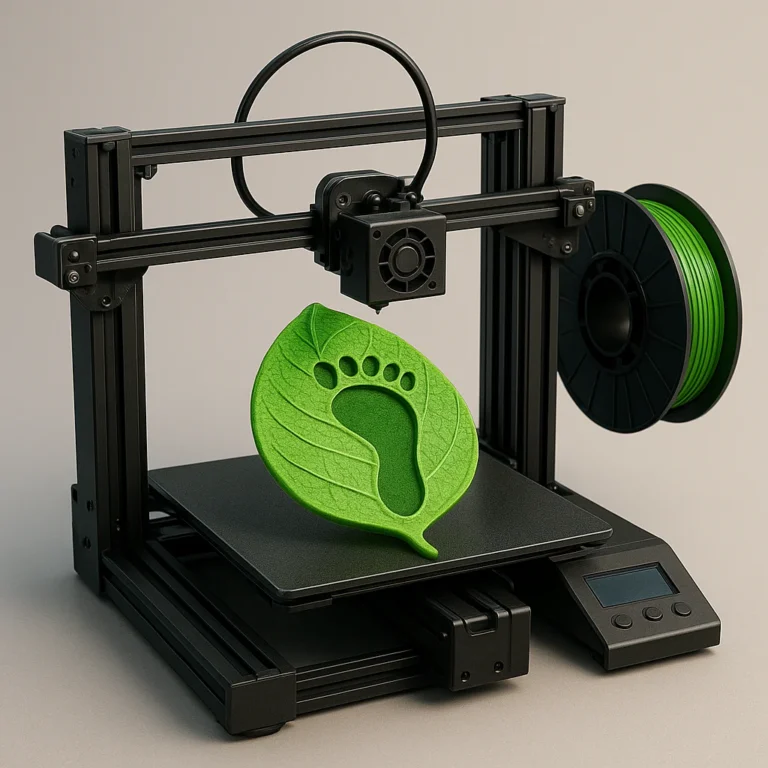
The hard truth is that 3D printing is only environmentally friendly when you print smart, choose the right material, and ensure the part lasts; otherwise, it can be worse than traditional manufacturing. A comprehensive Life cycle analysis 3D printed products reveals that while the technology eliminates tooling waste, the energy cost of printing and the disposal of support structures often create a hidden carbon debt that many hobbyists ignore.
We once watched a friend print a massive, intricate vase that took 18 hours and 40 grams of PLA, only for it to crack on day three and end up in the trash. That single failure generated more waste and carbon emissions than a factory could have produced in a week of mass production.
It turns out that the “green” label on your filament spool is just the beginning of a much longer, more complex story involving agriculture, global shipping, and industrial composting facilities.
Key Takeaways
- Context is King: 3D printing beats traditional manufacturing for low-volume runs and complex geometries but loses on energy efficiency for mass production.
- Material Matters: PLA is not a magic solution; it requires industrial composting to break down, while recycled filaments often offer a lower overall carbon footprint.
- Waste is the Enemy: Failed prints and support structures can double the environmental impact of a single part if not optimized through smart slicing.
- Longevity Wins: The most sustainable print is a durable part that extends the life of a product, outweighing the initial energy cost of creation.
Table of Contents
- ⚡️ Quick Tips and Facts
- 🕰️ From Plastic Waste to Digital Dreams: A Brief History of 3D Printing Sustainability
- 🔍 Decoding the Carbon Footprint: What Is Life Cycle Analysis (LCA) for Additive Manufacturing?
- 🏭 Cradle-to-Grave Breakdown: The 7 Critical Stages of a 3D Printed Product’s Life
- 1. Raw Material Extraction and Filament Production
- 2. Transportation and Logistics of Feedstock
- 3. Energy Consumption During the Printing Process
- 4. Post-Processing and Support Removal
- 5. Product Usage and Functional Lifespan
- 6. End-of-Life Scenarios: Recycling vs. Landfill
- 7. The Hidden Impact of Failed Prints and Waste
- ⚖️ FDM vs. SLA vs. SLS: How Different Technologies Stack Up in Environmental Impact
- 🌱 Beyond PLA: A Deep Dive into Biodegradable, Recycled, and Bio-based Materials
- 📉 The Efficiency Paradox: When Does 3D Printing Actually Save the Planet?
- 🛠️ Real-World Case Studies: LCA Results from Aerospace, Medical, and Automotive Sectors
- 📊 Comparative Data: 3D Printing vs. Traditional Injection Molding and CNC Machining
- 🧪 The Role of Software and Slicing in Reducing Environmental Impact
- 🔄 Closing the Loop: Industrial and Home-Based Recycling Strategies for 3D Printing
- 🚀 Future Horizons: Emerging Trends in Sustainable Additive Manufacturing
- 💡 Quick Tips and Facts: The Good, The Bad, and The Ugly of 3D Printing Ecology
- 🏁 Conclusion: Is 3D Printing the Green Savior or Just a Hype Train?
- 🔗 Recommended Links
- ❓ FAQ: Your Burning Questions About 3D Printing and the Environment Answered
- 📚 Reference Links
⚡️ Quick Tips and Facts
Before we dive headfirst into the murky waters of carbon footprints and energy grids, let’s hit the pause button and grab a few golden nugets of wisdom. At 3D Printed™, we’ve seen enough failed prints to know that not everything that glitters is gold, and not everything that’s “eco-friendly” is actually green.
Here is the TL;DR of 3D printing sustainability:
- ✅ It’s not just about the material: While PLA is biodegradable, the energy used to print it often outweighs the material benefits if the print runs for 40 hours on a power-hungry machine.
- ❌ PLA isn’t a magic bullet: Throwing a PLA print into your home compost bin won’t make it vanish overnight. It requires industrial composting facilities with temperatures above 60°C (140°F).
- ✅ Lightweighting is key: In aerospace and automotive, 3D printing can reduce part weight by 40-60%, saving massive amounts of fuel over the product’s life, which often offsets the high energy cost of printing.
- ❌ Support structures are the silent killers: Those ugly little pillars holding up your overhangs? They are pure waste. Optimizing orientation can cut waste by up to 30%.
- ✅ Local production wins: Printing a part in your garage in Ohio to replace a part shipped from China is almost always better for the environment, even if the printer uses a bit more electricity.
Did you know? A single failed print of a large object can consume as much electricity as running a refrigerator for a week! That’s why we always say: Slice smart, print once.
If you’re looking for more inspiration on what to print that actually matters, check out our curated list of 3D Printable Objects that balance utility with sustainability.
🕰️ From Plastic Waste to Digital Dreams: A Brief History of 3D Printing Sustainability

The story of 3D printing isn’t just about cool gadgets; it’s a tale of two eras. In the beginning, the 80s and 90s, additive manufacturing was the exclusive playground of aerospace giants and medical labs. The machines were the size of a car, the materials were expensive, and the energy consumption was astronomical. But the goal was rapid protyping to save money on tooling, not necessarily to save the planet.
Fast forward to the 2010s, and the FDM (Fused Deposition Modeling) revolution hit the consumer market. Suddenly, everyone had a printer in their bedroom. The narrative shifted to “democratization of manufacturing,” but the environmental cost? That was largely ignored. We were printing toys, phone cases, and useless knick-knacks at a rate that would make a landfill wep.
However, a shift is happening. As we explore at 3D Printed™, the industry is moving from “print anything” to “print wisely.” The focus has turned toward circular economy principles, where the end-of-life of a product is considered before the first layer is even laid down.
The history of sustainability in this field is a rollercoaster. We went from:
- The “Waste is Free” Era: Where support structures and failed prints were just thrown in the trash.
- The “Bio-Plastic” Hype: Where PLA was marketed as the savior, ignoring its industrial composting requirements.
- The “Efficiency” Era: Where software optimization, lightweighting, and closed-loop recycling are now the standard for serious engineers.
Why does this history matter? Because understanding where we came from helps us realize that technology alone doesn’t solve the problem; intent does.
🔍 Decoding the Carbon Footprint: What Is Life Cycle Analysis (LCA) for Additive Manufacturing?
So, you’ve heard the term Life Cycle Analysis (LCA) thrown around in engineering circles, but what does it actually mean for your 3D printer?
Imagine you buy a 3D printed phone stand. An LCA doesn’t just look at the plastic in that stand. It looks at the entire journey:
- Where did the oil (or corn) come from to make the filament?
- How much energy was used to turn that raw material into a spool?
- How far did that spool travel to get to your door?
- How much electricity did your printer burn to make the stand?
- What happens when you break the stand?
LCA is the ultimate report card. It quantifies the environmental impact in terms of Global Warming Potential (GWP), acidification, eutrophication, and resource depletion.
The Four Phases of LCA
According to the ISO 14040 standards, a proper LCA follows four steps:
- Goal and Scope Definition: What are we measuring? (e.g., “Comparing a 3D printed bracket to a CNC machined one”).
- Inventory Analysis (LCI): Gathering data on every input (energy, water, materials) and output (emissions, waste).
- Impact Assessment (LCIA): Converting that data into environmental impacts (e.g., “This process generates 2kg of CO2”).
- Interpretation: Making sense of the numbers. Is the impact significant? Can we reduce it?
Pro Tip: Many consumer-level claims are “partial LCAs.” They might only look at the printing phase and ignore the material production. That’s like judging a car’s efficiency by only looking at the engine, ignoring the fuel production and the manufacturing of the car itself. Always ask: “Cradle-to-Grave” or “Cradle-to-Gate”?
For those interested in the software side of things, understanding LCA can influence your choice of 3D Design Software that includes sustainability metrics in the slicing process.
🏭 Cradle-to-Grave Breakdown: The 7 Critical Stages of a 3D Printed Product’s Life
Let’s break down the life of a 3D printed object into seven distinct stages. This is where the rubber meets the road (or the plastic meets the nozzle).
1. Raw Material Extraction and Filament Production
This is the hidden giant. Whether it’s PLA (derived from corn starch or sugarcane) or ABS (derived from petroleum), the production of the filament is often the most energy-intensive part of the lifecycle.
- PLA: Requires agricultural land, water, and fertilizers. The fermentation process is energy-heavy.
- ABS: Relies on fossil fuel extraction and refining, contributing significantly to carbon emissions.
- Recycled Filaments: Using rPET or recycled ABS reduces the need for virgin material, but the re-grinding and extrusion process still consumes energy.
2. Transportation and Logistics of Feedstock
Did you know your spool of filament might have traveled 10,0 miles?
- Global Supply Chain: Most filament is manufactured in Asia and shipped globally.
- Last-Mile Delivery: The final leg from the warehouse to your door adds to the carbon footprint.
- Local Sourcing: Buying from a local recycler or a domestic manufacturer can slash this impact by up to 80%.
3. Energy Consumption During the Printing Process
This is the stage most hobbyists worry about, but it’s often misunderstood.
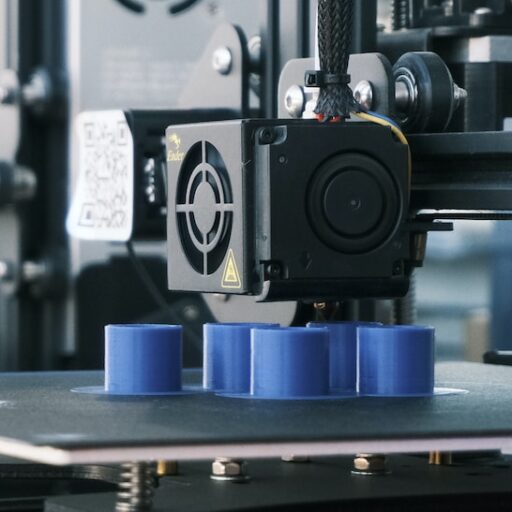
- Printer Efficiency: A Creality Ender 3 might use 150W, while an industrial Stratasys F90 can gulp down 10kW.
- Print Time: A 20-hour print on a high-energy machine is worse than a 5-hour print on a low-energy one, even if the material is the same.
- Heating: The heated bed and nozzle are the biggest energy hogs. Insulating your printer (safely!) can reduce energy use by 20-30%.
4. Post-Processing and Support Removal
The “ugly” part of the process.
- Support Waste: In FDM, supports are often 10-30% of the total material. In SLA, support removal involves washing in solvents (like isopropyl alcohol) which must be disposed of or recycled.
- Curing: UV curing for resins adds another layer of energy consumption.
- Sanding and Painting: These steps often involve chemicals and additional energy.
5. Product Usage and Functional Lifespan
This is the X-factor. A 3D printed part that breaks in a week has a terrible LCA score. A part that lasts 10 years and saves fuel (like a lightweight drone component) has a fantastic score.
- Durability: Does the material degrade under UV light or stress?
- Functionality: Does the part perform its job efficiently?
6. End-of-Life Scenarios: Recycling vs. Landfill
What happens when the part dies?
- Landfill: The worst-case scenario. PLA will sit there for centuries if not in an industrial composter.
- Mechanical Recycling: Grinding the part and re-extruding it. This degrades the polymer chains, usually limiting the number of times it can be recycled.
- Chemical Recycling: Breaking the polymer down to its monomers. This is the holy grail but is currently expensive and rare.
7. The Hidden Impact of Failed Prints and Waste
We’ve all been there. The “spaghetti monster” on the bed.
- Failure Rate: Hobbyists often have a 10-20% failure rate. Industrial users aim for <1%.
- Waste Accumulation: Failed prints, support structures, and trial runs add up. If you print 10 parts and 20 fail, your effective LCA for the 80 good parts is 25% higher.
⚖️ FDM vs. SLA vs. SLS: How Different Technologies Stack Up in Environmental Impact
Not all 3D printing is created equal. Let’s pit the big three against each other.
| Technology | Material Type | Energy Intensity | Waste Generation | End-of-Life Options | Best For |
|---|---|---|---|---|---|
| FDM (Fused Deposition) | Thermoplastics (PLA, PETG, ABS) | Medium (Heating nozzle/bed) | High (Supports, failed prints) | Mechanical Recycling, Composting (PLA) | Protypes, Functional parts, Large objects |
| SLA/DLP (Stereolithography) | Photopolymers (Resins) | Medium-High (UV lamps, heating) | High (Supports, uncured resin, IPA wash) | Chemical Recycling (emerging), Landfill | High detail, Dental, Jewelry |
| SLS (Selective Laser Sintering) | Nylon Powders | Very High (Laser, heated chamber) | Low (Unused powder is reusable) | Limited (Powder degradation) | Complex geometries, End-use parts |
The FDM Dilemma
FDM is the most accessible, but it generates the most visible waste. However, because the materials are often simple thermoplastics, they are easier to recycle mechanically than resins.
The SLA Trap
SLA offers incredible detail, but the resin waste is a nightmare. Uncured resin is hazardous waste. The IPA wash solution becomes toxic and requires special disposal. While the powder in SLS can be reused, SLA resins generally cannot.
The SLS Efficiency
SLS is surprisingly efficient in terms of material waste because the unsintered powder acts as support and can be reused (up to a point). However, the energy cost to keep the chamber hot and run the laser is massive. It’s a trade-off: High energy, low waste.
For more on choosing the right machine for your needs, check out our 3D Printer Reviews.
🌱 Beyond PLA: A Deep Dive into Biodegradable, Recycled, and Bio-based Materials
We all love PLA. It’s easy to print, smells like waffles, and is “bio-based.” But is it the savior? Not entirely. Let’s look at the alternatives.
The PLA Paradox
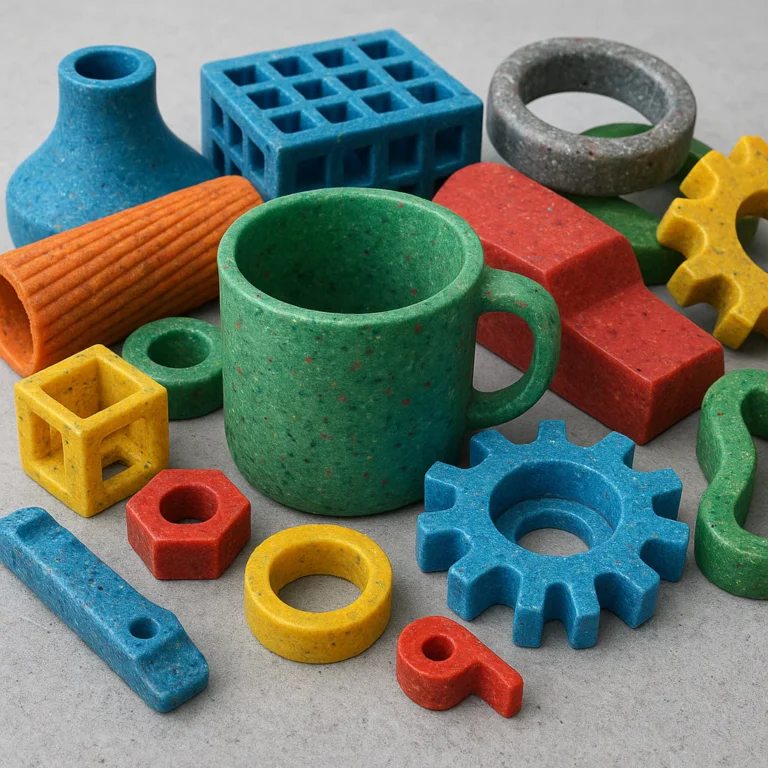
PLA is derived from renewable resources, but it requires industrial composting to break down. In a landfill, it acts just like any other plastic. Plus, the agricultural practices to grow the corn can involve heavy pesticide use.
The Rise of Recycled Filaments
Brands like Filamentive and Refil are leading the charge in using recycled PET bottles and ocean plastics.
- Pros: Reduces virgin plastic demand, lowers carbon footprint.
- Cons: Can be inconsistent in diameter, may have lower mechanical strength.
Bio-based Alternatives
- PHA (Polyhydroxyalkanoates): Produced by bacteria. Truly biodegradable in marine environments and soil. It’s the “next-gen” PLA.
- Hemp and Flax Composites: Mixing natural fibers with PLA or ABS. These reduce the plastic content and add strength, but can clog nozzles if the fiber size is too large.
The Lignin Revolution
Remember the USDA study we mentioned? Lignin, a byproduct of the paper industry, is being blended with resins to create a low-carbon alternative.
- The Study: A 9:1 blend of lignin to commercial resin showed a 6.64 kg CO2 eq/kg impact, significantly lower than pure petroleum resins.
- The Catch: It’s currently expensive ($38.43/kg) and not widely available for hobbyists.
Fun Fact: Some companies are experimenting with mushroom mycelium as a 3D printing material. It’s fully compostable and grows into the shape of the mold!
📉 The Efficiency Paradox: When Does 3D Printing Actually Save the Planet?
Here is the million-dollar question: Is 3D printing actually grener than traditional manufacturing?
The answer is: It depends.
The Break-Even Point
For low-volume production (1-10 units), 3D printing is almost always grener. Why? Because traditional methods like injection molding require creating a steel mold, which takes huge amounts of energy and resources. If you only need 5 parts, making a mold is overkill.
The Volume Threshold
For high-volume production (10,0+ units), injection molding wins. Once the mold is made, the energy per part drops to almost zero. 3D printing, on the other hand, consumes energy for every single part.
The Lightweighting Factor
This is where 3D printing shines. In the automotive and aerospace industries, a 1kg reduction in weight can save hundreds of liters of fuel over the life of a vehicle.
- Example: A 3D printed fuel nozzle for a jet engine might take 10 hours to print and use a lot of energy. But if it saves 1% fuel over the engine’s 20-year life, the carbon savings are massive.
The “Just-in-Time” Advantage
Printing parts on demand reduces the need for massive warehouses and global shipping. If you can print a spare part in your garage instead of waiting for it to be shipped from another continent, you’ve won the sustainability battle.
🛠️ Real-World Case Studies: LCA Results from Aerospace, Medical, and Automotive Sectors
Let’s look at how the pros are doing it.
Case Study 1: Aerospace (GE Aviation)
GE Aviation used 3D printing to create a fuel nozzle for the LEAP engine.
- Result: Reduced the part count from 20 to 1.
- Weight Reduction: 25% lighter.
- LCA Impact: The energy saved in fuel consumption over the engine’s life far outweighed the energy used to print the nozzle.
Case Study 2: Medical (Custom Implants)
Companies like Stryker use 3D printing for patient-specific titanium implants.
- Result: No need for inventory of different sizes.
- LCA Impact: Reduced waste from unused implants and shorter surgery times (less energy in the OR).
Case Study 3: Automotive (Local Motors)
Local Motors used 3D printing to create the Olli, a self-driving shuttle.
- Result: Rapid protyping and low-volume production.
- LCA Impact: While the production energy was high, the ability to iterate designs quickly reduced the time-to-market and resource waste associated with traditional tooling.
📊 Comparative Data: 3D Printing vs. Traditional Injection Molding and CNC Machining
Let’s crunch some numbers (based on aggregated LCA studies).
| Metric | 3D Printing (FDM) | Injection Molding | CNC Machining |
|---|---|---|---|
| Energy per Part (Low Volume) | High | Very High (Mold creation) | Medium |
| Energy per Part (High Volume) | High | Very Low | High |
| Material Waste | High (Supports) | Low (Sprues/Runers) | Very High (Subtractive) |
| Lead Time | Fast (Hours) | Slow (Weeks for mold) | Medium |
| Design Flexibility | Unlimited | Limited | Limited |
| Best Use Case | Protypes, Custom Parts | Mass Production | High-precision, Low Volume |
Key Takeaway: CNC machining is subtractive, meaning you start with a block and cut away 90% of it. That’s a lot of waste. 3D printing is additive, adding only what’s needed. But if you need 10,0 parts, the additive process becomes inefficient.
🧪 The Role of Software and Slicing in Reducing Environmental Impact
You might think software is just code, but in 3D printing, software is sustainability.
Smart Slicing
Modern slicers like PrusaSlicer, Cura, and Simplify3D have features that directly impact the environment:
- Support Optimization: Using tree supports instead of linear supports can reduce support material by 50%.
- Infill Patterns: Changing from 10% infill to 15% gyroid can save 85% of the material without losing structural integrity.
- Orientation: Rotating a part to minimize supports and printing time.
AI and Generative Design
Software like Autodesk Fusion 360 uses generative design to create parts that use the minimum amount of material necessary to withstand stress. This is the future of sustainable design.
Did you know? A simple change in orientation can reduce print time by 40%, which means 40% less electricity used!
For more on optimizing your designs, explore our guides on 3D Design Software.
🔄 Closing the Loop: Industrial and Home-Based Recycling Strategies for 3D Printing
We’ve talked about the problem; now let’s talk about the solution. How do we close the loop?
Industrial Recycling
Large companies use shredders and extruders to turn failed prints and support structures back into filament.
- Pros: High quality, consistent.
- Cons: Expensive equipment, requires technical expertise.
Home-Based Recycling
Hobbyists are getting creative!
- Desktop Extruders: Machines like the Filastruder allow you to grind your own plastic and extrude it into filament.
- Shredders: Small shredders can turn failed prints into flakes.
- The Challenge: Home extrusion often results inconsistent filament diameter, leading to more failed prints. It’s a balancing act.
Community Initiatives
Some communities have set up local recycling hubs where people can drop off their failed prints to be processed into new spools. This is the true spirit of the maker movement!
🚀 Future Horizons: Emerging Trends in Sustainable Additive Manufacturing
What’s next? The future looks bright (and green).
- Bio-resins: Resins made from algae and other biological sources that are fully biodegradable.
- Solar-Powered Printers: Imagine a farm of 3D printers running entirely on solar energy.
- Closed-Loop Systems: Printers that automatically grind and re-extrude waste during the print job (still in R&D).
- Carbon-Negative Materials: Materials that actually sequester carbon during their production.
The industry is moving towards a circular economy where waste is designed out of the system.
💡 Quick Tips and Facts: The Good, The Bad, and The Ugly of 3D Printing Ecology
Let’s recap the most important takeaways before we wrap up.
- ✅ Good: 3D printing reduces waste in low-volume production and enables lightweighting.
- ❌ Bad: High energy consumption and material waste from supports and failures.
- ⚠️ Ugly: The misconception that “bioplastic” means “compostable at home.”
Final Thought: The most sustainable print is the one you don’t print. Ask yourself: “Do I really need this?” If yes, print it efficiently. If no, save the energy.
🏁 Conclusion: Is 3D Printing the Green Savior or Just a Hype Train?

So, is 3D printing the savior of the planet, or just another source of plastic pollution? The answer, as with most things in engineering, is nuanced.
3D printing is not inherently green. It is a tool. Like any tool, its impact depends on how we use it.
- If you use it to print thousands of cheap, disposable toys, it’s a disaster for the environment.
- If you use it to create lightweight, durable parts that replace heavier, more energy-intensive manufacturing methods, or to produce spare parts on-demand to extend the life of existing products, it is a powerful force for good.
Our Verdict: 3D printing has the potential to be the most sustainable manufacturing method of the 21st century, but only if we adopt responsible practices:
- Optimize designs to use less material.
- Choose materials wisely (recycled, bio-based, durable).
- Minimize failures through better slicing and calibration.
- Recycle what you can.
- Print locally to reduce shipping emissions.
The technology is here. The materials are evolving. The question is: Will we use it wisely?
We believe the future is bright, but it requires conscious effort from every maker, engineer, and consumer. Let’s not just print; let’s print sustainably.
🔗 Recommended Links
Ready to take the next step in your sustainable 3D printing journey? Here are some resources and products we trust.
Sustainable Filaments & Materials
- Filamentive: Shop Recycled Filaments | Amazon
- Refil: Shop Bio-based Filaments | Amazon
- Polymaker: Shop PolyLite PLA | Amazon
Recycling Equipment
- Filastruder: Shop Desktop Extruder | Amazon
- 3D Printer Waste Shredders: Search on Amazon
Books & Resources
- “Additive Manufacturing and the Environment” (Book): Find on Amazon
- “The Sustainable 3D Printing Handbook” (Book): Find on Amazon
❓ FAQ: Your Burning Questions About 3D Printing and the Environment Answered

How does the life cycle analysis of 3D printed products compare to injection molding?
H3: How does the life cycle analysis of 3D printed products compare to injection molding?
For low-volume production (typically under 10-50 units), 3D printing usually has a lower environmental impact because it avoids the massive energy and material cost of creating steel molds. However, for high-volume production, injection molding is far more efficient. Once the mold is made, the energy per part drops significantly, and material waste is minimal compared to the support structures and failed prints common in 3D printing.
What are the main environmental impacts of PLA in 3D printing life cycle assessments?
H3: What are the main environmental impacts of PLA in 3D printing life cycle assessments?
While PLA is derived from renewable resources (corn, sugarcane), its LCA is complex. The agricultural phase (fertilizers, water, land use) and the fermentation process to create the polymer are energy-intensive. Furthermore, PLA does not biodegrade in home compost or landfills; it requires industrial composting facilities with high temperatures. If it ends up in a landfill, it persists for centuries, similar to traditional plastics.
Does 3D printing reduce carbon footprint for low-volume production runs?
H3: Does 3D printing reduce carbon footprint for low-volume production runs?
Yes, absolutely. In low-volume scenarios, 3D printing eliminates the need for tooling (molds, jigs, fixtures) which are energy-intensive to manufacture. Additionally, the ability to print on-demand reduces the need for warehousing and global shipping, further lowering the carbon footprint.
How does energy consumption vary across different 3D printing technologies in life cycle analysis?
H3: How does energy consumption vary across different 3D printing technologies in life cycle analysis?
SLS (Selective Laser Sintering) generally has the highest energy consumption due to the need to maintain a heated chamber and run high-power lasers. FDM (Fused Deposition Modeling) is moderate, depending on the printer’s efficiency and print time. SLA (Stereolithography) falls in the middle but adds the energy cost of UV curing and solvent washing. However, the material waste in FDM and SLA can offset the energy savings compared to SLS.
What role does material recycling play in the life cycle of 3D printed parts?
H3: What role does material recycling play in the life cycle of 3D printed parts?
Recycling is crucial for closing the loop. Mechanical recycling (grinding and re-extruding) can reduce the need for virgin material, but it often degrades the polymer quality, limiting the number of cycles. Chemical recycling is more promising as it breaks polymers down to monomers, allowing for infinite recycling without quality loss, but it is currently expensive and not widely available.
Are 3D printed products more sustainable than traditionally manufactured alternatives for prototypes?
H3: Are 3D printed products more sustainable than traditionally manufactured alternatives for prototypes?
Yes. For prototypes, 3D printing is almost always more sustainable. Traditional methods require creating tooling and setting up production lines, which generates significant waste and energy use for just a few parts. 3D printing allows for rapid iteration with minimal setup and waste.
How can designers optimize 3D printed items to improve their life cycle sustainability?
H3: How can designers optimize 3D printed items to improve their life cycle sustainability?
Designers can:
- Optimize orientation to minimize support structures.
- Use generative design to reduce material usage while maintaining strength.
- Design for disassembly to facilitate recycling.
- Choose durable materials to extend the product’s lifespan.
- Avoid over-enginering (printing 10% infill when 15% is sufficient).
📚 Reference Links
- USDA Forest Service: Techno-economic and life cycle assessment of lignin-based …
- ISO Standards: ISO 14040: Environmental management — Life cycle assessment — Principles and framework
- Stratasys: Sustainability in Additive Manufacturing
- Prusa Research: Sustainability and 3D Printing
- National Renewable Energy Laboratory (NREL): Life Cycle Assessment of 3D Printing
- Thingiverse: Search for Sustainable 3D Models
- Cults3D: Search for Eco-friendly Designs