Support our educational content for free when you purchase through links on our site. Learn more
🔄 12 Ways 3D Printing Powers the Circular Economy (2026)


The circular economy isn’t a distant dream; it’s a reality where your broken 3D prints become tomorrow’s spare parts, slashing waste and shipping emissions simultaneously. By embracing Circular economy 3D printing, we shift from a linear “make-use-discard” model to a regenerative loop where materials are constantly reused, repaired, and repurposed right in our garages.
Imagine a world where a snapped coffee maker latch doesn’t end up in a landfill but is instantly replaced by a file downloaded from the cloud. This isn’t science fiction; it’s the daily grind for makers who refuse to accept “planned obsolescence” as a design flaw.
Did you know that BMW alone recycles over 12 tonnes of plastic waste annually to create new 3D printed tools and fixtures? That’s the power of closing the loop, turning industrial trash into high-value assets without moving a single gram of raw material across the ocean.
Key Takeaways
- Waste is a Design Flaw: 3D printing enables on-demand manufacturing, eliminating inventory waste and allowing for the creation of spare parts that extend product lifecycles.
- Closed-Loop Systems: From home shredders to industrial extruders, recycling failed prints into new filament is becoming increasingly accessible and efficient.
- Localize Production: Printing parts locally drastically reduces transport emissions and packaging waste compared to global supply chains.
- Material Innovation: New bioplastics and recycled blends (like PLA-R and ocean plastic) are making sustainable printing stronger and more versatile.
- Design for Disassembly: The future lies in modular designs that allow parts to be easily separated and recycled at the end of their life.
Table of Contents
- ⚡️ Quick Tips and Facts
- 🕰️ From Linear Waste to Circular Lops: The History of 3D Printing Sustainability
- 🔄 The Core Mechanics: How Additive Manufacturing Drives the Circular Economy
- ♻️ Turning Trash into Treasure: Filament Recycling and Closed-Loop Systems
- 🛠️ Repair, Don’t Replace: Extending Product Lifecycles with On-Demand Spare Parts
- 📦 Lean Logistics: Reducing Transport Emissions and Packaging Waste
- 🏭 Small-Batch Brilliance: Efficient Localized Production for a Grener Future
- 🧪 Material Science Breakthroughs: Bioplastics, Composites, and New Eco-Friendly Polymers
- 🏢 Industry Giants Leading the Charge: Case Studies from BMW, Adidas, and GE
- 🏠 Home Workshop Hacks: Setting Up Your Personal Circular 3D Printing Station
- ⚖️ The Reality Check: Challenges, Limitations, and Energy Consumption Myths
- 🚀 Future Horizons: What’s Next for Sustainable Additive Manufacturing?
- 💡 Conclusion
- 🔗 Recommended Links
- ❓ FAQ
- 📚 Reference Links
⚡️ Quick Tips and Facts
Before we dive into the nitty-gritty of turning your plastic graveyard into a goldmine, let’s hit the ground running with some hard-hitting truths about the circular economy and 3D printing. We’ve seen too many “eco-friendly” claims that fall apart under a microscope, so here is the 3D Printed™ reality check:
- Waste is a Design Flaw: In a linear economy, a broken part means a trip to the landfill. In a circular one, it’s just a file waiting to be reprinted.
- Not All “Recycled” Filament is Created Equal: Some brands blend recycled content with virgin plastic to maintain strength. Others use 10% post-consumer waste, which can be tricky to print. Know your source!
- The Energy Paradox: While 3D printing reduces material waste, the energy consumption per part can be higher than injection molding for mass production. Context matters.
- HDPE is the Wildcard: You can’t just throw any plastic in the shredder. High-Density Polyethylene (HDPE) is notoriously difficult to print due to warping, but it’s the star of hospital recycling programs.
- Local is Local: The biggest carbon saver isn’t the material; it’s the elimination of shipping. Printing a part in your garage beats shipping it from a factory across the ocean.
Did you know? The Ellen MacArthur Foundation defines the circular economy as a model where “our throwaway economy [is transformed] into one where waste is eliminated, resources are circulated, and nature is regenerated.” It’s not just a buzzword; it’s a survival strategy. Read more about the Circular Economy.
🕰️ From Linear Waste to Circular Lops: The History of 3D Printing Sustainability

Let’s take a trip down memory lane, shall we? Back in the day, 3D printing (or additive manufacturing) was the cool kid on the block, but it was mostly used for rapid protyping. You’d print a part, realize it was slightly off, toss it in the bin, and print again. It was the definition of linear consumption: take, make, waste.
We remember our early days in the lab, surrounded by piles of failed PLA prints that looked like colorful abstract art. We thought, “This is the future!” until we realized were just creating micro-plastic mountains.
The shift began when the industry realized that the true power of 3D printing wasn’t just speed; it was on-demand manufacturing. If you only print what you need, you don’t have the inventory waste of traditional manufacturing.
- The 1980s-90s: Stereolithography (SLA) and FDM emerge. Focus is on speed and accuracy, not sustainability.
- The 20s: The maker movement explodes. Open-source hardware (like the RepRap project) democratizes the tech, but waste management lags behind.
- The 2010s: The concept of the circular economy gains traction. Companies like Ultimaker and Formlabs start experimenting with bio-based materials.
- The 2020s: Industrial giants like BMW and Adidas integrate closed-loop systems, recycling their own waste into new production materials.
The narrative has shifted from “Look how fast we can print” to “Look how little we can waste.” But how do we actually make this work without turning our printers into energy vampires? That’s the million-dollar question we’re about to answer.
🔄 The Core Mechanics: How Additive Manufacturing Drives the Circular Economy
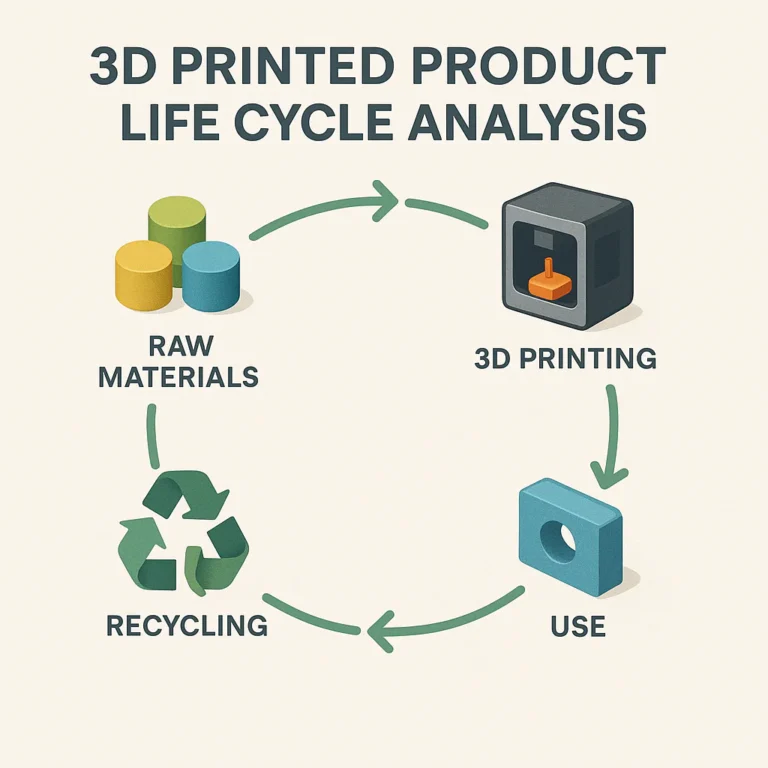
So, how does a machine that melts plastic actually save the planet? It’s not magic; it’s math and mechanics. The circular economy relies on three pillars: reduce, reuse, recycle. 3D printing hits all three, but in ways that are unique to additive processes.
1. Design for Additive Manufacturing (DfAM)
Traditional manufacturing often requires subtractive methods (cuting away material), which generates massive waste. 3D printing is additive. You only deposit the material where it’s needed.
- Topology Optimization: Software can remove unnecessary material, creating lightweight parts that use 50% less plastic but maintain the same strength.
- Part Consolidation: Instead of assembling 10 parts with screws and glue, you can print a single complex unit. Fewer parts mean fewer failures and less waste.
2. The “Just-in-Time” Revolution
In the old days, factories had to guess how many widgets they’d sell. They’d make 10,0, sell 8,0, and throw away 2,0. With 3D printing, you print the 8,0, and if you need 2 more next week, you print 2 more. Zero inventory waste.
3. Digital Warehousing
Why store physical spare parts for 20 years when you can store the CAD file? This is the holy grail of the circular economy.
- Scenario: A vintage car breaks down. The manufacturer stopped making the part 15 years ago.
- Linear Solution: Scavenge a used part or scrap the car.
- Circular Solution: Download the file, print the part, fix the car.
Fun Fact: According to a study by Frontiers in Bioengineering and Biotechnology, recycling plastic waste into filament in a hospital setting can reduce CO2 emissions by 9.16% compared to industrial production, while saving 85% on costs. Read the full study.
♻️ Turning Trash into Treasure: Filament Recycling and Closed-Loop Systems
This is where things get messy (literally). Turning your failed prints into new filament is the dream, but it’s also the hardest part of the puzzle.
The Shredder Dilemma
You can’t just throw a failed print into a blender. You need a dedicated shredder.
- The Process: Print -> Fail -> Shred -> Extrude -> Spool -> Print.
- The Catch: Every time you recycle a polymer, the molecular chains break down. This is called degradation. After 3-5 cycles, the filament might become brittle or change color.
Real-World Success Stories
Let’s talk about BMW. They aren’t just talking about it; they are doing it.
- The System: BMW recycles up to 12 tonnes of waste powder and shredded parts annually.
- The Output: They turn this waste into filament for FF printers and granulate for Fused Granulate Fabrication (FGF) for large tools.
- The Result: They produce hundreds of thousands of components annually, from ergonomic tools to assembly fixtures, all from their own waste.
Pro Tip: If you are a home user, don’t try to recycle ABS or PETG unless you have a high-end extruder. Stick to PLA or PLA-R (recycled PLA) for your first attempts. Brands like Kimya and ColorFabb offer excellent recycled blends that are much more forgiving.
Comparison: Virgin vs. Recycled Filament
| Feature | Virgin Filament | 10% Recycled Filament | Recycled Blend (e.g., 30% Recycled) |
|---|---|---|---|
| Consistency | High (Diameter tolerance ±0.02mm) | Variable (±0.05mm or more) | Good (Balanced) |
| Strength | Predictable | Can be 10-20% weaker | Near-virgin performance |
| Printability | Easy | Requires tuning (temp/speed) | Moderate |
| Aesthetics | Smooth, uniform color | Speckled, matte finish | Slight texture, consistent color |
| Cost | $$$ | $$ | $$ |
| Best For | Functional parts, high precision | Decorative items, prototypes | General purpose, non-critical parts |
👉 CHECK PRICE on:
- Kimya PLA-R: Amazon | Official Site
- ColorFabb Recycled: Amazon | Official Site
🛠️ Repair, Don’t Replace: Extending Product Lifecycles with On-Demand Spare Parts
Here is a question that keeps us up at night: Why do we throw away a $20 coffee maker because a $2 plastic latch broke?
This is the essence of the Right to Repair movement, and 3D printing is its secret weapon.
The “Spare Part” Economy
Imagine you own a pair of expensive hiking boots. The plastic buckle snaps.
- Old Way: Buy new boots.
- Circular Way: 3D print a replacement buckle.
We’ve seen communities like Siena Gardens offering “eternal spare parts” for their furniture. Instead of selling a whole new chair, they sell the file for the broken leg.
How to Get Started with Repair
- Identify the Part: Is it a simple geometric shape?
- Scan or Model: Use a phone app like Polycam (LiDAR) or Scaniverse to capture the broken part, or model it in Fusion 360 (free for hobbyists).
- Print with Purpose: Choose a material that matches the original. If it’s a hinge, maybe TPU (flexible) or Nylon (tough) is better than PLA.
Case Study: Heineken uses 3D printing to keep their production lines running. When a sensor bracket breaks, they don’t wait for a shipment; they print it on-site in minutes. This prevents costly downtime and eliminates the need for a massive warehouse of spare parts.
👉 Shop Spare Parts on:
- Thingiverse: Search for “Spare Parts”
- MyMiniFactory: Search for “Repair Parts”
📦 Lean Logistics: Reducing Transport Emissions and Packaging Waste
Let’s talk about the invisible waste: shipping.
Did you know that nearly 40% of all plastic is used for packaging? And the global transport sector accounts for roughly 20% of global CO2 emissions?
The Local Production Model
In a traditional supply chain:
- Raw materials are shipped to a factory.
- Parts are manufactured.
- Finished goods are shipped to a warehouse.
- Goods are shipped to a retailer.
- You buy the item.
In a circular 3D printing model:
- Raw material (or waste) is shipped to a local hub (or your home).
- You print the item.
- Done.
By eliminating steps 2, 3, and 4, you slash the carbon footprint. Plus, you eliminate the need for bubble wrap, cardboard boxes, and plastic bags.
The “Digital Shipping” Concept
Instead of shipping a physical object, you ship a digital file.
- Example: A company in Germany needs a custom tool. Instead of shipping the tool from China (taking 3 weeks and generating tons of emissions), they send the STL file to a local maker space in Germany. The tool is printed in 4 hours.
This is the future of distributed manufacturing. It’s not just about being green; it’s about resilience. When supply chains break (like during a pandemic), local production keeps the lights on.
🏭 Small-Batch Brilliance: Efficient Localized Production for a Grener Future
Mass production is great for things like water bottles, but terrible for unique, custom, or low-volume items. This is where 3D printing shines.
Why Small Batches Win
- No Minimum Order Quantity (MOQ): You can print one part.
- No Tooling Costs: No need for expensive molds.
- Rapid Iteration: If a design is flawed, you tweak the file and reprint. No wasted inventory.
Industry Giants Leading the Charge
Adidas is a prime example. Their 4D line of shoes uses 3D printing to create midsoles that are customized to the athlete’s foot.
- The Benefit: They can produce exactly what is needed, reducing overstock.
- The Material: They are actively working on recycling the midsoles into new ones.
GE Aviation uses 3D printing to produce fuel nozzles for jet engines.
- The Result: They consolidated 20 parts into 1, reducing weight and fuel consumption.
- The Circular Angle: They are developing processes to recycle the metal powder used in the printing process.
Did you know? ZEISS uses Ultimaker printers to produce adapter plates for microscopes. This allows them to produce precision parts for serial production without the waste associated with traditional mold-making. Learn more about ZEISS and Ultimaker.
👉 Shop 3D Printers for Small Batch Production:
- Ultimaker S5: Amazon | Official Site
- Bambu Lab X1-Carbon: Amazon | Official Site
🧪 Material Science Breakthroughs: Bioplastics, Composites, and New Eco-Friendly Polymers
The future of 3D printing isn’t just about recycling old plastic; it’s about creating new, sustainable materials.
Bioplastics: The Good, The Bad, and The Compostable
- PLA (Polylactic Acid): Made from corn starch or sugarcane. It’s biodegradable under industrial composting conditions.
The Catch: It doesn’t break down in your backyard compost or the ocean. It needs high heat and specific microbes. - PHA (Polyhydroxyalkanoates): A newer bioplastic that is truly biodegradable in marine environments. It’s expensive, but the future looks bright.
Composites: Strength from Waste
- Wood-Filled Filaments: Made from PLA mixed with wood dust (sawmill waste).
- Carbon Fiber: While not “recycled” in the traditional sense, carbon fiber composites allow for lighter parts, which saves energy in transportation and usage.
- Recycled Ocean Plastic: Brands like Refil and 3D4Makers are turning ocean-bound plastic into high-quality filament.
The HDPE Challenge
As mentioned earlier, HDPE (milk jugs, bottle caps) is the holy grail of recycling because it’s so common. But it’s a nightmare to print.
- The Solution: Researchers at Istituto Clinico Humanitas in Milan developed a workflow to recycle HDPE caps into filament. They used a Felfil Shredder and Felfil Evo Extruder.
- The Result: They achieved a cost saving of €29.24 per kg compared to commercial filament, with a 9.16% reduction in CO2 emissions.
👉 Shop Eco-Friendly Filaments:
- Refil Ocean Plastic: Amazon | Official Site
- 3D4Makers: Amazon | Official Site
🏢 Industry Giants Leading the Charge: Case Studies from BMW, Adidas, and GE
We’ve mentioned a few, but let’s dive deeper into how the big players are doing it.
BMW: The Circular Campus
BMW’s Additive Manufacturing Campus in Oberschleißheim is the heart of their operation.
- The Process: They take waste powder from metal printing and shredded plastic parts, recycle them, and turn them into new filament and granulate.
- The Scale: They produce several hundred thousand components annually.
- The Impact: This isn’t just a pilot; it’s a global rollout. Every BMW plant now has a 3D printer.
- Quote: “The use of waste powder and discarded 3D printing components is a key element of a functional and efficient circular economy,” says Paul Victor Osswald, project manager for Predevelopment Non-Metals. Read the full BMW press release.
Adidas: Speed and Sustainability
Adidas is pushing the boundaries of customization and recycling.
- The 4D Midsole: Printed using Digital Light Synthesis, these midsoles are designed to be recycled.
- The Goal: To create a closed-loop system where old shoes are returned, shredded, and turned into new midsoles.
GE: Aerospace Efficiency
GE Aviation is using 3D printing to make planes lighter and more efficient.
- The Nozzle: By consolidating 20 parts into 1, they reduced the weight of the fuel nozzle by 25%.
- The Material: They are developing processes to recycle the Inconel powder used in their metal printers.
🏠 Home Workshop Hacks: Setting Up Your Personal Circular 3D Printing Station
You don’t need a factory to be part of the circular economy. You just need a few upgrades to your home setup.
Step 1: The Shredder
You need a way to break down your failed prints.
- Option A: Buy a dedicated shredder like the Felfil Shredder (expensive but effective).
- Option B: DIY. Use a heavy-duty paper shredder (for small bits) or a hammer and a sturdy box (for the brave). Warning: This creates dust!
Step 2: The Extruder
This is the machine that melts the plastic and spools it.
- Recommendation: Felfil Evo or Recyclebot kits.
- Tip: Start with PLA. It’s the easiest to extrude and recycle.
Step 3: The Filament Dryer
Recycled filament absorbs moisture like a sponge. You must dry it before printing.
- Gear: Sunlu Filament Dryer or a simple food dehydrator.
Step 4: The Software
- Slicing: Use PrusaSlicer or Cura. They have settings specifically for recycled filament (slower speeds, higher temps).
- Design: Use Fusion 360 or Tinkercad to design parts that are easy to disassemble.
Pro Tip: Don’t mix plastics! If you shred a mix of PLA and ABS, your filament will be garbage. Sort your waste by color and material type.
👉 Shop Home Recycling Gear:
- Felfil Shredder: Official Site
- Sunlu Filament Dryer: Amazon | Official Site
⚖️ The Reality Check: Challenges, Limitations, and Energy Consumption Myths
We’ve painted a rosy picture, but let’s be real. The circular economy isn’t a magic wand.
The Energy Problem
3D printing is energy-intensive.
- The Myth: “3D printing is always grener than injection molding.”
- The Truth: For mass production (10,0+ units), injection molding is far more energy-efficient. 3D printing only wins for low volumes or complex geometries.
- The Math: A study showed that the energy consumption of 3D printing can be 10x higher per part than injection molding for simple shapes.
The Quality Gap
Recycled filament is rarely as strong as virgin filament.
- The Limitation: You can’t print a critical safety part (like a car brake component) with 10% recycled plastic.
- The Solution: Use recycled filament for non-critical parts (brackets, covers, tools) and virgin filament for structural components.
The Sorting Nightmare
Sorting plastic waste is hard.
- The Issue: If you mix PET and HDPE, the filament will be weak and brittle.
- The Future: We need better automated sorting technology (like X-ray or NIR sensors) to make home recycling viable.
The “Greenwashing” Trap
Some companies claim their products are “recyclable” when they are only recyclable in specific facilities that don’t exist in your area.
- The Rule: If it doesn’t say “compostable in home conditions” or “recyclable in your local bin,” assume it’s not.
🚀 Future Horizons: What’s Next for Sustainable Additive Manufacturing?
So, where do we go from here? The future is bright, but it requires innovation.
1. Automated Sorting
Imagine a machine that can scan a pile of plastic waste, sort it by polymer type, and feed it directly into an extruder. This is the holy grail of home recycling.
2. New Materials
We need more biodegradable and marine-degradable materials. PHA is a great start, but we need it to be cheaper.
3. Digital Product Passports
Every 3D printed part could have a digital ID (QR code) that tells you exactly what material it’s made of and how to recycle it.
4. The “Print and Return” Model
Imagine buying a product, using it, and then returning it to the manufacturer. They shred it, print a new one, and send it to you. No waste, no shipping of raw materials.
Final Thought: The circular economy isn’t just about technology; it’s about mindset. It’s about seeing waste as a resource and designing for the end of life from the very beginning.
💡 Conclusion

We started this journey wondering if 3D printing could truly save the planet. The answer is a resounding yes, but with a caveat: it depends on how we use it.
3D printing is not a silver bullet. It won’t fix the world if we keep printing single-use plastic toys and throwing them away. But if we use it to repair, localize, and recycle, it becomes one of the most powerful tools we have for a sustainable future.
From BMW recycling tons of waste to a home user printing a replacement part for a vintage toaster, the circular economy is happening right now. The key is to design with intention, recycle with care, and think locally.
Our Verdict:
- For Home Users: Start small. Recycle your PLA failures. Print spare parts.
- For Businesses: Invest in closed-loop systems. The cost savings and brand reputation are worth it.
- For Everyone: Demand transparency. Ask companies about their materials and recycling programs.
The future of manufacturing is additive, local, and circular. Are you ready to print it?
🔗 Recommended Links
👉 Shop 3D Printers & Accessories:
- Ultimaker S5: Amazon | Official Site
- Bambu Lab X1-Carbon: Amazon | Official Site
- Felfil Shredder: Official Site
- Sunlu Filament Dryer: Amazon | Official Site
👉 Shop Eco-Friendly Filaments:
- Kimya PLA-R: Amazon | Official Site
- ColorFabb Recycled: Amazon | Official Site
- Refil Ocean Plastic: Amazon | Official Site
Books on Circular Economy & 3D Printing:
- The Circular Economy: A User’s Guide by Walter R. Stahel: Amazon
- Additive Manufacturing and the Circular Economy by various authors: Amazon
❓ FAQ

How does 3D printing support the circular economy?
3D printing supports the circular economy by enabling on-demand production, which eliminates inventory waste. It allows for local manufacturing, reducing transport emissions, and facilitates repair by printing spare parts for broken items. Additionally, it supports closed-loop systems where waste materials are recycled into new filament.
Read more about “How 3D Printing Changed America: 12 Transformative Ways … 🚀”
What materials are best for circular economy 3D printing?
The best materials are those that are recyclable and biodegradable. PLA is the most common for home use due to its ease of recycling. HDPE is excellent for industrial recycling but difficult to print. PHA is a promising bioplastic that is truly biodegradable. Recycled blends (e.g., 30% recycled content) offer a balance of performance and sustainability.
Read more about “🌱 12 Best Biodegradable 3D Printer Filaments for 2026”
Can 3D printed objects be recycled into new filament?
Yes, but with limitations. Most thermoplastics like PLA, PETG, and ABS can be shredded and extruded into new filament. However, the material degrades with each cycle, so it’s best used for non-critical parts. HDPE is particularly challenging due to warping but is being successfully recycled industrial settings.
Read more about “🌍 Life Cycle Analysis 3D Printed Products: The Real Green Truth (2026)”
Which 3D printed items are most sustainable?
The most sustainable items are those that extend the life of other products (e.g., spare parts, repair tools) or replace single-use items (e.g., reusable containers, custom packaging). Printing complex, lightweight parts that reduce material usage in other industries (like aerospace) is also highly sustainable.
Read more about “📊 3D Printing Statistics 2020: The Data That Changed Everything”
How to design 3D prints for easy disassembly and recycling?
Design for modularity and standardization. Avoid gluing parts together; use screws or snap-fits that can be easily separated. Use single-material designs to simplify recycling. Avoid mixing different types of plastics in one print.
What are the benefits of using recycled plastic for 3D printing?
Using recycled plastic reduces waste and lowers the carbon footprint of production. It can also be cheaper than virgin filament. However, it may have lower strength and consistency, requiring adjustments to printing parameters.
Read more about “🌱 Reducing 3D Printing Carbon Footprint: The Ultimate 2026 Guide”
How does 3D printing reduce waste in manufacturing?
3D printing reduces waste by using an additive process, depositing material only where needed. It eliminates the need for tooling (molds) and inventory, allowing for just-in-time production. It also enables part consolidation, reducing the number of components and assembly waste.
Read more about “🚀 3D Printing Market Size Explodes: $136B by 2034? (2026)”
📚 Reference Links
- Ellen MacArthur Foundation: The Circular Economy
- Ultimaker: 3D Printing and the Circular Economy
- Frontiers in Bioengineering and Biotechnology: Circular Economy 3D Printing in Healthcare: HDPE Filament Recycling
- BMW Group Press: Turning Old into New: Recycling as Next Step Towards Greater Circular Economy for BMW Group 3D Printing
- Adidas: 4D Technology
- GE Aviation: Additive Manufacturing
- Felfil: Recycling Solutions
- Kimya: Recycled Filaments
- ColorFabb: Recycled PLA
- Refil: Ocean Plastic Filament