Support our educational content for free when you purchase through links on our site. Learn more
🚀 Rapid Liquid Metal Printing (LMP): The 10x Faster Metal Revolution (2026)

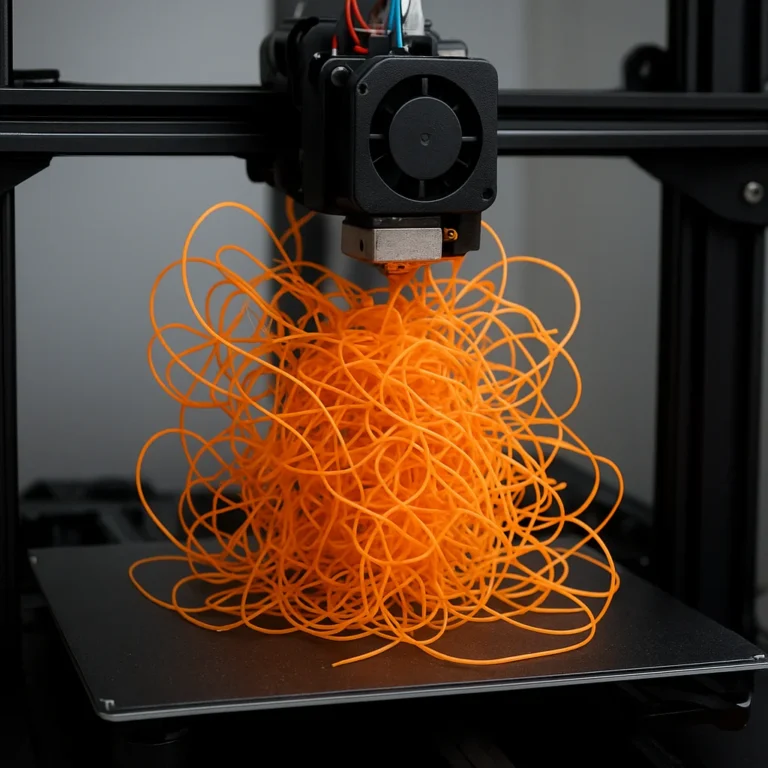
Remember the first time you tried to print a massive, hollow aluminum sculpture on a standard desktop FDM printer? You probably ended up with a pile of spaghetti and a very expensive lesson in thermal warping. We’ve all been there, staring at a failed print, wondering if we’ll ever bridge the gap between plastic protyping and industrial metal casting. But what if we told you that the future of metal manufacturing isn’t about sintering powders with lasers or melting wires with arcs? What if the answer lies in a process so fast it makes traditional methods look like they’re moving in slow motion?
Welcome to the world of Rapid Liquid Metal Printing (LMP), a technology that has us at 3D Printed™ absolutely buzzing with excitement. Born from the innovative minds at MIT’s Self-Assembly Lab, this technique flips the script on additive manufacturing by depositing molten metal into a granular support bed, allowing for the creation of large-scale structures at speeds up to 10 times faster than current industry standards. Imagine printing a functional aluminum chair in the time it takes to brew a single cup of coffee. It sounds like science fiction, but the data is real, and the implications for aerospace, automotive, and architectural design are staggering.
In this deep dive, we’ll peel back the layers of this molten marvel, exploring how it works, why it’s a game-changer for sustainability, and exactly how it stacks up against the giants like DMLS and Binder Jeting. We’ll also address the elephant in the room: is this technology ready for your workshop, or is it still reserved for the lab coats? By the end of this article, you’ll understand not just the “how,” but the “why” behind the rapid rise of LMP, and whether you should betting your next big project on this liquid gold rush.
Key Takeaways
- Unmatched Speed: Rapid Liquid Metal Printing (LMP) offers a production rate 10x faster than traditional metal additive manufacturing methods like Wire Arc Additive Manufacturing (WAM).
- Granular Support Magic: Unlike other methods requiring complex support structures, LMP utilizes a bed of glass beads to support the molten metal, enabling the creation of complex, large-scale geometries without post-processing removal.
- Sustainability First: The process is inherently designed to work with recycled and scrap aluminum, significantly reducing material waste and energy consumption compared to conventional casting or powder-based printing.
- Scalability: This technology is specifically optimized for large-format parts, making it ideal for applications in automotive frames, aerospace components, and architectural elements that were previously too costly or slow to produce.
- Accessibility: While currently in the research and early adoption phase, LMP promises to democratize metal manufacturing by lowering the barrier to entry for high-volume, custom metal production.
Table of Contents
- ⚡️ Quick Tips and Facts
- 📜 From Alchemy to Additive: The History of Rapid Liquid Metal Printing
- 🧪 How Rapid Liquid Metal Printing Actually Works: The Science Explained
- 🏗️ Core Technologies and Methods in Liquid Metal Additive Manufacturing
- 🚀 Why Speed Matters: The Advantages of Rapid LMP Over Traditional Casting
- ⚠️ The Challenges and Limitations of Printing with Molten Metals
- 🛠️ Essential Equipment and Materials for Liquid Metal 3D Printing
- 🔬 Real-World Applications: From Electronics to Aerospace
- 🆚 Rapid LMP vs. DMLS vs. Binder Jeting: A Comparative Analysis
- 🧠 The MIT Breakthrough: Decoding the “Rapid Liquid Metal” Research
- 💡 Future Trends: Where is Liquid Metal Printing Headed Next?
- 🛑 Common Myths and Misconceptions About Liquid Metal Printing
- ✅ Quick Tips and Best Practices for Beginners
- 🏁 Conclusion
- 🔗 Recommended Links
- 📚 Reference Links
⚡️ Quick Tips and Facts
Ever dreamt of printing a metal chair in minutes? Well
, hold onto your hot glue guns, fellow 3D printing enthusiasts, because Rapid Liquid Metal Printing (LMP) is making that dream a molten reality! At 3D Printed™, we’re always on the lookout for the next big
thing, and this technology, straight out of MIT’s Self-Assembly Lab, is a game-changer for large-scale metal additive manufacturing. But what exactly is it, and what makes it so revolutionary? Let’s dive into some quick
facts that’ll melt your mind! 🤯
| Feature | Detail
Rapid Liquid Metal Printing (LMP) is an additive manufacturing technique that deposits molten metal, typically aluminum, into a granular support bed to create large-scale 3D structures at unprecedented speeds.
| Aspect | Quick Fact
Rapid Liquid Metal Printing (LMP) is a groundbreaking additive manufacturing technique developed by researchers at MIT’s Self-Assembly Lab. This innovative process involves depositing molten metal, primarily aluminum, into a bed of tiny glass beads to rapidly create large-scale 3D structures.
Here’s a quick rundown of what makes LMP so exciting:
| Feature | Detail
| Feature
| Detail
| Key Metric | Detail
|
| Speed | At least 10 times faster than comparable metal additive manufacturing processes like Wire Arc Additive Manufacturing (WAM).
|
| Primary Material | While capable of using recycled or scrap metal, LMP primarily uses aluminum due to its widespread availability, low cost, and excellent recyclability.