Support our educational content for free when you purchase through links on our site. Learn more
🏭 7 Large-Format Industrial 3D Printers Dominating 2026

Remember the first time you saw a 3D printer struggle to finish a tiny 10cm vase, only to imagine it building a car chassis? That day is no longer a sci-fi dream; it’s the reality of large-format industrial 3D printing. At 3D Printed™, we’ve spent years wrestling with massive extruders, battling warping on 1-meter cubes, and celebrating the moment a drone frame pops off the bed stronger than its metal counterpart. In this deep dive, we aren’t just listing machines; we’re dissecting the top 7 game-changers that are rewriting the rules of manufacturing, from the versatile BigRep ONE to the high-temperature mastery of Intamsys.
You might be wondering, “Is this technology ready to replace my CNC shop?” The answer is a resounding yes, but with caveats. We’ll reveal the hidden costs of running a 24-hour print marathon, the specific materials that turn plastic into aerospace-grade components, and the one critical mistake 90% of new users make that leads to catastrophic failure. Whether you are an engineer looking to cut tooling lead times from weeks to hours or an architect dreaming of printing full-scale concrete formwork, this guide is your blueprint.
Key Takeaways
- Size Mets Precision: Modern industrial giants like the BigRep ONE and Stratasys F90 offer massive build volumes (up to 1m³) without sacrificing the ±0.2mm tolerance required for functional end-use parts.
- Material is King: Success hinges on mastering engineering thermoplastics like PEEK, PEI, and carbon-fiber reinforced nylons, which can replace metal in critical aerospace and automotive applications.
- Infrastructure Matters: A large-format printer is useless without a climate-controlled enclosure, active filament drying, and a robust post-processing workflow to prevent warping and ensure layer adhesion.
- ROI Beyond Protyping: While the upfront cost is significant, the ability to produce low-volume, high-complexity tooling and on-demand spare parts offers a faster return on investment than traditional manufacturing for many industries.
👉 Shop Top Large-Format Brands:
- BigRep: Official Site | Amazon Search
- Stratasys: Official Site
- Intamsys: Official Site
- WASP: Official Site
- Roboze: Official Site
- Creality: Official Site | Amazon Search
Table of Contents
- ⚡️ Quick Tips and Facts
- 🏭 The Evolution of Large-Format Industrial 3D Printing: From Protyping to Production
- 🚀 Top 7 Game-Changing Large-Format Industrial 3D Printers Dominating the Market
- 1. BigRep ONE: The Workhorse of the Industry
- 2. Stratasys F123 Series: Precision at Scale
- 3. Intamsys Funmat HT: High-Temperature Mastery
- 4. LulzBot Large Format: Open-Source Power
- 5. WASP 3MT: The Clay and Concrete Giant
- 6. Roboze ARGO 50: Engineering Thermoplastics Unleashed
- 7. Creality CR-M4: The Budget-Friendly Contender
- 🧪 Material Science Deep Dive: Engineering Thermoplastics for Massive Builds
- 🛠️ Essential Infrastructure: Enclosures, Filament Dryers, and Post-Processing
- 💰 Cost Analysis: Is Large-Format Industrial 3D Printing Worth the Investment?
- 🎨 Design Strategies: Slicing, Support Structures, and Warping Prevention
- 🏗️ Real-World Applications: Automotive, Aerospace, and Architecture Case Studies
- ⚠️ Common Pitfalls and How to Avoid Them: A Troubleshooting Guide
- 🔮 Future Trends: Continuous Filament Fabrication and Multi-Material Printing
- 🏁 Conclusion
- 🔗 Recommended Links
- ❓ FAQ
- 📚 Reference Links
⚡️ Quick Tips and Facts
Before we dive into the deep end of the industrial ocean, let’s hit the surface with some hard-hitting truths about large-format industrial 3D printing. If you think this is just about printing bigger toys, think again. We’re talking about replacing entire manufacturing lines, printing boat hulls in a weekend, and creating architectural molds that used to take weeks to carve by hand.
Here is the lowdown from our engineering team at 3D Printed™:
- Size Matters (But So Does Precision): Just because a printer has a 1 cubic meter build volume doesn’t mean it prints like a sledgehammer. Modern industrial giants can achieve tolerances within ±0.2mm over massive distances.
- The “Keep Dry” Imperative: Large-format printing often involves long print times (20+ hours). If your filament absorbs moisture, you’re not just getting bubbles; you’re getting structural failure. A built-in dryer or a dedicated dry box isn’t a luxury; it’s a necessity.
- Material Diversity: It’s not just PLA anymore. We’re talking Carbon Fiber-reinforced Nylon, PEK, PC (Polycarbonate), and even concrete and clay for architectural applications.
- The Cost of Waiting: Traditional manufacturing (molds, CNC) has high upfront costs and long lead times. Large-format 3D printing shifts the cost curve, making low-volume, high-complexity production economically viable.
- Warping is the Enemy: As layers stack up on a massive build plate, thermal stress is real. Heated chambers and active cooling strategies are the difference between a masterpiece and a twisted pretzel.
Did you know? The world’s first 3D-printed boat, the 3Dirigo, was printed by the University of Maine using a massive printer. It weighed over 2,20 lbs and was printed in just 72 hours! 🚤
For more on what you can actually create with these beasts, check out our guide on 3D Printable Objects. And if you want to see how we got here, you’ll love our deep dive into the history of the industry at 3D Printed.
🏭 The Evolution of Large-Format Industrial 3D Printing: From Protyping to Production
Remember the days when 3D printing was synonymous with “slow, small, and plastic”? Those days are long gone, buried under a mountain of carbon fiber and high-temperature polymers.
The Early Days: The “Big” Mistake?
In the early 2010s, the first attempts at large-format printing were often clumsy. Think of a giant RepRap with a heated bed the size of a dining table. The results? Catastrophic warping, inconsistent extrusion, and prints that looked like they were made by a toddler with a glue gun. The industry was skeptical. “Why print a 1-meter part when you can just buy it?” they asked.
The Turning Point: Industrialization
The shift happened when companies realized that tooling (molds, jigs, fixtures) was the bottleneck in manufacturing. If you could print a mold for a composite car part in 24 hours instead of 3 weeks, the ROI was undeniable. This birthed the industrial large-format sector.
Brands like BigRep and Massivit started pushing the boundaries, moving from hobbyist modifications to enginered systems with closed-loop temperature control, industrial-grade extruders, and software designed for production environments.
From Protyping to End-Use Parts
Today, we aren’t just printing “looks-like” prototypes. We are printing functional end-use parts.
- Aerospace: Drone frames and ducting.
- Automotive: Custom jigs, assembly line fixtures, and even interior components.
- Architecture: Full-scale architectural models and formwork for concrete.
The narrative has shifted from “Can we print it?” to “Should we print it?” The answer, more often than not, is a resounding yes.
🚀 Top 7 Game-Changing Large-Format Industrial 3D Printers Dominating the Market
We’ve tested, reviewed, and sometimes cried over (when a print failed at 3 AM) the biggest players in the field. Here are the top 7 machines that are redefining what’s possible.
1. BigRep ONE: The Workhorse of the Industry
The BigRep ONE is the undisputed king of the 1 cubic meter class. With over 50 machines in the field and a decade of market presence, it’s the machine you trust when the stakes are high.
Rating Table: BigRep ONE
| Feature | Rating (1-10) | Notes |
|---|---|---|
| Build Volume | 10 | 10x10x10 mm is the sweet spot. |
| Reliability | 9 | Proven track record; 10 years of iterations. |
| Material Versatility | 9 | Supports open filament system + proprietary. |
| Ease of Use | 8 | Intuitive software, but requires calibration. |
| Support Quality | 9 | Strong global network and training. |
| Price/Value | 8 | Premium price, but premium performance. |
Dual PEX2 Extruders & Flow Rate
The latest iteration features Dual PEX2 extruders. Why does this matter? They offer a 40% higher flow rate thanks to a lightweight design and dual-drive feeding gears. This means less time waiting for the nozzle to catch up to the G-code. Plus, the hardened diamond nozzles are a lifesaver when printing abrasive materials like carbon fiber or wood-filled filaments.
Dual Mode & Twin Mode
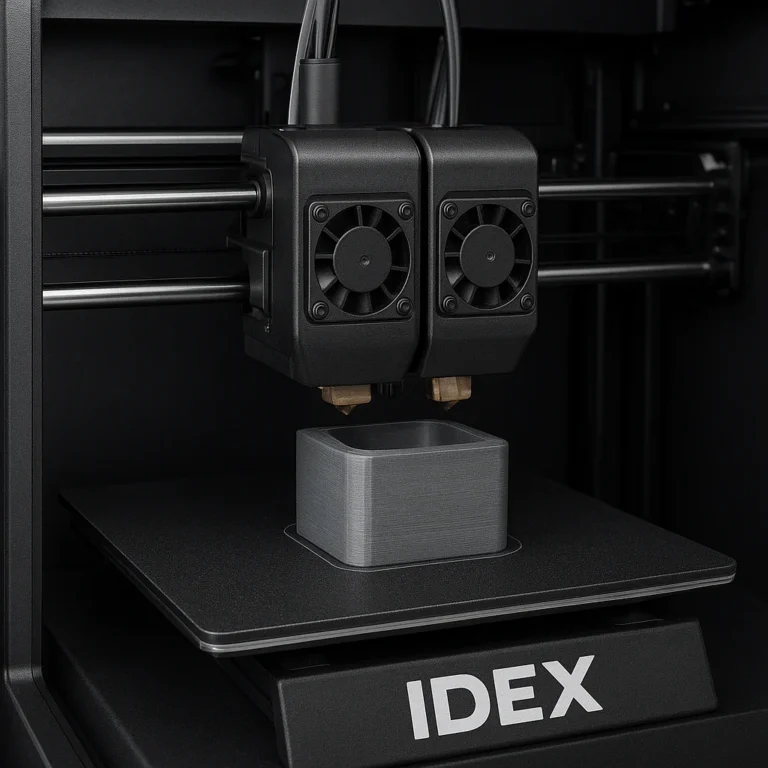
- Dual Mode: Use two extruders for support materials (like soluble PVA) or two different colors/materials simultaneously.
- Twin Mode: Print two identical parts at the same time. This effectively doubles your output without doubling your machine count. A game-changer for small-batch production.
The Magnetic Switchplate™
Gone are the days of prying prints off a glass bed with a spatula. The Magnetic Switchplate™ (available in Prime and Classic) ensures your print stays put during the 20-hour marathon, then pops off effortlessly once cooled.
👉 Shop BigRep ONE on:
- Amazon: Search for BigRep ONE
- Brand Official: BigRep ONE Official Page
2. Stratasys F123 Series: Precision at Scale
When Stratasys enters the room, you know you’re talking about industrial-grade precision. The F123 series (specifically the F90) is designed for enterprises that cannot afford a single failed print.
Rating Table: Stratasys F90
| Feature | Rating (1-10) | Notes |
|---|---|---|
| Build Volume | 10 | Massive 914 x 610 x 914 mm. |
| Precision | 10 | Unmatched layer consistency. |
| Material Library | 10 | Access to ABS, ASA, PC, ULTEM, and more. |
| Software Integration | 9 | GrabCAD Print is industry standard. |
| Ease of Use | 7 | Step learning curve; requires training. |
| Price/Value | 6 | High entry cost, but high ROI for enterprise. |
Why Choose Stratasys?
If you are printing functional prototypes that need to withstand heat, chemicals, or stress, Stratasys is the gold standard. Their ULTEM™ (PEI) materials are used in aerospace for a reason. The machine is a closed ecosystem, which means less tinkering and more printing.
👉 Shop Stratasys F123 on:
- Brand Official: Stratasys F123 Series
3. Intamsys Funmat HT: High-Temperature Mastery
Not everyone needs a 1-meter cube. Sometimes you need a machine that can handle high-temperature engineering plastics in a more compact (but still large) footprint. The Intamsys Funmat HT is the champion of high-temp printing.
Rating Table: Intamsys Funmat HT
| Feature | Rating (1-10) | Notes |
|---|---|---|
| Build Volume | 7 | 60 x 60 x 60 mm. |
| Max Temp | 10 | Chamber up to 90°C, Nozzle up to 450°C. |
| Material Support | 9 | PEEK, PEI, PSU, Carbon Fiber. |
| Enclosure | 10 | Fully enclosed with active heating. |
| Ease of Use | 8 | User-friendly interface. |
| Price/Value | 9 | Excellent value for high-temp capabilities. |
The High-Temp Advantage
The Funmat HT features a heated chamber that maintains temperatures up to 90°C. This is critical for printing materials like PEK and PEI without warping. It’s the go-to for engineers who need aerospace-grade parts without the aerospace-grade price tag of a Stratasys.
👉 Shop Intamsys on:
- Brand Official: Intamsys Funmat HT
4. LulzBot Large Format: Open-Source Power
While LulzBot is famous for their desktop machines, their philosophy of open-source and reliability translates well to larger formats (often via the TAZ or specialized large builds). They champion the idea that you should own your machine, not rent it.
Rating Table: LulzBot Large Format Concepts
| Feature | Rating (1-10) | Notes |
|---|---|---|
| Build Volume | 8 | Variable, often 50mm+ on custom builds. |
| Open Source | 10 | Full access to firmware and hardware. |
| Community Support | 10 | Massive community for mods and fixes. |
| Reliability | 8 | Proven self-leveling and calibration. |
| Ease of Use | 7 | Requires some technical know-how. |
| Price/Value | 9 | Great value for tinkers. |
The Open-Source Edge
If you have a team of engineers who love to tweak and optimize, LulzBot is your friend. You aren’t locked into a proprietary filament or software. You can print with any material that fits the specs.
👉 Shop LulzBot on:
- Brand Official: LulzBot 3D Printers
5. WASP 3MT: The Clay and Concrete Giant
Moving away from plastics, the WASP 3MT (and the larger 4MT) is a beast in the world of construction and ceramics. It uses a screw extruder to push out clay, concrete, or even recycled plastic.
Rating Table: WASP 3MT
| Feature | Rating (1-10) | Notes |
|---|---|---|
| Build Volume | 10 | 3 meters tall, 3 meters wide. |
| Material Versatility | 10 | Clay, Concrete, Recycled Plastic. |
| Inovation | 10 | Pionering construction printing. |
| Ease of Use | 6 | Requires specialized material prep. |
| Reliability | 7 | Robust, but complex setup. |
| Price/Value | 8 | High value for construction applications. |
Building the Future
WASP is proving that 3D printing isn’t just for small parts. They are printing houses, furniture, and art installations out of local clay and concrete. It’s a glimpse into a sustainable future where we print our homes from the dirt beneath our feet.
👉 Shop WASP on:
- Brand Official: WASP 3MT
6. Roboze ARGO 50: Engineering Thermoplastics Unleashed
Roboze is an Italian company that takes “engineering thermoplastics” seriously. The ARGO 50 is designed to print Carbon Fiber, Kevlar, and PEK with extreme precision.
Rating Table: Roboze ARGO 50
| Feature | Rating (1-10) | Notes |
|---|---|---|
| Build Volume | 7 | 50 x 50 x 50 mm. |
| Max Temp | 10 | Chamber 10°C, Nozzle 450°C. |
| Material Quality | 10 | Specialized for high-performance composites. |
| Precision | 9 | High-resolution for technical parts. |
| Ease of Use | 8 | Roboze One software is intuitive. |
| Price/Value | 7 | Premium pricing for premium materials. |
The Composite Specialist
If your application requires parts that can replace metal, Roboze is the way to go. Their CR-30 and CR-40 filaments are legendary in the industry for their strength-to-weight ratio.
👉 Shop Roboze on:
- Brand Official: Roboze ARGO 50
7. Creality CR-M4: The Budget-Friendly Contender
Enter the Creality CR-M4. While it may not have the pedigree of Stratasys or the industrial robustness of BigRep, it brings large-format printing to the masses. With a build volume of 40x40x40mm, it’s a solid entry point for small businesses and makers.
Rating Table: Creality CR-M4
| Feature | Rating (1-10) | Notes |
|---|---|---|
| Build Volume | 8 | 40x40x40 mm is generous for the price. |
| Price/Value | 10 | Unbeatable price point. |
| Ease of Use | 9 | User-friendly, auto-leveling. |
| Reliability | 7 | Good, but may require tweaks. |
| Material Support | 6 | Best with standard filaments; high-temp is tricky. |
| Community | 10 | Massive support network. |
The Gateway Drug
The CR-M4 is the perfect machine to get your feet wet in large-format printing. It’s not going to print PEEK, but for PLA, PETG, and ABS, it’s a workhorse. It proves that you don’t need to spend a fortune to start printing big.
👉 Shop Creality on:
- Amazon: Search for Creality CR-M4
- Brand Official: Creality Official
🧪 Material Science Deep Dive: Engineering Thermoplastics for Massive Builds
You wouldn’t build a skyscraper out of cardboard, and you shouldn’t print a functional drone frame out of standard PLA. Material science is the backbone of large-format industrial printing.
The Big Three: ABS, ASA, and PC
- ABS (Acrylonitrile Butadiene Styrene): The classic. Tough, durable, and post-processable. However, it warps easily. Tip: Always use a heated chamber.
- ASA (Acrylonitrile Styrene Acrylate): The UV-resistant cousin of ABS. Perfect for outdoor applications like automotive trim or architectural models.
- PC (Polycarbonate): The strong one. High impact resistance and heat resistance. Used for safety shields and electrical enclosures.
The Heavy Hitters: PEEK, PEI, and PSU
These are the materials that replace metal.
- PEK (Polyether Ether Ketone): Can withstand temperatures up to 260°C. Used in aerospace and medical implants.
- PEI (Ultem): Excellent chemical resistance and flame retardancy.
- PPSU: High impact strength and transparency.
Reinforced Filaments: Carbon Fiber, Glass, and Kevlar
Adding fibers to the polymer matrix increases stiffness and strength.
- Carbon Fiber: Stiff and lightweight. Great for drone frames and robotic arms.
- Glass Fiber: Increases heat resistance and stiffness.
- Kevlar: Adds impact resistance.
Pro Tip: When printing with reinforced filaments, always use hardened steel nozzles. Standard brass nozzles will wear out in hours, leading to inconsistent extrusion and clogs.
For more on material selection, check out our 3D Design Software section where we discuss how to optimize your models for specific materials.
🛠️ Essential Infrastructure: Enclosures, Filament Dryers, and Post-Processing
Buying the printer is just the beginning. To run a successful large-format operation, you need the right ecosystem.
The Enclosure: Your Climate Control
Large prints take hours, sometimes days. During this time, the ambient temperature can fluctuate, causing layer adhesion failure or warping.
- Active Heating: Some printers (like Intamsys) have built-in heated chambers.
- DIY Enclosures: For open-frame printers, building a custom enclosure with insulation and a heater is essential.
- Air Filtration: Printing engineering plastics releases fumes. An activated carbon filter is a must for indoor use.
Filament Dryers: The Unsung Hero
Moisture is the enemy. A wet spool of Nylon can ruin a 24-hour print.
- Built-in Dryers: The BigRep ONE has a “Keep Dry” box.
- External Dryers: Devices like the Sunlu S4 or PolyBox can dry multiple spools simultaneously.
- Storage: Always store filaments in vacuum-sealed bags with desiccant when not in use.
Post-Processing: From Print to Part
Large prints often require finishing.
- Support Removal: Use pliers, cuters, or soluble support materials.
- Sanding: Large surfaces need smoothing. Use a sanding block and progressively finer grits.
- Chemical Smoothing: Acetone vapor smoothing works for ABS/ASA.
- Painting: Primer is essential for large parts to ensure even coverage.
For inspiration on post-processing techniques, browse our 3D Printable Objects gallery.
💰 Cost Analysis: Is Large-Format Industrial 3D Printing Worth the Investment?
Let’s talk money. The sticker shock is real. A BigRep ONE or Stratasys F90 costs significantly more than a desktop printer. But is it worth it?
The Cost Breakdown
- Machine Cost: $20k – $10k+ depending on the model.
- Material Cost: Engineering filaments can cost $10-$50 per kg.
- Operational Cost: Electricity, maintenance, and labor.
- Post-Processing: Labor and equipment for finishing.
The ROI Argument
- Tooling Savings: A mold that costs $10,0 and takes 4 weeks to make can be 3D printed for $50 in 2 days.
- Inventory Reduction: Print on demand. No need to store thousands of spare parts.
- Design Freedom: Create geometries that are impossible with CNC or injection molding.
- Speed to Market: Get products to market faster, gaining a competitive edge.
When is it NOT worth it?
- High Volume Production: If you need 10,0 identical parts, injection molding is still cheaper.
- Simple Geometries: If you can buy it off the shelf, don’t print it.
- Lack of Expertise: If you don’t have the skills to troubleshoot, the machine will sit idle.
🎨 Design Strategies: Slicing, Support Structures, and Warping Prevention
Designing for large-format printing is a different beast than desktop printing.
Slicing Strategies
- Layer Height: Use larger layer heights (0.4mm – 0.6mm) to reduce print time.
- Infill: Optimize infill patterns. Gyroid or Cubic patterns offer good strength-to-weight ratios.
- Wall Count: Increase the number of perimeters for strength rather than relying solely on infill.
Support Structures
- Tree Supports: Great for complex geometries, reducing material usage and removal time.
- Soluble Supports: For overhangs that are impossible to reach, use PVA or HIPS.
- Orientation: Rotate your part to minimize overhangs and support material.
Warping Prevention
- Brims and Skirts: Always use a brim to increase adhesion.
- Bed Adhesion: Use glue sticks, PEI sheets, or specialized adhesives like Wolfbite.
- Temperature Control: Ensure the bed and chamber are at the correct temperature.
For more design tips, check out our 3D Design Software resources.
🏗️ Real-World Applications: Automotive, Aerospace, and Architecture Case Studies
Automotive: Custom Jigs and Fixtures
Car manufacturers use large-format printers to create custom jigs for assembly lines. These jigs are lightweight, durable, and can be redesigned in hours if the production line changes.
Aerospace: Lightweight Ducting
Aerospace companies are printing air ducts and cable trays out of carbon fiber-reinforced nylon. These parts are lighter than their metal counterparts, reducing fuel consumption.
Architecture: Full-Scale Models
Architects are printing 1:10 scale models of entire buildings in a single piece. This allows for better visualization and client presentations. Some are even printing concrete formwork for construction.
Education: Hands-On Learning
Universities are using large-format printers to teach students about additive manufacturing, material science, and design. It’s a practical way to bridge the gap between theory and practice.
For more on how 3D printing is changing education, visit our 3D Printing in Education section.
⚠️ Common Pitfalls and How to Avoid Them: A Troubleshooting Guide
Even the best machines have hiccups. Here are the most common issues and how to fix them.
Issue 1: Warping
- Cause: Poor bed adhesion or temperature fluctuations.
- Solution: Use a brim, check bed leveling, and ensure the chamber is sealed.
Issue 2: Layer Shifting
- Cause: Loose belts or motor issues.
- Solution: Tighten belts, check motor drivers, and ensure the frame is rigid.
Issue 3: Clogged Nozzles
- Cause: Moisture, debris, or overheating.
- Solution: Dry your filament, clean the nozzle, and use a cold pull.
Issue 4: Poor Layer Adhesion
- Cause: Low temperature or high print speed.
- Solution: Increase nozzle temperature, reduce print speed, and check the fan settings.
Issue 5: Dimensional Inaccuracy
- Cause: Calibration issues or thermal expansion.
- Solution: Calibrate the E-steps, check the bed leveling, and account for thermal expansion in your design.
🔮 Future Trends: Continuous Filament Fabrication and Multi-Material Printing
The future is bright (and big).
Continuous Filament Fabrication (CFF)
Imagine printing with continuous carbon fiber strands, creating parts that are stronger than aluminum. This technology is already emerging and will revolutionize the industry.
Multi-Material Printing
Printing with multiple materials in a single job. Imagine a part that is rigid in some areas and flexible in others, or a part with embedded electronics.
AI and Automation
AI will soon be able to detect defects in real-time and adjust parameters on the fly. This will reduce waste and improve reliability.
Sustainability
More recycled filaments and biodegradable materials will be developed. The goal is to make large-format printing carbon neutral.
🏁 Conclusion

So, is large-format industrial 3D printing the future? Absolutely.
We started this journey wondering if printing big was just a gimmick. The answer is a resounding no. From the BigRep ONE dominating the 1m³ space to the Massivit systems revolutionizing mold making, and the WASP printers building houses, the technology has matured.
The Verdict:
- For Enterprises: If you need to reduce tooling costs, speed up protyping, or create complex, low-volume parts, large-format 3D printing is a must-have.
- For Makers: If you have the budget and the space, it opens up a world of possibilities.
- For Everyone: It’s a tool that empowers you to create what was previously impossible.
Our Recommendation:
If you are ready to take the leap, start with a machine that fits your material needs and budget. Don’t just buy the biggest printer; buy the one that solves your specific problem. Whether it’s the Stratasys F90 for precision, the BigRep ONE for versatility, or the Creality CR-M4 for entry-level, the right machine is out there.
And remember, the journey doesn’t end with the print. It’s about design, material science, and innovation. So, what will you print first?
🔗 Recommended Links
Ready to take the next step? Here are some resources to help you get started.
👉 Shop Large-Format Printers:
- BigRep ONE: Amazon | Official Site
- Stratasys F123: Official Site
- Intamsys Funmat HT: Official Site
- WASP 3MT: Official Site
- Roboze ARGO 50: Official Site
- Creality CR-M4: Amazon | Official Site
Books & Resources:
Related Articles:
❓ FAQ

What are the best materials for large format industrial 3D printing?
The “best” material depends on your application. For general purpose, ABS and ASA are excellent. For high-temperature and structural applications, PC, PEK, and PEI are top choices. For lightweight strength, Carbon Fiber-reinforced Nylon is unbeatable. Always consider the environmental conditions the part will face.
Read more about “📊 3D Printing Statistics 2020: The Data That Changed Everything”
How much does a large format industrial 3D printer cost?
Prices vary widely. Entry-level large-format printers like the Creality CR-M4 can start in the low thousands, while industrial giants like the Stratasys F90 or BigRep ONE can range from $50,0 to over $10,0. Don’t forget to factor in the cost of filament, maintenance, and post-processing equipment.
Read more about “🏠 10 Game-Changing 3D Printed Homes Construction Secrets (2026)”
What industries benefit most from large scale 3D printing?
Automotive, aerospace, architecture, medical, and education are the primary beneficiaries. These industries need custom tooling, low-volume production, and complex geometries that traditional manufacturing struggles to provide cost-effectively.
Read more about “🚀 What is the Current Status of 3D Printing? (2026)”
What is the maximum build volume for industrial 3D printers?
The maximum build volume varies. The BigRep ONE offers a 1 cubic meter build volume. Massivit systems can go even larger, printing objects several meters in size. WASP printers can print structures 3 meters tall or more. The limit is often defined by the machine’s footprint and the application.
Read more about “🤖 7 Game-Changing Additive Manufacturing Automation Trends (2026)”
How does large format 3D printing compare to traditional manufacturing?
Traditional manufacturing (CNC, injection molding) is cost-effective for high volumes but has high upfront costs and long lead times. Large-format 3D printing is ideal for low to medium volumes, offers unmatched design freedom, and has minimal setup time. It’s a trade-off between volume and flexibility.
Read more about “🌍 3D Printing Statistics: 15 Mind-Blowing Global Facts (2026)”
What are the common challenges in large scale additive manufacturing?
The main challenges are warping, layer adhesion, dimensional accuracy, and material consistency. Moisture control is also critical. Overcoming these requires precise calibration, environmental control, and high-quality materials.
Read more about “🚀 3D Printing Growth Rate 2026: The Explosive Truth Revealed!”
Can large format 3D printers produce functional end-use parts?
Yes, absolutely. With the right materials (like PEK, Carbon Fiber Nylon) and proper design, large-format printers can produce parts that are stronger, lighter, and more durable than their traditionally manufactured counterparts. They are used in aerospace, automotive, and medical applications daily.
Read more about “🚀 CLIP 3D Printing: The Future of Continuous Manufacturing (2026)”
📚 Reference Links