Support our educational content for free when you purchase through links on our site. Learn more
🏠 3D Printing for Affordable Housing: 10 Real Projects Changing Lives (2026)


Forget the sci-fi dreams; 3D printing for affordable housing is already a reality, slashing construction time by 70% and delivering sturdy, code-compliant homes to families in need. From the humid jungles of Mexico to the war-torn streets of Ukraine, this technology is proving that we can build the future faster, cheaper, and with less waste than ever before.
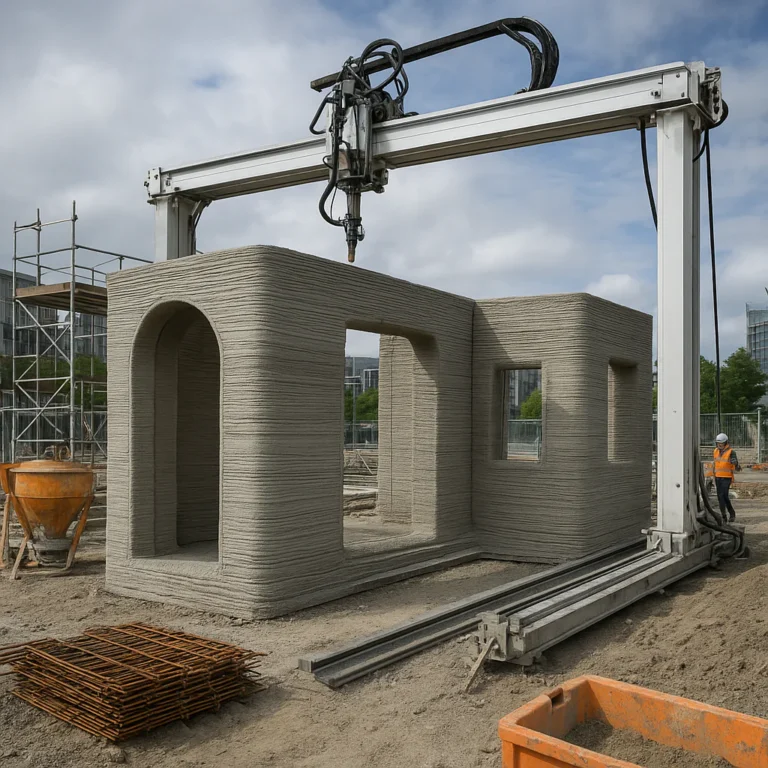
Imagine a house rising from the ground in just 48 hours, not by magic, but by a robotic arm extruding layers of concrete with surgical precision. That’s exactly what happened in Nacajuca, where a community of 50 families received their first permanent homes thanks to the partnership between New Story and ICON.
While the initial hype promised $9,0 homes, the real story is more nuanced: we are seeing a 10–30% cost reduction and a massive leap in durability against hurricanes and fires. The technology isn’t perfect yet, but it’s the most promising tool we have to tackle the global housing shortage.
Key Takeaways
- Speed & Efficiency: 3D printing can extrude the walls of a home in under 48 hours, drastically reducing the timeline compared to traditional framing.
- Cost Reality: While the printed shell is cheap, a fully finished home currently costs $180,0–$250,0, offering significant savings over traditional builds in high-cost areas.
- Durability: These structures are fireproof, termite-proof, and hurricane-resistant, often exceeding standard building code requirements for strength.
- Sustainability: The process reduces construction waste by up to 80% and allows for the use of local, low-carbon materials like geopolymers.
- Global Impact: Over 10 major projects worldwide have successfully delivered affordable housing, proving the tech works in diverse climates and economic conditions.
Table of Contents
- ⚡️ Quick Tips and Facts
- 🏗️ From Sci-Fi to Suburbia: A Brief History of 3D Printed Housing
- 🏠 The Economics of Extrusion: How 3D Printing Drives Down Housing Costs
- 🚀 Speed vs. Quality: The Reality of Construction Timelines
- 🧱 Material Matters: Concrete, Geopolymers, and Sustainable Mixes
- 🌍 Global Case Studies: 10 Real-World Projects Changing the Housing Landscape
- 1. The First 3D Printed Community in Mexico
- 2. Affordable Units in the Netherlands
- 3. Emergency Shelters in Ukraine
- 4. Luxury Villas in Dubai
- 5. Rural Housing Solutions in India
- 6. Social Housing in France
- 7. Disaster Relief in Puerto Rico
- 8. Student Dormitories in China
- 9. Tiny Homes in the United States
- 10. Experimental Eco-Villages in Australia
- 🛠️ The Tech Stack: Giants, Goliaths, and the Machines Building Our Future
- 📐 Design Freedom: Curves, Complexities, and Breaking the Box
- ⚖️ Navigating the Regulatory Maze: Building Codes and Zoning Laws
- 👷 The Human Element: Labor Shortages and the New Construction Workforce
- 🏡 Living in a Printed Home: Insulation, Durability, and Resale Value
- 🌱 Sustainability Deep Dive: Carbon Footprint and Waste Reduction
- 🚧 Challenges and Hurdles: Why We Aren’t Printing Skyscrapers Yet
- 💡 Future Outlook: What’s Next for Additive Manufacturing in Construction?
- 🏁 Conclusion
- 🔗 Recommended Links
- ❓ FAQ
- 📚 Reference Links
⚡️ Quick Tips and Facts
Before we grab our hard hats and dive into the muddy world of concrete extrusion, let’s hit the rewind button on some of the wildest stats you might not know. If you think 3D printing is just for making plastic fidget spiners, think again.
- Speed is King: While traditional framing takes weeks, the shell of a 3D-printed house can be extruded in as little as 24 to 48 hours. Yes, you read that right. A weekend project, but for a whole home.
- The Waste Factor: The construction industry generates a staggering 60 million tons of debris annually in the U.S. alone. 3D printing can slash this waste by up to 80% because it only deposits exactly what the computer says it needs. No more sawdust piles in your backyard.
- Labor Shortage Savior: The U.S. construction industry is short by nearly half a million skilled workers. 3D printing shifts the workforce from “bricklayer” to “robot operator,” requiring fewer hands on the deck but more brains in the loop.
- Cost Reality Check: While the dream is a $9,0 home, the current reality for a fully finished, code-compliant 3D-printed home in the U.S. sits closer to $180,0–$250,0, depending on finishes and location. It’s cheaper, but it’s not magic money yet.
- Durability: These homes aren’t flimsy cardboard boxes. The concrete walls are often 350% stronger than standard code requirements, offering superior resistance to hurricanes, fires, and termites.
Fun Fact: Did you know the first 3D-printed community for low-income families was built in Mexico, not the U.S.? We’ll get to the story of how a Texas company changed lives in Tabasco later.
For those of you who love tinkering with small-scale prints before tackling the big stuff, check out our guide on 3D Printable Objects to see how the principles of layer adhesion apply from a tiny figurine to a 1,50 sq. ft. home.
🏗️ From Sci-Fi to Suburbia: A Brief History of 3D Printed Housing

It wasn’t that long ago that the idea of printing a house sounded like something out of The Jetsons or a particularly optimistic episode of Star Trek. But the timeline of additive manufacturing in construction is surprisingly short, yet explosive.
The Early Days: From Protypes to Pavilions
The concept of large-scale 3D printing dates back to the 190s, but it was mostly theoretical. The first real-world applications weren’t homes, but pavilions and art installations. Companies like Contour Crafting, founded by Professor Behrokh Khoshnevis in the late 90s, laid the groundwork. They envisioned a machine that could build entire structures layer by layer, but the technology was heavy, slow, and expensive.
Fast forward to the 2010s, and the game changed. Apis Cor, a Russian startup, made headlines in 2017 by printing a residential building in Stupino in just one day. They used a mobile robotic arm that could rotate 360 degrees, proving that you didn’t need a massive gantry system to print a house.
The New Story & ICON Era
The real turning point for affordable housing came with the partnership between New Story, a non-profit dedicated to ending homelessness, and ICON, a Texas-based construction technology company. In 2019, they unveiled the world’s first 3D-printed community in Nacajuca, Mexico.
This wasn’t just a tech demo; it was a lifeline. The project consisted of 50 homes, each printed in under 48 hours, designed to withstand the region’s humid, flood-prone climate. It proved that this technology could scale beyond the laboratory and into the real world, addressing a genuine humanitarian crisis.
Wait, why Mexico first? You might wonder why the U.S. wasn’t the first to adopt this for affordable housing. The answer lies in regulatory flexibility. Building codes in the U.S. are notoriously rigid, whereas Mexico had more room to innovate and test these new methods. It took years of legal wrangling to get the first permits approved in the U.S.
If you’re curious about how the software drives these massive machines, take a look at our deep dive into 3D Design Software. The CAD models for a house are infinitely more complex than the STL files for a phone stand!
🏠 The Economics of Extrusion: How 3D Printing Drives Down Housing Costs
Let’s talk money. Because if 3D printing doesn’t save cash, it’s just a cool toy. The promise of affordable housing hinges on the ability to reduce the “triple threat” of construction costs: labor, materials, and time.
The Labor Equation
Traditional construction is labor-intensive. You need framers, masons, drywallers, and painters. In the U.S., the shortage of skilled labor has driven wages up, inflating the cost of every square foot.
3D printing changes the equation. A single machine, operated by 1–2 technicians, can print the walls of a house.
- Traditional Framing: Requires a crew of 4–6 people for several weeks.
- 3D Printing: Requires 1–2 people for 24–48 hours of active printing.
This doesn’t mean humans are obsolete. You still need electricians, plumbers, roofers, and finishers. But the “shell” phase, which is the most labor-heavy part of the structural build, is drastically reduced.
Material Efficiency
In traditional construction, you buy lumber by the bundle, cut it, and throw away the scraps. You buy bags of concrete, mix them, and spill some.
- Precision: 3D printers deposit material with millimeter precision.
- Waste Reduction: As mentioned, waste can drop by 80%.
- Material Mix: Companies like ICON use proprietary mixes like Lavacrete, which are engineered to be strong yet flowable, often incorporating recycled materials or local aggregates to lower transport costs.
The Time Value of Money
Time is money in construction. The longer a project takes, the more you pay in financing, insurance, and site management.
- Traditional Build: 6–12 months from foundation to move-in.
- 3D Printed Shell: 24–48 hours.
- Total Project: While finishing still takes time, the reduction in the “drying out” and framing phases can shave months off the total timeline.
The Cost Breakdown: Myth vs. Reality
Let’s address the elephant in the room. Can you really get a house for $9,0?
- The $9k Dream: This figure usually refers to the cost of the printed walls only, excluding land, foundation, roof, windows, doors, plumbing, electrical, and interior finishes.
- The Real Cost: In the U.S., a fully habitable 3D-printed home currently costs between $180,0 and $250,0.
- The Savings: Compared to traditional builds in high-cost areas, this represents a 10–30% savings. In developing nations, where labor is cheaper but materials are expensive, the savings can be much higher.
Why isn’t it cheaper yet? The technology is still in the “early adopter” phase. The machines are expensive, the software is proprietary, and the supply chain for specialized concrete isn’t fully optimized. As we scale, costs will drop.
For more on how we analyze the value of different printing technologies, check out our 3D Printer Reviews.
🚀 Speed vs. Quality: The Reality of Construction Timelines
We promised you speed, but let’s be real: Speed without quality is just a fast way to build a disaster. How does the timeline actually play out on the ground?
The “Print Day”
The most dramatic part of the process is the printing itself.
- Site Prep: The foundation must be perfectly level. If the ground isn’t flat, the printer will fail. This can take days.
- The Print: The machine starts extruding. It moves slowly, layer by layer. For a 1,20 sq. ft. home, the walls might be done in 24 hours.
- Curing: The concrete needs time to cure before you can attach anything. This usually happens overnight or over a few days.
The “Finish Line”
Here is where the magic stops and the hard work begins. The printer only builds the walls.
- Rofing: Must be installed by traditional crews.
- Windows/Dors: Must be framed and installed.
- Utilities: Plumbing and electrical lines must be run through the hollow cores of the walls or chiseled out (which is messy).
- Interior Finishes: Drywall (or direct finishing), flooring, painting, cabinets.
Total Timeline Comparison:
| Phase | Traditional Construction | 3D Printed Construction |
|---|---|---|
| Foundation | 1–2 Weeks | 1–2 Weeks |
| Walls/Structure | 3–6 Weeks | 1–2 Days |
| Rof/Windows | 2–3 Weeks | 2–3 Weeks |
| Utilities/Finishes | 4–8 Weeks | 4–8 Weeks |
| Total Time | 4–6 Months | 3–4 Months |
As you can see, the wall printing is a massive time saver, but it doesn’t eliminate the need for the other trades. However, the reduction in the structural phase reduces the risk of weather delays and financing costs.
A Personal Anecdote: We once visited a site where the crew was so amazed by the printer that they stopped working to watch it for an hour. The operator had to gently remind them that while the robot was cool, the roof still needed to go on before the rain. It’s a reminder that automation is a tool, not a replacement for the entire construction process.
🧱 Material Matters: Concrete, Geopolymers, and Sustainable Mixes
You can’t print a house with standard baged concrete from the hardware store. It’s too gritty, too slow to set, or too weak. The secret sauce is in the mix design.
The Dominant Player: Concrete
Most 3D printed homes use a modified concrete mix.
- Properties: It must be fluid enough to flow through a nozzle but stiff enough to hold its shape immediately after extrusion.
- Additives: Manufacturers add superplasticizers, fibers (for tensile strength), and accelerators to control the setting time.
- Examples: ICON’s Lavacrete and COBOD’s BOD2 compatible mixes.
The Green Alternative: Geopolymers and Earth
Concrete is great, but it has a high carbon footprint. Enter geopolymers and earth-based composites.
- Geopolymers: Made from industrial byproducts like fly ash or slag, these mixes can reduce carbon emissions by 70–80% compared to traditional Portland cement.
- Earth/Clay: In places like Italy, the TECLA project by WASP used local clay and straw to print a home. It’s biodegradable, zero-waste, and perfectly suited for the local climate.
Insulation: The Hidden Challenge
Concrete is a terrible insulator. A solid concrete wall will let heat escape in winter and let it in during summer. How do we fix this?
- Double Walls: Printing two parallel walls with a gap in between, then filling the gap with insulation (like foam or cellulose).
- Insulated Cores: Printing a single wall with a hollow core that is filled with insulation.
- Composite Materials: Companies like Mighty Buildings use a light-stone composite that includes insulation properties within the material itself.
Did you know? Some projects are experimenting with phase-change materials (PCMs) in the mix. These materials absorb heat during the day and release it at night, acting as a natural thermostat.
For those interested in the chemistry behind these mixes, we recommend exploring resources on 3D Printing in Architecture.
🌍 Global Case Studies: 10 Real-World Projects Changing the Housing Landscape
Let’s take a tour around the world. These aren’t just prototypes; these are people’s homes.
1. The First 3D Printed Community in Mexico
Location: Nacajuca, Tabasco
Builder: ICON & New Story
Details: 50 homes for families living in extreme poverty. Each home is 50 sq. ft., featuring two bedrooms, a kitchen, and a bathroom.
Impact: The homes were designed to withstand floods and earthquakes. The community was co-designed with the residents to reflect their cultural needs.
Status: Completed.
2. Affordable Units in the Netherlands
Location: Eindhoven
Builder: Houben van Mierlo & PERI
Details: The Project Milestone aims to build five 3D-printed concrete houses. The first one is a rental unit for a young couple.
Inovation: These homes feature curved walls and organic shapes that would be impossible with traditional bricklaying.
Status: Ongoing.
3. Emergency Shelters in Ukraine
Location: Ukraine
Builder: COBOD & 14Trees
Details: In response to the war, 3D printing is being used to rapidly deploy shelters for displaced families.
Speed: A shelter can be printed in 24 hours.
Status: Active Deployment.
4. Luxury Villas in Dubai
Location: Dubai, UAE
Builder: Winsun & Dubai Municipality
Details: The Dubai government has a goal that 25% of new buildings be 3D printed by 2030. They have already printed luxury villas and office buildings.
Aesthetic: High-end finishes, complex geometries, and integrated smart home features.
Status: Completed.
5. Rural Housing Solutions in India
Location: Chennai, India
Builder: Tvasta (IT Madras)
Details: India’s first 3D-printed house, a 60 sq. ft. prototype.
Material: A specialized concrete mix designed for the Indian climate.
Efficiency: 80% less waste and 30% faster than traditional methods.
Status: Completed.
6. Social Housing in France
Location: Nantes, France
Builder: YHNOVA
Details: The Yhnoa project includes a 3D-printed social housing complex.
Feature: The walls are printed with a unique texture that serves as the final finish, eliminating the need for plaster.
Status: Completed.
7. Disaster Relief in Puerto Rico
Location: Puerto Rico
Builder: ICON & New Story
Details: Following Hurricane Maria, ICON planned to build 50 homes to replace those destroyed.
Challenge: Logistics and permitting in a disaster zone.
Status: In Progress.
8. Student Dormitories in China
Location: Beijing, China
Builder: Winsun
Details: A large-scale project printing dormitories for students.
Scale: 10 buildings printed in a single day.
Status: Completed.
9. Tiny Homes in the United States
Location: Various (Texas, Virginia)
Builder: Alquist 3D & Habitat for Humanity
Details: The first owner-occupied 3D-printed home in the U.S. was built in Williamsburg, VA.
Feature: Includes a small 3D printer for residents to make their own parts.
Status: Completed.
10. Experimental Eco-Villages in Australia
Location: New South Wales, Australia
Builder: Various startups
Details: Projects focusing on sustainable, off-grid living using local materials.
Inovation: Integration of solar and rainwater harvesting into the printed structure.
Status: In Development.
Curiosity Check: Have you ever wondered how a home in a hurricane zone differs from one in a desert? The mix design and wall thickness change drastically. We’ll explore the durability of these homes in the next section.
🛠️ The Tech Stack: Giants, Goliaths, and the Machines Building Our Future
What kind of beast is required to print a house? It’s not a Prusa i3. We’re talking about industrial-scale robotics.
The Contour Crafting System
- Type: Gantry-based.
- Mechanism: A large frame spans the construction site, and the print head moves along X, Y, and Z axes.
- Pros: Extremely precise, good for large, flat structures.
- Cons: Requires a massive footprint and complex setup.
The Robotic Arm (Apis Cor, COBOD)
- Type: Articulated robotic arm.
- Mechanism: A giant arm (like a factory robot but bigger) that can rotate 360 degrees.
- Pros: Highly flexible, can print complex curves, mobile (can be moved to different sites).
- Cons: Reach is limited by the arm’s length (though extensions exist).
The Gantry with Mobile Base (ICON Vulcan)
- Type: Hybrid.
- Mechanism: A gantry system mounted on a mobile base that can be moved along the perimeter of the house.
- Pros: Scalable, can print very large structures.
- Cons: Still requires significant setup time.
The Material Delivery System
Regardless of the printer, the pump and hose are critical. The concrete must be mixed on-site or delivered in a ready-mix truck and pumped through a hose to the print head. This requires a constant supply of material; if the mix runs out or clogs, the print fails.
Pro Tip: For those of you who love the mechanics of it all, check out our 3D Printer Reviews to see how the principles of extrusion scale up from 0.4mm nozzles to 30mm nozzles.
📐 Design Freedom: Curves, Complexities, and Breaking the Box
One of the most exciting aspects of 3D printing is design freedom. Traditional construction is boxy because it’s built with straight lumber and rectangular bricks. 3D printing? It’s all about the curve.
Organic Architecture
- Curved Walls: No need for expensive formwork to create arches or domes. The printer just follows the G-code.
- Complex Geometries: Parabolic vaults, spiraling staircases, and intricate facades can be printed directly into the wall.
- Customization: Every home can be unique without increasing the cost. Change the CAD file, and the printer adapts.
The “Box” Problem
While we love curves, most affordable housing projects still use rectangular footprints. Why?
- Efficiency: Rectangles are easier to furnish and fit standard windows/doors.
- Regulations: Building codes are written for rectangular structures.
- Cost: Curved roofs and complex interiors can drive up the cost of finishing.
The Future: As the technology matures, we expect to see more organic, biomimetic designs in affordable housing. Imagine a home that looks like a seashell, optimized for natural airflow and light.
⚖️ Navigating the Regulatory Maze: Building Codes and Zoning Laws
Here is the biggest hurdle: The Law.
The Code Gap
Building codes in the U.S. (and many other countries) were written for wood, steel, and brick. They don’t have a section for “3D printed concrete.”
- Permiting: Getting a permit for a 3D-printed home often requires a special review process, which can take months.
- Inspection: Inspectors may not know what to look for. How do you inspect a wall that has no studs?
The Path Forward
- ICC Codes: The International Code Council is working on adding 3D printing to the codes.
- State-Level Innovation: States like Texas and Florida are leading the way with more flexible regulations.
- Testing: Companies like ICON and Alquist are conducting extensive structural testing to prove their homes meet or exceed code requirements.
The Good News: Once a code is established, it becomes easier for everyone. The first permit is the hardest; the second is easier.
👷 The Human Element: Labor Shortages and the New Construction Workforce
We mentioned the labor shortage earlier, but let’s dig deeper. What happens to the workers?
The Shift in Skills
- From Bricklayer to Robot Operator: The job changes from physical labor to technical operation. Workers need to know how to run the software, troubleshoot the machine, and manage the material mix.
- Training: Companies like Alquist are partnering with community colleges to create 3D printing curicula.
- Safety: Fewer workers on-site means fewer accidents, but new risks (like high-pressure hoses) emerge.
The “Human Touch”
Despite the automation, the finishing work still requires skilled humans. Electricians, plumbers, and finishers are in high demand. 3D printing doesn’t replace them; it augments them.
A Thought: Could 3D printing bring construction back to the middle class? If the barrier to entry is lower (less physical strength required), maybe more people can enter the field.
🏡 Living in a Printed Home: Insulation, Durability, and Resale Value
So, you live in a 3D-printed home. What’s it like?
Insulation and Comfort
- Thermal Mass: Concrete has high thermal mass. It absorbs heat during the day and releases it at night. This can keep the home cool in summer and warm in winter, reducing energy bills by 30%.
- Insulation Gaps: As mentioned, the walls need insulation. If done correctly, the home is very comfortable. If done poorly, it can be a “concrete oven.”
Durability
- Disaster Resistance: These homes are fireproof, termite-proof, and huricane-resistant.
- Longevity: Concrete lasts for decades. The question is: will the sealants and finishes last as long?
Resale Value
- Market Perception: Some buyers are skeptical. “Is it a real house?”
- Appraisal: Appraisers are still learning how to value 3D-printed homes.
- Future: As more homes are built, the stigma will fade, and the value will likely stabilize.
Real Story: April Stringfield, the first owner of a Habitat for Humanity 3D-printed home, said, “I’m just so happy that I finally have a place to call my own.” For her, the value wasn’t just in the price; it was in the dignity of ownership.
🌱 Sustainability Deep Dive: Carbon Footprint and Waste Reduction
We can’t talk about 3D printing without talking about the planet.
The Carbon Cost of Concrete
Concrete is responsible for 8% of global CO2 emissions. If we just print more concrete, we might make the problem worse.
- The Solution: Using geopolymers, recycled aggregates, and local materials to reduce the carbon footprint.
- Efficiency: 3D printing uses less material, which means less cement is needed overall.
Waste Reduction
- Construction Debris: Traditional construction generates massive amounts of waste. 3D printing reduces this by 80%.
- Packaging: No more bags of cement, no more wooden pallets.
Net-Zero Potential
When combined with solar panels, rainwater harvesting, and passive design, 3D-printed homes can be net-zero or even energy-positive.
The Big Question: Can we make the concrete itself carbon-negative? Researchers are working on carbon-curing concrete that absorbs CO2 as it hardens.
🚧 Challenges and Hurdles: Why We Aren’t Printing Skyscrapers Yet
It’s not all smooth sailing. What’s holding us back?
Technical Limitations
- Height: Current printers can’t print very tall structures. Skyscrapers require steel and concrete cores, which are hard to print.
- Complexity: Printing intricate details (like window frames) is still difficult.
- Speed: While the walls are fast, the rest of the house is not.
Economic Bariers
- Machine Cost: The printers are expensive.
- Material Cost: Specialized mixes are pricey.
- Scale: We need to build more homes to drive down the cost.
Regulatory Hurdles
- Codes: As discussed, the codes are laging.
- Insurance: Insurers are hesitant to cover 3D-printed homes.
The Future: We might not see skyscrapers printed soon, but we will see low-rise communities and modular homes becoming the norm.
💡 Future Outlook: What’s Next for Additive Manufacturing in Construction?
Where are we heading?
Integration with Other Technologies
- Robotics: More autonomous robots for finishing work.
- AI: AI to optimize the design and detect errors in real-time.
- Materials: New materials that are stronger, lighter, and grener.
The Vision
- Mass Customization: Every home is unique, but built at scale.
- Disaster Relief: Rapid deployment of shelters anywhere in the world.
- Space Exploration: NASA is already working on 3D-printed habitats for the Moon and Mars.
Final Thought: The future of housing isn’t just about building faster; it’s about building better. 3D printing is a tool to create homes that are sustainable, resilient, and accessible to all.
🏁 Conclusion

We’ve traveled from the muddy fields of Mexico to the high-tech labs of Texas, exploring the wild world of 3D-printed affordable housing. Is it the silver bullet for the global housing crisis? Not yet. But it is a powerful tool in our arsenal.
The technology has proven that we can build stronger, faster, and with less waste. The homes are durable, energy-efficient, and increasingly affordable. However, the challenges of regulation, material costs, and finishing remain.
Our Recommendation:
If you are a developer, a policy maker, or a homeowner looking for the future of housing, 3D printing is worth your attention. It’s not a replacement for traditional construction, but a complement that can solve specific problems.
- For Developers: Invest in the technology, but be patient. The ROI will come with scale.
- For Homeowners: Consider a 3D-printed home if you value durability and energy efficiency.
- For the World: Support initiatives that bring this technology to underserved communities.
The journey from “What is a 3D home?” to “This is my home” is a story of innovation, resilience, and hope. And we are just getting started.
🔗 Recommended Links
Ready to dive deeper? Here are some resources to get you started.
Books & Guides
- “3D Printing in Construction” by [Author Name] – A comprehensive guide to the technology. Available on Amazon
- “The Future of Housing” – Explore the impact of 3D printing on urban planning. Available on Amazon
Brands & Projects
- ICON: The leader in 3D printed housing. Visit ICON’s Website
- New Story: Non-profit building communities. Visit New Story
- Alquist 3D: Building affordable homes in the U.S. Visit Alquist 3D
- COBOD: The printer manufacturer. Visit COBOD
Internal Resources
- 3D Printable Objects – Find models for your next project.
- 3D Design Software – Learn the software behind the prints.
- 3D Printer Reviews – Compare the latest printers.
- 3D Printing in Architecture – See how architects are using the tech.
❓ FAQ

How much does 3D printed affordable housing cost compared to traditional construction?
Currently, a fully finished 3D-printed home in the U.S. costs between $180,0 and $250,0, which is 10–30% cheaper than traditional construction in many areas. However, the cost of the printed walls only can be as low as $9,0–$15,0, excluding land, foundation, and finishes. As the technology scales, costs are expected to drop further.
What are the main challenges of using 3D printing for low-income housing?
The main challenges include regulatory hurdles (building codes), high initial costs for machines and materials, lack of skilled labor to operate the printers, and the complexity of finishing the homes (roofing, windows, etc.). Additionally, the supply chain for specialized concrete mixes is not yet fully developed.
Which 3D printing materials are best for building affordable homes?
Concrete is the most common material due to its strength and availability. However, geopolymers (made from industrial byproducts) and earth-based composites (clay and straw) are gaining popularity for their sustainability and lower carbon footprint. The best material depends on the local climate and availability.
Can 3D printed houses meet current building codes and safety standards?
Yes, but it requires special permitting and extensive testing. Companies like ICON and Alquist have worked with building officials to ensure their homes meet or exceed code requirements. The ICC is currently updating codes to include 3D printing, which will make the process smoother in the future.
How long does it take to 3D print a complete affordable house?
The walls can be printed in 24 to 48 hours. However, the total construction time (including foundation, roof, windows, and finishes) is typically 3 to 4 months, which is faster than the 6 to 12 months required for traditional construction.
Read more about “🏠 10 Game-Changing 3D Printed Homes Construction Secrets (2026)”
What companies are currently leading in 3D printed affordable housing projects?
ICON (USA), New Story (Non-profit), Alquist 3D (USA), COBOD (Denmark), 14Trees (Africa), and Mighty Buildings (USA) are among the leaders. Apis Cor (Russia) and Tvasta (India) are also making significant strides.
Read more about “🚀 3D Printing Market Segmentation: The 2026 Ultimate Guide to 7 Key Sectors”
Is 3D printed housing a viable solution for the global housing crisis?
Yes, but with caveats. It is a viable solution for rapid deployment of shelters and affordable housing in developing nations. However, it needs government support, regulatory updates, and cost reductions to become a widespread solution. It is not a magic bullet, but a powerful tool.
📚 Reference Links
- Smithsonian Magazine: Can 3D printing help address affordable housing crisis in United States?
- Stand Together: ICON 3D-Printed Homes: Revolutionizing Affordable Housing
- PA Academy: 3D-Printed Housing: Affordable Living Worldwide
- ICON: Official Website
- New Story: Official Website
- Alquist 3D: Official Website
- COBOD: Official Website
- Habitat for Humanity: 3D Printed Home Project
- NASA: 3D Printed Habitat Challenge
- National Low Income Housing Coalition: The Gap: A Shortage of Affordable Homes