Support our educational content for free when you purchase through links on our site. Learn more
🔥 Beyond Metal: The Ultimate Guide to High-Performance Polymers (2026)

Stop printing toys and start printing parts that can survive a jet engine. High-performance polymers for 3D printing like PEEK and PEKK are the only materials capable of replacing metal in extreme aerospace, medical, and industrial applications, offering unmatched strength-to-weight ratios and thermal resistance.
We once tried printing a PEEK bracket on a standard heated bed, and the result was a warped, unrecognizable mess that cost us a week’s worth of filament. That failure taught us a hard truth: these materials demand respect, specialized equipment, and precise thermal management.
Did you know that a single 3D printed PEK implant can replace a titanium spinal cage, reducing surgery time and recovery periods? The shift from metal to polymer isn’t just a trend; it’s a revolution in how we build the future.
Key Takeaways
- 🚀 Performance Over Cost: While PEK and PEKK cost significantly more than standard filaments, their ability to withstand 260°C+ and harsh chemicals makes them cost-effective for end-use industrial parts.
- 🌡️ Hardware is Non-Negotiable: You cannot print these materials without a heated chamber (120°C+) and an all-metal hotend capable of 40°C; open-frame printers simply won’t work.
- 💧 Moisture is the Enemy: High-performance polymers are hygroscopic and must be dried immediately before printing to prevent britleness and delamination.
- 🏭 Metal Replacement: These polymers are successfully replacing aluminum and steel in aerospace brackets, medical implants, and automotive intake manifolds.
Table of Contents
- ⚡️ Quick Tips and Facts
- 📜 From Lab Bench to Factory Floor: The Evolution of High-Performance Polymers
- 🧪 The Heavy Hitters: Deep Dive into PEEK, PEKK, and PSU
- 🔥 Beyond the Basics: Mastering Polyimide (PI), PEI, and Liquid Crystal Polymers (LCP)
- 🛠️ The Ultimate Showdown: Comparing Mechanical Properties, Thermal Resistance, and Chemical Stability
- 🖨️ Matching the Polymer to the Printer: FDM, SLS, and MJF Technology Requirements
- 🌡️ Taming the Heat: Essential Chamber Temperatures, Nozzle Settings, and Bed Adhesion Strategies
- 🧵 Post-Processing Power: Annealing, Vapor Smoothing, and Machining High-Temp Parts
- 🏭 Industrial Applications: Aerospace, Automotive, and Oil & Gas Use Cases
- 🏥 Medical Marvels: Biocompatible Polymers for Implants and Surgical Tools
- 🏎️ High-Octane Performance: Polymers in Motorsports and Extreme Sports Equipment
- 📱 Consumer Electronics and Robotics: Heat-Resistant Housings and Durable Gears
- 💰 Cost vs. Performance: Is Investing in High-Performance Filament Worth It?
- 🏆 Top Brands and Suppliers: Where to Source Quality PEEK, PEKK, and More
- 🚀 Future Horizons: Emerging Polymers and 3D Printing Trends
- 💡 Quick Tips and Facts
- 🏁 Conclusion
- 🔗 Recommended Links
- ❓ FAQ
- 📚 Reference Links
⚡️ Quick Tips and Facts
Before we dive into the molten depths of high-temperature polymers, let’s hit the pause button on your standard PLA printing habits. If you think your 3D printer is a magic wand, wait until you see what happens when you swap that spool for something that can survive a jet engine.
Here are the non-negotiables you need to know before buying your first spool of PEEK:
- 🌡️ It’s Not Just Hot, It’s Scorching: While PLA melts at a cozy 190°C, PEK requires a nozzle temperature of 380°C to 40°C. If your printer can’t handle that, you’re going to have a bad time (and a very clogged nozzle).
- 🏠 The Chamber is King: You cannot print high-performance polymers in an open-frame printer. You need a heated chamber reaching 120°C to 160°C to prevent warping. Without it, your part will curl up like a bacon strip in seconds.
- 💸 The Price of Performance: These materials aren’t cheap. Expect to pay 10x to 50x more per kilogram than standard filaments. But remember, you’re buying aerospace-grade strength, not a toy.
- 🧪 Moisture is the Enemy: High-performance polymers are hygroscopic. If they absorb moisture from the air, your prints will be brittle, stringy, and prone to delamination. Dry them before every print session!
- 🔗 Interlayer Adhesion: Unlike PLA, where layers stick easily, PEEK and PEKK require perfect thermal management to fuse layers. If the part cols too fast, it’s just a stack of weak sheets.
Fun Fact: Did you know that the first 3D printed PEK implant was successfully used in a human spine in 2013? It’s not just for machines anymore; it’s saving lives! Read more about medical 3D printing applications here.
📜 From Lab Bench to Factory Floor: The Evolution of High-Performance Polymers
Let’s take a trip down memory lane, shall we? It wasn’t always about printing jet engine parts. The story of high-performance polymers begins in the 1960s when chemists at ICI (Imperial Chemical Industries) were trying to create a plastic that could replace metal in extreme environments. The result? PEK (Polyether ether ketone).
For decades, these materials were locked away in industrial labs, reserved for aerospace and medical applications where failure wasn’t an option. They were too expensive, too hard to process, and required machinery that cost more than a house.
Fast forward to the 2010s, and the 3D printing revolution hit. Suddenly, engineers realized they could additively manufacture these beasts. Companies like AON3D and Intamsys started building printers capable of reaching those insane temperatures.
“Our Advanced Bio-Circular (ABC) materials with flagship Rilsan® PA1 are the polymer of choice for powder bed fusion 3D printing,” notes a key insight from Arkema, a major player in the field. Explore Arkema’s 3D printing solutions.
The evolution has been rapid. We’ve moved from:
- Comodity Plastics (PLA, ABS): Good for toys and prototypes.
- Engineering Plastics (Nylon, PETG): Good for functional parts.
- High-Performance Polymers (PEK, PEI, PEKK): Good for replacing metal in critical applications.
This shift has allowed us to create impossibly complex designs that were previously impossible to machine. As Arkema puts it, “With our materials, we enable the creation of impossibly complex designs for consumer products and electronics.”
But how do we choose the right one? That’s where things get spicy.
🧪 The Heavy Hitters: Deep Dive into PEEK, PEKK, and PSU
Let’s meet the big three. These aren’t your average plastics; they are the Titans of Thermoplastics.
1. PEEK (Polyether ether ketone)
The gold standard. If you need something that can withstand 260°C continuous service temperatures, resist harsh chemicals, and still be biocompatible, PEEK is your guy.
- Pros: Incredible mechanical strength, low flammability, biocompatible, excellent wear resistance.
- Cons: Extremely difficult to print, requires specialized printers, expensive.
- Best For: Aerospace components, surgical implants, oil & gas seals.
2. PEKK (Polyether ketone ketone)
The challenger. PEKK is chemically similar to PEEK but has a different molecular structure that makes it easier to print in some scenarios.
- Pros: Better interlayer adhesion than PEEK, tunable crystallinity, high chemical resistance.
- Cons: Still requires high temps, slightly lower thermal stability than PEEK in some grades.
- Best For: Complex lattice structures, fluid mixers, parts requiring high fatigue resistance.
3. PSU (Polysulfone) & PSU (Polyphenylsulfone)
The workhorses. While not as strong as PEEK, they are much easier to print and still offer excellent thermal stability (up to 180°C).
- Pros: Easier to print than PEEK/PEKK, transparent, sterilizable, good chemical resistance.
- Cons: Lower mechanical strength than PEEK, sensitive to certain hydrocarbons.
- Best For: Medical trays, food processing parts, electrical insulation.
Pro Tip: If you are new to high-temp printing, start with PEI (ULTEM) or PSU before attempting PEEK. Don’t jump straight to the deep end unless you have a heated chamber and a lot of patience!
🔥 Beyond the Basics: Mastering Polyimide (PI), PEI, and Liquid Crystal Polymers (LCP)
We can’t talk about high-performance polymers without mentioning the underdogs that punch above their weight.
PEI (Polyetherimide) – The “ULTEM” Star
Often sold under the brand name ULTEM by SABIC, PEI is the gateway drug to high-performance printing.
- Why we love it: It strikes a perfect balance between performance and printability. It can handle 170°C continuously and is flame retardant (UL94 V-0).
- Real-world use: It’s everywhere in aerospace for ducting and brackets.
- The Catch: It’s still hygroscopic and needs a heated bed of at least 130°C.
Polyimide (PI) – The Heat King
If PEEK is the gold standard, Polyimide is the diamond. It can withstand temperatures up to 30°C+.
- The Problem: It’s incredibly hard to process. Most PIs are not thermoplastic in the traditional sense and require sintering or specialized Laser Sintering (SLS) processes.
- The Future: New formulations are making PI more accessible for FDM, but it remains a niche material for extreme environments.
Liquid Crystal Polymers (LCP) – The Speed Demon
LCPs are unique because they have self-reinforcing properties. They flow like liquid crystals, offering incredible dimensional stability and chemical resistance.
- Key Feature: They have a very low coefficient of thermal expansion, meaning they don’t warp easily.
- Application: Perfect for micro-electronics and high-frequency connectors.
🛠️ The Ultimate Showdown: Comparing Mechanical Properties, Thermal Resistance, and Chemical Stability
You can’t just guess which material to use. You need data. Let’s break down the specs.
| Material | Continuous Service Temp (°C) | Tensile Strength (MPa) | Flexural Modulus (GPa) | Chemical Resistance | Biocompatibility |
|---|---|---|---|---|---|
| PLA | 60 | 50 | 3.5 | Poor | No |
| ABS | 80 | 40 | 2.3 | Moderate | No |
| Nylon (PA12) | 120 | 45 | 1.5 | Good | Yes (Medical Grade) |
| PEI (ULTEM) | 170 | 10 | 3.0 | Excellent | Yes (Class VI) |
| PEK | 260 | 10 | 3.6 | Outstanding | Yes (ISO 1093) |
| PEKK | 250 | 95 | 3.4 | Outstanding | Yes (ISO 1093) |
| Polyimide | 30+ | 120 | 4.0 | Exceptional | Limited |
Data sources: Material datasheets from SABIC, Arkema, and Victrex.
Key Takeaway: Notice how PEK and PEKK are nearly identical in strength but differ in processing? That’s why PEKK is often preferred for complex geometries where layer adhesion is critical.
Did you know? According to Arkema, replacing metal with Kepstan® PEKK in a cast aluminum intake manifold resulted in a 70% weight reduction while maintaining temperature and mechanical resistance. That’s the kind of efficiency that makes engineers wep with joy.
🖨️ Matching the Polymer to the Printer: FDM, SLS, and MJF Technology Requirements
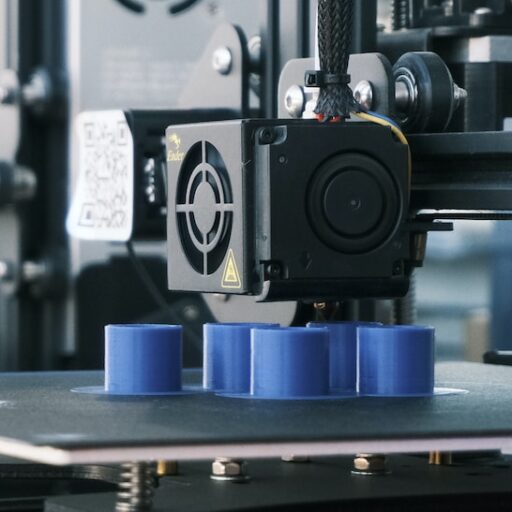
Not all printers are created equal. Trying to print PEEK on a standard Creality Ender 3 is like trying to drive a Ferrari in a go-kart. You need the right machine.
FDM (Fused Deposition Modeling)
- Requirements:
Nozzle: Hardened steel or ruby tip (brass melts at 380°C+).
Hotend: All-metal, capable of 40°C+.
Chamber: Enclosed and heated to 120°C+.
Bed: Heated to 120°C-140°C. - Top Brands: Intamsys, AON3D, Stratasys, Bambu Lab (with mods).
- Verdict: Great for low-volume, high-complexity parts.
SLS (Selective Laser Sintering)
- Requirements: Uses powder instead of filament. No support structures needed.
- Materials: PA12, PEKK, TPU.
- Top Brands: EOS, 3D Systems, Materialise.
- Verdict: Best for mass production of complex, functional parts.
MJF (Multi Jet Fusion)
- Requirements: Similar to SLS but uses a fusing agent. Faster and smoother surface finish.
- Materials: Primarily PA12, expanding to high-temp variants.
- Top Brands: HP.
- Verdict: Excellent for functional protyping and small batch production.
Warning: If you try to print PEEK on an unheated bed, your part will warp so badly it looks like a modern art sculpture. Trust us, we’ve been there.
🌡️ Taming the Heat: Essential Chamber Temperatures, Nozzle Settings, and Bed Adhesion Strategies
So, you have the printer. Now, how do you not ruin a $20 spool of filament?
1. Drying is Non-Negotiable
High-performance polymers absorb moisture like a sponge.
- Action: Dry PEK at 150°C for 4-6 hours before printing.
- Action: Dry PEI at 120°C for 4 hours.
- Tool: Use a dedicated filament dryer like the Sunlu FilaDryer or a convection oven.
2. Chamber Temperature Control
- PEK: Needs 120°C – 160°C chamber temp.
- PEI: Needs 10°C – 120°C chamber temp.
- Strategy: If your printer doesn’t have a heated chamber, you can build a DIY enclosure with a space heater and a thermostat, but be careful of fire hazards!
3. Bed Adhesion
- PEK/PEKK: Use PEK tape or Kapton tape on the bed. Some users swear by glue sticks mixed with isopropyl alcohol.
- PEI: PEI sheet on the bed works wonders.
- Tip: Keep the bed temperature slightly higher than the chamber temperature to prevent warping.
4. Cooling Fans
- Rule of Thumb: Turn them off for the first few layers. For high-temp polymers, you want zero cooling to ensure layer fusion. Only turn them on if you have overhangs, and even then, keep it low (10-20%).
🧵 Post-Processing Power: Annealing, Vapor Smoothing, and Machining High-Temp Parts
Printing is just the beginning. High-performance polymers often need post-processing to reach their full potential.
Annealing
This is the process of heating the part to just below its melting point to relieve internal stresses and increase crystallinity.
- Result: Parts become stronger, more heat resistant, and less prone to warping.
- How-to: Place the part in an oven at 20°C for PEEK for several hours.
Vapor Smoothing
Using chemical vapors to smooth the surface.
- Benefit: Improves chemical resistance and surface finish.
- Caution: Not all polymers react well to the same chemicals. Test first!
Machining
Because these materials are so strong, they can be machined like metal.
- Use Case: Drilling holes, threading, or milling surfaces for tight tolerances.
- Tip: Use sharp carbide tools and low feed rates to avoid melting the plastic.
🏭 Industrial Applications: Aerospace, Automotive, and Oil & Gas Use Cases
Why go through all this trouble? Because the results are game-changing.
Aerospace
- Use Case: Brackets, ducts, and fluid mixers.
- Benefit: Weight reduction is critical. Replacing metal with PEK can save pounds, which translates to fuel savings.
- Case Study: Lynxter replaced metal with Kepstan® PEKK in an engine assembly, achieving a 70% weight reduction.
Automotive
- Use Case: Intake manifolds, bearing cages, and door mechanisms.
- Benefit: High heat resistance allows parts to be placed closer to the engine.
- Example: Arkema highlights the use of Rilsan® PA1 for bearing cages and pico turbines.
Oil & Gas
- Use Case: Seals, valves, and downhole tools.
- Benefit: Resistance to corosive chemicals and high pressures.
- Material: PEK and PEKK are the go-to choices here.
🏥 Medical Marvels: Biocompatible Polymers for Implants and Surgical Tools
The medical field is one of the biggest adopters of high-performance polymers.
- Implants: PEK is used for spinal cages, cranial plates, and joint replacements. It has a modulus of elasticity similar to bone, reducing stress shielding.
- Surgical Tools: PEI and PSU are used for reusable surgical instruments that can withstand autoclaving (sterilization at high temps).
- Customization: 3D printing allows for patient-specific implants that fit perfectly.
Quote: “Our lightweight materials are transforming the production of bearing cages, pico turbines, pipe fittings and embankment rollers,” says Arkema. In healthcare, this translates to custom orthotics and prosthetics that are lighter and more comfortable.
🏎️ High-Octane Performance: Polymers in Motorsports and Extreme Sports Equipment
If it’s fast, it’s likely made of high-performance polymer.
- Motorsports: PEK and PEKK are used for gearboxes, suspension components, and intake systems. They can handle the heat and vibration of a race engine.
- Extreme Sports: Ski boots, golf clubs, and bicycle frames.
- Example: Arkema mentions custom lattice shapes in sports equipment, combining lightweight properties with high-performance durability.
📱 Consumer Electronics and Robotics: Heat-Resistant Housings and Durable Gears
Even your gadgets are getting an upgrade.
- Housings: PEI is used for smartphone casings and laptop frames that need to be flame retardant and heat resistant.
- Robotics: Nylon and PEK gears that don’t wear out.
- Electronics: LCP connectors that handle high-frequency signals without losing integrity.
💰 Cost vs. Performance: Is Investing in High-Performance Filament Worth It?
Let’s talk money. PEK filament can cost $50+ per kg, while PLA is $20. Is it worth it?
- For Protyping: Maybe not. Use ABS or Nylon first.
- For End-Use Parts: Absolutely. If the part fails in the field, the cost of failure is much higher than the cost of the material.
- ROI: Consider the weight savings in aerospace or the durability industrial applications. The ROI can be massive.
Perspective: As noted in the 3D Natives video, “PEK is known for its superior properties, but PEKK is generally easier to process.” This trade-off is crucial when deciding on cost vs. performance.
🏆 Top Brands and Suppliers: Where to Source Quality PEEK, PEKK, and More
Where do you buy these materials? Don’t just grab the first spool you see.
- KIMYA: Known for high-quality PEKK and PEK filaments.
- SABIC: The original maker of ULTEM (PEI).
- Victrex: The pioneer of PEK.
- Arkema: Offers Kepstan® PEKK and Rilsan® PA1.
- Intamsys: A leading manufacturer of high-temp 3D printers and filaments.
👉 CHECK PRICE on:
- KIMYA PEKK: Amazon | KIMYA Official
- SABIC ULTEM: Amazon | SABIC Official
- Intamsys Filaments: Intamsys Store
🚀 Future Horizons: Emerging Polymers and 3D Printing Trends
What’s next?
- Carbon Fiber Reinforced Polymers: Adding CF to PEK and PEKK for even higher strength.
- Bio-based Polymers: Arkema’s Rilsan® PA1 is 10% bio-based, paving the way for sustainable high-performance materials.
- Multi-material Printing: Combining PEK with flexible TPU in a single print.
The future is bright, hot, and incredibly strong.
💡 Quick Tips and Facts (Recap)
Just in case you missed it, here’s a quick recap:
- Dry your filament!
- Heated chamber is mandatory.
- No brass nozzles!
- Patience is key.
🏁 Conclusion

So, there you have it. The world of high-performance polymers is not for the faint of heart. It requires specialized equipment, meticulous preparation, and a willingness to learn. But the rewards? Unmatched strength, thermal resistance, and the ability to replace metal in ways we never thought possible.
If you are ready to take your 3D printing to the next level, start with PEI or PSU. Once you’ve mastered those, graduate to PEK or PEKK. And remember, every failed print is a lesson learned.
Final Thought: As we saw in the 3D Natives video, the choice between PEK and PEKK often comes down to processability vs. ultimate performance. Choose wisely, and you’ll be printing parts that last a lifetime.
Ready to start your high-temp journey? Check out our 3D Printable Objects for inspiration, or dive into 3D Design Software to design your next masterpiece.
🔗 Recommended Links
👉 Shop High-Performance Filaments:
- KIMYA PEKK Filament: Amazon | KIMYA Official
- SABIC ULTEM 1010: Amazon | SABIC Official
- Intamsys PEEK Filament: Intamsys Store
Books & Resources:
- “Additive Manufacturing of High-Performance Polymers” on Amazon
- “3D Printing: The Next Industrial Revolution” on Amazon
Design & Models:
- Find high-temp printable models on Thingiverse or Cults3D.
❓ FAQ
What are the cost differences between standard and high-performance polymers for 3D printing?
Standard filaments like PLA or ABS cost between $20-$40 per kg. High-performance polymers like PEK or PEKK can range from $30 to $1,0+ per kg. The price difference is due to the complex synthesis process and the specialized equipment required to process them.
Read more about “🤖 AI for 3D Print Quality Control: The Ultimate 2026 Guide”
How to choose the right high-performance polymer for your 3D printing project?
Consider the operating temperature, chemical exposure, and mechanical load. If you need biocompatibility, choose PEK. If you need ease of printing with good heat resistance, go for PEI. For complex geometries and fatigue resistance, PEKK is often the best choice.
Read more about “⚡️ 10 Top Conductive 3D Printing Materials for 2026”
What are the challenges of 3D printing with high-performance polymers?
The main challenges are high printing temperatures, warping due to rapid cooling, and moisture absorption. You need a heated chamber, dried filament, and specialized nozzles.
Read more about “Unlocking the Secrets of 3D Printing Polymers: 10 Must-Know Insights for 2024! 🚀”
Can high-performance polymers withstand extreme temperatures in 3D printed objects?
Yes! PEK can withstand 260°C continuously, and Polyimide can handle 30°C+. They are ideal for applications where metal would be too heavy or expensive.
Read more about “🧠 Shape-Memory Polymers for 3D Printing: The Ultimate 2026 Guide”
Which industries benefit most from high-performance polymers in 3D printing?
Aerospace, automotive, medical, and oil & gas industries benefit the most. They need materials that are lightweight, heat resistant, and chemically stable.
Read more about “🚀 3D Printing Market Size: Is McKinsey Underestimating the $50B Boom? (2026)”
How do high-performance polymers improve 3D printing quality?
They offer superior mechanical properties, better chemical resistance, and higher thermal stability compared to standard plastics. This results in parts that can be used in real-world applications rather than just prototypes.
Read more about “🤖 7 Game-Changing Additive Manufacturing Automation Trends (2026)”
What are the best high-performance polymers for 3D printing durable parts?
PEK and PEKK are the top choices for durability. They offer excellent wear resistance and high tensile strength.
Read more about “🏭 7 Large-Format Industrial 3D Printers Dominating 2026”
What are the best high performance polymers for functional 3D printing?
PEI (ULTEM) is often the best choice for functional protyping due to its balance of performance and printability.
Read more about “🔄 12 Ways 3D Printing Powers the Circular Economy (2026)”
How does PEEK compare to PEI for industrial 3D printing applications?
PEK has higher thermal stability and chemical resistance than PEI, but PEI is easier to print and more cost-effective for many applications.
Read more about “🚀 3D Printing ROI: The Ultimate 2026 Guide to Profit & Savings”
Which high temperature polymers are compatible with FDM 3D printers?
PEI, PEK, PEKK, PSU, and PPSU are compatible with FDM printers, provided the printer has a heated chamber and high-temp nozzle.
Read more about “🚀 What is the Current Status of 3D Printing? (2026)”
What are the mechanical properties of ULTEM for 3D printed parts?
ULTEM (PEI) has a tensile strength of around 10 MPa, a flexural modulus of 3.0 GPa, and can withstand temperatures up to 170°C.
Read more about “Can I 3D Print Functional Tools? The Ultimate 2026 Guide 🛠️”
How do you print with carbon fiber reinforced high performance polymers?
Use a hardened steel nozzle and lower print speeds. Carbon fiber reinforcement increases stiffness but can be abrasive. Ensure the filament is dry and the chamber is heated.
What post-processing is required for high performance polymer 3D prints?
Annealing is crucial to relieve stresses and increase crystallinity. Machining may be needed for tight tolerances. Vapor smoothing can improve surface finish.
Read more about “🧬 Micro 3D Printing Applications: 7 Ways to Shrink the Future (2026)”
Are high performance polymers cost-effective for protyping in 3D printing?
For functional protyping that will be used in real-world conditions, yes. For visual protyping, standard materials are more cost-effective.
Read more about “🚀 3D Printing Market Segmentation: The 2026 Ultimate Guide to 7 Key Sectors”
📚 Reference Links
- Arkema: High-Performance Polymers for 3D Printing
- SABIC: ULTEM Resins
- Victrex: PEK Materials
- Intamsys: High-Temp 3D Printers
- KIMYA: PEKK Filament
- 3D Natives: Engineering and High-Performance Materials Video
- All3DP: High-Performance 3D Printing Materials Guide
- Wiley: Advanced Materials Journal (Note: Access may require verification)