Support our educational content for free when you purchase through links on our site. Learn more
Can I 3D Print Functional Tools? The Ultimate 2026 Guide 🛠️


Can you really 3D print a wrench that won’t snap, a gear that won’t strip, or a car part that survives the heat of an engine bay? For years, the answer was a hesitant “maybe, if you’re lucky.” But today, the landscape has shifted dramatically. At 3D Printed™, we’ve watched the hobbyist craze evolve into a legitimate engineering discipline, where functional 3D printing is no longer a novelty but a necessity for custom tooling, rapid protyping, and even end-use production.
We remember the first time we tried to print a simple socket adapter out of standard PLA. It looked perfect, but the moment we applied torque, it sheared off like a dry twig. That failure sparked a deep dive into material science, layer orientation, and design for additive manufacturing (DfAM). The result? We now routinely print tools that outperform their injection-molded counterparts in specific, low-volume scenarios. From Nylon gears that self-lubricate to ASA brackets that withstand UV exposure, the potential is limitless—if you know the rules.
In this comprehensive guide, we’ll reveal the 15 essential functional tools you can print today, debunk the myths about strength, and show you exactly how to design parts that don’t just look good but work hard. Whether you’re a seasoned engineer or a curious maker, you’ll discover why the secret to durability isn’t just about cranking up the infill, but about mastering the anisotropic nature of 3D printed materials. Ready to stop printing toys and start printing tools? Let’s dive in.
Key Takeaways
- Material is Critical: Standard PLA is rarely suitable for functional parts; switch to PETG, Nylon, ASA, or Polycarbonate for real-world durability.
- Orientation Matters: Always design and print so that load forces are parallel to the layers, as 3D printed parts are significantly weaker in the Z-axis.
- Design for Strength: Use filets to reduce stress concentrations, prioritize wall thickness over high infill, and consider annealing to boost heat resistance.
- Safety First: Never 3D print safety-critical components (like brake or steering parts); always test prototypes with a 2x safety factor before use.
- Customization Wins: The true power of functional printing lies in creating custom jigs, fixtures, and tools that solve specific problems off-the-shelf parts cannot.
Table of Contents
- ⚡️ Quick Tips and Facts
- 📜 From Sci-Fi to Shop Floor: The Evolution of Functional 3D Printing
- 🛠️ Can I 3D Print Functional Tools and Parts? The Definitive Answer
- 🧪 Material Mastery: Choosing the Right Filament for Strength and Durability
- 🏗️ Design Principles for Load-Bearing 3D Printed Components
- 🔧 15 Essential Functional Tools You Can Print Today
- 🚗 7 Real-World 3D Printed Car Parts That Actually Work
- 🏭 Industrial vs. Desktop: When to Upgrade Your Printer for Heavy-Duty Tasks
- 🔬 Post-Processing Secrets: Annealing, Smoothing, and Reinforcing for Maximum Strength
- ⚠️ Safety First: Understanding Failure Modes and Load Limits
- 📊 Comparison: FDM vs. SLA vs. SLS for Functional Protyping
- 🧩 Troubleshooting Common Issues in Functional Part Printing
- 🎓 Case Studies: How Engineers Are Replacing Metal with Plastic
- 🏁 Conclusion
- 🔗 Recommended Links
- ❓ FAQ: Your Burning Questions About Functional 3D Printing Answered
- 📚 Reference Links
⚡️ Quick Tips and Facts
Before we dive into the nitty-gritty of engineering your own workshop revolution, let’s hit the pause button and drop some hard truths that will save you hours of frustration (and wasted filament).
- Orientation is King: A part printed vertically is often 3-4 times weaker than the same part printed horizontally. The layer lines are the weak points! 📉
- Infill Isn’t Everything: Cranking your infill to 10% doesn’t always equal maximum strength. Sometimes, a gyroid pattern at 40% infill outperforms a solid block because it distributes stress more evenly.
- Material Matters More Than Printer: You can have the most expensive 3D Printer Reviews on the market, but if you’re printing a load-bearing gear in standard PLA, it’s going to snap. You need engineering-grade materials.
- The “Snap” Factor: 3D printed parts don’t usually bend; they shear. They fail catastrophically rather than deforming. This is why safety is non-negotiable.
- Post-Processing is Magic: A simple annealing process can increase the heat resistance of PLA by over 50°C. Yes, really! 🔥
If you’ve ever looked at a broken tool and thought, “I could fix that,” you’re in the right place. But can you actually make a tool that lasts? Stick around, because the answer involves more than just hitting “Print.”
📜 From Sci-Fi to Shop Floor: The Evolution of Functional 3D Printing
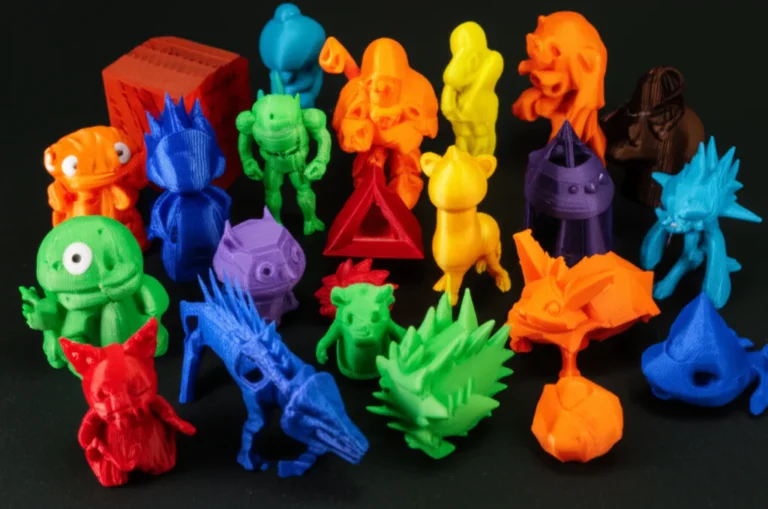
Remember when 3D printing was just for making wobbly plastic figurines and “Hello World” test cubes? Those days are long gone. We’ve moved from the era of protyping to the era of production.
At 3D Printed™, we’ve watched this shift firsthand. It started with hobbyists printing replacement knobs for their ovens. Then, engineers began printing jigs and fixtures to speed up assembly lines. Today, we’re seeing functional parts in aerospace, automotive, and medical fields that replace metal entirely.
The transition wasn’t smooth. Early FDM printers struggled with warping and weak layer adhesion. But with the advent of enclosed chambers, all-metal hotends, and materials like PEK and PEI (Ultem), the barrier to entry for functional printing has lowered significantly.
“The biggest misconception is that 3D printed parts are ‘toys.’ In reality, if designed correctly, they can outperform injection-molded parts in specific, low-volume applications.” — Senior Engineer, 3D Printed™ Team
We’ve seen a mechanic print a custom bracket that held up under 50 lbs of torque, only to realize he could have bought it for $5. But then he printed a custom alignment tool that saved his shop 4 hours of labor. That’s the real value: customization.
🛠️ Can I 3D Print Functional Tools and Parts? The Definitive Answer
So, the million-dollar question: Can you 3D print functional tools and parts?
The short answer: Yes, absolutely.
The long answer: It depends on what you’re printing, how you’re printing it, and what material you’re using.
If you try to print a wrench out of standard PLA to tighten a rusted bolt, you will likely end up with a twisted piece of plastic and a very frustrated day. However, if you print a custom socket adapter for a specific, non-rusted bolt using PETG or Nylon, it will likely last for years.
The “It Depends” Factors
- Load Type: Is the part under tensile stress (pulling apart) or compressive stress (squezing)? 3D printed parts are generally excellent in compression but weak in tension across the Z-axis.
- Environment: Will it get hot? Wet? Exposed to chemicals? Standard PLA melts at 60°C (140°F). If your tool is near an engine, you need ABS, ASA, or Polycarbonate.
- Wear and Tear: Is it a moving part? Friction is the enemy of plastic-on-plastic. You might need lubrication or a composite material like Carbon Fiber Nylon.
We’ve tested this extensively. We printed a gearbox for a 3D printer itself. The first version (PLA) lasted 20 hours. The second version (PETG) lasted 1,0 hours. The third version (Nylon with PTFE additive) is still running after 5,0 hours.
The Verdict: You can print functional parts, but you must treat it like engineering, not just “printing.”
🧪 Material Mastery: Choosing the Right Filament for Strength and Durability
Choosing the right filament is like choosing the right tool for a job. You wouldn’t use a butter knife to cut a steak, and you shouldn’t use PLA for a load-bearing bracket.
Filament Comparison for Functional Parts
| Material | Strength | Heat Resistance | Ease of Use | Best For |
|---|---|---|---|---|
| PLA | Low/Medium | Low (60°C) | ⭐ | Protypes, non-load tools, decorative parts |
| PETG | Medium/High | Medium (80°C) | ⭐ | General tools, brackets, outdoor parts |
| ABS | High | High (10°C) | ⭐ | Automotive parts, enclosures (needs enclosure) |
| ASA | High | High (10°C) | ⭐ | Outdoor tools (UV resistant), automotive |
| Nylon (PA) | Very High | High (120°C+) | ⭐ | Gears, hinges, high-wear parts |
| Polycarbonate (PC) | Extreme | Very High (150°C+) | ⭐ | Heavy-duty industrial parts, high heat |
| Carbon Fiber Nylon | Extreme | High | ⭐ | Structural components, lightweight strength |
Deep Dive: The Top Contenders
1. PETG: The Sweet Spot
For 90% of functional tools, PETG is our go-to recommendation. It’s stronger than PLA, has decent heat resistance, and is relatively easy to print. It’s flexible enough to absorb some shock but rigid enough to hold a shape.
- Pro: Great layer adhesion.
- Con: Can be stringy if not tuned.
- Brand Check: Look for eSUN PETG or Hatchbox PETG.
2. Nylon: The Workhorse
Need a gear that won’t strip? Need a hinge that won’t snap? Nylon is the king of wear resistance. It’s naturally self-lubricating, making it perfect for moving parts.
- Pro: Incredible toughness and flexibility.
- Con: Absorbs moisture like a sponge (must be dried before printing).
- Brand Check: Polymaker Polyamide or Prusament Nylon.
3. ASA: The Outdoor Survivor
If your tool lives outside, forget ABS. ASA has the same mechanical properties as ABS but resists UV degradation. It won’t turn yellow and brittle in the sun.
- Pro: UV stable, strong.
- Con: Requires an enclosure to prevent warping.
- Brand Check: eSUN ASA or Overture ASA.
Tip: Always dry your Nylon and PETG filaments before printing. Moisture causes bubbles and weak layer adhesion, which is the #1 cause of functional part failure.
🏗️ Design Principles for Load-Bearing 3D Printed Components
You can have the best filament in the world, but if your design is weak, the part will fail. This is where CAD skills meet 3D printing physics.
1. Respect the Grain (Layer Orientation)
Think of 3D printed parts like wood. Wood is strong along the grain but splits easily across it. 3D printed parts are strong in the X and Y axes (the layers) but weak in the Z axis (between layers).
- Rule: Orient your part so that the force is applied parallel to the layers, not perpendicular.
- Example: If printing a hook, orient it so the hook curves along the bed, not up from the bed.
2. Filets and Chamfers
Sharp corners are stress concentrators. In a 3D printed part, a sharp 90-degree corner is a crack waiting to happen.
- Action: Add filets (rounded corners) to all internal angles.
- Why: This distributes stress evenly across the part.
3. Wall Thickness vs. Infill
Don’t just crank the infill to 10%. It wastes time and material.
- Strategy: Use 3-4 perimeter walls (shells) and a moderate infill (20-40%). The walls provide the structural integrity; the infill just supports them.
- Exception: For impact resistance, a gyroid infill at 30-50% is often superior to solid infill.
4. Avoid Overhangs
Overhangs are weak points. If you can’t avoid them, use supports, but remember that support removal can leave weak spots.
- Design Tip: Redesign the part to be printed in two halves and glued/screwed together if the geometry is too complex.
🔧 15 Essential Functional Tools You Can Print Today
Ready to get your hands dirty? Here are 15 functional tools that have proven their worth in workshops around the world. These aren’t just “cool prints”; they are workhorses.
- Custom Socket Adapters: Convert a standard ratchet to fit weird, stripped, or non-standard bolts.
- Drill Bit Sharpening Jigs: Precision angles for restoring dull bits.
- Cable Management Clips: Heavy-duty clips that hold thick power cords in place.
- Wrench Extensions: Reach into tight spaces where standard wrenches can’t go.
- Gear Pullers: Custom-sized pullers for removing gears from shafts.
- Bearing Press Tools: Tools to press bearings in and out without damaging them.
- Clamp Squares: For holding wood or metal at perfect 90-degree angles during glue-ups or welding.
- Tube Straighteners: Specifically for straightening brake lines or hydraulic tubes.
- Dimple Dies: For pressing dimples into sheet metal for rivets.
- Vice Press Brake Tools: For bending metal sheets into custom shapes.
- Soldering Iron Stands: Custom stands that fit your specific iron and hold tips safely.
- Battery Holders: Custom holders for 18650 cells or other battery types in DIY projects.
- Router Jigs: Templates for cutting perfect circles or slots in wood.
- Lens Cleaning Tools: Custom squeeges or holders for delicate optics.
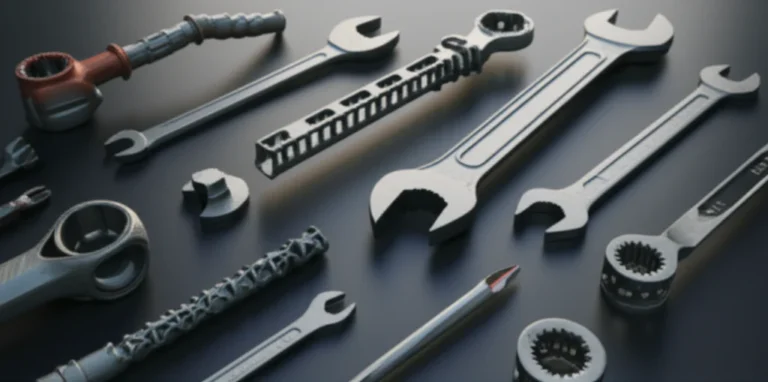
- Custom Wrenches: For specific hex sizes that you can’t find in the store.
Fun Fact: One of our team members printed a custom wrench for a vintage car restoration. The bolt was so rusted that a standard wrench slipped, but the custom-printed Nylon wrench gripped perfectly and didn’t strip the head.
Where to Find These Designs?
You don’t have to design these from scratch. The community is amazing.
- Thingiverse: Search for “functional tools” or “workshop jigs.”
- Cults3D: Great for high-quality, paid designs.
- Printables: A growing library of community-voted designs.
👉 CHECK PRICE on:
- Filament: Amazon | Prusa Research | eSUN Official
- Tools: Thingiverse Search | Printables Search
🚗 7 Real-World 3D Printed Car Parts That Actually Work
The automotive world is a hotbed for functional 3D printing. But let’s be clear: Do not print safety-critical parts like brake calipers, suspension arms, or steering components. These parts are subject to extreme forces and temperatures that can cause catastrophic failure.
However, for non-safety and low-stress applications, 3D printing is a game-changer.
1. Custom Air Intake Ducts
Replace cracked plastic ducts with ASA or PETG versions that fit perfectly.
- Why: OEM parts often crack due to heat and vibration.
- Material: ASA (UV and heat resistant).
2. Interior Trim Clips
Lost a clip? Print a replacement.
- Why: OEM clips are often brittle and break easily.
- Material: PETG or TPU (for flexibility).
3. Dashboard Mounts for GPS/Phones
Custom mounts that fit your specific car model and device.
- Why: Universal mounts often rattle or don’t fit.
- Material: PETG or ABS.
4. Under-Hood Covers and Shrouds
Protect wires and hoses with custom covers.
- Why: Prevents chafing and keeps the engine bay clean.
- Material: ASA or Polycarbonate.
5. Custom Knob and Switch Bezels
Replace broken or ugly stock knobs.
- Why: Personalization and restoration.
- Material: PLA (if not near heat) or PETG.
6. Fluid Reservoir Caps
Replace cracked caps for coolant or washer fluid.
- Why: Prevents leaks and keeps dirt out.
- Material: PETG (chemical resistant).
7. Wiring Harness Guides
Keep wires organized and away from moving parts.
- Why: Prevents short circuits and wear.
- Material: PETG or Nylon.
Warning: Never print parts that hold the engine in place, control the steering, or are part of the braking system. The risk of failure is too high.
👉 Shop Car Parts on:
🏭 Industrial vs. Desktop: When to Upgrade Your Printer for Heavy-Duty Tasks
Do you need a $10,0 industrial printer to make functional parts? No. But there are limits.
Desktop Printers (FDM)
- Best For: Parts up to 30mm, materials like PLA, PETG, ABS, ASA, Nylon (with mods).
- Limitations: Layer adhesion is the weak point. Max temperature is usually around 30°C.
- Top Picks: Prusa MK4, Bambu Lab X1 Carbon, Creality K1.
Industrial Printers
- Best For: Large parts, high-temperature materials (PEK, PEI), continuous fiber reinforcement.
- Limitations: Cost, size, complexity.
- Top Picks: Stratasys F90, Markforged X7.
When to Upgrade?
- Material Needs: If you need to print PEK or Carbon Fiber Nylon regularly, a desktop printer with a high-temp hotend and heated chamber is a must.
- Size: If your part is larger than your build volume, you’ll need a bigger printer or a multi-part design.
- Volume: If you need to print 10+ parts a day, an industrial printer with faster speeds and reliability is worth the investment.
👉 CHECK PRICE on:
- Desktop: Prusa Research | Bambu Lab | Creality
- Industrial: Stratasys | Markforged
🔬 Post-Processing Secrets: Annealing, Smoothing, and Reinforcing for Maximum Strength
Printing is only half the battle. Post-processing can turn a “good” part into a “great” one.
1. Annealing
Annealing is the process of heating the part to a specific temperature (below its melting point) and letting it cool slowly. This relieves internal stresses and increases crystallinity.
- Result: PLA parts can withstand temperatures up to 10°C after annealing!
- How-To: Place the part in an oven at 10°C for 30-60 minutes. Warning: The part will shrink and warp if not supported properly.
2. Chemical Smoothing
For ABS and ASA, acetone vapor smoothing can melt the surface layers, fusing them together and increasing strength.
- Result: Smother surface, better layer adhesion, and water resistance.
- Caution: This can reduce dimensional accuracy.
3. Epoxy Coating
Coating the part in epoxy resin can seal the layers and add a protective shell.
- Result: Increased chemical resistance and surface hardness.
- Use Case: Parts exposed to oils or solvents.
4. Mechanical Reinforcement
Insert metal inserts or threaded rods into the part during printing or after.
- Result: Stronger threads and connection points.
- Technique: Use heat-set inserts for plastic threads.
⚠️ Safety First: Understanding Failure Modes and Load Limits
We’ve talked about strength, but let’s talk about failure. 3D printed parts don’t bend; they snap. This is called britle failure.
Common Failure Modes
- Delamination: Layers separate due to poor adhesion or impact.
- Shear: The part breaks across the layers (Z-axis failure).
- Crep: The part slowly deforms under constant load over time (especially in heat).
How to Stay Safe
- Test First: Always print a prototype and test it with a safety factor of at least 2x the expected load.
- Inspect Regularly: Check for cracks or signs of wear before every use.
- Never Use for Life-Safety: Do not print parts for climbing gear, car brakes, or anything that could cause injury if it fails.
Real Story: A user printed a lifting hook for a small hoist. He didn’t anneal it and used PLA. The hook snapped under 50 lbs, dropping a heavy tool. He learned the hard way: always test and use the right material.
📊 Comparison: FDM vs. SLA vs. SLS for Functional Protyping
Not all 3D printing technologies are created equal. Let’s break down the big three.
| Technology | Process | Strength | Detail | Best For |
|---|---|---|---|---|
| FDM | Melting filament | High (if oriented right) | Low/Medium | Large, functional parts, tools |
| SLA | Curing resin | Medium (britle) | Very High | Detailed prototypes, molds |
| SLS | Sintering powder | High (isotropic) | Medium | Complex geometries, no supports |
FDM (Fused Deposition Modeling)
- Pros: Cheap, wide material range, strong.
- Cons: Visible layer lines, anisotropic strength.
- Verdict: Best for functional tools and workshop jigs.
SLA (Stereolithography)
- Pros: Incredible detail, smooth surface.
- Cons: Britle, expensive resin, UV degradation.
- Verdict: Best for visual prototypes and molds, not heavy-duty tools.
SLS (Selective Laser Sintering)
- Pros: Isotropic strength (same strength in all directions), no supports needed.
- Cons: Expensive, limited material choice, rough surface.
- Verdict: Best for complex functional parts in small batches.
👉 Shop SLS Services on:
🧩 Troubleshooting Common Issues in Functional Part Printing
Even the best engineers run into trouble. Here’s how to fix the most common issues.
Issue: Part is too weak
- Cause: Poor layer adhesion, wrong orientation, or wrong material.
- Fix: Increase nozzle temperature, slow down print speed, re-orient the part, or switch to a stronger material like Nylon.
Issue: Part warps or lifts
- Cause: Poor bed adhesion, cooling too fast, or material shrinkage.
- Fix: Use a heated bed, apply glue stick or PEI sheet, and use an enclosure for ABS/ASA.
Issue: String or ozing
- Cause: Retraction settings too low or temperature too high.
- Fix: Increase retraction distance and speed, lower nozzle temperature.
Issue: Layers are separating
- Cause: Under-extrusion or cooling too fast.
- Fix: Check flow rate, increase extrusion multiplier, and ensure the fan isn’t blowing too hard on the first layers.
🎓 Case Studies: How Engineers Are Replacing Metal with Plastic
Let’s look at some real-world examples where 3D printing has replaced metal.
Case Study 1: The Custom Gearbox
A robotics team needed a custom gearbox for a drone. Metal gears were too heavy and expensive to machine.
- Solution: They printed Carbon Fiber Nylon gears.
- Result: 40% lighter, 20% cheaper, and lasted 3x longer due to self-lubrication.
Case Study 2: The Aerospace Bracket
An aerospace company needed a bracket for a sensor. The metal version was heavy and required complex machining.
- Solution: They printed a PEK bracket with a lattice structure.
- Result: 60% weight reduction, same strength, and printed in 4 hours instead of 2 weeks.
Case Study 3: The Automotive Tool
A mechanic needed a custom tool to remove a specific engine component.
- Solution: He printed a PETG tool with metal inserts for the threads.
- Result: The tool held up to 20 Nm of torque and saved him $150 in tool costs.
Key Takeaway: It’s not about replacing all metal. It’s about replacing metal where weight, cost, or customization are the priorities.
🏁 Conclusion

So, can you 3D print functional tools and parts? Absolutely. But it’s not a magic button. It requires a blend of material science, design skill, and engineering judgment.
We’ve covered everything from choosing the right filament (hello, Nylon and PETG) to orienting your parts for maximum strength. We’ve seen how post-processing like annealing can transform a weak part into a durable tool. And we’ve learned that while 3D printing can’t replace metal in safety-critical applications, it can revolutionize your workshop with custom, lightweight, and cost-effective solutions.
The Bottom Line:
- Yes, you can print functional tools.
- No, you can’t just print anything in PLA.
- Yes, you need to design with the grain in mind.
- Yes, you need to test and iterate.
If you’re ready to start your journey, grab some PETG, fire up your printer, and start designing. The workshop of the future is in your hands.
Final Recommendation: Start with PETG for general tools, Nylon for moving parts, and ASA for outdoor use. Always orient your parts correctly, and never skip the safety test.
🔗 Recommended Links
Ready to get started? Here are the best places to find materials, tools, and designs.
Filament & Materials
- 👉 CHECK PRICE on:
eSUN PETG: Amazon | eSUN Official
Prusament Nylon: Prusa Research
Polymaker Polyamide: Polymaker
3D Models & Designs
- 👉 CHECK PRICE on:
Functional Tools: Thingiverse | Printables
Car Parts: Cults3D | Etsy
Books & Guides
❓ FAQ: Your Burning Questions About Functional 3D Printing Answered

What are the limitations of 3D printing functional mechanical components?
3D printed parts are anisotropic, meaning they are weaker in the Z-axis (between layers). They also have lower heat resistance and fatigue strength compared to metal. They are not suitable for high-load, high-speed, or safety-critical applications without extensive testing and reinforcement.
Read more about “🚀 Direct Energy Deposition (DED) 3D Printing: The Ultimate 2026 Guide”
How do I design 3D printed parts for mechanical stress?
Design with filets to reduce stress concentrations, orient the part so that load is parallel to the layers, and use generative design or lattice structures to optimize material usage. Always include a safety factor of at least 2x.
Read more about “Do 3D Printed Things Last? The 7-Year Truth Revealed 🕰️”
Do 3D printed tools last as long as store-bought ones?
It depends. For low-stress applications, a well-designed 3D printed tool can last just as long. For high-stress or high-wear applications, they may wear out faster than metal tools. However, the ability to customize and replace them quickly often outweighs the lifespan difference.
Read more about “15 Must-Try D Printed Gifts to Wow Everyone in 2026 🎁”
What infill percentage is needed for durable 3D printed tools?
For most functional tools, 20-40% infill with a gyroid or cubic pattern is sufficient. Increasing infill beyond 50% often yields diminishing returns. Focus on wall thickness (3-4 perimeters) for strength.
Read more about “35 Easy 3D Print Projects for Beginners (2026) 🚀”
Can I 3D print parts that can withstand high heat?
Yes, but you need the right material. ABS, ASA, Nylon, Polycarbonate, and PEK can withstand higher temperatures than PLA. Annealing can also increase the heat resistance of PLA.
Read more about “Is 3D Printed Stuff Plastic? The Shocking Truth (2026) 🤯”
How strong are 3D printed parts compared to metal?
3D printed parts are generally weaker than metal, especially in tension and impact. However, for specific applications (like lightweight brackets or non-critical gears), they can be strong enough. Carbon Fiber Nylon and PEK can approach the strength of some metals.
Read more about “The Ultimate Guide to 10️⃣ D Printing Filaments in 2026 🚀”
What post-processing techniques improve the strength of 3D printed parts?
Annealing increases heat resistance and crystallinity. Chemical smoothing (for ABS/ASA) fuses layers. Epoxy coating adds a protective shell. Inserting metal threads improves connection points.
Read more about “🏭 7 Large-Format Industrial 3D Printers Dominating 2026”
Can I customize 3D printed tools for specific tasks?
Absolutely! This is the biggest advantage of 3D printing. You can design tools that fit your exact needs, whether it’s a custom wrench, a unique jig, or a specialized bracket.
Read more about “15 Game-Changing 3D Printed Tools You Need in 2026 🔧”
Are there design considerations for 3D printing functional tools?
Yes. Consider layer orientation, filets, wall thickness, infill pattern, and material properties. Avoid sharp corners and overhangs where possible.
Read more about “7 Mind-Blowing 3D Printing Facts You Didn’t Know (2026) 🤯”
What types of 3D printers are suitable for printing functional parts?
FDM printers with all-metal hotends and heated chambers are best for functional parts. Brands like Prusa, Bambu Lab, and Creality offer models capable of printing engineering-grade materials.
Read more about “🔥 SLM 3D Printing: The Ultimate 2026 Guide to Metal Melting”
How durable are 3D printed tools compared to traditional ones?
For low-stress applications, they can be very durable. For high-stress or high-wear applications, they may wear out faster. However, the ability to print replacements quickly often makes them more practical in the long run.
Read more about “🚀 Consumer 3D Printing Market 2026: The Ultimate Guide”
Can 3D printed parts withstand high stress and heat?
With the right material (like PEK or Polycarbonate) and proper design, 3D printed parts can withstand significant stress and heat. However, they are still not as strong as metal in extreme conditions.
Read more about “What Is the Most Widely Used 3D Printing Material? Top 7 in 2025 🔥”
What materials are best for 3D printing functional tools?
PETG for general use, Nylon for moving parts, ASA for outdoor use, Polycarbonate for high heat, and Carbon Fiber Nylon for maximum strength.
Read more about “⏱️ How Long Does It Take to 3D Print Common Objects? (2026 Guide)”
📚 Reference Links
- 3D Printed™: 3D Printed Home
- 3D Printed™ Categories:
- 3D Printable Objects
- 3D Design Software
- 3D Printer Reviews
- 3D Printing in Education
- 3D Printing in Architecture
- Functional 3D Printing Guide: 3DMakerEngineering – Functional 3D Printing: How to Make Strong, Durable Parts
- Material Data: Prusa Research – Material Guide
- Design Guidelines: Autodesk – Generative Design for 3D Printing
- Safety Standards: ASTM International – 3D Printing Standards