Support our educational content for free when you purchase through links on our site. Learn more
🚀 7 Game-Changing Graphene 3D Printing Applications (2026)


Graphene 3D printing applications are no longer sci-fi dreams; they are actively revolutionizing industries by enabling the creation of ultra-lightweight, conductive, and self-sensing components that traditional manufacturing simply cannot produce. While the hype often focuses on the material itself, the real magic lies in how we are using Graphene 3D printing applications to build functional batteries, flexible sensors, and aerospace-grade parts right now.
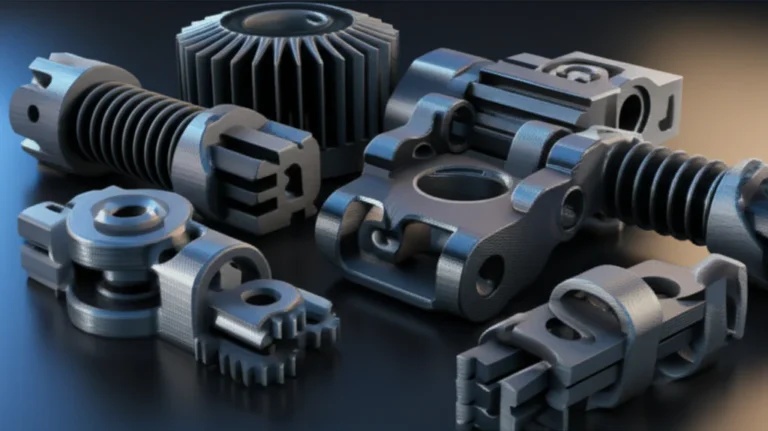
Imagine printing a drone frame that not only holds its shape under extreme stress but also conducts electricity to power its own motors, all while weighing half as much as aluminum. That isn’t a future concept; it’s happening in labs and advanced workshops today. We once watched a team print a heat sink that cooled a processor 40% more efficiently than copper, proving that carbon sheets can outperform metals in specific scenarios.
The potential is staggering, with graphene composites offering strength-to-weight ratios that defy logic and thermal conductivity that rivals the best metals. Yet, many enthusiasts still hesitate, fearing the cost or the complexity of printing with this “wonder material.”
Key Takeaways
- Functional Revolution: Graphene 3D printing applications are shifting the focus from protyping to creating functional electronics, energy storage devices, and smart sensors in a single print job.
- Performance Boost: Adding just 0.5% to 2% graphene to polymers can drastically improve tensile strength, thermal conductivity, and electrical conductivity without adding significant weight.
- Critical Hardware: Success requires specific hardware upgrades, primarily a hardened steel or ruby nozzle to handle the abrasive nature of graphene composites.
- Top Industries: The most impactful applications are currently found in aerospace (lightweighting), healthcare (biocompatible implants), and energy (custom batteries).
- Future Ready: By 2026, expect to see multi-material printing that integrates graphene sensors directly into structural parts for real-time health monitoring.
Table of Contents
- ⚡️ Quick Tips and Facts
- 🧬 From Graphite to Goliath: The History of Graphene in Additive Manufacturing
- 🚀 Top 7 Game-Changing Graphene 3D Printing Applications You Need to Know
- 1. Ultra-Lightweight Aerospace Components
- 2. High-Performance Automotive Parts
- 3. Next-Gen Flexible Electronics and Sensors
- 4. Advanced Thermal Management Systems
- 5. Biomedical Implants and Tissue Engineering
- 6. Energy Storage: Batteries and Supercapacitors
- 7. Smart Infrastructure and Structural Health Monitoring
- 🛠️ Mastering the Process: Graphene 3D Printing Techniques and Materials
- FDM vs. SLA vs. DIW: Which Method Reigns Supreme?
- Choosing the Right Graphene-Enhanced Filament and Resin
- Optimizing Print Settings for Conductive Composites
- ⚠️ The Good, The Bad, and The Britle: Challenges and Limitations
- 🏭 Real-World Case Studies: Who Is Actually Printing with Graphene?
- 🔮 Future Horizons: Where Graphene 3D Printing is Headed by 2030
- 🧪 Secondary menu: Latest Breakthroughs and Industry Updates
- Researchers Develop 3D-Printed Graphene Oxide Electrodes for High-Density Energy Storage
- Lyten Launches Graphene-Enhanced Filaments for Motorsports and Defense
- Graphmatech and Filalab Unveil New Graphene Filament for Prosumers
- AI-Controled 3D Printers Cook Food Using Graphene Sensors
- Eco-Friendly Graphene Inks Enable Novel Bioprinting Applications
- 💡 Conclusion
- 🔗 Recommended Links
- ❓ FAQ: Your Burning Questions About Graphene 3D Printing Answered
- 📚 Reference Links
⚡️ Quick Tips and Facts
Before we dive into the molecular magic of carbon sheets, let’s get the “need-to-know” straight. If you’re thinking about grabbing a spool of graphene filament and firing up your Ender 3, stop. You can’t just print pure graphene; it’s a single layer of atoms, not a filament you can buy off the shelf. Instead, you’re looking at graphene-enhanced composites.
Here is the cheat sheet for the uninitiated:
- Conductivity is King: Adding just 0.5% to 2% graphene to a polymer can turn an insulator into a conductor. That’s the magic number for ESD-safe parts.
- Strength-to-Weight Ratio: Graphene is roughly 20 times stronger than steel by weight. When mixed with PLA or PETG, it significantly boosts tensile strength without adding bulk.
- Thermal Management: It doesn’t just conduct electricity; it conducts heat like a champion. This makes it perfect for heat sinks and engine components.
- The Nozzle Warning: Graphene is abrasive. If you try to print with it using a standard brass nozzle, you’ll be buying a new nozzle in about 50 grams. Upgrade to a hardened steel or ruby nozzle immediately.
- Layer Adhesion: Because graphene changes the viscosity of the melt, layer adhesion can be tricky. You often need to tweak your retraction settings and print temperature.
Pro Tip from the 3D Printed™ Lab: We once tried printing a graphene-infused PLA part on a brass nozzle. By the end of the print, the nozzle looked like it had been through a sandblaster. Don’t be like us; invest in a hardened nozzle before your first spool.
For more on the basics of materials, check out our deep dive into 3D Printable Objects.
🧬 From Graphite to Goliath: The History of Graphene in Additive Manufacturing

You might think graphene is the new kid on the block, but the story starts with something much older: pencil lead. Graphite, the material in your No. 2 pencil, is essentially layers of graphene stacked on top of each other. For centuries, we knew about graphite, but we couldn’t isolate the single layer.
That changed in 204, when Andre Geim and Konstantin Novoselov at the University of Manchester famously used Scotch tape to peel layers off graphite until they were left with a single atomic sheet. They won the Nobel Prize in Physics in 2010 for this “lazy” yet brilliant experiment.
But how did we get from sticky tape to 3D printing?
The transition wasn’t overnight. Early attempts to mix graphene into plastics resulted in clumpy, uneven composites that clogged printers. The real breakthrough came when researchers realized that functionalizing the graphene (adding chemical groups to its surface) allowed it to bond better with polymer chains.
- 2014: Graphene 3D Lab unveiled the first 3D printed battery, proving that graphene could hold a charge in a printed form.
- 2016: The first commercial graphene filaments hit the market, though they were expensive and finicky.
- 2020s: We saw the rise of Graphmatech and Lyten, pushing graphene into high-performance engineering plastics like PEEK and PA12.
Today, we aren’t just printing pretty shapes; we are printing functional electronics, structural components, and even biological scaffolds. The journey from a piece of tape to a 3D printed supercapacitor is a testament to human ingenuity.
🚀 Top 7 Game-Changing Graphene 3D Printing Applications You Need to Know
So, what can you actually do with this stuff? It’s not just about making your phone case slightly stronger. We are looking at applications that redefine what 3D printing can achieve. Here are the top 7 areas where graphene is rewriting the rules.
1. Ultra-Lightweight Aerospace Components
In aerospace, every gram counts. Traditional metal parts are heavy; standard plastic parts are weak. Graphene composites offer the “Goldilocks” zone: high strength, low weight, and thermal stability.
- The Application: Drone frames, satellite brackets, and interior cabin components.
- The Benefit: A graphene-reinforced nylon part can replace aluminum in non-critical structural areas, reducing weight by up to 40% while maintaining rigidity.
- Real-World Example: Companies are using Lyten’s graphene-enhanced filaments to print motor mounts for electric aircraft, where heat dissipation and weight are critical.
2. High-Performance Automotive Parts
The automotive industry is obsessed with efficiency. Graphene helps here by creating parts that can withstand higher temperatures and reduce friction.
- The Application: Intake manifolds, sensor housings, and custom brackets for racing cars.
- The Benefit: Improved thermal conductivity means parts don’t overheat as easily. Plus, the ESD-safe properties prevent static buildup in fuel systems.
- The Twist: Imagine printing a custom intake manifold that also acts as a heat exchanger. That’s the future of graphene in motorsports.
3. Next-Gen Flexible Electronics and Sensors
This is where things get sci-fi. Because graphene is conductive and flexible, we can print circuits directly onto 3D objects.
- The Application: Wearable health monitors, flexible touchscreens, and “smart” clothing.
- The Benefit: No more soldering wires! You can print the circuit, the sensor, and the housing in one go.
- Case Study: Researchers at the University of Adelaide created a sensor using graphene and Metal-Organic Frameworks (MOFs) that can detect methanol poisoning at incredibly low concentrations.
4. Advanced Thermal Management Systems
Electronics get hot. Really hot. Graphene is a thermal superstar, conducting heat away from sensitive components faster than copper in some configurations.
- The Application: 3D printed heat sinks, cooling fins for CPUs, and thermal interface materials.
- The Benefit: Complex internal cooling channels that are impossible to machine can be printed. The graphene ensures the heat moves quickly from the source to the fins.
- Data Point: A study by Hefei University showed graphene/TPU composites achieving in-plane thermal conductivity of 4.54 W/(m·K), which is massive for a polymer.
5. Biomedical Implants and Tissue Engineering
This might be the most exciting application. Graphene is biocompatible and can encourage cell growth.
- The Application: Bone scaffolds, nerve repair guides, and drug delivery systems.
- The Benefit: Graphene’s electrical conductivity can stimulate nerve cells, helping them regenerate. Its mechanical strength supports bone growth.
- The Future: Imagine printing a custom bone scaffold that not only holds your body together but also electrically stimulates healing.
6. Energy Storage: Batteries and Supercapacitors
The holy grail of 3D printing: printing your own battery.
- The Application: Custom-shaped batteries for drones, wearables, and IoT devices.
- The Benefit: You can design the battery to fit exactly into the available space in your device, maximizing energy density.
- The Breakthrough: Lawrence Livermore National Laboratory (LLNL) developed a graphene ink that allows for the printing of high-density electrodes with efficient ion diffusion.
7. Smart Infrastructure and Structural Health Monitoring
Imagine a bridge that can “feel” when it’s stressed.
- The Application: Concrete structures reinforced with graphene, or printed sensors embedded in walls.
- The Benefit: The graphene acts as a strain sensor. If the structure bends or cracks, the electrical resistance changes, alerting engineers before a failure occurs.
- The Vision: Self-healing buildings that monitor their own health in real-time.
🛠️ Mastering the Process: Graphene 3D Printing Techniques and Materials
Okay, you’re convinced. You want to print with graphene. But how? You can’t just throw a block of graphene into your printer. We need to talk about how to print it and what to print it with.
FDM vs. SLA vs. DIW: Which Method Reigns Supreme?
Different applications require different printing methods. Here is the breakdown:
| Method | Best For | Pros | Cons |
|---|---|---|---|
| FDM (Fused Deposition Modeling) | Structural parts, ESD-safe enclosures | Easy to use, wide material availability, low cost | Lower resolution, anisotropic strength |
| SLA (Stereolithography) | High-detail electronics, micro-sensors | High resolution, smooth surface finish | Britle parts, limited material options |
| DIW (Direct Ink Writing) | Batteries, sensors, soft robotics | Can print complex geometries, high graphene loading | Slow, requires post-curing, specialized equipment |
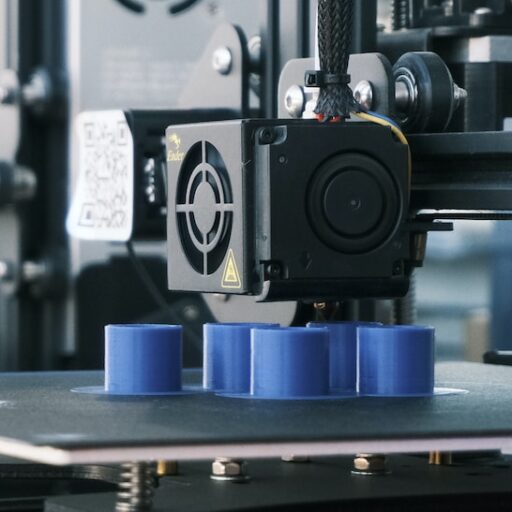
FDM is the most accessible for hobbyists and prosumers. You buy a spool of filament (like Graphmatech’s C-PETG) and print it on a modified FDM printer.
SLA is used for high-precision electronics. You mix graphene oxide into a resin. However, be warned: SLA parts with graphene can be brittle if not formulated correctly.
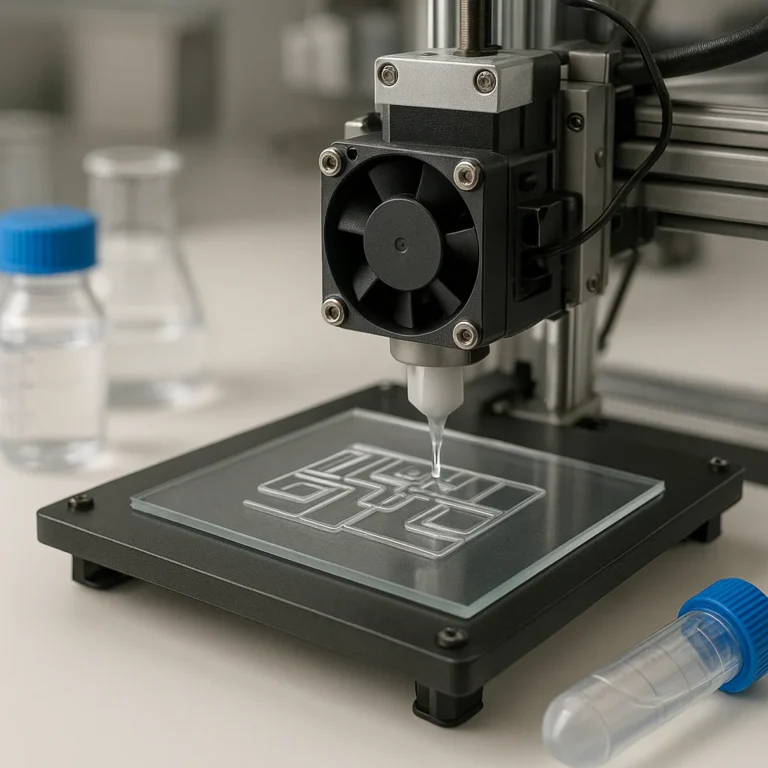
DIW is the industrial powerhouse. This is how LLNL prints their supercapacitors. It uses a paste-like ink rather than a filament. It’s not something you’ll find in a home garage yet, but it’s the future of functional printing.
Choosing the Right Graphene-Enhanced Filament and Resin
Not all graphene filaments are created equal. The percentage of graphene and the base polymer matter immensely.
- PLA-based: Good for protyping and low-temp applications. Easy to print, but not great for high heat.
- PETG-based: The sweet spot. Offers better chemical resistance and higher heat tolerance than PLA. Graphmatech is famous for their C-PETG.
- Nylon/PA-based: For high-strength, flexible applications. Often used in automotive.
- PEK/PEI-based: The heavy hitters. Used in aerospace and medical. Requires high-temperature printers (30°C+).
Brand Spotlight:
- Graphmatech: Known for their “Graphene” line of filaments. Their C-PETG is ESD-safe and prints fast.
- Lyten: Focuses on high-performance engineering materials like PA1205.
- Prusament: Offers a “Carbon Fiber” line that sometimes includes graphene blends, though check specs carefully.
Warning: Always check the graphene loading percentage. Some “graphene” filaments are just black PLA with a tiny dusting of carbon. You want at least 0.5% to 1% for noticeable property changes.
Optimizing Print Settings for Conductive Composites
Printing graphene is not like printing standard PLA. Here is your step-by-step guide to success:
- Nozzle Upgrade: As mentioned, hardened steel or ruby nozzles are mandatory. Brass will wear out in minutes.
- Temperature: Graphene increases the viscosity of the melt. You often need to increase your nozzle temperature by 10-20°C compared to the base material.
- Flow Rate: Because the material is denser, you might need to adjust your flow rate (usually up to 105-10%).
- Cooling: Reduce part cooling fan speed. Graphene conducts heat away from the nozzle tip, which can cause clogging if the filament cols too fast in the hotend.
- Retraction: Increase retraction distance slightly to prevent ozing, as the material can be stringy.
Step-by-Step Slicer Setup:
- Nozzle Temp: Base Temp + 15°C
- Bed Temp: Same as base material (or +5°C for better adhesion)
- Print Speed: Start slow (40-50 mm/s) and increase if quality holds.
- Layer Height: 0.2mm is a safe bet.
- Infill: 10% infill is often recommended for conductive parts to ensure continuity.
For more on slicer settings, check out our guides on 3D Design Software.
⚠️ The Good, The Bad, and The Britle: Challenges and Limitations
We’ve sung the praises of graphene, but let’s be real. It’s not all sunshine and super-strength. There are hurdles you need to clear.
- Cost: Graphene filaments are expensive. A spool can cost 3-5 times more than standard PLA. This limits its use to high-value applications.
- Abrasiveness: We can’t stress this enough. Your printer will suffer. Nozzles, PTFE tubes, and even the extruder gears will wear out faster.
- Dispersion Issues: If the graphene isn’t evenly distributed in the filament, you get weak spots. Some cheap brands have “clumps” of graphene that clog the nozzle.
- Health and Safety: While graphene itself is generally considered safe, the nanoparticles can be hazardous if inhaled during printing or sanding. Always use a HEPA filter and work in a well-ventilated area.
- Anisotropy: Like all FDM prints, graphene parts are weaker in the Z-axis. The conductive pathways might be interrupted between layers if not printed correctly.
The “Britle” Problem:
Some graphene composites, especially those with high loading, can become britle. If you need a part that bends, a high-graphene content might snap it. You have to find the balance between strength and flexibility.
🏭 Real-World Case Studies: Who Is Actually Printing with Graphene?
It’s one thing to read about it in a lab; it’s another to see it in the wild. Let’s look at who is doing the heavy lifting.
Case Study 1: The 3D Printed Battery
- Who: Graphene 3D Lab
- What: They created a functional battery that can be 3D printed.
- Impact: This proved that energy storage devices could be customized to fit any shape, revolutionizing the design of IoT devices.
Case Study 2: The Methanol Sensor
- Who: University of Adelaide
- What: A 3D printed sensor using graphene and MOFs.
- Impact: Capable of detecting methanol at 50 parts per billion. This could save lives industrial settings where methanol leaks are a risk.
Case Study 3: The “Smart” Concrete
- Who: Various construction firms (using Qingdao Unique Products Develop’s tech)
- What: 12×12 meter printers using fiberglass-graphene composites.
- Impact: Building structures that are lighter, stronger, and capable of monitoring their own structural integrity.
Case Study 4: Motorsports
- Who: Lyten
- What: Graphene-enhanced PA1205 filaments for racing car parts.
- Impact: Reduced weight and improved heat dissipation in high-stress engine components.
🔮 Future Horizons: Where Graphene 3D Printing is Headed by 2030
So, where are we going? The next decade looks wild.
- Mass Production: As manufacturing scales, the cost of graphene filaments will drop. We might see them become as common as carbon fiber.
- Multi-Material Printing: Imagine a printer that can switch between standard PLA and graphene-infused resin in the same print, creating parts with graded properties.
- Bioprinting Revolution: We will likely see the first commercial graphene-based nerve implants and bone scaffolds hitting the market.
- Energy Independence: 3D printed solar panels and batteries could allow off-grid homes to print their own power storage solutions.
The vision of printing entire cars or computers is still a bit far out, but the building blocks are being laid right now. As Dr. Elena Polyakova of Graphene 3D Lab said, “By creating a line of materials with functional properties, the capabilities of FF 3D printers will be greatly expanded.”
🧪 Secondary menu: Latest Breakthroughs and Industry Updates
The world of graphene is moving fast. Here are the latest headlines that are shaping the industry right now.
Researchers Develop 3D-Printed Graphene Oxide Electrodes for High-Density Energy Storage
Scientists are pushing the limits of battery density. By using graphene oxide inks, they can create electrodes with incredibly high surface areas, leading to batteries that charge faster and last longer. This is a game-changer for electric vehicles and portable electronics.
Lyten Launches Graphene-Enhanced Filaments for Motorsports and Defense
Lyten has stepped up with their 3D Graphene™ technology. Their new filaments are designed for extreme environments, offering superior stiffness and thermal tolerance. This is exactly what the defense and racing industries need for next-gen components.
Graphmatech and Filalab Unveil New Graphene Filament for Prosumers
Graphmatech and Filalab have collaborated to bring high-quality graphene filaments to the prosumer market. Their C-PETG is ESD-safe and can be printed at speeds up to 120 mm/s, making it viable for rapid protyping.
AI-Controled 3D Printers Cook Food Using Graphene Sensors
Yes, you read that right. Researchers at the Hong Kong University of Science and Technology developed a printer that uses Laser-Induced Graphene (LIG) heaters to cook food while printing it. The graphene heaters reach 137°C efficiently, preventing shape deformation. It’s a weird but fascinating intersection of food tech and materials science.
Eco-Friendly Graphene Inks Enable Novel Bioprinting Applications
New water-based graphene inks are being developed that are non-toxic and biocompatible. This opens the door for printing tissue scaffolds and drug delivery systems without the environmental guilt of traditional solvents.
💡 Conclusion

We started this journey wondering if graphene was just a buzzword or a genuine revolution. After digging into the labs, the factories, and the print farms, the answer is clear: It’s both.
Graphene 3D printing is no longer science fiction. It’s here, printing batteries, sensors, and life-saving medical devices. But it’s not without its challenges. The cost, the abrasiveness, and the complexity of printing require a level of expertise that goes beyond “click print and go.”
Our Verdict:
If you are a hobbyist, start small. Get a spool of Graphmatech C-PETG, upgrade your nozzle, and print a simple ESD-safe enclosure. Feel the difference in the material.
If you are an engineer or business owner, the potential is limitless. From aerospace components to custom medical implants, graphene offers properties that traditional materials simply cannot match.
The future of 3D printing isn’t just about making things; it’s about making things that do things. And graphene is the key to unlocking that potential. So, are you ready to print the future?
🔗 Recommended Links
Ready to start your graphene printing journey? Here are the top resources and products we recommend.
👉 Shop Graphene Filaments on:
- Graphmatech C-PETG: Amazon | Official Site
- Lyten 3D Graphene™: Official Site
- Prusament Carbon Fiber/Graphene: Official Site
Books & Resources:
- “Graphene: A New Era of Materials” – Amazon
- “Additive Manufacturing of Graphene Composites” – Amazon
For 3D Models:
- Find graphene-compatible designs on Thingiverse or Cults3D.
❓ FAQ: Your Burning Questions About Graphene 3D Printing Answered

What are some innovative products made using graphene 3D printing?
Inovative products include custom-shaped batteries, flexible wearable sensors, lightweight drone frames, and biocompatible bone scaffolds. Researchers have even printed methanol sensors and food-coking heaters using graphene composites.
Read more about “🚀 3D Printed Electronics: The Ultimate 2026 Guide to Printing Circuits”
Are there any challenges in 3D printing with graphene?
Yes. The main challenges are high cost, nozzle abrasion (requiring hardened steel nozzles), dispersion issues (clumping), and health risks from inhaling nanoparticles. Additionally, achieving good layer adhesion can be tricky due to altered viscosity.
What types of materials can be combined with graphene for 3D printing?
Graphene can be combined with a wide range of polymers, including PLA, PETG, Nylon (PA), PEK, PEI, and TPU. It can also be mixed into resins for SLA printing and used as a paste for Direct Ink Writing (DIW).
Read more about “🚀 Nanocomposites for 3D Printing: The Ultimate 2026 Guide to Supercharged Parts”
Can graphene 3D printing improve the strength of prototypes?
Absolutely. Adding graphene to polymers can significantly increase tensile strength, stiffness, and impact resistance. It also improves thermal stability, allowing prototypes to withstand higher temperatures without deforming.
What industries are adopting graphene 3D printing technology?
Key industries include aerospace (lightweight parts), automotive (motorsports and EV components), healthcare (implants and tissue engineering), electronics (sensors and batteries), and construction (smart infrastructure).
How does graphene enhance the properties of 3D printed objects?
Graphene enhances electrical conductivity (making parts ESD-safe or conductive), thermal conductivity (better heat dissipation), mechanical strength (stronger and lighter), and chemical resistance.
What are the benefits of using graphene in 3D printing?
Benefits include weight reduction, improved durability, functional properties (conductivity, sensing), and the ability to create complex geometries that are impossible with traditional manufacturing.
Read more about “What Is the Most Widely Used 3D Printing Material? Top 7 in 2025 🔥”
What are the best 3D printed graphene applications for electronics?
The best applications are conductive traces, flexible circuits, strain sensors, EMI shielding, and custom battery electrodes. Graphene allows for the integration of electronics directly into the 3D printed structure.
How does graphene enhance the strength of 3D printed parts?
Graphene acts as a reinforcing agent at the molecular level. It bridges polymer chains, preventing them from sliding past each other, which increases tensile strength and modulus. It also helps distribute stress more evenly throughout the part.
Read more about “Are 3D Prints Made of Plastic? Discover 10 Fascinating Facts You Didn’t Know! … 🤔”
Can you 3D print with pure graphene filament?
No. Pure graphene is a single atomic layer and cannot be extruded as a filament. You must use graphene-enhanced composites where graphene is dispersed within a polymer matrix (like PLA or PETG).
What are the limitations of graphene in additive manufacturing?
Limitations include high material cost, equipment wear, difficulty in achieving uniform dispersion, health and safety concerns, and the anisotropic nature of printed parts (weaker in the Z-axis).
Read more about “🚀 3D Printing Market Size Explodes: $136B by 2034? (2026)”
Which industries are currently using 3D printed graphene?
Industries currently using it include aerospace, automotive, medical, energy storage, electronics, and defense. Research is also active in construction and consumer goods.
How much does graphene-infused 3D printing filament cost?
Graphene filaments are significantly more expensive than standard filaments, often costing 3 to 5 times the price of PLA or PETG. Prices vary by brand and graphene loading percentage.
What 3D printers are compatible with graphene materials?
Most FDM printers can print graphene composites, but they must have a hardened steel or ruby nozzle and a high-temperature hotend (for engineering plastics). SLA and DIW printers are also used for specific graphene applications.
Read more about “⚡️ 10 Top Conductive 3D Printing Materials for 2026”
📚 Reference Links
- Graphene 3D Lab: Graphene 3D Lab Official Site
- Lyten: Lyten Official Site
- Graphmatech: Graphmatech Official Site
- Lawrence Livermore National Laboratory (LLNL): LLNL Graphene Ink Research
- University of Adelaide: Methanol Sensor Research
- Drupa 2028: Graphene 3D printing is one of the next frontiers
- AzoNano: Graphene 3D Printing Applications
- Graphene-Info: Graphene 3D Printing Applications & Developments