Support our educational content for free when you purchase through links on our site. Learn more
🏺 5 Ceramic 3D Printing Materials to Master in 2026

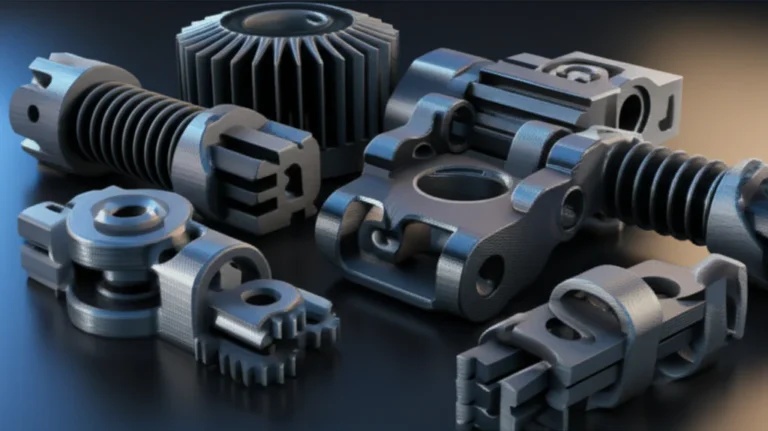
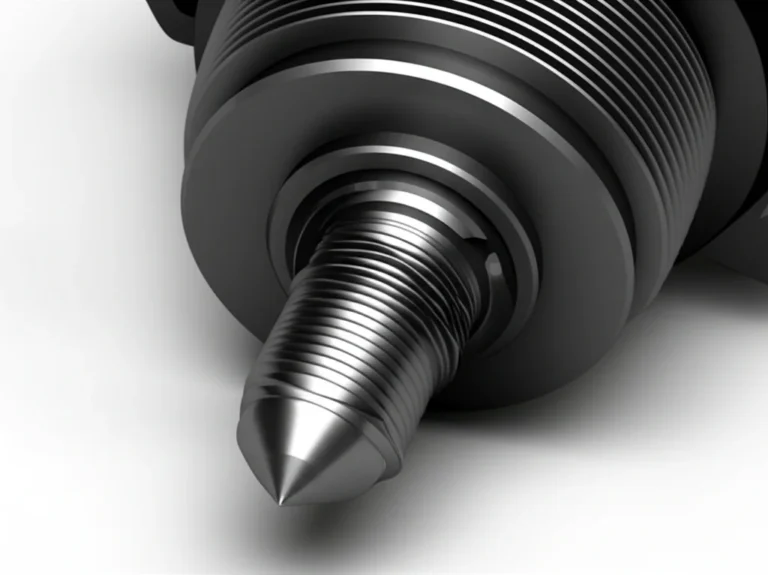
Forget the hype; Ceramic 3D printing materials are no longer just a futuristic concept—they are the only solution for parts that must survive extreme heat, corrosive chemicals, or the human body. While traditional manufacturing struggles with complex geometries, these advanced resins and powders allow you to print turbine blades, dental implants, and heat shields that would be impossible to mold.
We once watched a team try to print a “ceramic” engine component using standard PLA and a ceramic-filled filament, only to watch it crumble into dust during the sintering phase. That failure taught us a hard lesson: true ceramic performance requires pure ceramic resins or sluries followed by a rigorous debinding and sintering process.
Did you know that Silicon Carbide parts printed today can withstand temperatures exceeding 1,60°C, making them essential for next-gen aerospace engines? This isn’t just about making pretty vases; it’s about engineering the unbreakable.
Key Takeaways
- Material Matters: Choose Alumina for electrical insulation, Zirconia for unmatched toughness, or Silicon Carbide for extreme thermal stability.
- Process is Critical: Successful printing requires a precise debinding and sintering cycle; skipping this step results in fragile “green parts” that cannot function.
- Design Freedom: Leverage 3D printing to create internal cooling channels and complex lattices that traditional casting cannot achieve.
- Shrinkage Warning: Always design your models with 15–25% shrinkage in mind to ensure your final sintered part meets specifications.
- Safety First: Handling raw ceramic powders and green parts requires respirators and careful handling to avoid injury and part failure.
Table of Contents
- ⚡️ Quick Tips and Facts
- 🏺 From Ancient Potery to High-Tech Resins: A Brief History of Ceramic Additive Manufacturing
- 🧐 Why Bother with Ceramic 3D Printing? The Case for Technical Ceramics
- 🧪 The Big Breakdown: Types of Ceramic 3D Printing Materials
- 1. Alumina (Al₂O₃): The Workhorse of High-Temperature Applications
- 2. Zirconia (ZrO₂): When You Need Strength That Won’t Quit
- 3. Silicon Carbide (SiC): The Heat Shield for Extreme Environments
- 4. Lithium Disilicate: Beauty Mets Biocompatibility in Dental Labs
- 5. Porcelain and Traditional Clays: Bringing Art to the Digital Age
- 🖨️ Decoding the Tech: How Different Ceramic 3D Printing Processes Work
- Stereolithography (SLA) and Digital Light Processing (DLP) with Ceramic Resins
- Binder Jeting: The Speed Demon of Ceramic Production
- Fused Deposition Modeling (FDM) with Ceramic Filaments
- Direct Ink Writing (DIW) and Robocasting: For the DIY Enthusiast
- 🔥 The Crucible Moment: Understanding Debinding and Sintering
- 🛠️ Post-Processing Perfection: Getting Your Parts to Final Density
- 🏭 Real-World Wins: Industries Crushing It with 3D Printed Ceramics
- Aerospace and Defense: Heat Shields and Radar Components
- Medical and Dental Implants: Biocompatible Solutions
- Automotive: Sensors and Engine Components
- Electronics: Insulators and Substrates
- 💰 Cost vs. Value: Is Ceramic 3D Printing Worth the Investment?
- 🚀 Future Horizons: Where Ceramic Additive Manufacturing is Heading Next
- 🎓 Learn: Resources for Mastering Ceramic Printing
- 🏢 Company Spotlight: Who’s Leading the Charge?
- 🆘 Support and Sales: Where to Get Help and Buy Gear
- 🏁 Conclusion
- 🔗 Recommended Links
- ❓ FAQ: Your Burning Questions About Ceramic Materials Answered
- 📚 Reference Links
⚡️ Quick Tips and Facts
Before you dive headfirst into the molten world of ceramic 3D printing, let’s hit the pause button and drop some knowledge bombs. We’ve seen too many enthusiasts try to print a “ceramic” vase with standard PLA filament and end up with a sad, plastic-looking lump that smells like burnt sugar. Here’s the reality check:
- It’s Not Just “Hard Plastic”: True ceramic 3D printing involves sintering. You print a “green part” (which is fragile as a dry cookie) and then bake it in a kiln to fuse the particles. If you skip the kiln, you don’t have a ceramic part; you have a very expensive, very breakable sculpture.
- Shrinkage is Real: Expect your part to shrink by 15% to 25% during sintering. If you design a 10mm cube, it might come out 80mm. Always scale your models up in your slicer or CAD software!
- The “Green State” is Fragile: Before sintering, your part is held together by a polymer binder. Handle it like a raw egg. One sneze, and your turbine blade is dust.
- Not All “Ceramic” Filaments Are Equal: There are ceramic-filled filaments (PLA with ceramic powder) and pure ceramic resins/sluries. The former is great for look-alikes; the latter is for functional, high-heat engineering.
- Safety First: Ceramic dust (especially silica and zirconia) is no joke. Always wear a respirator when handling raw powders or sanding green parts.
For a deeper dive into how we got here and where we’re going, check out our guide on 3D Printed technologies.
🏺 From Ancient Potery to High-Tech Resins: A Brief History of Ceramic Additive Manufacturing

You might think 3D printing ceramics is a 21st-century invention, but the roots go back much deeper than your grandma’s pottery wheel. While the concept of layering material dates back to the 1980s, ceramics were the final frontier for a long time. Why? Because ceramics are brittle, hard to shape, and require extreme heat to set.
In the early days, Stereolithography (SLA) was all about photopolymers. Engineers tried to mix ceramic powder into resin, but the result was a sludge that clogged nozzles or failed to cure properly. It wasn’t until the late 20s and early 2010s that companies like voxeljet and ExOne started perfecting Binder Jeting for sand and ceramics, allowing for larger industrial parts.
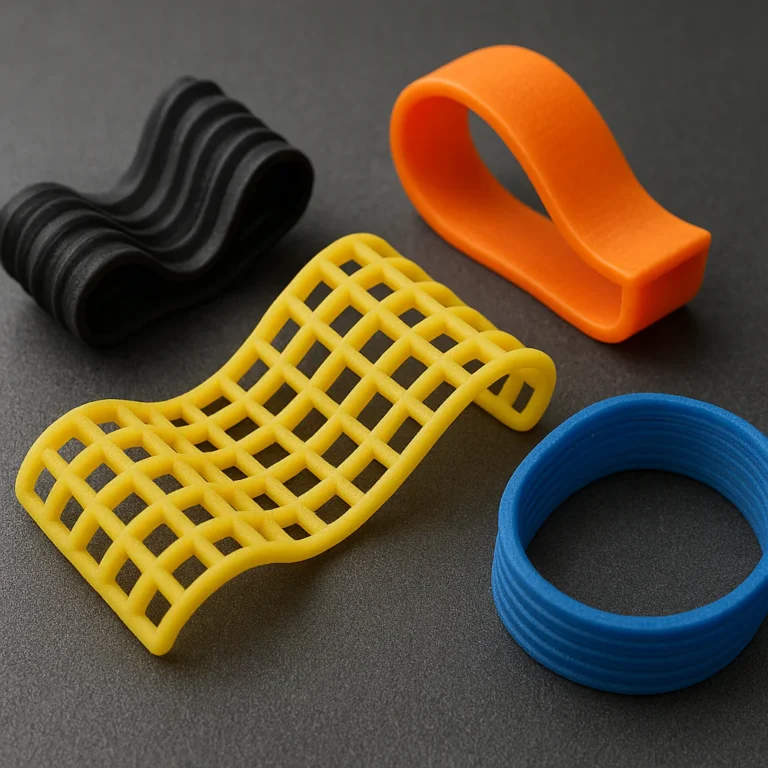
Fast forward today, and we have Formlabs democratizing the space with their Alumina 4N Resin, making it possible for a university lab or a small R&D team to print high-performance ceramics without needing a million-dollar factory. Meanwhile, artists are using Direct Ink Writing (DIW) to create organic, wavy textures that would take a master poter weeks to throw by hand.
The journey from clay pots to silicon carbide heat shields for jet engines is a testament to human ingenuity. But how did we get from “mud and fire” to “resin and lasers”? It started with the realization that if we could control the binder (the glue holding the ceramic particles together) with extreme precision, we could bypass the limitations of molds and machining.
🧐 Why Bother with Ceramic 3D Printing? The Case for Technical Ceramics
So, you have a 3D printer. You can print plastic, maybe some metal. Why would you want to deal with the headache of ceramics?
The answer lies in the extreme environments where plastics melt and metals corrode.
- Thermal Stability: Ceramics can withstand temperatures that would turn your ABS into a puddle. We’re talking 1,60°C+ for some materials.
- Chemical Resistance: Acids, alkalis, and solvents? Ceramics don’t care. They are chemically inert.
- Electrical Insulation: Perfect for high-voltage components where metal would short out.
- Biocompatibility: Zirconia and Alumina are used in dental implants and bone replacements because the body accepts them.
But here’s the kicker: Design Freedom. Traditional ceramic manufacturing (slip casting, injection molding) requires expensive molds. If you want to change the design, you need a new mold. With 3D printing, you can create internal cooling channels, lattice structures, and complex geometries that are impossible to mold.
“The heat sink pictured is a ‘simple shape’, but it can carry a long lead time of up to 3 weeks which we are able to reduce to just a few days.” — Kieran Smith, Atlas Elektronik UK
This isn’t just about making cool-looking vases (though we love those too). It’s about solving engineering problems that were previously unsolvable.
🧪 The Big Breakdown: Types of Ceramic 3D Printing Materials
Not all ceramics are created equal. Choosing the right material is like picking the right tool for a job; use a hammer to drive a screw, and you’ll end up with a mess. Let’s break down the heavy hitters.
1. Alumina (Al₂O₃): The Workhorse of High-Temperature Applications
Alumina is the most common technical ceramic. It’s the “go-to” for electrical insulators, wear-resistant parts, and thermal management.
- Pros: High hardness, excellent electrical insulation, relatively affordable.
- Cons: Britle, lower fracture toughness compared to Zirconia.
- Best For: Electrical insulators, furnace lings, wear plates.
2. Zirconia (ZrO₂): When You Need Strength That Won’t Quit
If Alumina is the workhorse, Zirconia is the tank. It has transformation toughening, meaning it can absorb energy and resist cracking better than almost any other ceramic.
- Pros: Incredible fracture toughness, high strength, biocompatible.
- Cons: More expensive, harder to sinter, prone to “low-temperature degradation” in humid environments if not stabilized correctly.
- Best For: Dental crowns, cutting tools, medical implants, high-stress mechanical parts.
3. Silicon Carbide (SiC): The Heat Shield for Extreme Environments
Need something that can handle the heat of a rocket engine? Silicon Carbide is your guy. It has high thermal conductivity and retains strength at extreme temperatures.
- Pros: High thermal conductivity, excellent wear resistance, stable at very high temps.
- Cons: Very difficult to sinter (often requires sintering aids), expensive.
- Best For: Heat exchangers, rocket nozzles, semiconductor manufacturing components.
4. Lithium Disilicate: Beauty Mets Biocompatibility in Dental Labs
This is the star of the dental world. It offers a balance of strength and translucency that mimics natural teeth.
- Pros: Aesthetic (translucent), strong, biocompatible.
- Cons: Limited to specific dental applications, requires precise sintering.
- Best For: Dental crowns, bridges, veners.
5. Porcelain and Traditional Clays: Bringing Art to the Digital Age
For the artists and hobbyists, porcelain and clay sluries are the way to go. These are often printed using DIW (Direct Ink Writing).
- Pros: Aesthetic appeal, food-safe (after glazing), accessible.
- Cons: Lower mechanical strength, high shrinkage, requires glazing.
- Best For: Artistic sculptures, custom tableware, architectural models.
| Material | Primary Use | Max Temp (Approx) | Key Strength | Key Weakness |
|---|---|---|---|---|
| Alumina | Electrical, Wear | 1,70°C | Insulation, Hardness | Britle |
| Zirconia | Medical, Mechanical | 1,20°C | Toughness, Strength | Cost, Degradation |
| Silicon Carbide | Aerospace, Thermal | 1,60°C+ | Thermal Conductivity | Sintering Difficulty |
| Lithium Disilicate | Dental | 80°C | Aesthetics, Strength | Limited Scope |
| Porcelain/Clay | Art, Decor | 1,20°C | Aesthetics | Low Strength |
🖨️ Decoding the Tech: How Different Ceramic 3D Printing Processes Work
You’ve picked your material. Now, how do you print it? The process varies wildly depending on the material and the desired outcome.
Stereolithography (SLA) and Digital Light Processing (DLP) with Ceramic Resins
This is where Formlabs shines. They mix ceramic powder (like Alumina) into a photopolymer resin.
- Print: A UV laser or projector cures the resin layer by layer, trapping the ceramic particles.
- Wash: The part is washed in a specialized Ceramic Wash Solution to remove uncured resin.
- Debind: The polymer binder is burned off in a furnace.
- Sinter: The remaining ceramic particles fuse together at high heat.
Why it’s great: Incredible detail (50 microns), smooth surfaces, and complex geometries.
The catch: You need a dedicated wash station and a kiln.
Binder Jeting: The Speed Demon of Ceramic Production
Used by voxeljet and ExOne, this process sprays a liquid binder onto a bed of ceramic powder.
- Spread: A roller spreads a thin layer of powder.
- Jet: Print heads spray the binder to bond the particles.
- Repeat: Layers are added until the part is done.
- Cure & Sinter: The “green part” is removed from the powder bed, cured, and sintered.
Why it’s great: Fast, no support structures needed (the powder holds the part), good for large batches.
The catch: Surface finish is rougher than SLA, and shrinkage can be harder to predict.
Fused Deposition Modeling (FDM) with Ceramic Filaments
This is the most accessible method for hobbyists. You use a standard FDM printer (often with a hardened steel nozzle) and a filament that is mostly ceramic powder bound in a polymer.
- Print: The filament is melted and extruded.
- Debind: The polymer is removed (often in a solvent or low-heat oven).
- Sinter: The part is fired.
Why it’s great: Cheap, uses standard printers (mostly), easy to get started.
The catch: Layer lines are visible, detail is lower, and the “green part” is very fragile.
Direct Ink Writing (DIW) and Robocasting: For the DIY Enthusiast
Think of this as a high-tech glue gun. A syringe extrudes a thick, paste-like ceramic slurry.
- Extrude: The paste is pushed through a nozzle.
- Dry: The solvent evaporates, leaving the ceramic structure.
- Sinter: Fired in a kiln.
Why it’s great: Great for large, artistic pieces, and works with a wide variety of clays.
The catch: Requires precise control of viscosity, slow printing speed, and often needs post-processing to smooth surfaces.
🔥 The Crucible Moment: Understanding Debinding and Sintering
This is the part where most people fail. You printed a beautiful part, but now it’s time for the debinding and sintering process. If you rush this, your part will crack, warp, or explode.
Debinding is the removal of the polymer binder. This must be done slowly. If you heat it too fast, the binder burns off too quickly, creating gas pockets that blow the part apart.
- Thermal Debinding: Heating in a furnace.
- Solvent Debinding: Soaking in a solvent to dissolve the binder first (common in SLA/DLP).
Sintering is the magic step. The part is heated to near the melting point of the ceramic (but not quite melting). The particles fuse together, and the part shrinks significantly.
- Shrinkage: As mentioned, expect 15-25% shrinkage.
- Atmosphere: Some materials (like Silicon Carbide) need a specific atmosphere (vacuum or inert gas) to sinter correctly.
“The chemistry of the glaze and the clay can react differently depending on the color of the clay.” — Ceramica Studio
This is why kiln schedules are critical. You can’t just throw a ceramic part in a kitchen oven. You need a programmable kiln that can ramp up temperatures over hours or even days.
🛠️ Post-Processing Perfection: Getting Your Parts to Final Density
Once your part comes out of the kiln, it’s technically a ceramic part, but it might not be ready for prime time.
- Sanding: Green parts can be sanded, but it’s messy. Sintered parts are incredibly hard and require diamond tools.
- Glazing: For aesthetic or food-safe applications, a glaze is applied and fired again.
- Infiltration: Sometimes, a secondary material (like metal or polymer) is infiltrated into the porous ceramic to improve strength or conductivity.
🏭 Real-World Wins: Industries Crushing It with 3D Printed Ceramics
Let’s look at who is actually using this tech and why.
Aerospace and Defense: Heat Shields and Radar Components
The Air Force Research Laboratory has been using Alumina 4N Resin to prototype turbine engine parts. Why? Because they need parts that can withstand extreme heat and have complex internal cooling channels that traditional casting can’t achieve.
- Case Study: Rapid protyping of turbine engine components and custom oven fixtures.
Medical and Dental Implants: Biocompatible Solutions
Zirconia and Lithium Disilicate are revolutionizing dentistry. 3D printing allows for custom-fit crowns and implants that are stronger and more aesthetic than traditional methods.
- Check out: 3D Printing in Healthcare for more on medical applications.
Automotive: Sensors and Engine Components
Automotive engineers are using ceramics for sensors that can survive in the exhaust stream and for engine components that reduce weight and increase efficiency.
Electronics: Insulators and Substrates
With the rise of high-power electronics, Alumina substrates are being 3D printed to create custom heat sinks and insulators that fit perfectly into compact devices.
💰 Cost vs. Value: Is Ceramic 3D Printing Worth the Investment?
This is the million-dollar question.
- Upfront Cost: A dedicated ceramic 3D printer (like a voxeljet system) can cost hundreds of thousands of dollars. However, desktop solutions like the Form 3 with ceramic resin are a fraction of that cost.
- Operational Cost: You need a kiln, wash stations, and safety gear. The material cost per part is higher than plastic, but lower than machining a custom ceramic part.
- Value Proposition: If you need low-volume, high-complexity parts, 3D printing is a no-brainer. If you need 10,0 identical parts, traditional molding is still cheaper.
🚀 Future Horizons: Where Ceramic Additive Manufacturing is Heading Next
The future is bright (and hot). We’re seeing:
- Multi-material printing: Combining ceramics with metals or polymers in a single print.
- Faster sintering: New techniques to reduce the time it takes to fire parts.
- New materials: Exploring exotic ceramics like boron carbide for armor applications.
As voxeljet notes, “Ceramic is a pioneering printing material that is becoming increasingly established in many industries… [it] will give you completely new capabilities.”
🎓 Learn: Resources for Mastering Ceramic Printing
Ready to dive in? Here are some resources:
- Formlabs Documentation: Excellent guides on their Alumina 4N Resin workflow.
- voxeljet Academy: Training on industrial binder jeting.
- Community Forums: Check out Thingiverse for ceramic-specific models and 3D Printed for more ideas.
- Books: Look for “Additive Manufacturing of Ceramics” on Amazon.
🏢 Company Spotlight: Who’s Leading the Charge?
- Formlabs: Democratizing ceramic printing with the Form 3 and Alumina 4N Resin.
- voxeljet: Industrial leader in Binder Jeting for large-scale ceramic production.
- Eazao: Focusing on clay and porcelain for artists and hobbyists with their Poter and Zero models.
- ExOne: Another giant in the binder jeting space, focusing on sand and ceramics.
🆘 Support and Sales: Where to Get Help and Buy Gear
Need a printer? Need resin?
- Formlabs: Shop Formlabs
- voxeljet: Contact voxeljet
- Eazao: Eazao Official Website
- Filaments/Resins: Check Amazon or specialized suppliers like Polymaker or Prusament (for ceramic-filled filaments).
🏁 Conclusion

So, is ceramic 3D printing the future? Absolutely. But it’s not a magic wand. It’s a powerful tool for solving specific problems where heat, strength, and complexity are the constraints.
We started this article wondering if you could just “print a ceramic part.” The answer is a resounding yes, but with a caveat: you must respect the process. From the green state fragility to the sintering shrinkage, every step requires precision.
If you’re an engineer looking to prototype turbine parts or a dentist designing custom crowns, the investment is worth it. If you’re an artist, the Eazao printers might just turn your home into a studio.
The narrative we left hanging earlier? That “burnt sugar” smell you get when you try to print ceramic with PLA? That’s the smell of failure. But the smell of a perfectly sintered Alumina part? That’s the smell of innovation.
Ready to start your own ceramic journey? Check out our 3D Design Software guides to get your models ready for the kiln.
🔗 Recommended Links
👉 Shop Ceramic 3D Printing Materials:
- Formlabs Alumina 4N Resin: Formlabs Official | Amazon Search
- Eazao Ceramic Printers: Eazao Official | Amazon Search
- Ceramic Filaments: Amazon Search
Books & Resources:
- Additive Manufacturing of Ceramics (Book): Amazon
- 3D Printing: The Next Industrial Revolution (Book): Amazon
❓ FAQ: Your Burning Questions About Ceramic Materials Answered

What post-processing techniques are needed for ceramic 3D printed objects?
Post-processing is critical. It involves washing (to remove uncured resin or binder), debinding (burning off the polymer), and sintering (fusing the ceramic particles). Some parts may also require sanding, glazing, or infiltration.
Read more about “Binder Jetting Full-Color 3D Prints: The Ultimate Guide (2026) 🎨”
How to choose the right ceramic material for your 3D printing project?
Choose based on your application. Need heat resistance? Go for Alumina or Silicon Carbide. Need strength and toughness? Zirconia is the way. For artistic pieces, Porcelain or Clay is best. Always consider the sintering temperature and shrinkage rates.
Read more about “📊 3D Printing Materials Market Share: Who Really Wins in 2026?”
Which industries benefit most from ceramic 3D printing materials?
Aerospace (heat shields, turbine parts), Medical (dental implants, bone replacements), Automotive (sensors, engine components), and Electronics (insulators, substrates) are the primary beneficiaries.
Read more about “🚀 What is the Current Status of 3D Printing? (2026)”
What are the advantages of using ceramic materials in 3D printing?
The main advantages are high-temperature resistance, chemical inertness, electrical insulation, and the ability to create complex geometries that are impossible with traditional manufacturing.
Read more about “🦷 Top 10 Dental 3D Printing Innovations Reshaping Smiles (2026)”
Can ceramic 3D printing materials be used for functional parts?
Yes, absolutely. Functional parts like turbine blades, medical implants, and electrical insulators are being produced regularly. However, they must be properly sintered to achieve full density and strength.
Read more about “🌊 Ultrasonic Additive Manufacturing (UAM): The Cold Metal Revolution (2026)”
How does ceramic 3D printing differ from plastic 3D printing?
Ceramic printing requires a sintering step to fuse the particles, whereas plastic printing is ready to use immediately after printing. Ceramic parts are also much harder, more brittle, and require higher temperatures to process.
Read more about “🚀 3D Printing Market Segmentation: The 2026 Ultimate Guide to 7 Key Sectors”
What are the best ceramic materials for 3D printing?
Alumina is the most versatile and widely used. Zirconia is best for strength, and Silicon Carbide for extreme heat. For art, Porcelain is the top choice.
Read more about “🚀 7 Latest 3D Printing Trends Reshaping 2024”
What are the most durable ceramic materials for 3D printing?
Zirconia is generally considered the most durable due to its transformation toughening mechanism, which resists crack propagation.
Read more about “🏭 7 Large-Format Industrial 3D Printers Dominating 2026”
How does ceramic 3D printing differ from traditional manufacturing?
Traditional methods like slip casting or injection molding require expensive molds and are limited in geometry. 3D printing allows for complex internal structures, customization, and rapid protyping without tooling.
Read more about “🚀 15+ Aerospace 3D Printed Components Revolutionizing Flight (2026)”
What post-processing steps are required for printed ceramic parts?
The essential steps are washing, debinding, and sintering. Additional steps may include sanding, glazing, or infiltration depending on the desired finish and properties.
Read more about “🚀 7 Advanced Metal 3D Printing Techniques Mastered (2026)”
Can I 3D print food-safe ceramic items at home?
Yes, but with caution. You must use food-safe clays and ensure the part is fully sintered and glazed with a food-safe glaze. The sintering process must be done in a dedicated kiln to avoid contamination.
Read more about “15 Must-Try D Printed Gifts to Wow Everyone in 2026 🎁”
What are the cost differences between various ceramic 3D printing materials?
Alumina is generally the most affordable. Zirconia and Silicon Carbide are more expensive due to the raw material costs and processing requirements. Porcelain is relatively cheap but requires more manual labor.
Read more about “What Are Most 3D Printed Objects Made of Today? Top 11 Materials (2025) 🛠️”
Which ceramic materials are best for high-temperature applications?
Silicon Carbide and Alumina are the top choices for high-temperature applications, capable of withstanding temperatures above 1,60°C.
Read more about “Can I 3D Print Functional Tools & Machinery? Your Ultimate 2025 Guide 🛠️”
What printers are compatible with ceramic 3D printing filaments and sluries?
FDM printers with hardened nozzles can handle ceramic-filled filaments. SLA/DLP printers (like Formlabs) use ceramic resins. DIW printers (like Eazao) use clay sluries. Binder Jeting systems (like voxeljet) use ceramic powders.
📚 Reference Links
- Formlabs: Alumina 4N Resin
- voxeljet: Ceramic 3D Printing – The Material of the Future
- Eazao: Eazao Ceramic 3D Printing Solutions
- Air Force Research Laboratory: Ceramic 3D Printing Research
- Atlas Elektronik UK: Case Study on Heat Sinks
- Bosch Advanced Ceramics: Client Asemblies
- Ceramica Studio: Instagram (For artistic inspiration)
- 3D Printed: 3D Printed
- Thingiverse: Ceramic Models
- Amazon: Ceramic 3D Printing Materials